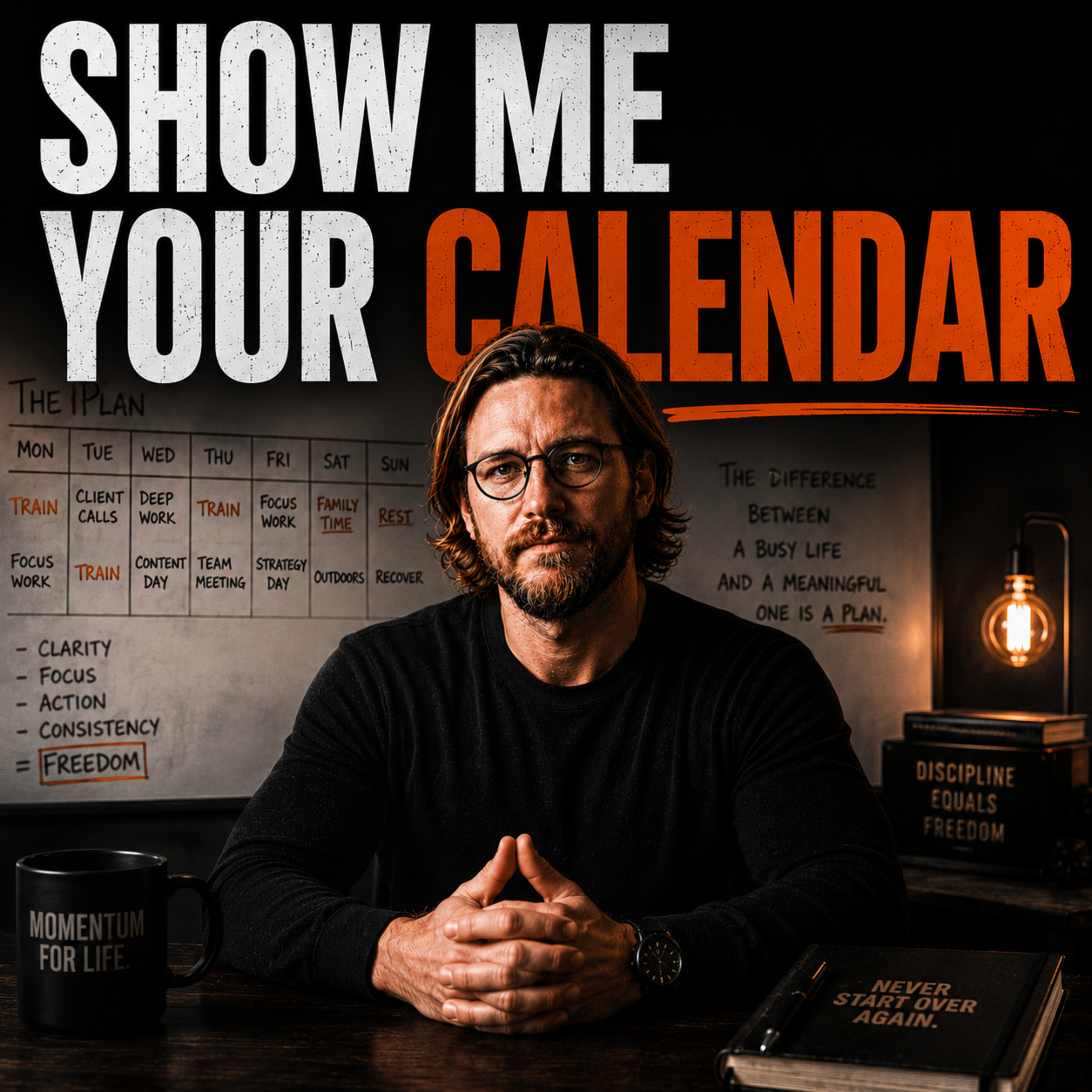
Most people don't fail because they don't start. They fail because they restart too often. Never Start Over Again is a weekly Monday podcast hosted by Rickard Long — coach, entrepreneur, and founder of Escapist CrossFit in Berlin. Each episode is built for one moment: the start of your week. Not to motivate you. Not to lecture you. To shift something before you sit down. Every episode brings together three things: a story from history you probably haven't heard the right way, an idea from the…
Why does the medical system tell people to stop moving — when movement is often the only thing that would actually fix the problem? What happens when a doctor says stop sport and the patient decides not to listen? And what is a coach actually for when everything the textbook says you should be able to do has been taken away? Three questions. Three stories. One pattern. Lisa was told she would need…
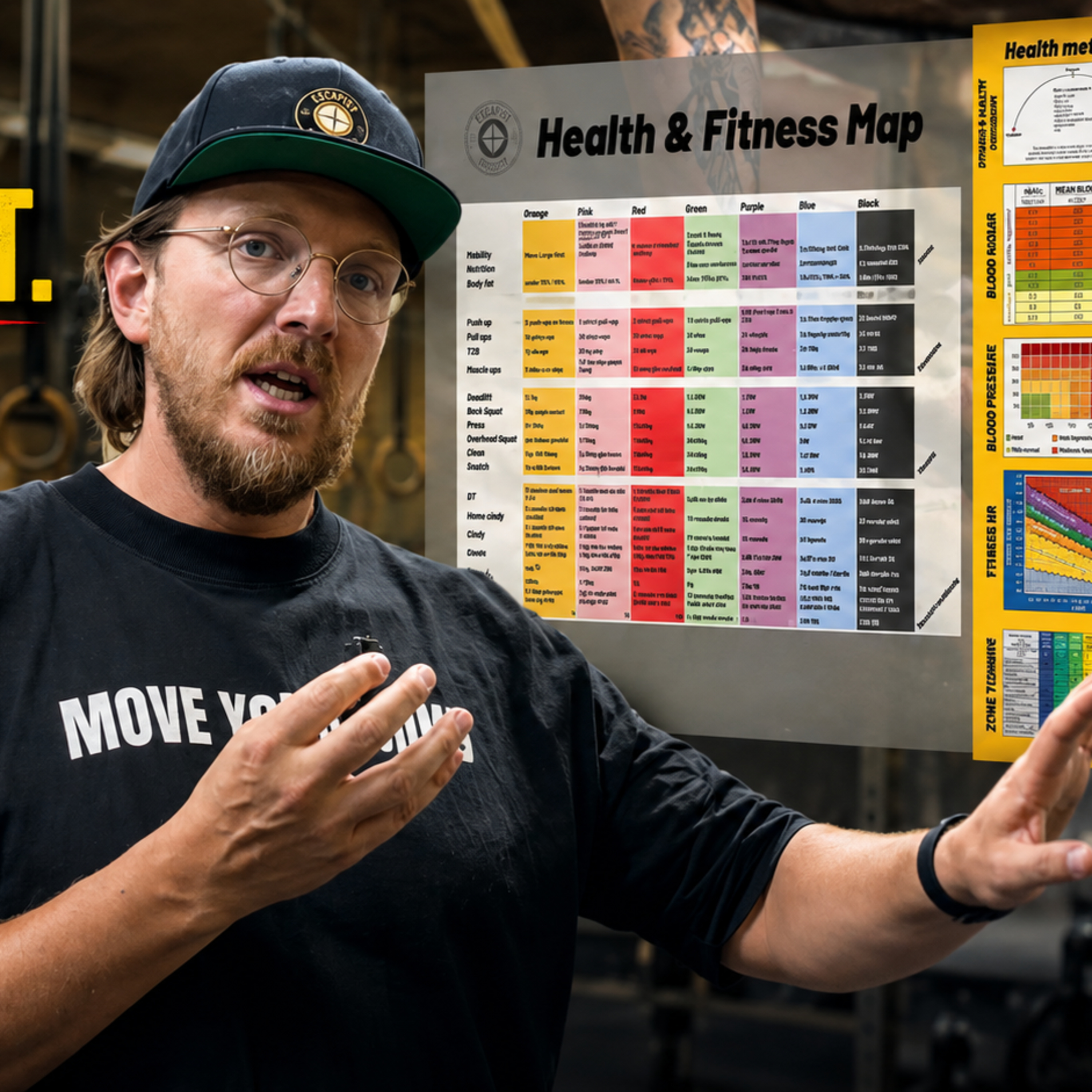
If you wanted to drive from Berlin to Rome, the first question is not "how do I get there?" It is "where are you right now?" Health and fitness work the same way. And almost nobody starts with the right question. This episode introduces the Escapist Health and Fitness Map — seven levels from Orange to Black, covering mobility, nutrition, body composition, gymnastics, strength, and metabolic…
I meet people at offices, co-working spaces, birthday parties. The moment fitness comes up, someone says "I have Urban Sports Club" or "we give our staff Wellhub." And I ask the same question every time: when did you last go? How often in the last three months? They go blank. Every time. This episode is about why that happens — and why in 2019, Escapist made the decision to cancel its Urban Sports…
I was at the Freibad with my kids this week. And something stopped me. The number of seriously overweight children — children who will carry that weight for the rest of their lives unless something changes. And the thing that is not changing is the conversation. We are not having it. This episode is about why silence about a real problem is not kindness. It covers the most successful public health…
The President of Finland secretly showed up at an amateur triathlon last week under a fake name. He swam, cycled, ran. Finished second. Nobody knew who he was until it was over. That story is the opening of this episode — because it sits in sharp contrast to what the EU data says about how Europe actually manages the health of its people. The EU spends 3.7% of its healthcare budget on prevention…
AI can write you a perfect training programme in thirty seconds. It will not make you fit. This episode is about why most people are using AI to delay getting started — and the three moves that actually work instead. Ingvar Kamprad built IKEA on one principle: remove every unnecessary step so the essential thing can happen. That is exactly how AI should be applied to your health. Not to replace…
Everyone has 168 hours a week. The billionaire, the lawyer, the parent of three, the business owner — same budget, different allocation. The average person spends nine times more time on screens than moving their body. Real social connection has dropped 40% in a decade. 67% of gym memberships worldwide go unused. People are already paying for fitness. They just are not going. This week is a…
Silver medalists are measurably less happy than bronze medalists. Third place, happier than second. The Cornell research on this is uncomfortable and completely clarifying — and it is the starting point for this week's episode. Roald Amundsen reached the South Pole in 1911 and came home with something far more valuable than a flag in the ice. We launched The Zoo this week — a Hyrox simulation in…
There is the fitness that looks good on Instagram. And then there is the other version — the one nobody sees. The 6am session when you are tired. The hotel gym at 40% energy. The decision made alone with nobody counting. This week: Franz Kafka writing in the dark between midnight and 3am for years while working as an insurance clerk, telling almost nobody. A bicycle accident in Berlin where a…
Running a business is lonely in a way that is hard to explain to people who haven’t done it. Not obviously lonely. Quietly lonely. You carry things because you don’t want to bring them home every time something goes sideways. This week I am recording from Chicago, at the TwoBrain Business Summit, inside a room with some of the best gym operators in the world. Yesterday we had sixty seconds to…