
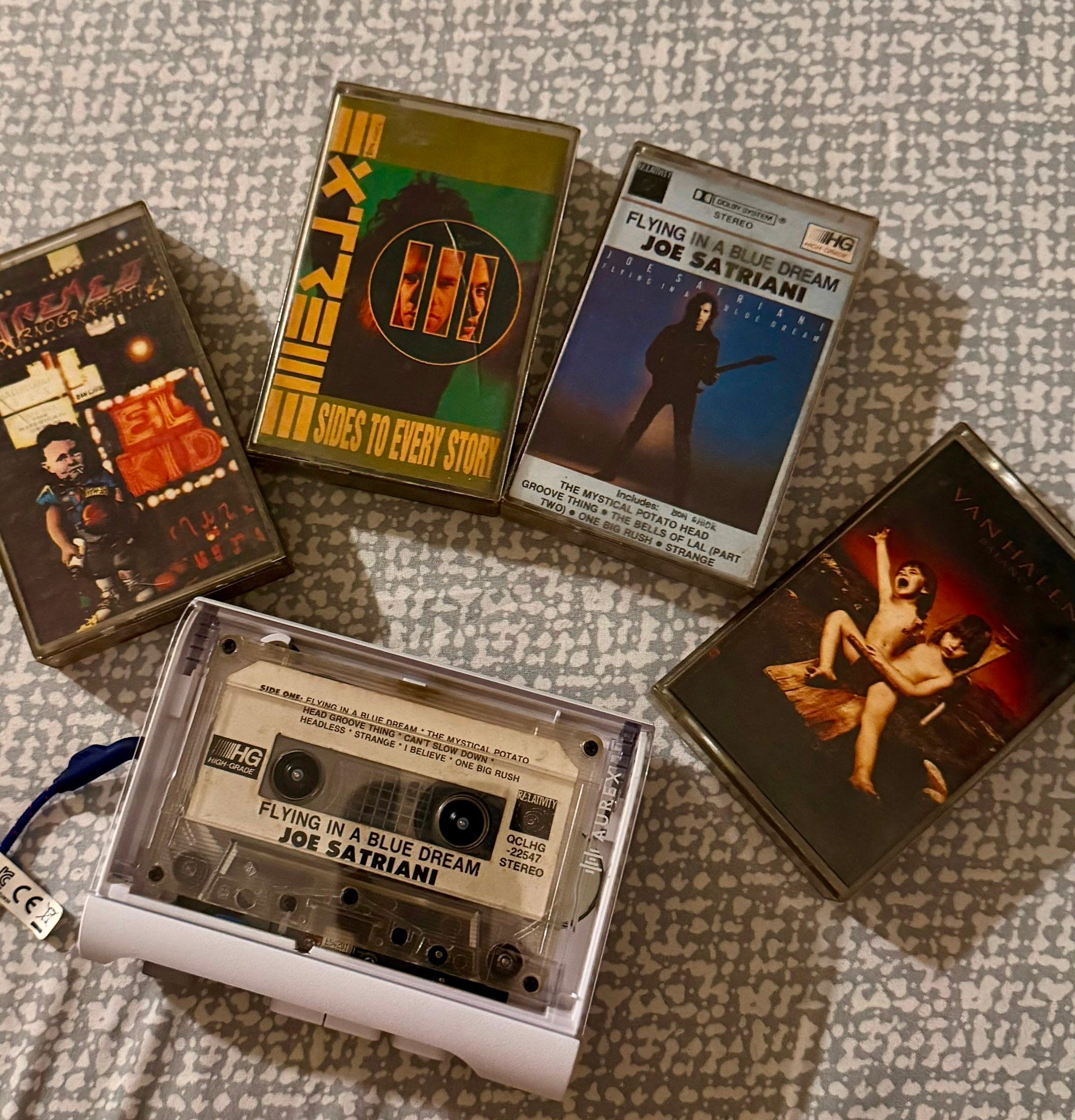
Months later, while doomscrolling on Instagram, I got hit by a video ad for a white cassette tape player with a transparent cover. A friend happened to be in Japan, so I asked her if she had seen one and if she could buy me one.
Yesterday, the box arrived with the newly minted Toshiba Aurex cassette player (my quick AI research said Aurex is now a China-owned brand; Toshiba has been dropped from the brand). Unboxing it, I was ecstatically explaining to my twenty-something daughter how this 80s relic works. I then asked my eldest daughter to grab my rack full of old cassette tapes, which I collected back in College and later while working. To my amazement, my tapes played as they did back when I first bought them in the late 90s. (I later found that some have accumulated white molds. More on that later.)
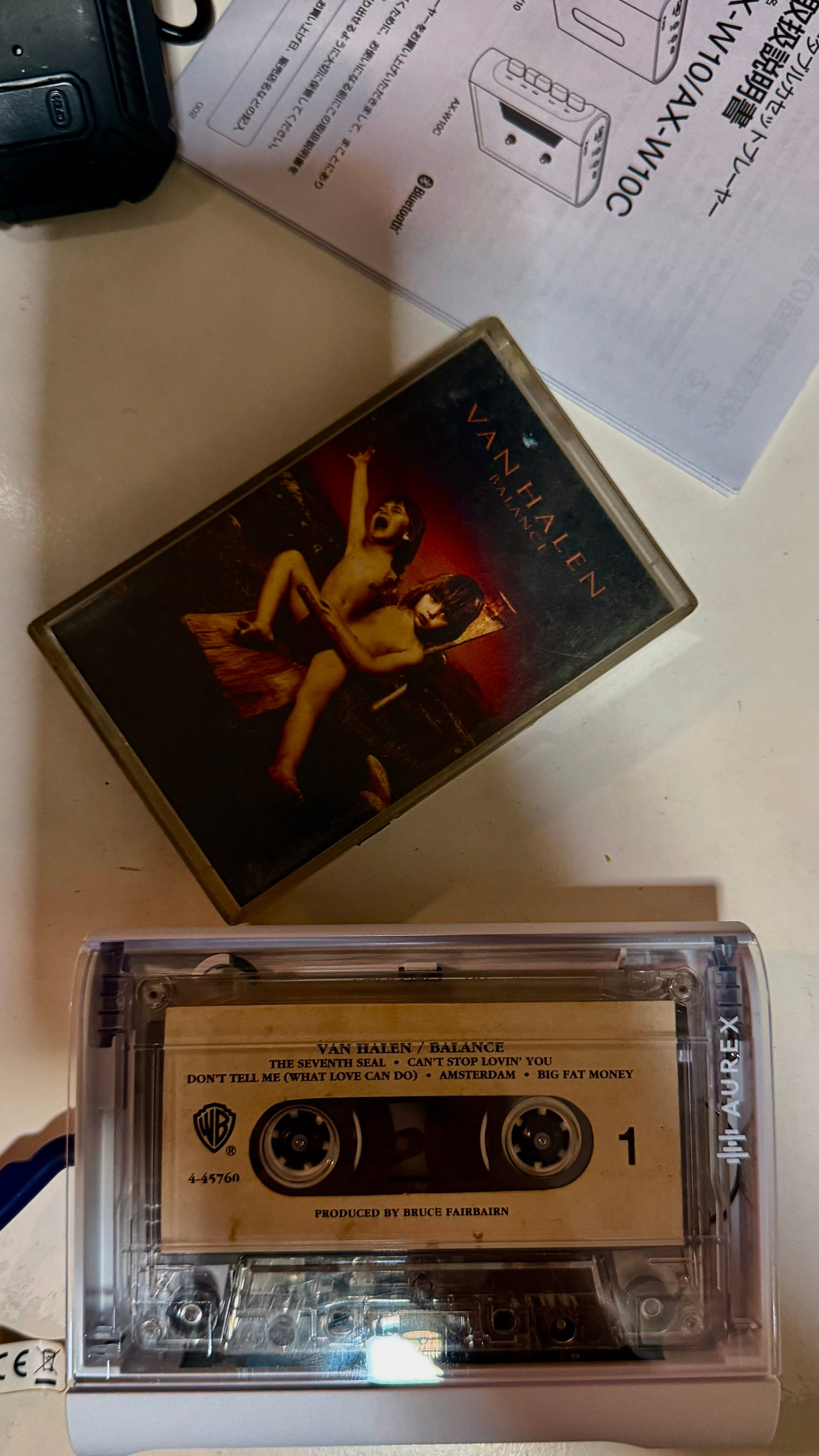
Open cover. Insert tape. Press play. Hissssss. Music begins.
The familiar sound of a tape when the music was not yet on made my hair stand on end. I burst out laughing while my daughter was looking a bit annoyed. Here was his dad with his new toy, listening to a Van Halen album titled Balance. The track was the Seventh Seal. If you knew Van Halen, his signature brown sound, which came from his custom-made guitar, started bursting through my wired earphones to my eardrums. Sammy Hagar wailed away, singing an old, classic hard-rocking tune.
How does this retro technology work? Remember the Sony Walkmans? It was a Japanese invention that let you carry your music around with you. All you needed was this tape player-recorder, a nice pair of headphones, and a handful of tapes to swap and play while walking.
Walkmans became the symbol of the 80s cool. Instead of a boom box, which you also can carry around, this pocket-sized music gadget would play your latest collection of rock classics or your favorite music from a pop band. And you can enjoy music in a more intimate, solo style.
Cassette tapes are made of strips of plastic coated with magnetic material. This strip of plastic is wound inside a cassette, which stores sound. Like visible grooves in vinyl records, this strip of plastic follows patterns of magnetism that, in turn, produce music. Thanks to physics, sound (voice or music) is converted into electrical signals and back into sound, which you can hear.
I read and saw somewhere that 2026 is going to be the year of analog. Parents in the US are buying their kids dial phones. Gen Zs and millennials are getting off their screens and back to activities that don't require them to be on them. Several years ago, I told myself I’m “screenburned,” meaning I’m in front of the screen most of my waking time, leading to screen burn (like sunburn).
There is a tactile appeal to going analog. With cassette tapes, for example, you are holding a dozen songs in your hand. There’s beauty in listening to six curated songs from the side A of a tape, then, if you’re feeling you haven’t had enough, flip to Side B and continue the experience.
Think about this: how many songs can you remember now with the endless, algorithm-based playlists playing on your smartphone? Maybe one or two. I can also guess that your playlist has little to do with the songs. It is your mood or your activity that dictates what you listen to. Working? Here’s a coffee chill playlist. Meditating? Here’s a set of nature-based sounds. Studying? Here’s a focus playlist, which will probably be a collection of jazz.
Whenever I tell Alexa to play my music on Apple, it assumes I want to listen to a rotation of songs from my playlist. It doesn’t ask me if I want to dive into deep cuts of Van Halen or Pearl Jam. When I fire up my Spotify before I drive, it automatically pushes 80s music, which dominated my listening hours in 2025 — that is, according to this year’s Spotify Wrapped. Why? Spotify is driven by profit; it will keep pushing music it thinks I love and stick to, and keep playing it because it needs to generate stream revenue from my listening.
Analog does not care about algorithms. You get what it serves. Music that the artist thinks is good for you, based on a specific subjective order of things. The first song should start with a bang. The last song in Side One is a set up to Side Two’s first song. Artists and producers had a lot of control over how your music is curated. And this—it comes with liner notes. This is a small piece of information tucked into the cassette tape or vinyl cover. And never forget the beautiful art form: album art! Like a magazine, the cover dictates if a pimpled teenager like me would pick music based on that mysterious album cover.
I admit screens inundate me. It contributes to my technostress. While my work requires me to be online most of the time, it has become a bad habit to spend most of my waking hours looking at screens. If I were to estimate the ratio of time spent on screens versus talking to someone offline, thinking, or just staring into a blank space, it would come close to 80%. This may sound like an exaggeration. So let’s look at the numbers.
Statista says Filipinos spend an average of 8 hours and 52 minutes in front of a screen. Other studies place that number at 9 hours. That is roughly 38% of our time in front of a screen. What do we do in front of screens? It is spent on staying in touch with friends and family, watching videos online (streaming, of course), following the news, and school and work activities. That’s still a lot of time dedicated to tech.
There are no studies or statistics on how much time Filipinos spend offline or elsewhere beyond digital technology. Maybe a good question to ask: how much time do you exercise, play (not video games), or sleep? I just remembered how a Netflix exec was once quoted as saying that it was not competing with other streaming companies, but sleep.
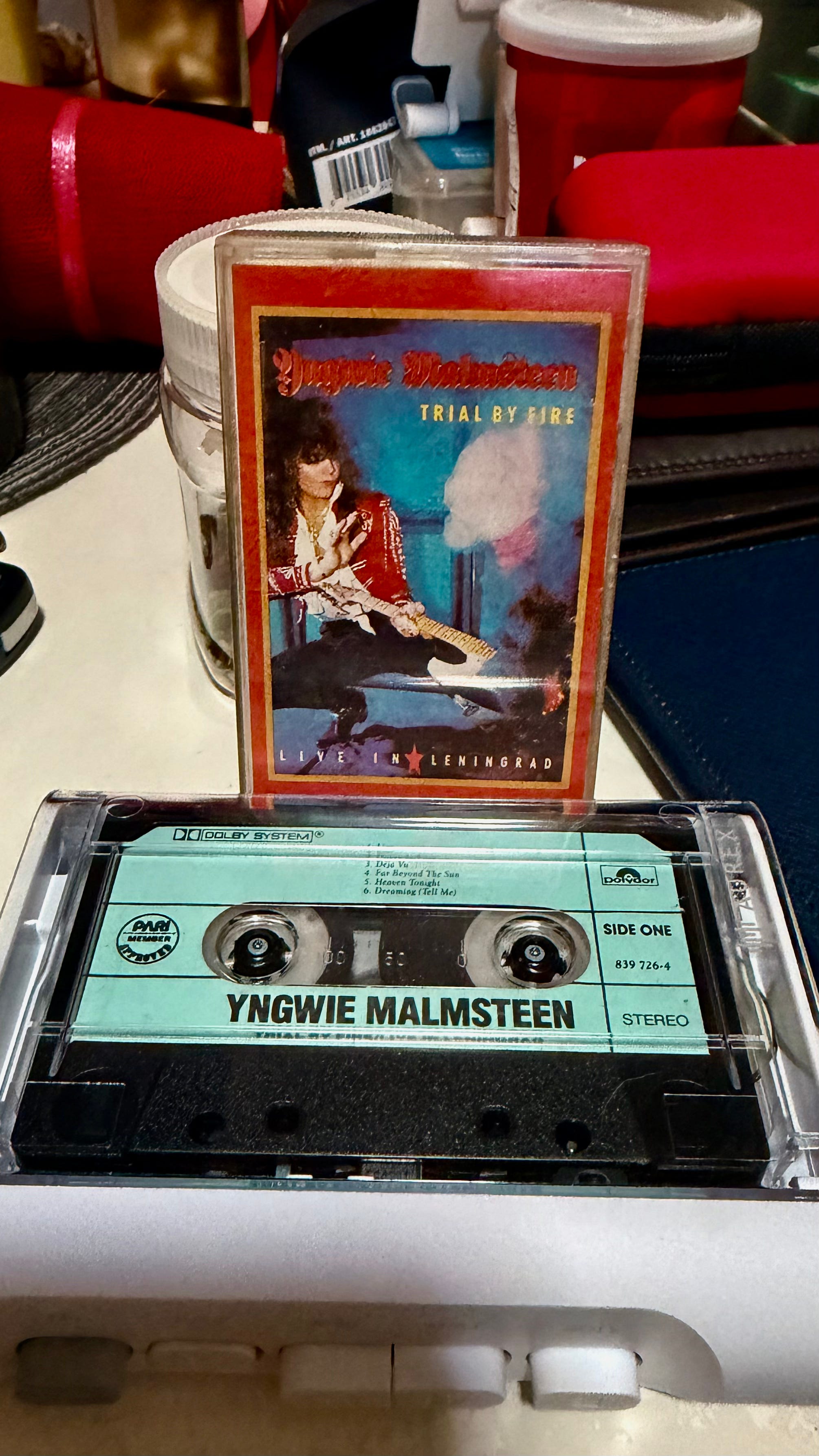
In 2026, I’m going to spend more time with analog. How? I will go back to playing my guitar, which also means I have to practice again. I need to do more writing and reading (I do both on a real book and a digital version). I also need to up my time for exercise (walking first) and sleep. The last one is often sacrificed due to screen burn.
Here’s a set of activities and things that I think you can also apply if you want to go analog next year. I want to be more present with God, my family, and my own thoughts, rather than my phone.
Reduce phone time in the bedroom, during meals, and in the evenings.
Tuck away your phone when you sleep. Don’t place it near the bed. I will put mine on silent and keep it out of reach.
Spend 15 minutes in the morning doing simple exercises, calisthenics.
Spend another 15 minutes doing contemplative Bible reading on paper in the evening, or before sleep.
Use paper to plan your day. This means I may need a planner (Starbucks?!)
Find time in the week for screen-free times (walking without earphones), just wandering and contemplating.
Delete social media apps that are addictive. Force yourself to be on your computer if you want to do social.
Target to read and finish a book (the paper version) every month. This means dedicating time in the evenings to reading.
Create no-screen time with the family and do an activity together, like playing a board game, studying the Bible, or just trading stories about your day.
This list is not perfect, but it is a starting point. Hoping I can do each.
What about you? Do you have a set of analog things that you want to do next year?
No posts
Comments
Nothing yet. Say the first thing.
Sign in to join the conversation.