
When I teach workshops about Transformative Justice (TJ), I often ask folks how they’re practicing TJ in real time. And for some reason, they often hold onto the belief that they don’t. They believe that the only way to practice TJ is to not call the cops when their neighbours fight, or to call a cab when their friends are too drunk to get home on their stupid bike.
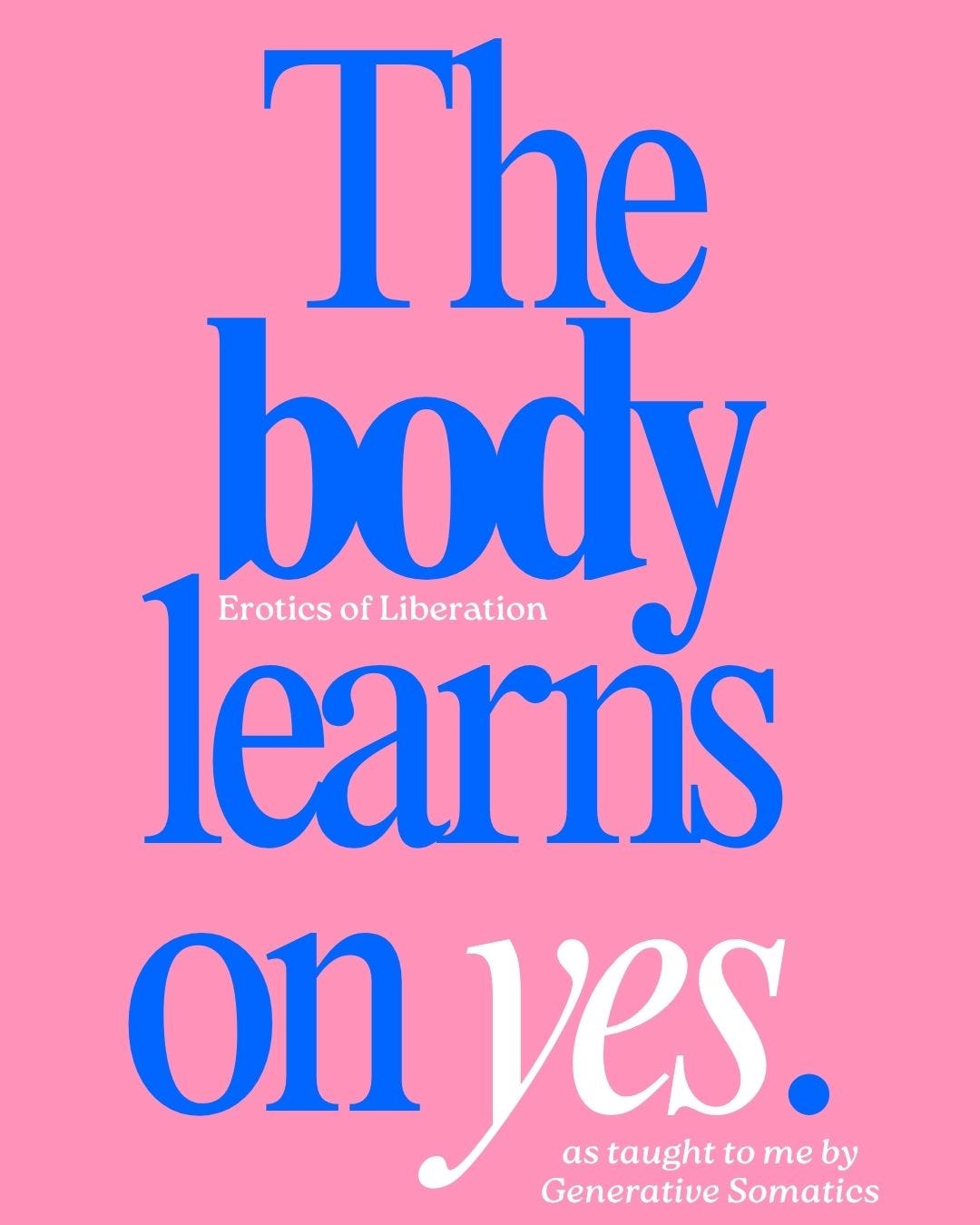
All of that is true. And, as a somatic practitioner, a hill I will die on is the belief that the body learns on yes (introduced to me by Staci Haines and Generative Somatics).
The brain doesn’t hear negation. Example: don’t think about a pink elephant.
So here are some ways you practice TJ that are not rooted in not doing something, but are actually active ways to practice abolition.
Abolition is the ongoing practice of building relationships that render domination unnecessary.
Abolition unfolds in 3 movements:
dismantling the systems that kill us,
imagining the relationships that would make domination obsolete,
& practicing those relationships in real time.
TJ follows the same arc:
we stop the harm,
we reconcile with the pain and repair where we can,
& we create the conditions that make the harm unconceivable to happen again.
So, you’re practicing TJ when:
Before this! I want to introduce myselves!
I am Care (they/them), a Transformative Justice & somatic practitioner, doula and artist. I created Erotics of Liberation, a space dedicated to practicing the relational capacities that make domination obsolete: accountability, generative conflict, repair, and staying connected through difference, so we can collectively inscribe abolition on the agenda of our futures and liberation on the map of our collective body.

I started Erotics of Liberation because I believe our movements are only as strong as our relationships. If you’re convinced that conflict is the smallest unit of abolition, and that 1312 is going to be hard if we can’t even have a difficult conversation about the pile of dishes in the sink, I think you’ll get along with us.
And by us, I mean cuties like you (and me) who are tired of reading about the world we long for on cute little Instagram carousels. We want to practice it now. We want to french-press our values into our bodies until they become habit, so we can collectively inscribe abolition on the agenda of our futures and liberation on the map of our collective body.
Every week, I share essays about conflict, intimacy, abolition, grief, love, power, and what it means to practice becoming more human together. My hope is that these words don’t just give you something to think about. I hope they slowly change the way your body meets the people you love, because abolition is relational practice.
But words can only take us so far.
Somatics isn’t about knowing more. It’s about practicing differently. We are not our values—we are what we practice most. And we’re always practicing something!
So if you want to go beyond reading and actually practice alongside me and a community of fellow cuties, becoming a paid subscriber is for you.
And honestly, this is the perfect time to join!!!! Because on top of accessing all my zines FOR FREE,
on September 10, I’ll be opening Becoming Conflict Secure, my very first live course on Substack (free for paid subscribers, usually 47 euros!)
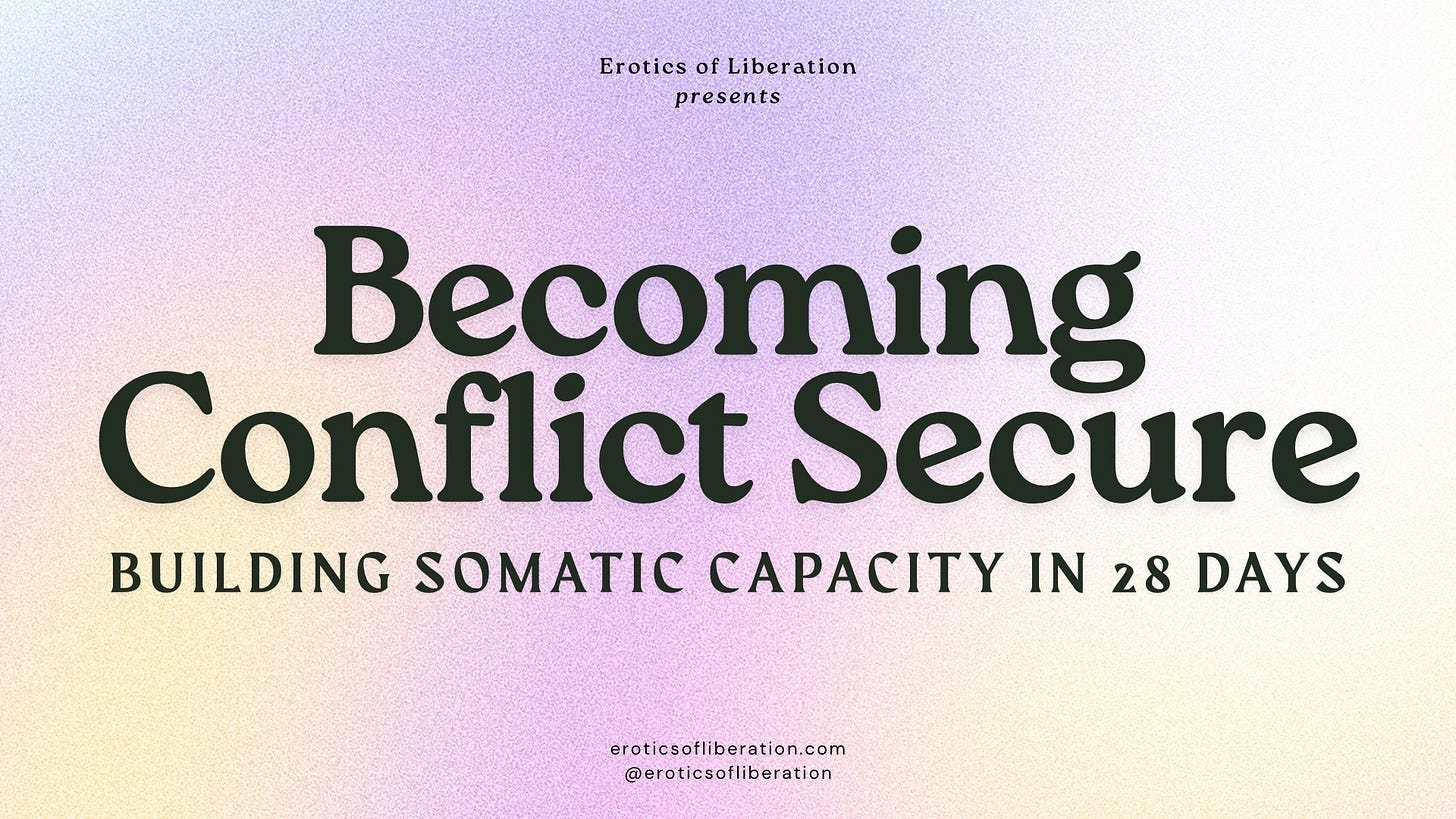
If you want to go beyond reading and actually practice alongside me and a community of fellow cuties, this is the perfect time to join my Substack.
Because on top of accessing all my zines FOR FREE, on September 10, I’ll be opening Becoming Conflict Secure, my very first live course on Substack (free for paid subscribers, usually 47 euros!)
For 28 days, we’ll practice together. Every day you’ll receive a short video, reflection questions, and a somatic practice to help you build the capacity to stay connected to yourself and others during conflict. We’ll also meet me live every week so you can ask me questions and practice in community.
I want to be clear! This isn’t about becoming better at arguing. It’s about becoming someone whose nervous system no longer experiences conflict as a threat to survival.
If you’ve ever frozen, people-pleased, shut down, over-explained, disappeared, or exploded during conflict, I made this for you.
Ok, we are some ways you already practice TJ!
You are committed to building the somatic capacity to hold complexity, so you can stay curious. Curiosity is the opposite of trauma.
When you notice yourself wanting to escalate, you reach for support. You understand that when you’re in pain, escalating will not make the pain subside. In pain, you need more water than fire.
You build friendships that can hold the weight of abolition (meaning: that can survive conflict), because you understand that conflict is the smallest unit of abolition, and if we can’t repair with one another, we’ll keep outsourcing repair to systems of punishment.
So when you’re hurt, you can get support instead of escalating hurt into harm. You understand that you deserve care even when you experience a paper cut; you don’t have to wait for thousands of paper cuts to advocate for yourself!
You refuse to stockpile pain as leverage. Revenge is lazy grief, and if today doesn’t prove that to you, I don’t know what will!
You forgive yourself when you act shitty. You can separate personhood from behaviour.
You practice apologising like you deserve love. It’s much easier to ghost when we’ve hurt someone we love than to face the harm we’ve caused them.
You understand that accountability is a function of dignity. Us having such an impact on people we love only means we matter. Accountability means: I understand that I matter. That my actions, non-actions, words, and silences matter.
You want your wounds to become scars, not worlds you build to keep others at bay. You understand that your wounds, when shared and politicised, do not make you illegible to belonging but are proof that you belong.
You refuse to believe that your mistakes render you illegible to your own dignity (and you believe the same for others), but you understand that abolition does not mean we all have to love each other (yes, you have the right not to like ppl!).
Stay ungovernable,
Care
Comments
Nothing yet. Say the first thing.
Sign in to join the conversation.