
Welcome to The Question Underneath — with Care, my advice column where I sit with your questions about love, conflict, heartbreak, grief, and the strange, holy difficulty of being in a human body.
This isn’t a column about answers. It’s about slowing down long enough to hear what a question is really asking.
In this column I respond to one reader—not to tell you what to do, but to help return agency where it belongs. You can write to me with whatever you’re circling: a conflict you can’t resolve (internal or external), a regret that won’t loosen its grip, a pattern you’re tired of repeating.
Today I’m answering S. who asked:
“I keep wondering what kind of person I would be if it wasn’t for this trauma that happened years ago. I know this question leads nowhere, but it keeps coming back. Is there something underneath I am not seeing/sensing? I feel stuck.”
As always, I’d love to hear your reflections in the comments!!!
Dear S.,
Thank you for asking this question.
Before anything, I have to admit that this question moves my waters in ways I won’t be able to explain, even through words. But I’ll try.
I think it is not only because all of my clients have, in some way, asked me this question, not only because I have asked this question myselves. I think the true reason is that this question is not so much a question, as it resembles some kind of begging.
Before you read this essay, I need you to drop all the associations your brain has formed around begging. The word comes with all the hate we have for ourselves for being so dependent, so vulnerable, in other words: human.
This essay is meant to honor the begging we all carry in our bones. I hope this essay, instead of keeping you more sheltered from life, will drag you just a tiny bit closer. Because it is human to beg.
The only respectable answer to begging is mercy. It is solidarity, it is witnessing, it is acknowledgment. It is heart. It is tissue and flesh.
So I want you to know that every word I write comes from there: from my heart, from my tissues and my flesh.
I don’t have perfect answers to this question. What first comes to my body is a deep sigh.
Like you brilliantly noted in your initial message, this question doesn’t lead anywhere. And those are my favorite questions, because that means we get to wander and arrive exactly where we started: the body, the breath.
When we elongate the breath for more than one second, there is this strange thing that happens: time stretches.
Maybe you know the difference between Kairos and Chronos? Chronos is chronological time. The time of clocks, deadlines, calendars. It is binary (before/after) and it is linear (obsessed with what happens next). In other words, it is quantitive time that is unstoppable.
Kairos is something completely different: it is lived time. Lived as in: being fully alive.
It is the time that opens inside a first kiss. The time that slips through our fingers during a long awaited hug. The time that stretches into what feels like infinity when we’re in pain.
Kairos gives a moment its meaning, its weight, its depth. It is qualitative rather than quantitative. It is not measured by how long something lasts, but by how deeply it is lived.
Trauma, like anything profound, blurs the distinction between the two.
You can probably point to the moment your life changed. When this horrible thing happened. In that sense, trauma belongs to Chronos. It happened at a particular point in time. And yet, trauma refuses to stay there.
It follows us into the present. It colors the way we interpret a text message, the way we enter a room, the way we interpret someone’s voice, the way we read these very words. Something that happened years ago continues to organize what feels possible today.
This is why I teach trauma in all of my courses the same way:
Not because we literally return to the past, but because parts of our nervous system never entirely realize that it has ended. The body keeps asking today’s relationships to answer yesterday’s questions. It keeps looking for the danger that once existed, even when it no longer does.
But there is something else that travels through time, and it’s longing.
I don’t bring up longing as the opposite of trauma, but as its natural descendant.
Trauma introduces us to a world we never wanted to know. At its core, trauma reorganizes our relationship to ourselves, to others, and to life itself. It teaches us to orient around what should never have happened.
I’ve said it so many times here, and I’ll keep saying it: we cannot transform away from something. We have to transform toward something.
Trauma transforms us away from the world we wish had never existed. Longing is the orientation that calls us back toward what trauma uprooted inside us: our agency, our sovereignty, our imagination, our hope.
As Mariame Kaba reminds us, hope is a discipline. I believe what she means is: hope is not optimism, it is a practice. And so hope is work and dedication. It takes a tremendous amount of work and resources to find your way back to the river of hope after trauma. You have to intentionally place yourself in the way of beauty. You have to practice noticing what is still alive. Some mornings you have to get out of your own way, some mornings you have to put yourself in your own way, over and over again, until your nervous system slowly begins to believe that life can hold more than survival.
But this is the last step of trauma recovery. So let me slow this letter down.
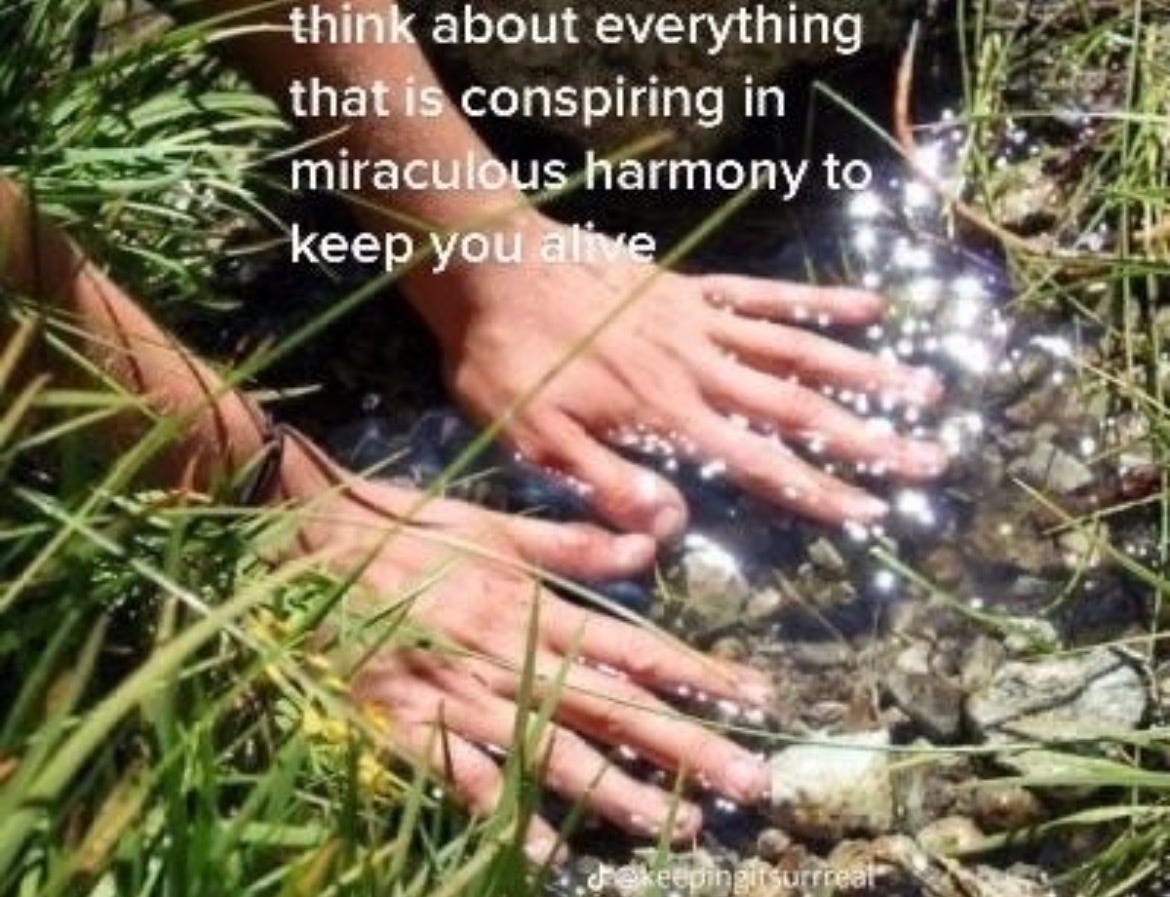
Many trauma therapists argue that recovery often takes a recognizably common shape made of 3 “phases”:
The establishment of safety
Constructing or completing the narrative of the trauma (closing the loop)
Coming back to connection
Let’s go over each one together.
Phase 1 is the establishment of safety, and it is crucial. Without it, there is no path toward healing. It is only from a place of safety that we can begin to face the truth of our own story. our nervous system can only metabolize what overwhelms us when it no longer has to spend all of its energy trying to survive the present. In other words: trauma needs space for distance. Trauma needs time, it needs breath.
Phase 2 is about completing the narrative, which entails going back to the trauma. We often tell survivors that memory is imperfect, as though the goal were to become suspicious of their own sensing body. What I am saying here is almost the opposite. It requires that you believe yourself. That you take seriously every inch of you when it says, This is what it felt like, right here.
You have the right to change your mind. You have the right to remember differently as new pieces emerge. The point of this phase is not to produce a final, definitive version of the story. It is to tell it, so that you can return to it over and over again, allowing it to become more complex each time.
Coming back to the story doesn’t always mean we’ve changed our mind. More often, it means our mind and body can hold more than they could before. Insight can only be downloaded through experience.
The point of returning is—as the philosopher Hermann Cohen said— about making the past known to know yourself as changed.
Writing has always helped me with this part. Once I have written what happened, I can begin asking a different question: What does this mean to me? It is here that I find more of my agency—the very thing trauma tries to take from us. Because while we cannot choose what happens to us, we do get to decide how we respond to it.
Here we are, back to Kairos.
What I keep telling folks in my program is this: what you believed to be true yesterday does not have to be true now. You’re allowed to create the story that heals you and yours.
This is why the questions we ask ourselves matter so much. The nature and quality of our questions determine where our healing lands. The one question that keeps returning, no matter who I’m sitting with is:
Who would I be without this trauma?
Underneath this question I suspect lie other questions:
Can I still become someone I love, even though this happened?
Is my future still available to me?
Has this trauma stolen something that can never be recovered?
Am I condemned to live only in reaction to what happened?
Will I ever get to meet the self that wasn’t organized around survival?
The reason ‘Who would I have become?’ hurts so much is because it is an impossible counterfactual. There is no answer to that question. At least not in this timeline.
If I were working with you as a somatic practitioner, this is what I would ask following this question:
Who do you think you would be without this trauma?
Then I would ask you to write that person down.
Who is this version of you? How do they speak? How do they love? How do they fuck? How do they work? How do they move through the world?
Most of the time, when I ask this question, people’s answers circle around the same longing: connection. They would relate to others differently.
Trauma convinces us that there is something deeply wrong with us—otherwise this wouldn’t have happened—and/or that there is something deeply wrong with the world. We collapse into binary thinking: I am a piece of shit/ every body is a piece of shit.
That is part of trauma. Trauma is binary thinking, it is black or white, it is all or nothing. trauma splits.
Healing, on the other hand, is the slow reintroduction of plurality. It is both/and. It is neither/nor. It is the return of nuance, of contradiction, of complexity. It is our growing capacity to hold.
So let me tell you something that may surprise you:
The list you just wrote is true. It is true because you wrote it down.
You see, abolition unfolds in three movements: dismantling the systems that kill us, imagining the relationships that would make domination obsolete, and practicing those relationships in real time.
Transformative Justice follows the same arc: we stop the harm, we heal and repair where we can, and we create the conditions that make the harm unconceivable to happen again.
When you write down who you could have become without trauma, you are doing something profoundly political:
you’re casting a spell. That spell is called longing.
And here we arrive at the third phase of healing.

Undoing the binds of shame that keep us sheltered from life.
In other words: coming back to connection, where we are meant to live. Trauma does a number on us. Trauma wounds our spirit. It wounds our body. It wounds our relationships. But it also kills by sheltering us from the very thing that keeps us alive: connection.
I’ve said this before, and I’ll keep saying it: Trauma happens in relationships, and so healing has to happen there, too.
There is, however, an important caveat.
While connection can reduce trauma symptoms, trauma symptoms also make support harder to perceive, trust, and receive.
So when I say healing happens in relationship, I do not mean that connection automatically heals us. Trauma can make care feel dangerous, illegible, burdensome, or impossible to receive. It often does.
Trauma is not only painful because it separates us from the world. It is painful because it convinces us that we have become unintelligible to it. That we are somehow no longer worthy of love, of belonging, of being understood. Perhaps this is why we keep turning to the past…? Who would I have become if this horrible thing hadn’t happened to me? But I don’t think that is really what we mean.
What I think we mean is: am I still lovable after what happened to me? Will people still choose me after I’ve changed?
In other words, the grief underneath this question is rarely about the life we lost. It is about wondering whether we have become too changed to return to life at all.
Trauma doesn’t only steal our sense of safety. It steals our sense of legibility. It convinces us that we have become impossible to understand, impossible to hold, impossible to love.
And so we imagine another version of ourselves—not because we truly want another past, but because we are desperately searching for evidence that we are still worthy of a future.
Healing requires relationships that repeatedly make care visible, trustworthy, and receivable, but perhaps even more than that, healing requires our own capacity to receive.
In other words: healing is somatic capacity.
Support can exist all around us and still remain unavailable to our nervous system because we have learned that closeness is what brought us into the light of harm and shame. So healing asks a heartbreaking question:
How do I let people come close enough to support me, when closeness is also what has hurt me?
We long for connection, for being seen, for intimacy. And yet the very thing we need—relationship—is what feels most dangerous. This is the central dilemma of relational healing: we need connection to reconcile with pain, and yet we fear it, because it has also been the site of our deepest wounding.
So, dear S., it requires that you believe me when you read my words: no matter who you could have been without this trauma, you are still worthy of love. You’re always worthy of love. And if you can’t hold the hope for that to be true, I’ll tell you what I love telling my clients most: I’ll hold the hope for you. I’ll hold it until you realize how undoubtedly true it is.
Phase 3 of healing is about coming back to connection—not because we are finally certain that harm will never happen again, but because we have become, little by little, more curious than afraid. It’s interesting how trauma makes us crave certainty. We organize our lives around prediction. We restrain every impulse toward expansion because we believe that if nothing changes, nothing can hurt us.
And for a while, this protection is wise. It can keep us alive. But there comes a moment when protection slowly becomes resistance to the natural order of things: change.
All magic begins with uncertainty. If we already knew what was going to happen, there would be no need for trust, no need for hope, no need for relationship.
You see, the grief underneath Who would I have become? isn’t really about the past. It’s about the future. It’s asking:
Is there still enough life left for me to become someone beyond what happened to me?
As a somatic practitioner, I know that trauma doesn’t only make us mourn what happened. It also makes us mourn the futures it foreclosed—the versions of ourselves that were never given the conditions to emerge.
We’re back to time again. Only this time, it’s as though Chronos is the only kind of time we believe in. Trauma convinces us that because years have been taken from us, possibility has been taken too.
But Kairos tells a different story. Kairos reminds us that while trauma can certainly steal years from our lives, healing can open up just as many years. Not by returning us to who we were, but by allowing us to become someone we could never have imagined while we were surviving.
When you heal, you do not heal only for yourself. You heal for the versions of you that never had access to this kind of care. You heal for your ancestors, whose wounds had nowhere to go. You heal for your descendants, who may inherit a little less fear because you chose to interrupt its transmission. You heal for those who, in this timeline, will never have access to healing.
You heal for all of us.
Because healing, like trauma, has always been collective.
PS!: While writing this piece, I came across another Greek way of understanding time: Aiôn. I had never heard of it before!!
Unlike Chronos, which measures time, or Kairos, which gives time meaning, Aiôn refers to the rhythm of existence itself. It is cyclical time—the time that endlessly returns.
Aiôn means: the changing of the seasons, the rhythm of the breath, the tides, day becoming night, and night becoming day. Aiôn also means the victim becomes the oppressor and history repeating itself over and over.
Aiôn reminds us that life does not move only in straight lines. It moves in cycles.
We don’t get to leave our pain behind, there is no redemption from the past, but we get to meet it differently each time it returns. We have a choice to integrate pain instead of letting it rule us. So I hope that when this question returns to the shore of your skin, you meet it with a deep, long awaited breath. You meet it with a bigger sense of possibility than fear.
I am in solidarity with you, dear S. !
And here are some songs that really help when this question finds the shore of my skin. Music for me is where I integrate most of my healing, along with moving my body. Believe it or not this is what I listen to while pushing the heaviest weight I can lol!
Sending big care your way!
Have a question for Care?
Just fill the form here.
Include your question with the information you believe is necessary for me to answer thoroughly. Make sure to offer up a pseudonym, or indicate the name you’d like me to answer to as well as your pronouns.
What I love to answer:
The question you can’t stop thinking about, the one that keeps coming back to the shore of your skin
The question you keep avoiding.
Those are usually the ones that matter.
A few things to know before you send:
I may lightly edit questions for clarity or length, but I’ll keep the heart of what you’re asking intact.
Make sure to offer up a pseudonym, or indicate the name you’d like me to answer to as well as your pronouns.
Although I do read each one, I probably won’t be able to answer all of them. If I choose yours, I will answer with all the information and heart life allows me to access in this present moment.
What This Column Is / Isn’t
This column is:
reflective, relational, somatically informed
grounded in accountability and abolitionist care
oriented toward agency rather than reassurance/validation for the sake of it
This column is not:
quick fixes
moral judgment
therapy
crisis support
advice about who’s right or wrong
a place for public shaming or surveillance
If your question feels unfinished, uncomfortable, or hard to phrase, that’s usually a good sign.
Stay ungovernable, and thank you for entrusting me with your question,
Care
Comments
Nothing yet. Say the first thing.
Sign in to join the conversation.