
When I was probably in the second grade, my grandpa asked me what I was going to do over the summer. I shrugged and said, “I don’t know, probably sit around and watch TV.”
He laughed.
I say “probably” because I have a horrible memory when it comes to the timelines of my childhood. I only remember this in the first place because I was never allowed to live it down. Even now in my 30s, it gets brought up.
But 7-year-old (ish) Erin was on to something. She was, in fact, ahead of her time. Because even then, I understood what seems to now be on everyone’s lips.
Hot girl summer, tomato girl summer, jam girl summer, rat girl summer, goblin girl summer, brat summer… Call it what you want, but they all point to the same thing: a summer of doing jack shit. Whether it's lying in the sun with nectarine juice running down your forearm, sipping Aperol spritzes and eating bread dipped in olive oil on the Amalfi coast, or waking up at noon in last night’s make-up, the sentiment is the same—the goal for our summers is to just exist. To rest. To be a little messy. To be unencumbered by… anything. To drop the masks that we tirelessly work to maintain and just be.
But this year, in the year of our Lord 2026, we’re not trying to hide the fact that we want a break behind the facade of an aesthetic with some cutesy name like “strawberry girl.”
No.
Frankly, we’re too tired for that.
This year, the trend I’m seeing play out is a cut-and-dry, no two ways about it hedonistic summer. And that might not exactly be a good thing.
For the last few years, wellness has looked and felt more like a Silicon Valley start-up, full of metrics, KPIs, and, of course, optimization. People have been in deep, tracking every metric, consuming endless amounts of information, spending every available (maybe even unavailable) dollar on supplements, programs, gadgets, subscriptions, and memberships, all in pursuit of their “best selves.” And it’s looked and felt like a Silicon Valley start-up because… it kind of has been.
The “quantified-self” movement was a version of wellness that tech-bros could understand and get behind. At long last, the nerds could become jocks. They realized that the more optimal their health was, the more productive they could be, giving them an important edge in the increasingly competitive tech world. Through meditation apps and sleep trackers, they could stave off burnout and just… keep going. Wellness as a means for crushing the competition. Naturally, a lot of capital got dumped into the health tech space, and that same ethos got passed down the consumer pipeline to us—be healthy so that you can keep working.
But now, the self-quantification that was intended to prevent burning has people going down in a blaze of glory from the sheer volume of things they’re supposed to do (which is really telling about American work culture, if you ask me).
As a result, people are throwing their Oura rings into the sea (metaphorically) and paring down their supplement cabinets in search of the one very important piece they missed while they were busy tracking: pleasure.
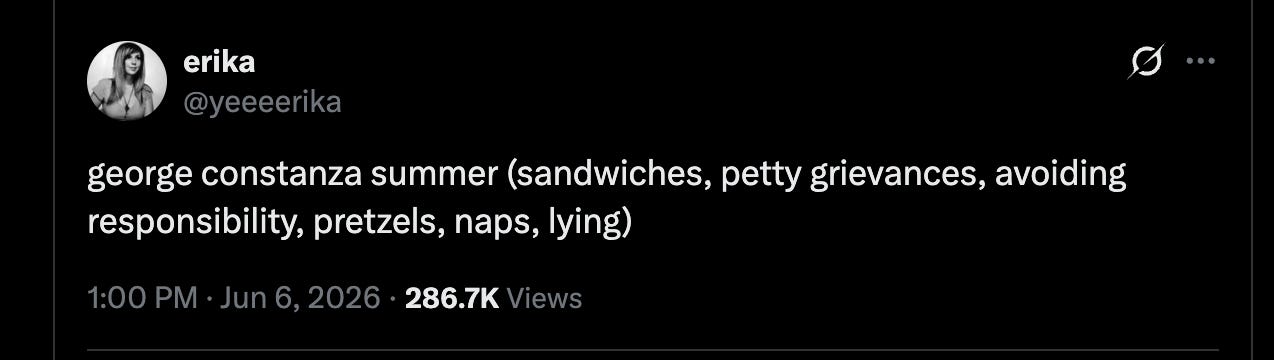
Over the past decade and a half, research about how stress, loneliness, and isolation are some of the highest risk factors for all-cause mortality has elbowed its way to the forefront of the wellness conversation. Starting with a meta-analysis done by Dr. Julianne Holt-Lunstad in 2010 that produced the famous stat that lack of strong social bonds and prolonged isolation results in the same mortality risk as smoking 15 cigarettes a day. Then, in 2015, Dr. Robert Waldinger from the Harvard Study of Adult Development—the longest running longitudinal study in history—revealed that the chief finding from the study thus far is that joy and community are the most important factors for living a long, healthy life.
And because research takes 10-20 years for research to become mainstream, in 2026, the time is ripe for pleasure to take over the wellness sphere.
As the person who coined the “post-wellness era,” I think it goes without saying that I not only saw this shift coming a mile away, but am wholeheartedly here for it. The realization that being so obsessed with our health is costing us the things that make us actually well is hitting escape velocity. As a result, people are taking rest, socialization, and fun more seriously.
That said, if you look deeper, there are some less-than-rosy, even insidious dimensions to this trend that are worth taking a closer look at.
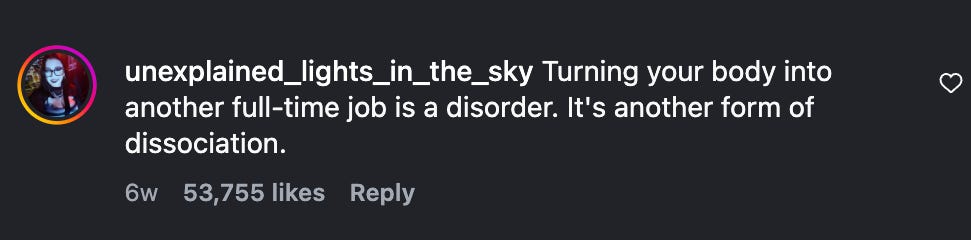
People gravitated towards optimization, at least in part, as a reaction to an unstable climate—a way to feel a modicum of control in a world that often feels like it’s coming off the rails. But now we’re too tired and burnt out from it all to keep up the performance. Optimization is about delayed gratification. But when the future is so uncertain—when you’re actually unsure if you’ll even be able to reap the benefits of your hard work—it’s hard to know what you’re even optimizing for. Might as well enjoy what we can now, lest it all turns to shit soon. The scent of sweaty towels being thrown in is in the air. Resistance feels futile. People are kind of… giving up.
But dive even deeper, and we find that “hedonistic summer” might not even be a rejection of optimization culture, but rather, its mirror image. “Unoptimizing” on purpose is being performed as a lifestyle brand—just the next rung of the wellness ladder. If slowing down, being stress-free, and fostering deep connections is what we’re learning the deepest layer of wellness is really about, then it comes as no surprise that wellness influencers are now posting themselves eating croissants post-run instead of their Strava stats.
In his 1997 book The Conquest of Cool, cultural critic Thomas Frank argues that the 1960s counterculture wasn’t simply a grassroots rebellion against consumerism, but was actively encouraged and absorbed, and even started by corporate advertising, which discovered that rebellion itself could be marketed. When mainstream movements start to fall under scrutiny, capitalism isn’t obliged to keep the order. Instead, it sells the differentiation. Counterculture is a powerful market engine.
When the Global Wellness Summit listed “over-optimization backlash” in their 2026 trend report, it wasn’t just an indicator of human behavior—it was a signal of a burgeoning consumer market. Corporations have no prerogative to beat you, so they join you—or rather, convince you to join them and make you think it was your idea. If it’s profitable, they’ll sell it. And since, at the end of the day, consumption is one of the ways we express ourselves, we’ll buy whatever aligns with the identity we’re trying to project.
Grinding is no longer aspirational. Being over-optimized is gauche. Slowing down and having time to relax and enjoy yourself has become the new mark of affluence. As a result, things like IRL events, travel, and things that add a layer of friction, like film cameras and wired earbuds are coming at a premium. Campsites and backcountry passes are increasingly difficult and competitive to nab. Things that used to be incredibly plain and democratic now cost a pretty penny. It’s no longer enough to hang out on a beach in Santorini. Now, only a small island with no tourism infrastructure will suffice. Brands, from skin care, to beverages, to olive oil, to cookware, to running are increasingly leaning in to hedonistic, analog, leisurely—dare I say aggressively human—iconography in their ads.
But just because companies are finding ways to capitalize doesn’t mean the backlash is fake or that the resistance is insincere. Wellness and optimization place all of the responsibility onto the individual. But we’re collectively waking up to the role that systems play in our well-being. How certain things work against us by design. How we wouldn’t have to try so hard if we had some social support. When the fish is sick, you clean the tank—you don’t blame the fish. There’s freedom in realizing that and relinquishing some of that personal responsibility. We are social primates. It can’t all be on our shoulders and our shoulders alone.
Ultimately, there’s a balance to be struck. We cared about our wellness in the first place because we live in an environment that doesn’t exactly lend itself to the dolce far niente lifestyle. Wellness absolutely has its place.
Every action has an equal and opposite reaction. When wellness hit so aggressively a few years ago, anyone who’s ever seen trend cycles play out would’ve predicted the pendulum swinging this way. Eventually, though, the momentum will slow, and most people land somewhere in the middle. There is a place for wellness, and a place for fun.
Enjoy this piece and want to support my work, but don’t want to commit to a subscription? I get it:
Comments
Nothing yet. Say the first thing.
Sign in to join the conversation.