
Almost every gardener I know has one plant in common: chives. You plant them once, they self-seed (everywhere, unless you intentionally keep them under control), and they come back year after year. But they hardly ever get used beyond maybe sprinkling them over a baked potato…once.
And then there are their sweet, almost storybook-like flowers. Delightful purple pom poms that attract all of the bees.
Both parts are edible, and are hardy in even the coldest of growing zones. They require almost no care and keep on giving for months. Maybe you have some chives growing in the corner of your garden, and every year you tell yourself you’re going to make more use of them. But maybe you don’t know where to start or what to do?
Here are some fun and easy ways to put both chives and chive blossoms to work in your kitchen.
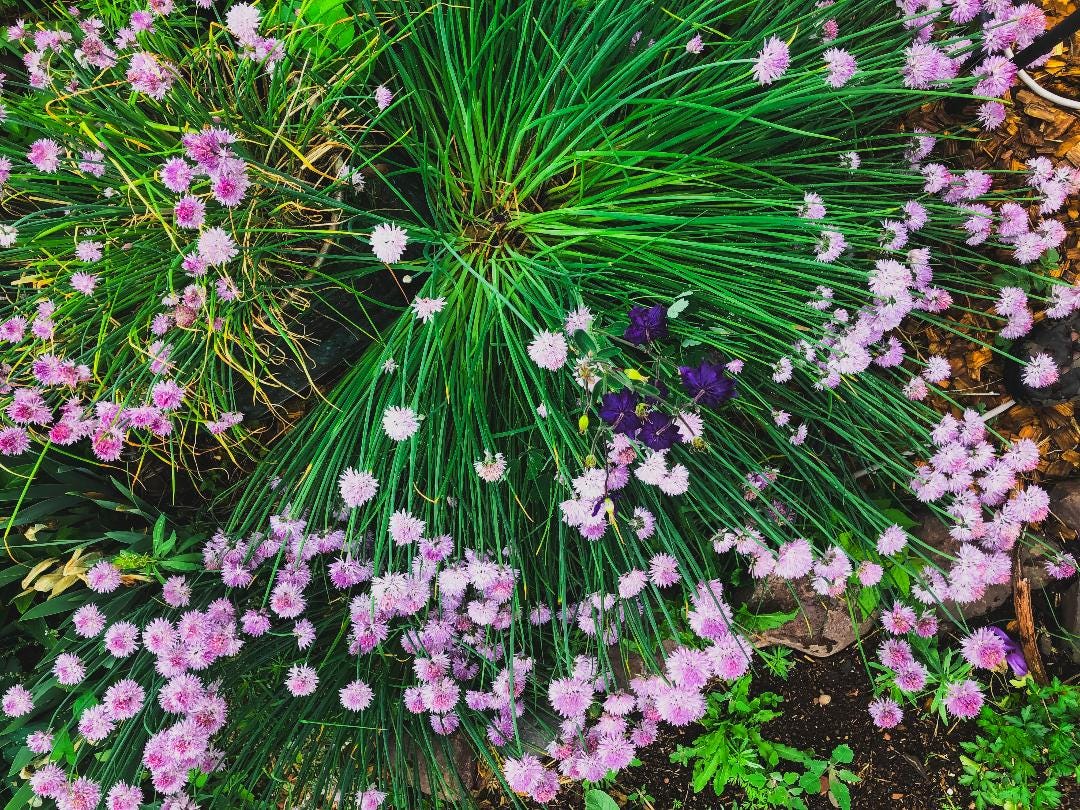
One of the prettiest vinegar you can make is chive blossom vinegar. Simply fill a jar with fresh chive blossoms and cover them with white wine vinegar or apple cider vinegar. Let it steep for one to two weeks before straining.
The result is a gorgeous pink vinegar with a mild onion flavor that is perfect for homemade salad dressings. Use it in place of other vinegar in you vinaigrette.
Simple, classic, and for good reason. Fresh chives add just enough onion flavor without overpowering the eggs. If you don’t love the texture of onions in your scrambled eggs but love that bit of flavor, chives hit the spot.
There are so many ways to make compound butter, and chive compound butter simply cannot be overlooked.
Mix finely chopped chives into softened butter, add a bit of salt, roll it into a log, and refrigerate. Once firm, slice into 1/2” thick slices, wrap, and freeze. A slice melted over grilled meat, vegetables, fresh bread, or baked potatoes feels luxurious for something that takes less than five minutes to make.
Fresh chives instantly elevate homemade ranch dressing.
Fresh or dried chives, combined with parsley, dill, garlic, and sour cream, creates a dressing that tastes far fresher than anything you’ll buy at the store.
One of the easiest herbs to preserve, so there’s no excuses not to! Simply chop and freeze in airtight containers or freezer bags. Unlike many herbs, chives hold their flavor remarkably well in the freezer.
This one is a favorite for sure. Blend fresh blossoms with coarse sea salt and spread the mixture on a tray to dry. Once dried, pulse it briefly in a food processor. The result is a beautiful finishing salt that looks just as lovely as it tastes.
A handful of fresh chives scattered over potato soup, chicken soup, or cream-based soups adds freshness and color. It’s the finishing touch that makes a simple meal feel just a little bit elevated.
The blossoms separate easily into dozens of tiny edible florets. Their mild onion flavor pairs beautifully with spring greens and makes even a simple salad feel special.
Similar to compound butter, but using the blossoms instead of the leaves. The purple flecks create a beautiful presentation on homemade bread.
Fresh chives folded into cream cheese create an easy spread for bagels, crackers, sandwiches, or vegetables. This is especially good with homemade sourdough bread.
If there was ever an herb meant for potato salad, it might be chives. Their gentle onion flavor complements potatoes without overwhelming them.
Mix chopped chives into savory bread dough, biscuits, or dinner rolls. The flavor becomes more subtle after baking but adds wonderful depth.
This might sound unusual, but chive blossom jelly is surprisingly delicious. The finished jelly has a delicate savory flavor and pairs beautifully with cheese and crackers.
This was the first thing I ever did with chives, back in my early days of gardening. A generous handful of fresh chives turns ordinary mashed potatoes into something extra special and delicious. Add butter and cream cheese, and you’re set.
A small sprinkle of chopped chives or blossoms makes deviled eggs look beautiful while adding flavor. Perfect for spring gatherings and potlucks.
Whether it’s onion dip, spinach dip, or a simple sour cream dip, fresh chives add brightness and freshness.
Chives pair beautifully with other spring herbs. Combine them with parsley, dill, thyme, or tarragon to create custom herb blends for cooking and dressings.
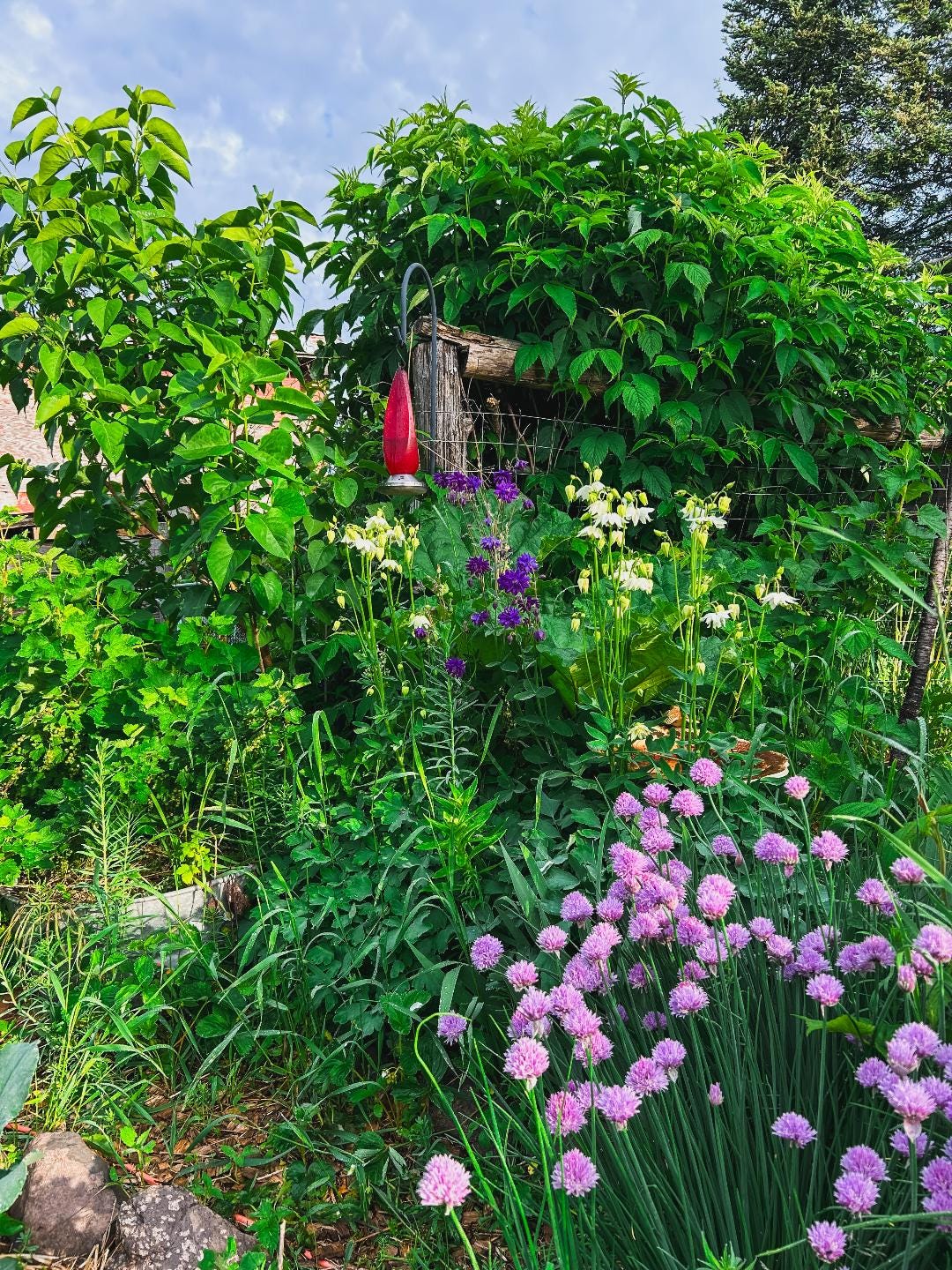
Not every use has to happen in the kitchen. Chive blossoms are one of the earliest and most reliable nectar sources in my garden. Honeybees, bumblebees, butterflies, and countless beneficial insects flock to them every year. Sometimes the best use for a flower is simply letting it bloom.
If your clump has become crowded, spring is the perfect time to divide it. A single established plant can become several new ones in just a few minutes. They transplant easily- and you’ll have more chives for yourself and plenty to share with friends.
In a garden focused on food production, it’s easy to evaluate every plant based on how much it yields. And while we want to make the most of our efforts, I want to say that it’s okay if you can’t get to everything. There’s inevitably always something that seems to fall to the wayside.
Chives and chive blossoms can simply be enjoyed for their beauty, too.
And sometimes, beauty is enough for the season.
I hope that this list has given you a few new ideas to try this year. I’ve found that having some fresh inspiration helps motivate me to actually use what I grow- and to have fun while I’m at it.
Now tell me: what are your favorite ways to use chives and their beautiful blossoms?
See you again soon, my friend.

Comments
Nothing yet. Say the first thing.
Sign in to join the conversation.