
This is part 2 of a series. You can find part 1 here…
I planned to go to Clyde’s house the next day, around six, when a Happy Hour visit meant no commitment, but also left room for more, like two drinks, or dinner, or even a night out. I tried on several different outfits, brushed my teeth, put on cologne, and combed my hair, not knowing what to expect, but having high expectations; a true foreshadowing for disappointment.
Clyde’s doorbell was reminiscent of a poppier version of Westminster Abbey, the E,C,D, and G notes echoing against the arching Murano stain-glass windows then tinkling upward through the four stories of his canal-house. There was also an obsidian haptic sensor and a keypad, neatly installed into the polished limestone doorway. A video-camera, high-above, in a domed eagles nest, glibly recorded my unease… the same camera, which no doubt, had recorded the demise of my bakfiets.
When the Westminster notes ended, an electric grinding followed, like a drill boring into a sea-bottom. A 17th-century, foot-long bolt was being pulled aside by an electric motor. I knew this because the bolt in my own front door, one which took considerable effort to move manually, extended well into the wall, a design intended to keep homeowners safe from pro-William of Orange torch and pitchfork-wielding mobs.
Clyde opened the massive door wearing a pastel version of his torn rockstar jeans and a shiny FC Barcelona jersey. He looked harried, surprised, and not necessarily pleased to see me.
“Hello sir,” he said in his usual squeaky voice, clenched consonants drawling out vowels. Calling me “sir” had the same false modesty as when he said he said he had bought a “small” house.
“I thought I’d stop by. You said…”
“Oh shit. Right. Sorry. Sorry. Soooorrry. I was just all working on this…” He waved away something imaginary behind him. “Never mind. Come in, come in. Come in.” He bowed like a servant as I stepped into his foyer.
I suddenly felt awkward, as if maybe Clyde had been doing that distinctly American thing of telling people he wanted to spend time with them when really he didn’t.
“I don’t mind coming back. I only live two steps away.”
Clyde yelled “SARAH!” and muttered nervously, “I need to rush up stairs, but I’ll be back once I finish.” He touched my shoulder with his palm, then turned and bolted up the stairs. “Ah, man, I’m glad you are here. I can’t wait to give you the tour.”
There was a seven-foot high steel sculpture in the foyer; a Picasso-meets tin-Native American medicine man dancing to the gods of cultural appropriation and arts-related tax loopholes. Behind the sculpture was a large mirror, the kind that makes everything in the room look bigger, including my fraudulence because, in reality, there was no connection between me and Clyde except our nationality which, to be honest, we also shared with 300-some-million other people. I was his neighbor, sure, but my rent was probably one-thousandth of his mortgage and, unlike him, I was worried if I could pay it next month.
Still, being near Clyde’s money filled me with the kind of gooey self-assurance that all American kids have; that I too deserved this kind of wealth and that I was only a few steps away from achieving a similar financial success. It was that same innate American blank-slate of self-assurance, like untouched Play-doh straight out of the bucket, a colored lump molded first by our wishful parents who said we could be anything we wanted through the sheer will of our unique character, then reinforced through the relatable, underdog-hero in Hollywood television and movies, and finally an unrelenting, ungrounded, and unfounded onslaught of saccharine optimism repeated exponentially through commercials, inspirational posters, corporate lingo, and relatives or friends so broken that they deferred to the positive out of survival and demanded we did the same. The truly sad part was that, over the years, that same self-assurance accumulated and infected a significant portion of the population so that skeptics became the minority, and people like myself, who were hitting middle-age without having even a sliver of that promised success, and who lacked the tools to come to terms with their failure, felt as if they were entering a kind of self-esteem hospice, where society was still encouraging me to “do me” while reality was showing that no one cared if I “did me,” because “doing me” was about as relevant as a quirky squirrel that found an ingenious way to climb a bird-feeder or a caged lizard that occasionally dipped his head in his bowl of water.
Thankfully, outside, a bike went by, its wheels and bell clanging on the cobblestones and drawing me out of a dark spiral of thought. Then, like a pharmaceutical advertisement for a new SSRI, a beam of sun found its way through the omnipresent Dutch clouds and through Clyde’s stain-glass windows, casting blue, maroon, and green speckled fragments upon the white marble floor in such a beautiful pattern that I briefly lost my breath.
Several of Clyde’s shoes were lined against the wall and while most Dutch people, groaned and complained about having to take their shoes off in a house, this small custom made me feel at home. As I set my shoes next to Clyde’s, I heard a voice. I turned and saw an attractive woman whose style was distinctly Europe meets Colorado, a sophisticated-crunchy: blonde hair pulled into a peppy pony-tail, a rock-climbing-club t-shirt, fitted black jeans, and running/hiking shoes. She had a reluctance to her greeting, as if she, like Clyde, had also been working on something important; most likely attending to her vast, international staff, chair-womaning boards, making far-reaching executive decisions, but now was forced to entertain a neighbor from Colorado whose significance was tied to geographical coincidence.
“I’m Sarah. Clyde just texted me to show you the house.”
This first disappointment cracked my smile. We shook hands, hers smelling of exotic soap.
“I can also wait until he’s done,” I said, sounding a little too hopeful. She countered my suggestion with a quick eye-roll and dismissive glance up the stairs.
“Cyber-security, according to him, never sleeps.”
“Oh right,” I said, swallowing this new discovery under casualness. “Sure. This renovation, by the way… I watched every step from my window. Was great procrastination material.”
“Thank god you’re not upset. A lot of the neighbors complained. Some of them. Wow. It’s nearly impossible to sue in the Netherlands otherwise we wouldn’t be standing here. You been living here long?”
“This neighborhood?” I pointed at the ground. “Oh, not long. I used to live on the east side. After my divorce, I moved here. Close enough to my kids, but far enough from my ex.”
I asked how Sarah had met Clyde and she told me they had only met a few weeks ago, online. After dating one week, they had flown to Ibiza on a private jet. She had become a lawyer because she grew up poor, but admitted that her salary was not nearly enough to pay for the suite Clyde had rented near Talamanca beach, looking over a parking lot of super-yachts.
As we toured Clyde’s house, Sarah unspooled details like a walking Wikipedia-page and with the confidence of a real estate agent, telling me the house was built in the 1600’s right outside the Amsterdam walls and how, at the time, had the highest murder rate in the world. The wealthy, she said, dug tunnels to get from their homes and back inside the Amsterdam walls.
“I love that they barely tax their wine here. Clyde turned his tunnel into a wine-cellar. He filled it up in like a day.” When we came to a new, gleaming steel extension buttressing the back yard, she said, “Clyde kept as much of the house as he could, but there was a lot of asbestos so things had to go."
“Asbestos?”
Sarah gave me a thin, opaque smile and continued on, telling me how the exposed wooden beams in the ceiling were constructed of four-hundred year old Baltic fir, the roof tiles from ancient Siena, and a few extremely thin, leaded and crown glass windows from Elizabethan London.
"There’s even a window here based on Sir William Cecil’s home in Lincolnshire. He was Queen Elizabeth’s chief minister. I mean, really, I didn’t know that until recently either.” She winked. “But I sounded smart saying it, didn’t I?”
There was a music room with a $10,000 record player, but only had a handful of records. A sauna, parallel to a narrow hallway, that could barely fit one person. A workplace built entirely of soundproof glass, but with no desk or chair. A top balcony patio with no view.
Clyde’s first floor kitchen was for cocktails, the kitchen on the second floor for parties and snacks, and the real kitchen, on the third floor, looked like it had never been used. It was half-the size of my apartment with every imaginable appliance, most of them hidden behind glossy-white panels. Sarah opened them one by one, exposing Gaggenau ovens, a JennAir microwave, and a $250,000 Moley Robotic arm which, through a voice command, according to Sarah, could perfectly poach an egg.
Clyde usually made s'mores and hamburgers, she told me, American fare that seemed anomalous with the high end renovations.
The bathrooms were replete with rich, opulent styles designed to fit a certain theme. Sarah explained them in detail, including the specially imported toilet paper and scented hand soaps to match each theme.
Clyde’s house was similar in concept to how I imagined it, while, at the same time, constructed altogether differently. The slabs of marble, brought in on pallets by workmen shouting in Italian, was not only on the floor, but also part of the ceiling trim. The mahogany staircase, which had been lowered in carefully by crane, was not at the base of a grand foyer, but against the wall, leading directly into the ceiling. The wallpaper that had been delivered in a little blue Fiat with Kravat written on the side, lined the walls of stairway, almost out of sight. The tile dumped by a fuming delivery truck with Marazzi on the side was in the third floor hallway. The art on the walls, which had been transported by several black Mercedes vans, was less obtrusive, more exquisite than the stamped plywood-crates suggested; abstract enough not to challenge perception, but clear enough for the viewer to feel as if they understood the high price-tag attached to the abstraction.
It had the atmosphere of a fancy hotel where the design emoted luxury, but the actual style-choices remained harmless and inoffensive; nondescript wood-paneled walls, dark mahogany cupboards, marble side-tables, ageless, gilded furniture with embroidered, patterned silk. The only thing that shocked me was a mounted elephant tusk which Sarah was quick to point out had been killed during the time of King George IV.
I asked Sarah how she knew so much about the house and she told me that Clyde had given her access to his interior decorating account.
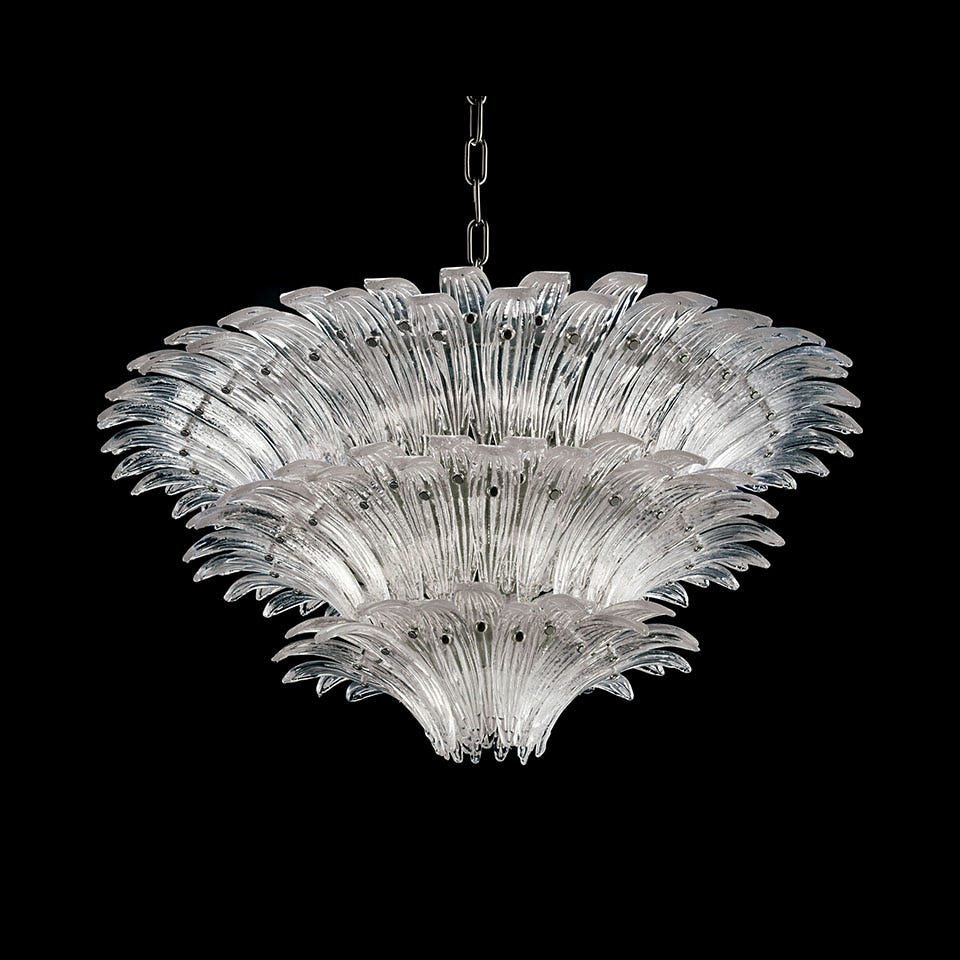
“I used to sell lights,” she said with a quick, embarrassed shrug. “One day he asked me to order some nice lampshades, but I had no experience in buying $30,000 chandeliers.”
Sarah invited me into the living room and offered me an American microbrew that was rare in the United States much less Europe. We chatted about Colorado, honing in on our favorite places; she Breckenridge and me anywhere in the San Juan mountains. We both loved Casa Bonita.
She had had much of the same experience in Europe as I had; dinner parties where conversation forced her to reluctantly defend a homeland that she felt more comfortable critiquing. Her older brother had lost a foot fighting in Kabul and she was angry about the war, but the self-righteousness and often cruel accusations leveled against the average American soldier by anti-war Europeans had left her prematurely leaving a party more than once.
“Bush will never go to the War Crime Tribunal here in the Hague,” she said, “but if he does make sure to get me tickets.”
We bitched about how easily Europeans conflated sophistication with intelligence or how the vast American Military Industrial Complex had given them the financial freedom to build their vast 5-Week-Vacation Complex. I was careful not to let the “expat conversation” run too long because while they might start out therapeutic, they inevitably left me in an existential funk.
As if he had been listening in, which would have been easy in his fiber-optic cable-wired house, Clyde came down and poured himself a Baileys on ice.
“You two are really, really hitting it off.”
He giggled at what he perceived was the awkwardness of the question, even though he had so obviously intended it to be awkward. Clyde took out an iPad and began fidgeting with the lights and music and just when he seemed settled, popped off to grab something, returned a few minutes later, and asked us our opinion about whatever change he had made. Clyde's nervous energy, as if he couldn’t settle his thoughts, interrupted our three-way flow. Eventually, Sarah excused herself to make a phone call.
“Hey,” he said somewhat secretively, watching Sarah turn a corner. He pointed at two small holes at the bottom of my t-shirt. “You have those holes too. See mine? You know where they are from? Slouching in your seat and rubbing your shirt against a desk. I’m a real sloucher. You sit at a desk all day like me, huh? What do you do for living?”
“I try to write.”
He sat up with a jolt. “A writer. I didn’t think they made those anymore. Anything I’ve heard of?”
I told him about the articles I had written and the one novel. He checked his massive iPad and found my book, found pictures of me, and, as I waited awkwardly, cyber-stalked me. I knew it was far from impressive, but he gushed anyway;
“This is great man. Really great. A writer. Living right next door. And you’ve written a lot. Wow.” He sounded like someone who was enamored by the idea of a writer, but never read. He set the iPad down and asked, “So what do you think of the place?”
“It’s amazing,” I said.
He was sitting close, like we had been friends for years, and that hot feeling of validation that I had when we first met, dropped right back into my chest. I was close enough so see bony ridges of his nose crested by cartilage under translucent skin. His breath smelled of bottom-shelf chocolate liqueur, his shirt a mixture of body-odor and expensive cologne. Clyde had a two-day stubble that wasn’t uniform on his face, specks of white and silver hair loitering mostly under his chin and nose. He looked tired, but wired, asking questions not so much for the answers, but for a subversion so as to study me.
“Which room was your favorite?”
“Oh,” I said. “Um. I like them all.”
“Tell me one.”
“Well…”
“You should meet the interior decorator sometime. I’ll have her over. Great lady. She has her stuff in all sorts of magazines.”
He tapped his hand against my belly lightly. “You’re my first guest, buddy. That’s so cool. Tell me something you really, really liked. I mean that you would have in your own place.”
I pretended to think only to buy time. When my pretend pondering time was up, I blurted out the first thing that popped into my head.
“The bathrooms. I like how they all had really creative and distinct themes, like the toilet paper, ehm, the different ply and color and…”
Clyde waited and listened and nodded, his eyes falling on my lips then back to my eyes then to my chest. For some reason I just went on lying and lying and lying, unashamedly flattering, stroking, even when Clyde began checking his phone and I didn’t need to lie anymore… I still kept lying.
I was well aware that fiction required reflection and the internet rapes reflection, but I had stupidly convinced myself that fiction could be married with the online universe. I made fake Facebook accounts, complex stories on Twitter, blogged endlessly, all with nominal success. Even my online dating profile, Daniel Deronda, was replete with rich literary references such as long, contemplative river walks with Virgina Woolf.
Unsurprisingly, only one woman showed interest. Her profile name was Anniek, a Dutch reference that I didn’t understand nor could I find through Google. Anniek, jaded by the online romance scene, had set all the dating app filters to the highest levels of rich, good-looking, and intellectual. When I was the first and only one to come up she wrote me;
“With a profile name taken from a George Elliot novel, I can only assume you live with a hundred cats.”
“If you are disappointed now,” I said, employing self-deprecation, which usually charmed young, independent women, “wait until you meet me in person.”
Anniek rolled good-humoredly into the deception, young enough to convince herself that my gross dishonesty was endearing. Her real name was Janine. She had grown up in the somber north of the Netherlands and embodied a rare millennial sagacity that felt strangely grounded. She refused to be drawn into my verbal hooks and her bemused silences to my more provocative comments came as chirpy, judgmental retorts.
“Do all American Gen X divorcees lack charm?”
Janine arrived at our first date wearing slim jeans, a white, worn t-shirt, and a European version of cowboy boots which were more like pointy-toed moccasins. She was Dutch, tall of course, blonde, and blue-eyed. She was ten-years younger than me and her willingness to date an older, struggling expat writer recently divorced and co-parenting, was a sexy blend of maturity, naiveté, and masochism.
She was beautiful in an unusual way, her forehead and eyes spaced just right so that, between blinks and frowns, I believed I could see her thoughts coming as morse code. However, Janine had a busy energy about her so that just when I thought I was connecting, she slipped away under a broad, flirtatious gesture that could have involved me or anyone in the room.
After we ordered beers and chicken skewers with peanut sauce, we began arguing about Israel. She had said something along the lines of if Israel had never been put in the middle east, the world would be a much more peaceful place, a comment in which I pretended to choke on. She smiled curiously at my dramatics, as if this date was turning out to be everything she had imagined and worse.
“Anti-semitism is part of the European DNA,” I said, swizzling my third beer. “It’s scientifically proven.”
“You know what tying idealism to genetics is called? I’ll give you a hint. It starts with an ‘F'.’ It ends with ‘ism.’”
Janine, like every other Dutch person, claimed that she wasn’t anti-semitic, but, at the same time, didn’t like Israel’s politics. I told her, like I had told so many Dutch people, that Israel and Jewishness were inherent, and that, as a Dutch person, with a sordid history of treating the Jews poorly, perhaps she should reign in her flippancy a wee bit.
“We’re having a discussion,” she said. When I shook my head, she asked, “What are we doing then?”
She told me about her travels across Africa, alone, and a horse she had ridden five-days a week, while growing up. She was well-read, but I could see, when I threw out names of authors, she became quietly insecure. So we drank more beer, argued about politics, and wound up kissing, inside and outside of the pub. When she wouldn’t let me go home with her because it was our first date, I grumbled, “It’s not very European to let some vague, prudish guideline overrule your throbbing desire?”
“Maybe going home with you isn’t even close to a ‘throbbing desire.’”
“Well, I’m too old and been through too much the last few years to put up with a three-date rule.”
“Are you always this obnoxious?”
“You should see me after the third date when I’ve already gone home with you.”
“Impressive.”
“Really?”
She shook her head. “No. But you are lucky that I have always been attracted to assholes."
Janine kissed me again and whispered that if I kept up acting like a klootzaak, I’d never go home with her. I wasn’t sure why I had acted like a klootzaak or an asshole over the course of the evening. I was supposed to be a gentle, thoughtful avatar on a first-date, not a caustic, stay-true-to-my-opinions boor.
As I biked home, I felt something I hadn’t felt in quite some time, something before my ex, Marieke, and the kids, had come along, something I hadn’t felt since I was living in New York. I wasn’t sure why I had tried to blow it.
Comments
Nothing yet. Say the first thing.
Sign in to join the conversation.