
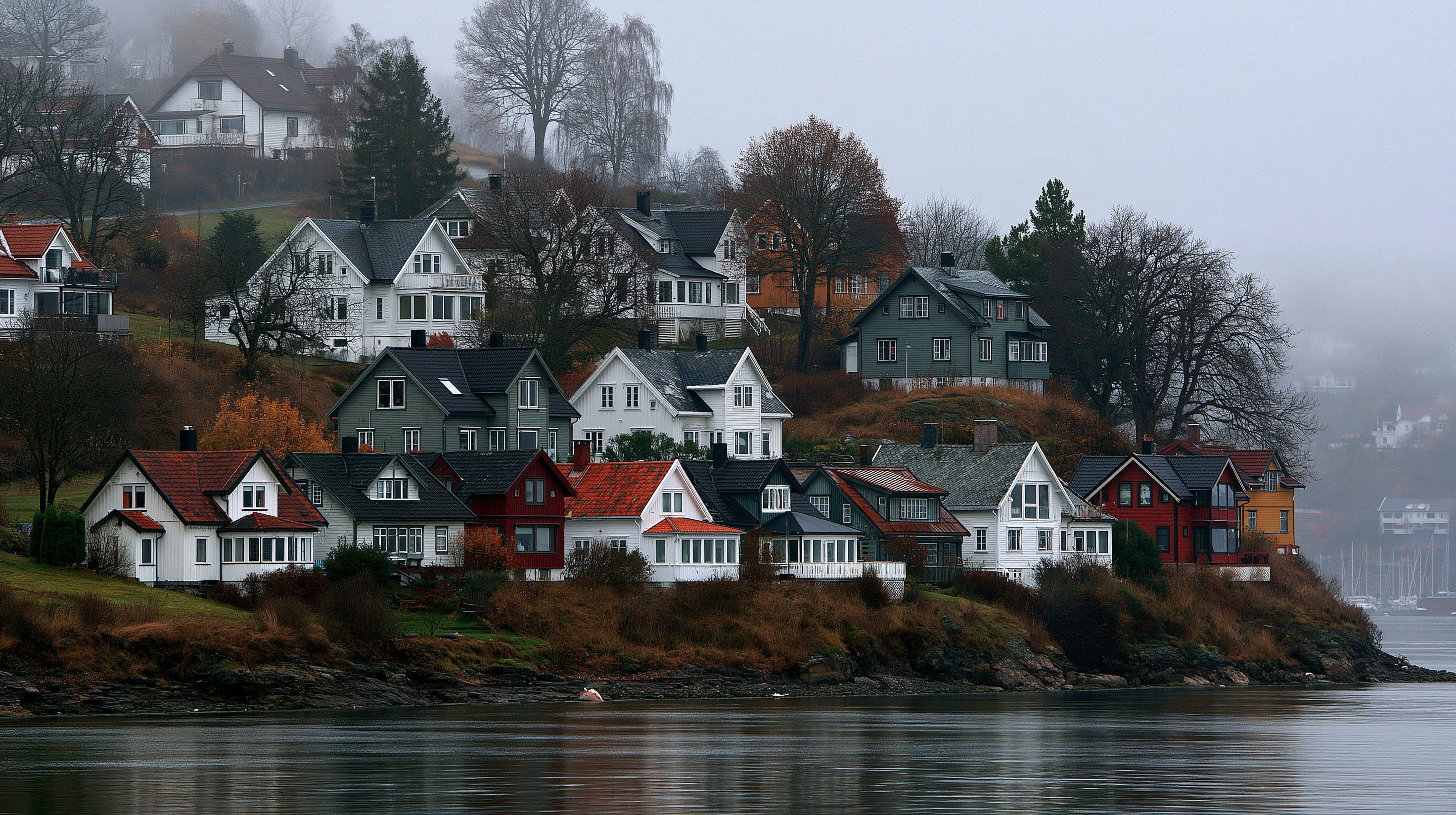
If you were going to place four families within an area in a way that optimize space usage to give them the best life experiences how would you do it?
You could optimize for individual plot sizes. Give each family home the largest possible front and backyard. Next questions is cars or pedestrians? Who should you prioritize?
To answer this question let me compare a stereotypical American and Norwegian neighborhood in the suburbs.
As a Norwegian I experienced a completely different approach to building neighborhoods from what I was used to growing up in Norway.
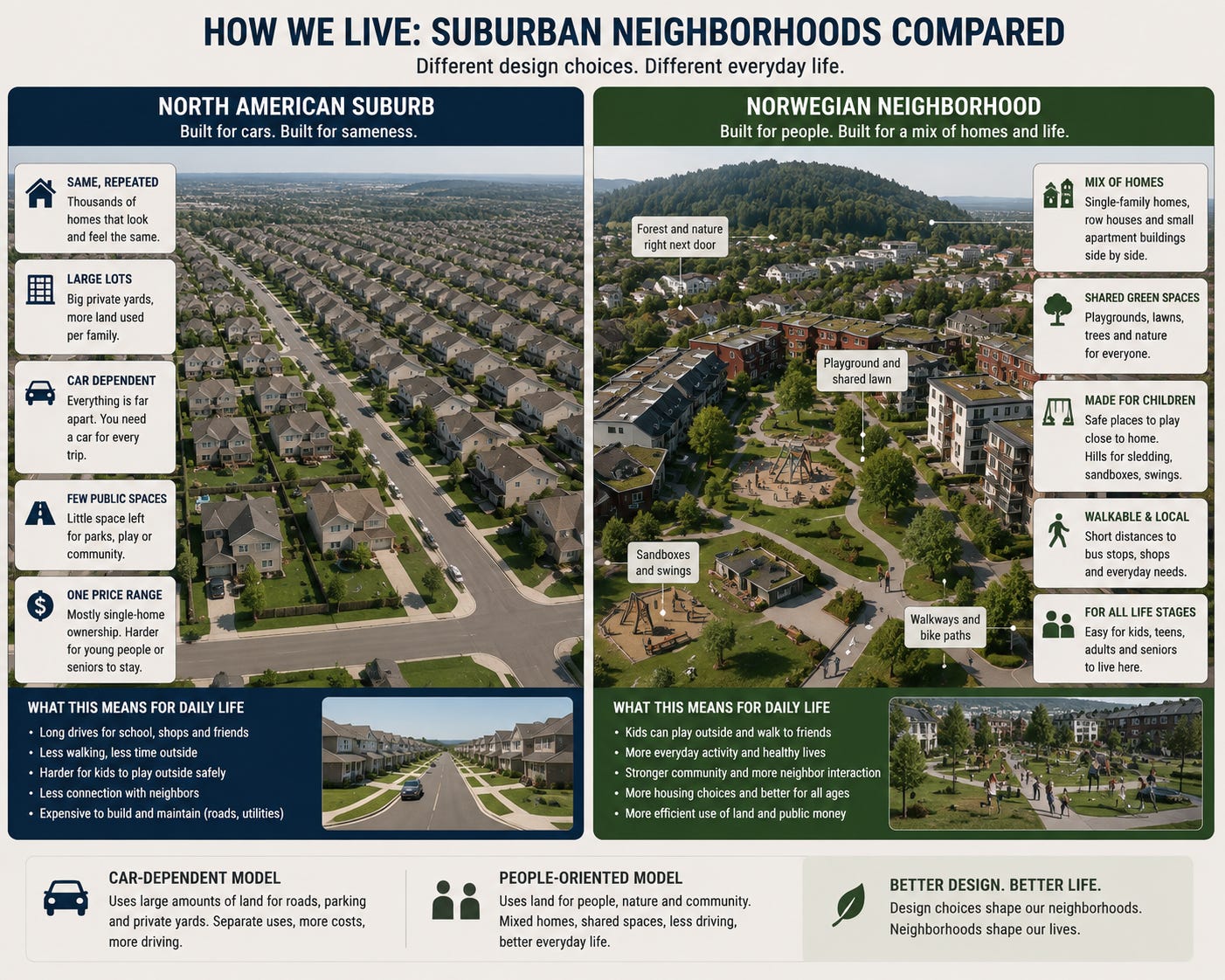
What I noticed living in the US was how little public usage land there was. Almost every inch of land was reserved for access roads or private property of individual houses. That contrasts strongly with the area I raise my children in Oslo, Norway as well as the area I grew up. Let us look at an illustration of the different choices made in hose space is utilized.
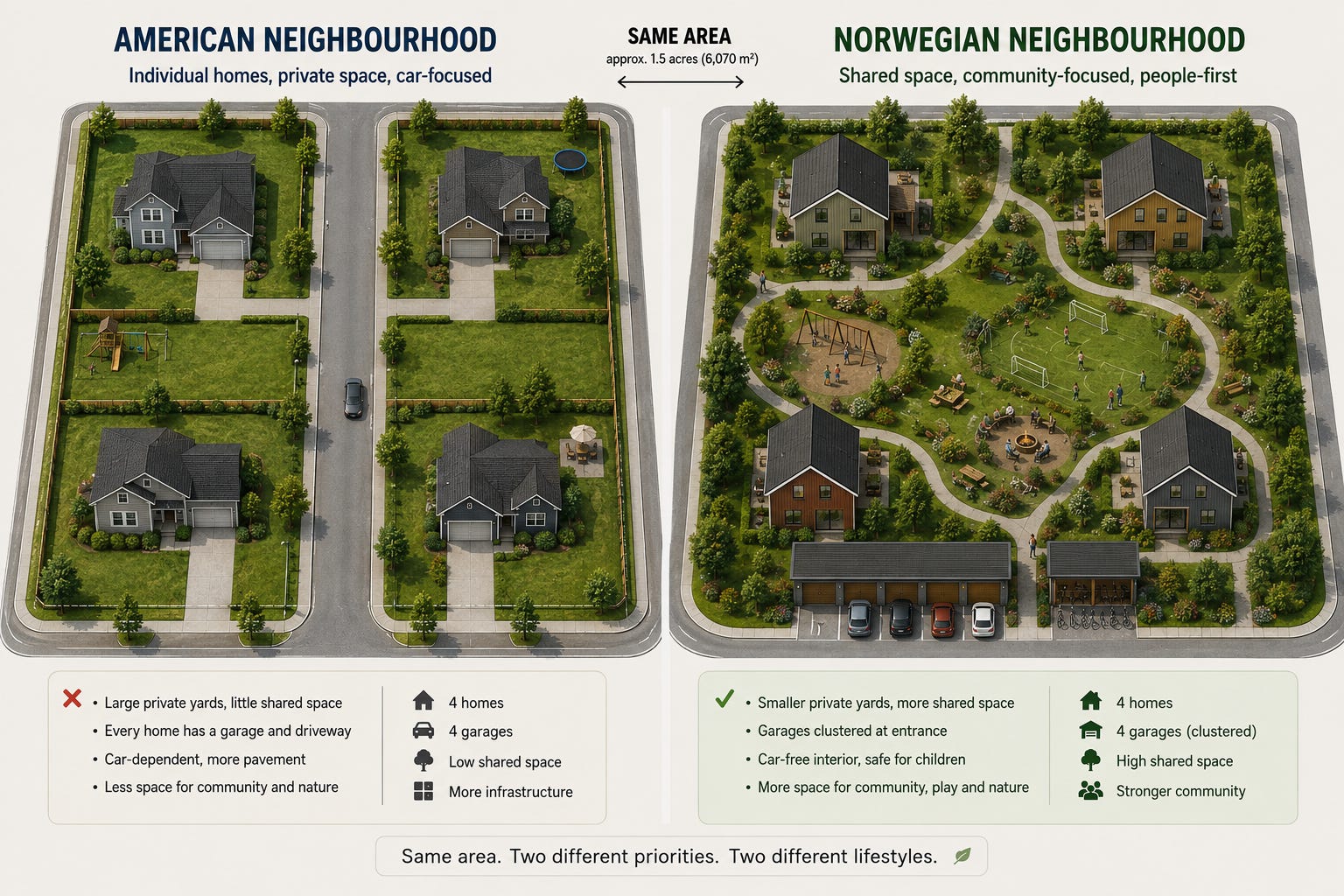
You can see the Norwegian approach is to think in terms of community rather than individual plots. It is less optimized for the individual and car driving and more optimized for the community. Private plots size for each house is reduced to have a lot more shared public space.
The Norwegian idea is that children should be able to walk out of their house unattended and head over to friends and go together to the playground. That should be possible without ever crossing any dangerous car roads. You want an internal playground area accessible by foot without cars.
The Norwegian solution is to move garages away from individual houses and cluster them at the entrance of the neighborhood. That way the neighborhood can be made car free and safe for children.
I would also argue that shared space is more optimal. It is wasteful that every house has a sandbox, swings, and soccer field. Sharing these facilities gives better resource utilization.
Where I live we have a little forest that is a bit rocky or hilly next to the sandbox. When my kids were younger they could run playing Nerf gun battle with their friends. They could hide behind rocks and trees and had a large area to roam around. Had this land instead been split up and shared among individual private properties it would not have been possible to have such a large area to roam around.
Another benefit is the having common areas for neighbors to meet. Some places have shared BBQ with benches where neighbors can eat together in the summer.
It should be noted that the ideas for how to build Norwegian neighborhood are not unique to Norway, and is actually a development of an American concept called the Radburn design housing. Below is a definition from wikipedia:
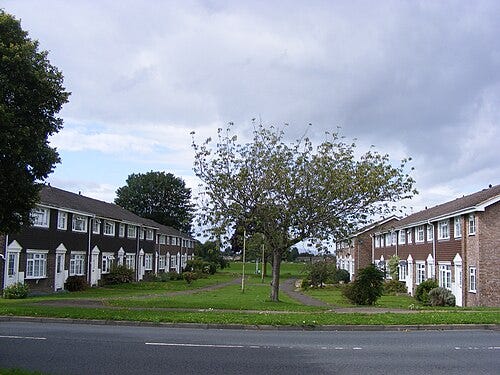
Radburn design housing (also called Radburn housing, Radburn design, Radburn principle, or Radburn concept) is a concept for planned urban settlements and housing estates, based upon a design that was originally used in the community of Radburn within Fair Lawn, New Jersey, United States. The objective of the planners Clarence Stein and Henry Wright in the late 1920s was to accommodate the increasing car traffic of the time while keeping it separate from pedestrian spaces and to prevent accidents.
There are a lot of ways of organizing neighborhoods. I lived several years in the Netherlands which as another interesting case. It is a much smaller country with high population density so they have to optimize more for space.
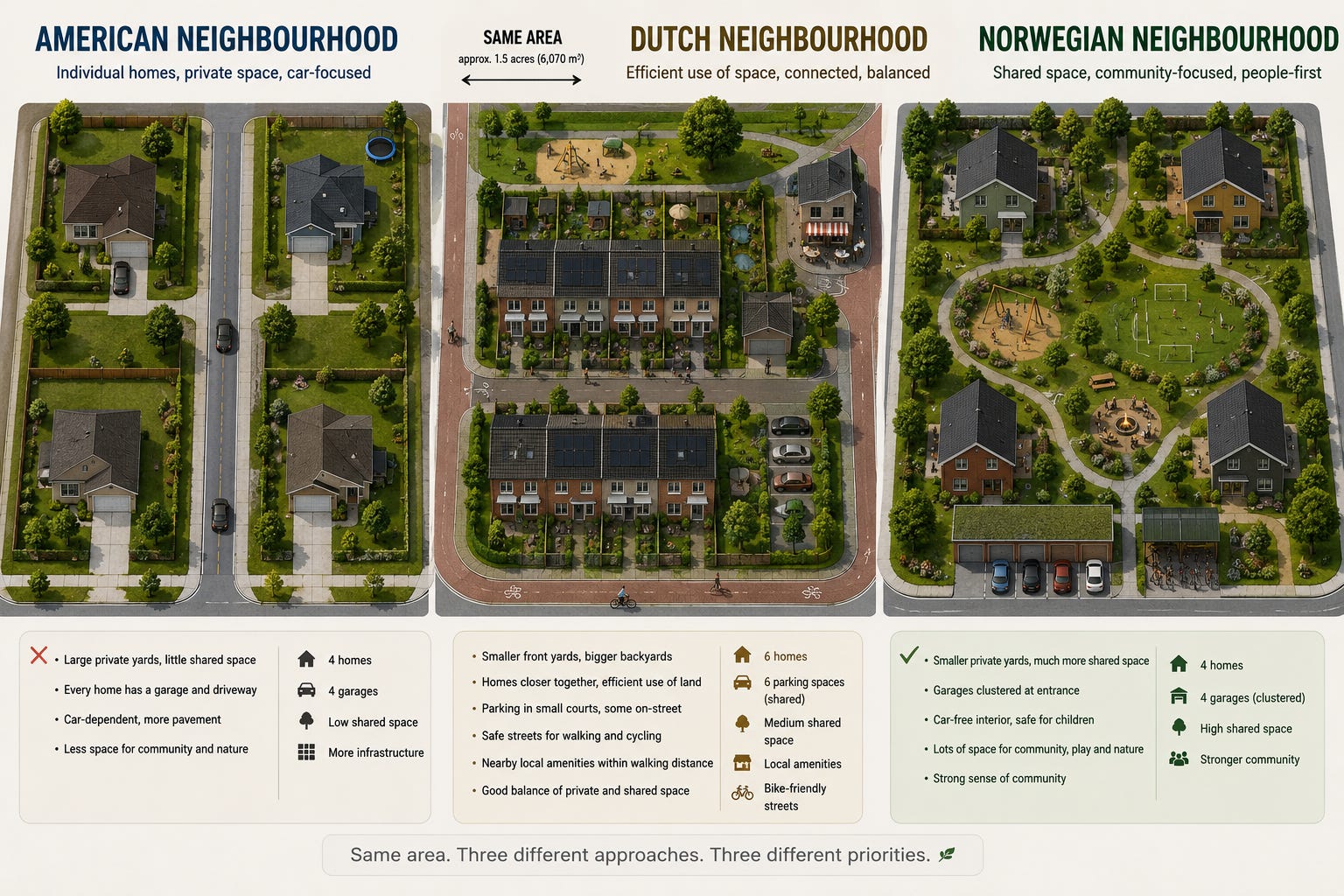
To save space the Dutch tend to use row-houses rather than individual homes. Because less space is available, shared public spaces for things like parks and playgrounds becomes even more important. An interesting detail I noticed living in the Netherlands is that it is often a bit more urban. You will find small cafes and similar on the corner in some Dutch neighborhoods. That would be very unusual in the US and Norway.
Another interesting difference is in how shopping is done. I typically walk daily to the shops where I live. It is just a 5-10 minute walk.
Norwegian suburbs differ from American ones in that they are kind of built like small towns onto themselves. They have their own centers even if they are part of a larger city with a downtown.
The center is located at the transportation hub. Typically it would be where subway stations and bus stops. To make as many people as possible have a short walk to a transportation hub the urban density is higher in these centers. Shopping centers often have apartments on top. Where I live they have green areas and playgrounds on the roofs so it is perfectly possible to raise small children there.
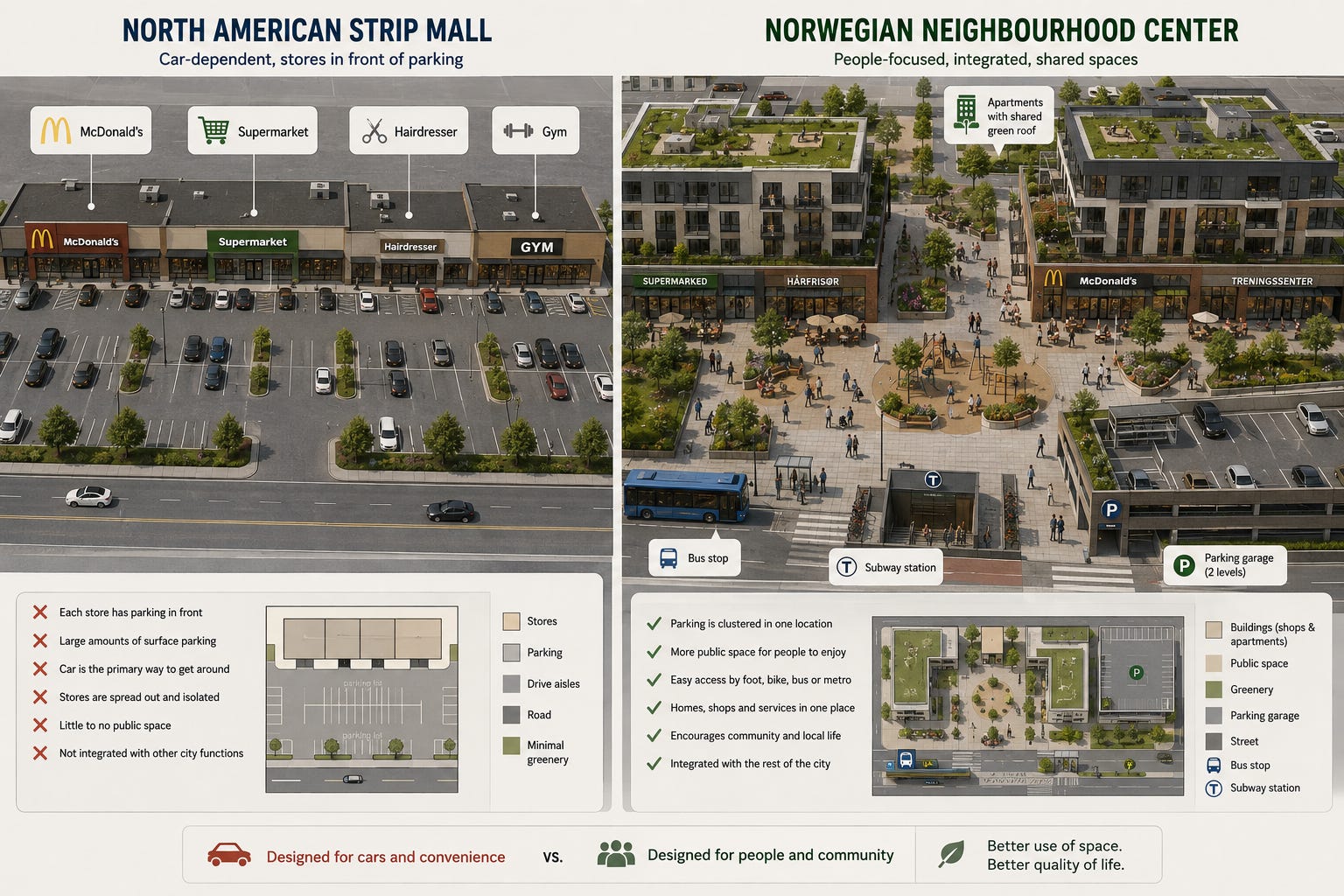
The key idea is the old concept of a town square. Shops, garage complexes and subways are arranged around a town square. This allows pedestrians to walk around easily, mingle and meet. At my neighborhood square we got benches, playgrounds and similar. You can bring yours kids and they can go on a slide while you talk to parents you know from school or in your neighborhood.
Another benefit is that as children get older they can walk to these suburb centers themselves. My oldest son goes to the library there to borrow books. My youngest might go there to buy a soda or something. Either way I don’t have to drive them around. They get personal autonomy.
Contrast with the American suburb. It is very convenient to use by car. Every shop has parking in front of it. The stores are all lined up along the street. Here the car has essentially become your legs. Moving between stores in the European setup is primarily done with your legs. The American way is to replace your legs with a car. It reduces walking. But that isn’t necessarily a good thing.
Also it dramatically increase space that has to be used for parking. That again causes stores to be spaced out more. The consequence is that walking between stores as a pedestrian does not work well.
The strip malls are a good example of why it is so difficult to just add public transportation to American cities. Before I lived in the US I thought the lack of public transportation in the US was simply about American choosing to not operate buss lines, trams and subways.
But that isn’t actually the problem. The problem is the design of the cities themselves. Strip mall designs creates vast space between stores. The car is supposed to be your legs. So if a bus drops you off at one store, you get problems walking to the next one because wide roads and parking spaces separates them.
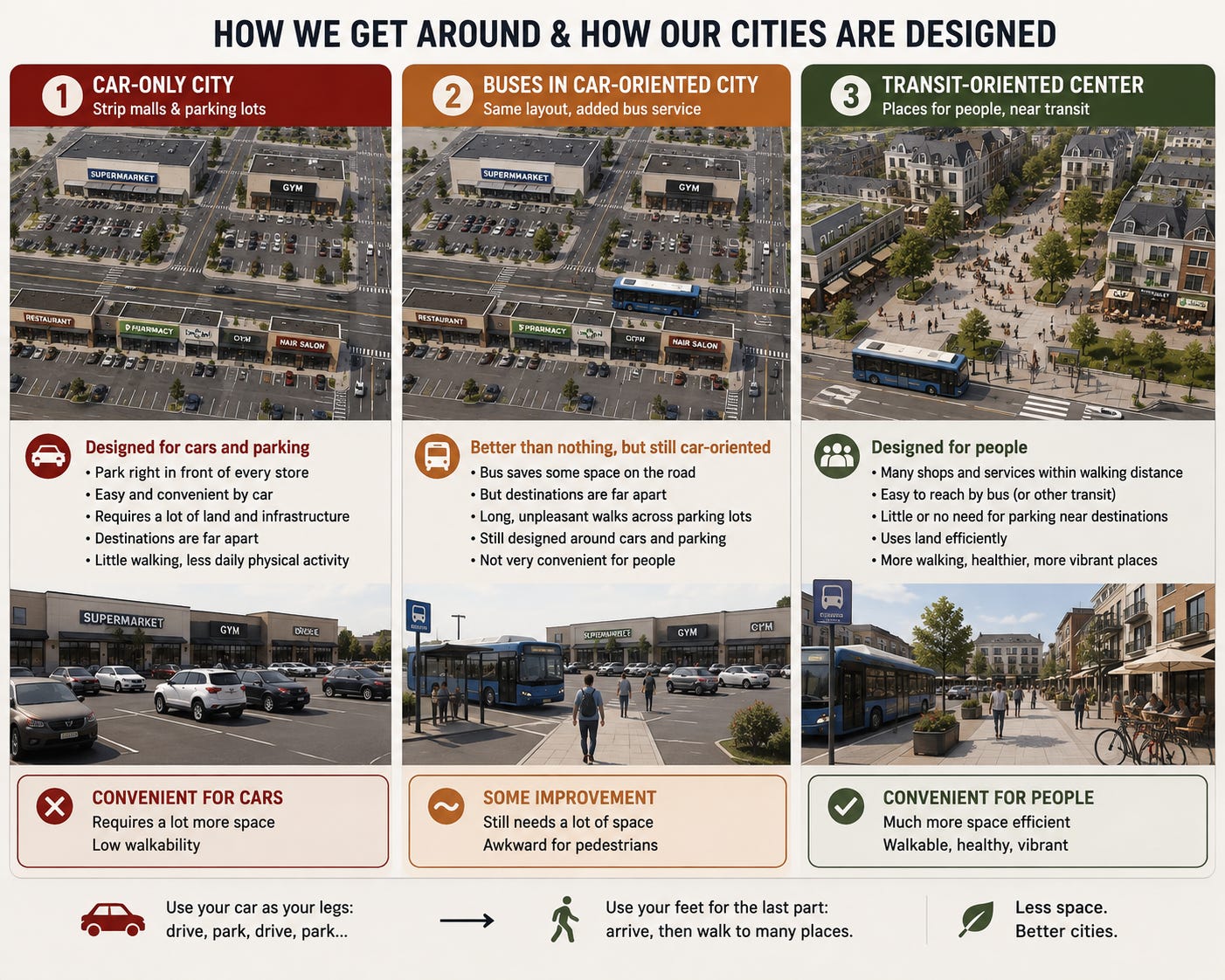
To get buss services to work effectively you need higher concentration of stores and facilities. That means you need narrower streets and less parking. Again that means something more like a European style city layout.
An irony of American downtowns with high-rise buildings is that their density is worse than a traditional European downtown with buildings which are just 4-5 stories high. But how can that be?
The reason is illustrated (somewhat exaggerated) hot the density gets so low in American cities. The problem is the car usage. A skyscraper may fit a lot of people, but you need wide roads to get all those people there. And you need a lot of parking for these people in a car-centric city.
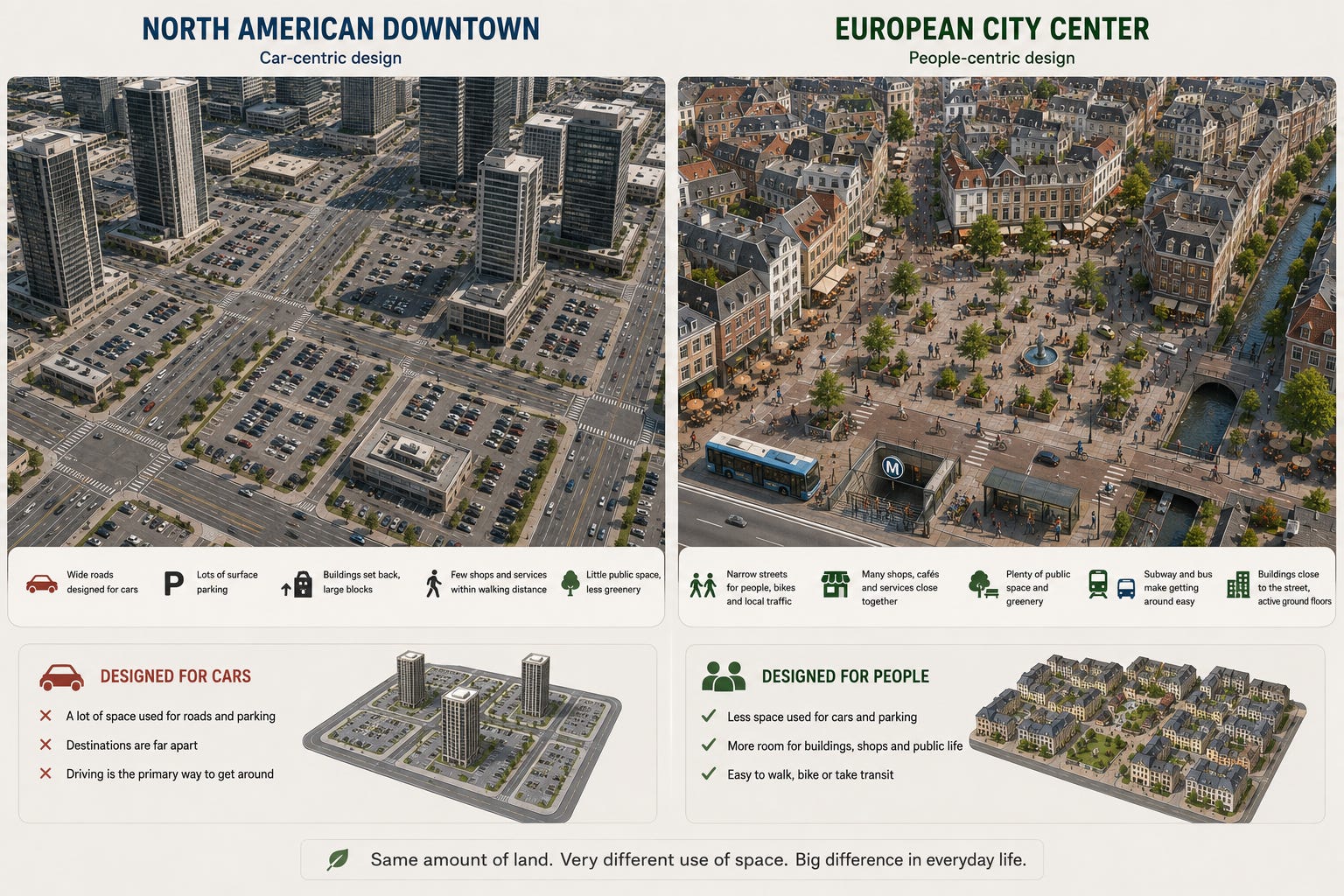
In contrast a European style city with bus stops and subway stations needs a lot less parking space. Thus more buildings can fit into the same area. That means European cities despite low buildings can often be denser in population.
Many Europeans are not quite aware of this fact because we often visit places like New York. And New York is in fact a very dense city. But that is because New York is an American anomaly. It has a dense network of subways. That is what makes New York possible.
If you go to a city such as Los Angeles you see more of what I talk about here. It is surprisingly low density in the downtown despite the high-rise buildings and large overall population of the city. That is because of the massive road networks and parking lots needed. Houston, Texas maybe even a better example
Many of us Europeans visiting American cities will have had the experience of seemingly walking forever to get anywhere when in an American downtown. That is precisely for this reason. Because the cities are accessed by cars rather than busses, trams and subways they need massive roads and parking lots. That causes commercial buildings, shops, cafes and restaurants to get spaced very far apart. Basically the density of businesses and facilities you can visit falls.
This creates a vicious circle. Because it is so far to walk you decide to use a car. But since you use a car, they need more road and parking making the problem even worse. American cities have gone through this transformation over several years. Density has kept dropping to facilitate cars. But lower density means more people get pushed into using cars. And so the problem gets ever worse.
The American solution of high-rise buildings with standoffs (green areas outside them) makes it quite difficult to make livable areas for people in the downtown. Instead US downtowns after office hours become ghost towns.
The European model of lower story buildings, allow for the construction of courtyards. Why are these so great? Because they allow families to raise children in the cities. That means downtowns do not become ghost towns after office hours but they remain alive because people actually live there.
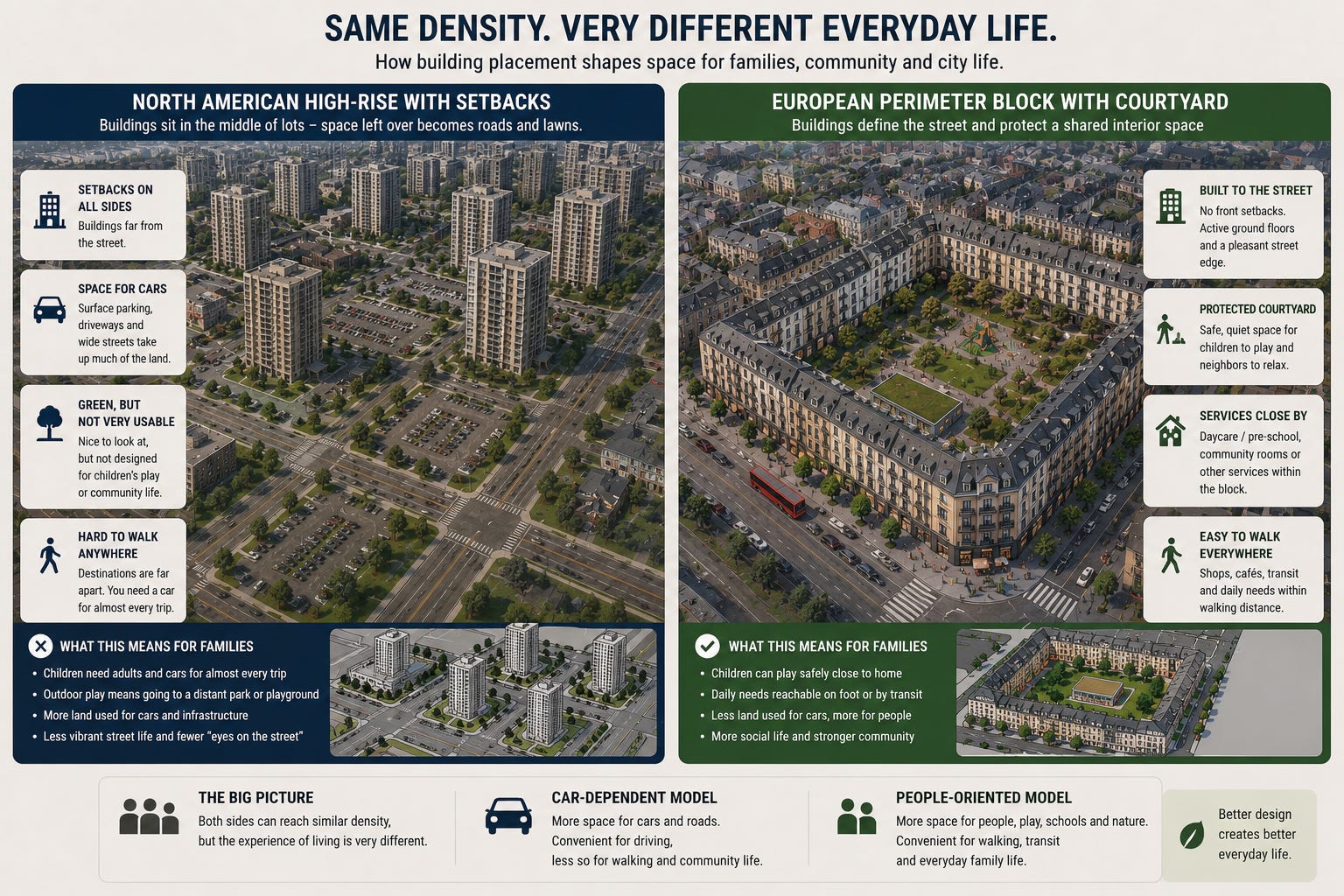
The images here are exaggerated to make the point. US downtowns don’t have that crazy amount of parking and also court yards are not as big as I show above. I am just trying to get the basic idea across. People living in the city means you also reduce traffic further. If people are not traveling from distant suburbs into the city, then you reduce traffic congestion further.
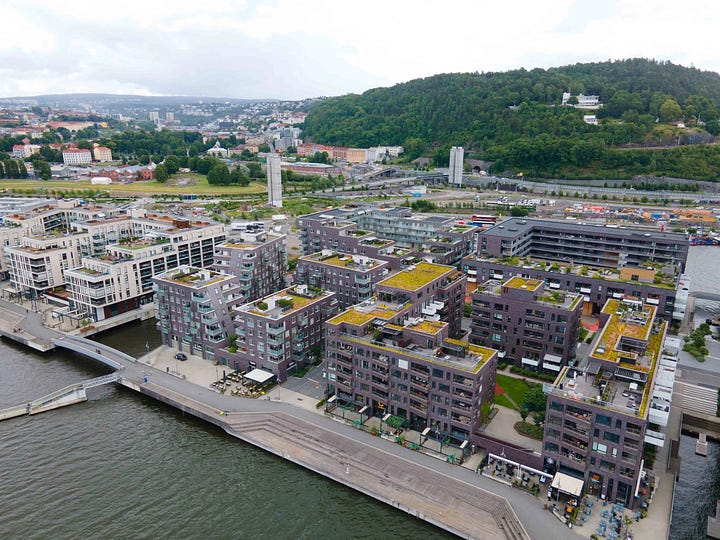
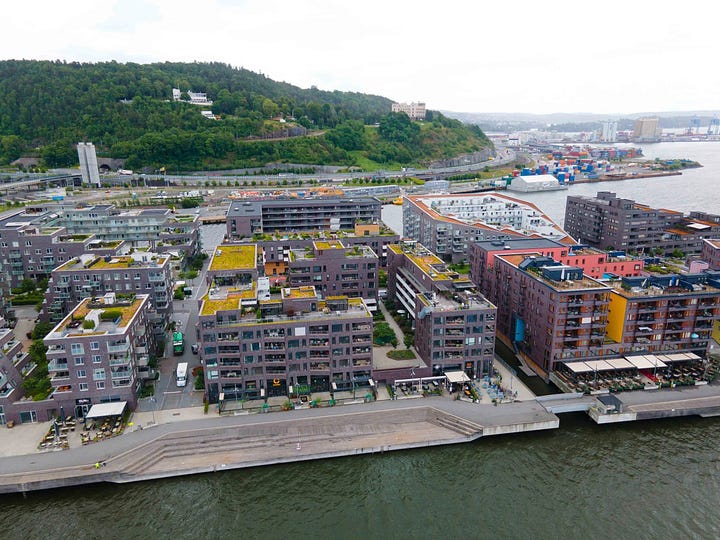
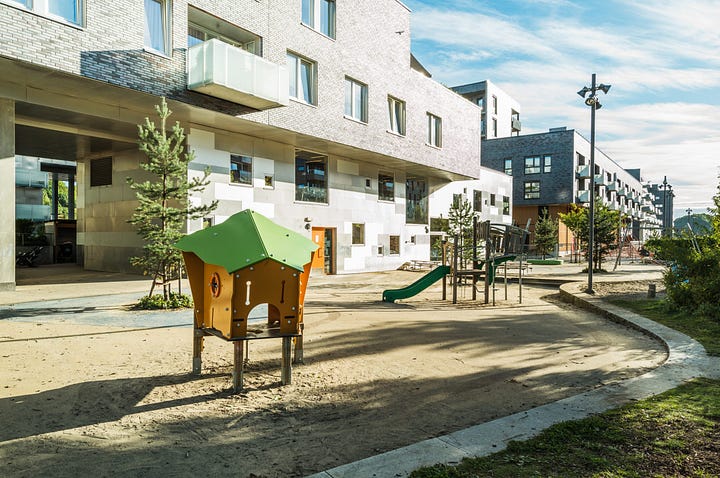
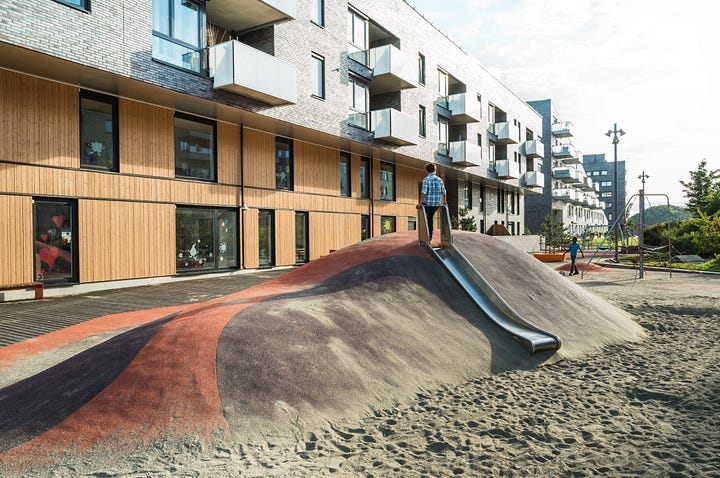
Courtyards exist in both modern and older building in Oslo where I live. Here is a modern development in Oslo called Sørenga that uses courtyards. It even has kindergarten / pre-school in some of these courtyards so parents with young children before school age can live there.
Oslo has another older inner-city suburb called Grünerløkka which used to be where factory workers lived in the old days. It has since been gentrified and popular with young professionals. Here one can also fine many courtyards. A few examples below.
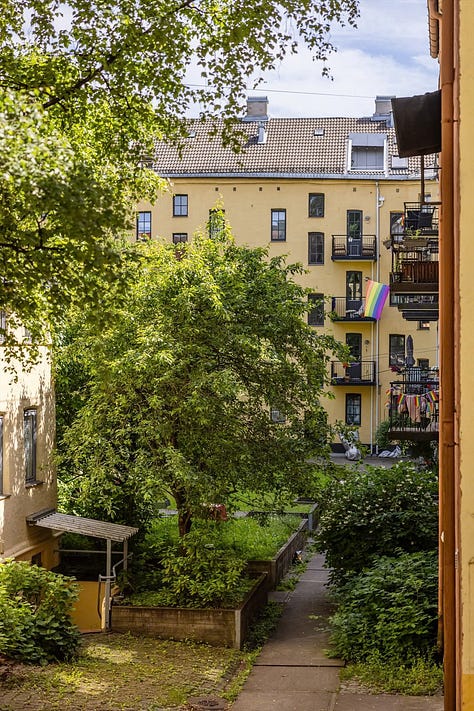
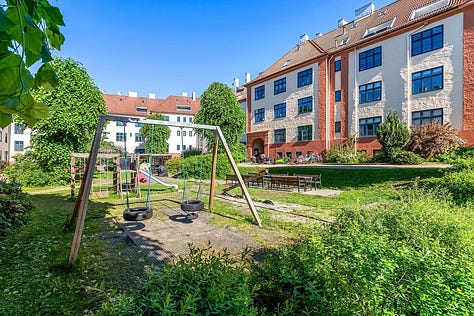
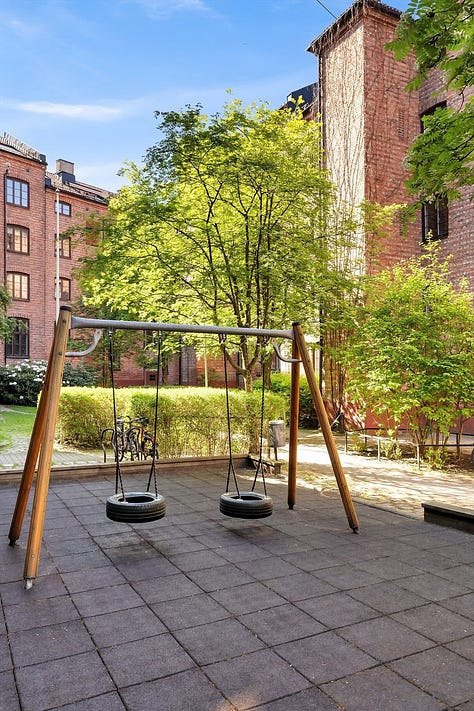
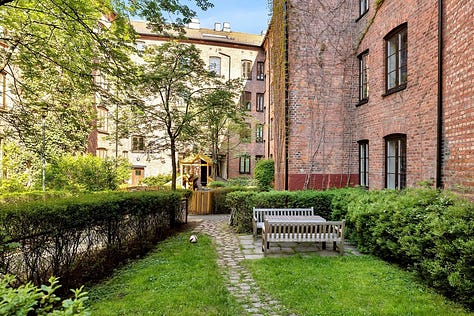
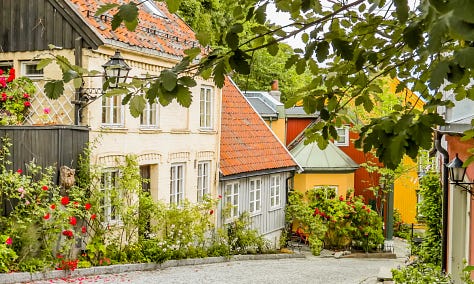
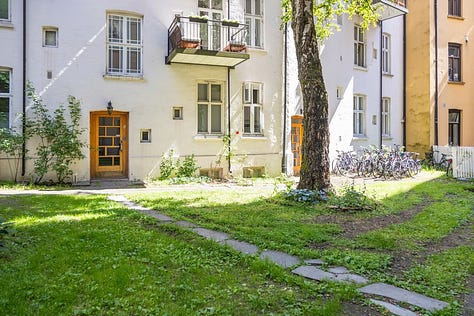
City design and layout is a huge topic one could write several books on. I just want to finish with another topic close to my heart.
One of the problems I saw living in the US is how homogenous the neighborhoods are. Vast suburbs are built where the plot sizes and house sizes are almost identical. The problem with that is that people living there will end up coming from very similar income range.
That means the middle class, the rich and the poor never get much interaction with each other. It also means different ethnic groups also often get separated. More affluent whites live entirely different places from poorer blacks or hispanics.
I remember this from living in the US in cities that had a lot of diversity on paper. The stats would say that e.g. many Hispanics lived in the city. Except I would never actually see them. Naturally it is not quite that bleak as there are of course many black and hispanic people who have entered the middle class and thus live in the same areas as whites.
But I would still argue that Europeans tend to get more interactions with various minorities as housing is built more diverse. Again that varies between countries but at least in Norway it is fairly decent mix. It is enough that I have lived in both the richest neighborhoods in Oslo and the poorest on the same salary. That is because you can find smaller places in a rich neighborhood you can live. While you might want to move to a poorer area because they offer larger houses or apartments for a lower price.
A side-effect of this however is that poor neighborhoods are never poor in the American sense. They are not rundown or crime ridden. I live in currently in one of the poorer areas of Oslo, but a foreigner visiting would never walk around here and say it looked poor. It is well maintained. Lots of green areas. Well kept buildings. Low-crime.
That happens because a “poor” area of Oslo isn’t just concentrated with unemployed people, garbage collectors or something. Such an area will still have cab drivers, University professors, immigrant families and anything in-between. There might be more social problems than in a richer neighborhood but not to a level where it is actually unsafe to go out or building collapse on themselves.
I know many liberal American friends will see this article as a way to show different ideas on what a city could be like. Some more right leaning American patriots will see this kind of article as a kind of competition, where I dared imply something was better in Norway. They knee-jerk respond in a way to prove America is overall better. Please refrain from such silly behavior.
I don’t write these articles as part of a competition with the US. My goal is not to get people to praise Norway and talk down the US. The American approach has its pros as well. I absolutely loved driving in the US. If you have a car and drive around America is extremely convenient. The urban planning I advocate for here is less good for car lovers. It means you will have to walk more.
Urban planning is always a tradeoff. What you get with these solutions is a city that works better for children, students and the elderly. It is also in my opinion far more space efficient. America has enormous amounts of land and can afford to waste a lot more space. It also has the money and resources to spend excessively on roads and parking. But we have to ask ourselves about how can a society with limited means and land create a high quality experience for all its citizens?
Then I do not believe the American sprawl solution is the way to go. It demands enormous amounts of land. Without things like shared playgrounds you need very large houses and yards to give children the same experiences. In other words you require a much higher level of prosperity and wealth per family than a Norwegian style solution requires.
A very rich country can afford the American way. But it will still only really work for the middle class and upper middle class. The lower classes will be much worse off from it.
My goal about writing these articles are several:
I want Americans on the left eager to explore alternative ways of live to see what that could look like.
I want Europeans eager to copy the American way of life to rethink. Is this really what we want?
I was once in category two. I was a European who was really looking up to the US. In big part from numerous American movies. I loved the skylines of American cities like New York and dreamed that Oslo would look something like that.
But once I actually lived in the US and later in the Netherlands I started getting a wakeup call. I started realizing that while the American way looks very cool in movies it doesn’t actually work well in real life. American suburbs look very pretty, but I would never want to raise children there. My wife grew up in North American style suburbs. We compare notes of our own childhood experiences as we raised our children here in Norway and I must say that I think the Norwegian way works better. It gives so much more autonomy and freedom to children.
So don’t hate the messenger. I am just trying to educate you on how other parts of the world organize cities and what you might learn from it. Nobody forces you to copy Norway, the Netherlands or any other country. But at least know what is out there.
Nordics
What is Modern Scandinavian Socialism in 2025?
·
June 25, 2025

I wrote an article about Scandinavian socialism back in 2020 on Medium but it is as relevant as ever even in 2025 to clarify the many misconceptions I still see Americans have about Scandinavia. Especially conservative Americans. But the misconception also exists in my native Norway because people tend to conflate having a system of government that is s…
No posts
Comments
Nothing yet. Say the first thing.
Sign in to join the conversation.