
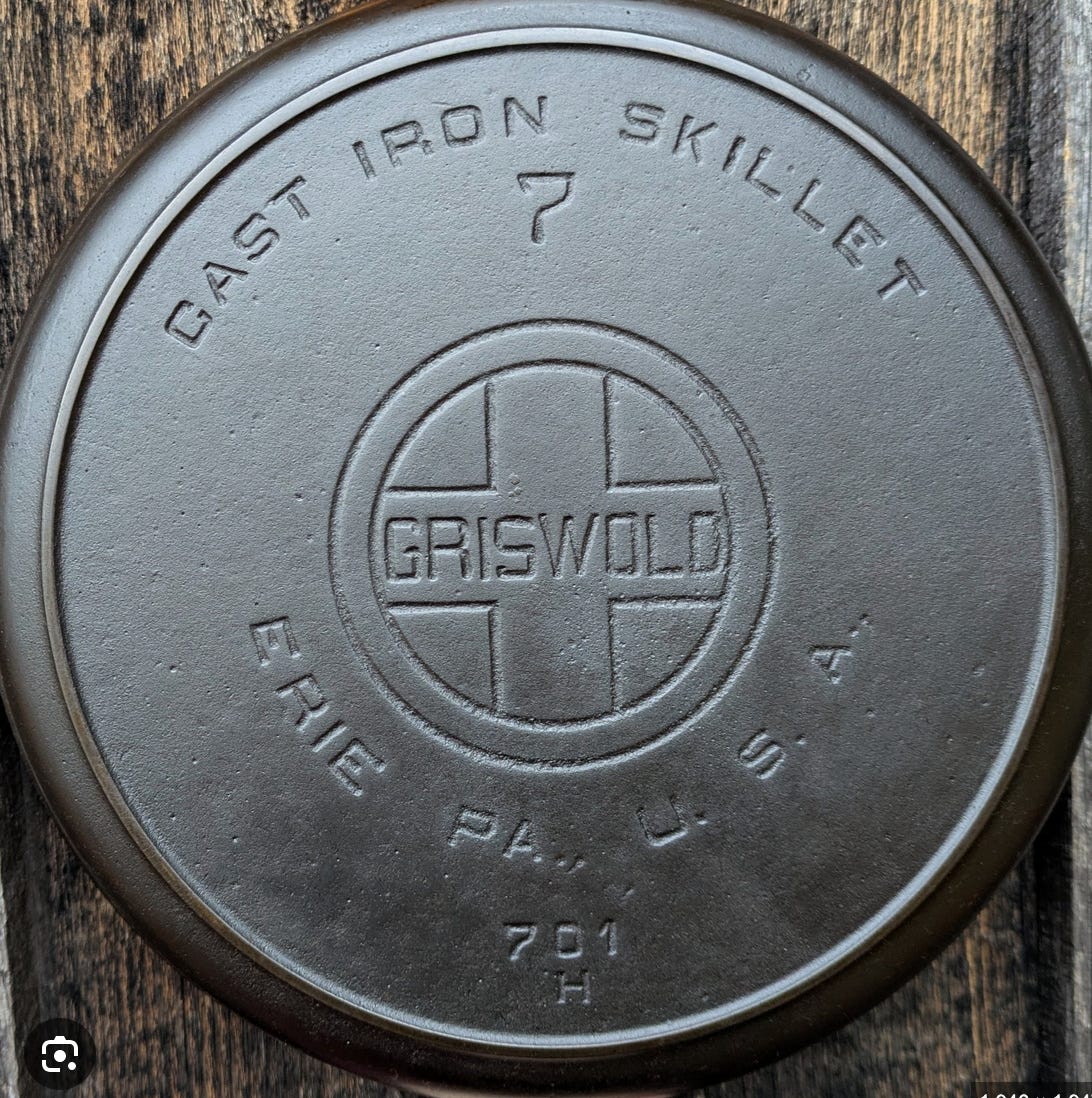
The morning I found out my house had burned down, I clung to one frail hope: The Griswold will survive. I gotta go find the Griswold.
The Griswold was the old cast iron frying pan my stepfather, David, gave me as a wedding present back in 1991. It was all I had left of the man who had parented me in ways my own parents couldn’t.
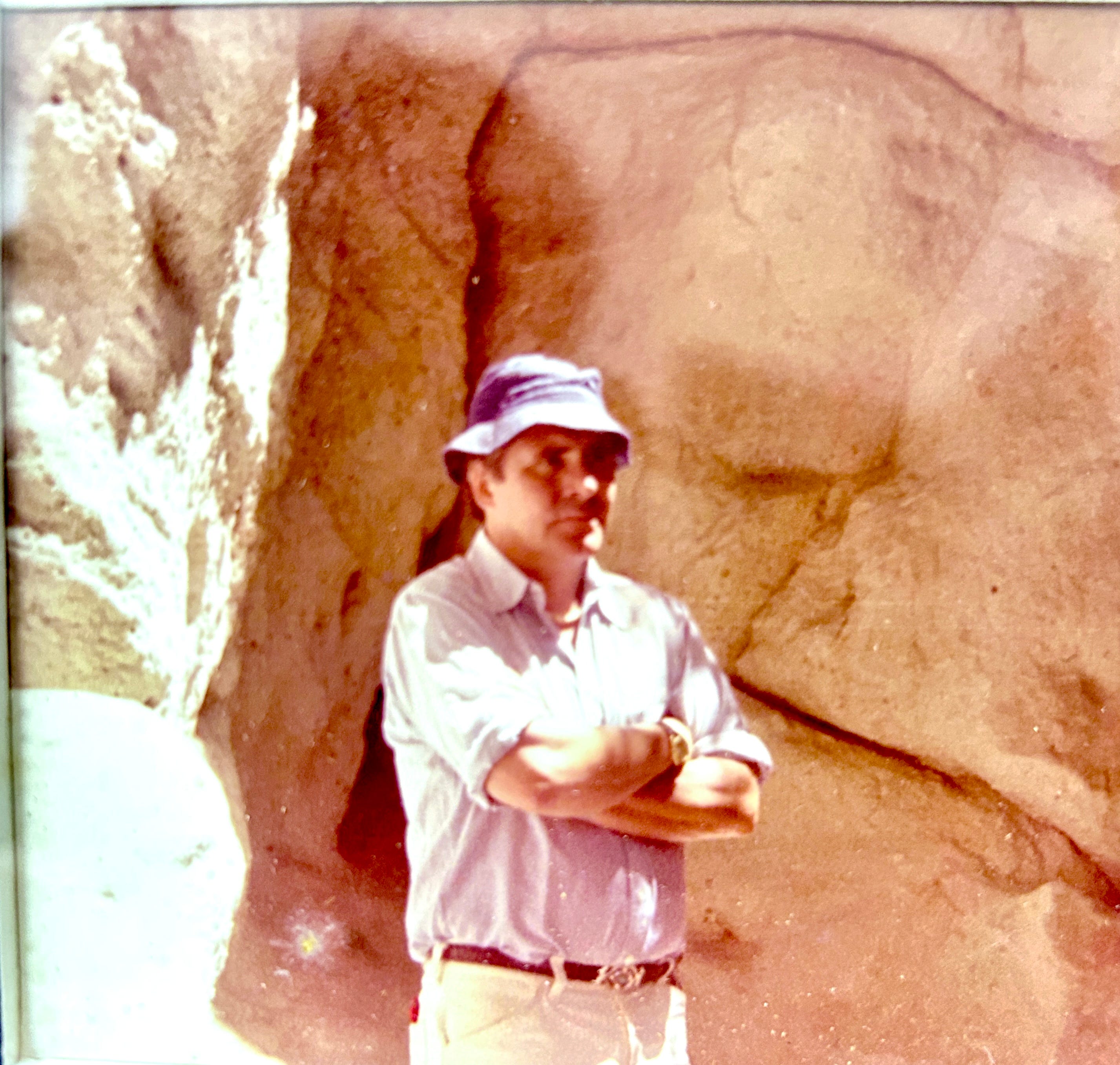
Technically David Eames wasn’t my stepfather. First, he was my Dad’s friend from Look Magazine. Then, he was my best friend’s dad. Then my family bought the house next door to theirs on 95th Street and the Eameses became my second family.
Every day, several times a day, I would go next door to play, do homework, maybe see what David was up to. David was the nicest dad I knew—always friendly and never creepy. He always included me in whatever he was doing; fixing something, listening to music, baking bread. He would show me how to do things, too, giving me instructions without making me feel stupid or lectured. While my parents were next door busy writing big books, David showed me how to diagram a sentence.
How David and my mother ended up getting together is a long, complicated, and tawdry tale of 1970’s betrayal, wife-swapping, group therapy, and retributive fiction that you can read about in my book. Suffice it to say, Mom and David’s romantic kerfuffle resulted in two fractured families, six traumatized kids, me banished to boarding school and my father permanently enraged with “David-fucking-Eames.”
Mom and David shacked up and stayed together for ten years, setting up one cozy home after another as they chased “fresh starts” across the country, taking my little sister with them.
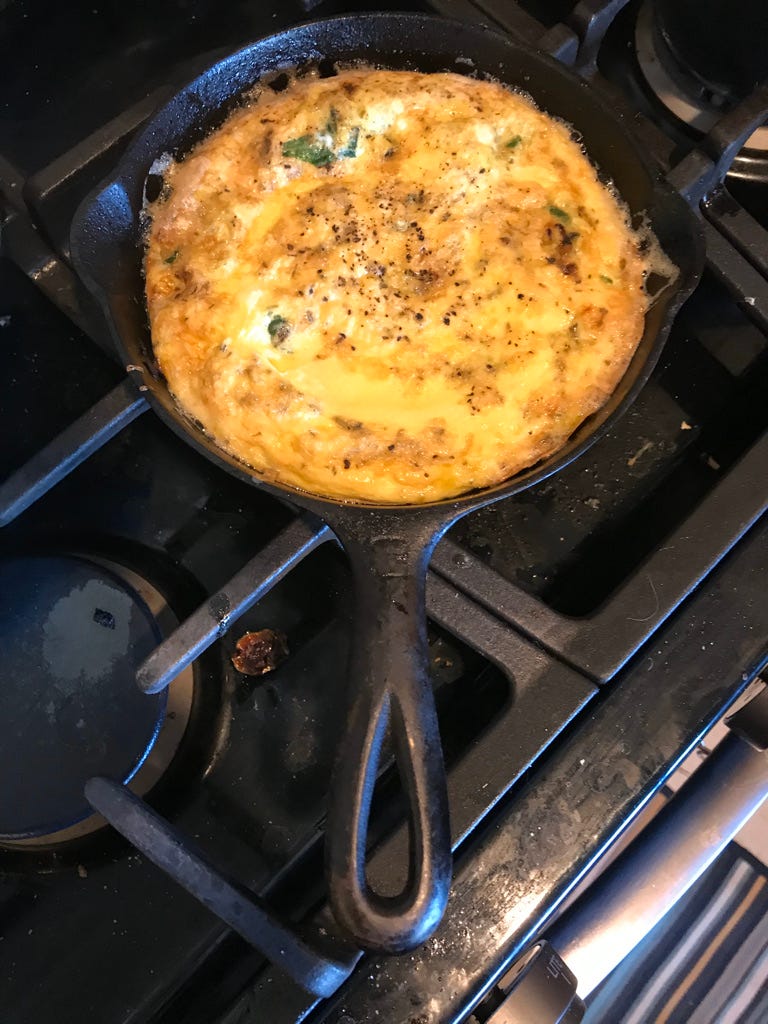
David was in possession of life skills and wisdom that, in the bitter absence of his own children, he bestowed on me. He taught me how to drive a stick shift, how to light a paper match in a stiff wind, how season a cast iron frying pan. He showed me what a frittata is and how to make one.
“David Eames is a trust-fund dilettante and a bad drunk and he’ll never publish another book,” my father would often proclaim while tucking into his nightly martini. Dad wasn’t entirely wrong. David published one novel and to my knowledge went to his grave having never finished the second one. And yes, even as a ‘tween I could see that David’s trust fund was both a blessing and a curse, affording him the time and space to bob endlessly in an ocean of “research” and jug wine.
Most of the David decade I was away at boarding school, or in college, so I was around for the good times, and not too many of the bad. David and I kept a tacky postcard pen-palship going, sending each other ugly postcards of jackalopes and shad bakes. Meanwhile he and mom tried to outrun his alcoholism and her existential malaise by moving from New York to Santa Fe, to the Pacific Palisades, then to Cambridge and Cape Cod.
But no matter where they lived, David made it feel like home. He would greet me with a big grin and a bear hug. He always wore an Oxford shirt with the sleeves rolled up (and a packet of Gauloises in the shirt pocket), dungarees or khakis, and Sperry Topsiders (it wasn’t affect; he was bonafide Deerfield/Putney prepster who knew damn well how to sail). Just the sight of David was comfortable. Wherever they lived was cute and cozy and smelled like dinner. David would have made a stew or a quiche, depending on the season. He wasn’t just a good cook, he was great at the dinner table, regaling us with neighborhood gossip, true stories and dirty limericks, all garnished with accents and hilarious napkin work.
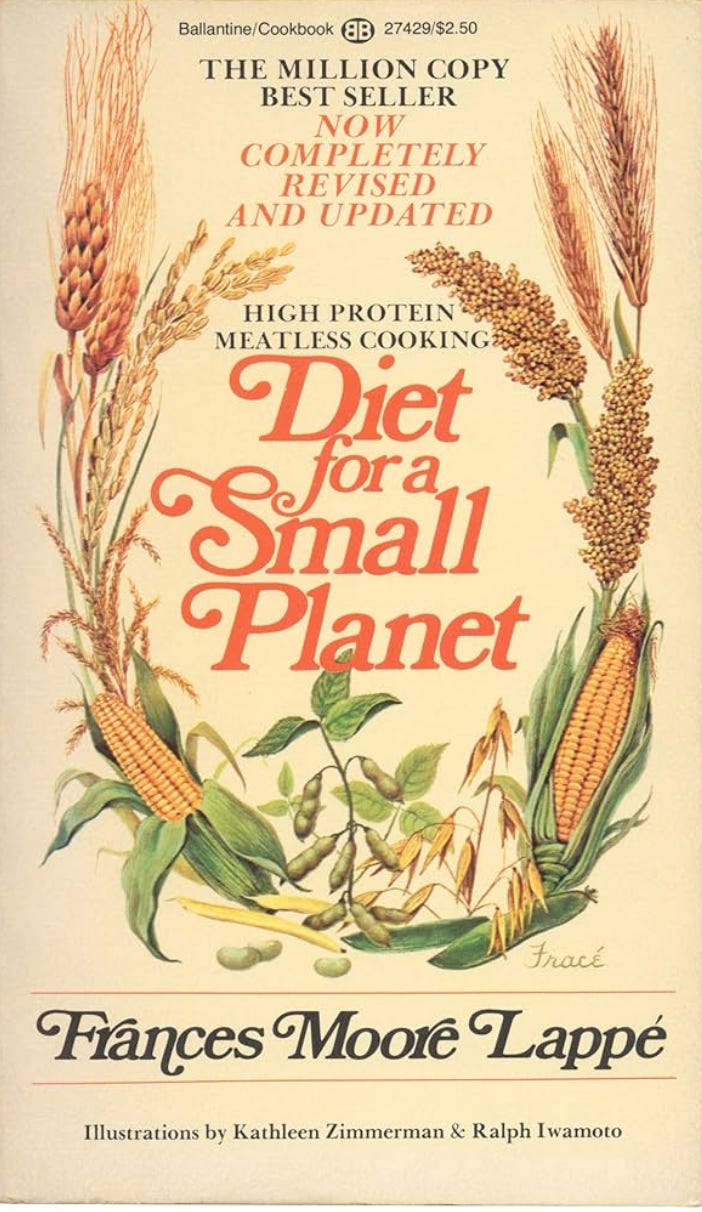
One Christmas I came home from school a vegetarian. I had read Diet for a Small Planet and had been food-combining peanut-butter with jelly for months, convinced it was a complete protein. I was pasty, pudgy, tetchy, and malnourished.
David was making a roast for Christmas Eve dinner. I stood in the kitchen and watched as he stabbed the meat with a paring knife, inserting slivers of garlic under its skin, rubbing coarse salt into it.
Leaning against the counter, I lectured him about world hunger and food policy, as he laid the meat in a hot pan to brown. I was arguing the economic and health advantages of soy protein when the steamy, sizzly garlic plume that came from the stove-top hit me full in the snout and awakened something bestial in me.
All that afternoon I paced and growled around the house, driven mad by the smell of roasting meat. I felt as though every sweaty, carnivorous cell of my adolescent body was screaming for blood. I wandered back into the kitchen again and again.
By the time David took the roast out of the oven I was ready to chew off my own leg. He lifted the meat from the pan and placed it on a deep-gullied cutting board where it dripped and glistened.
“Now we let it repose,” he said. Noted. I stood staring at the roast. “Erika, what do you say we go outside and get a look at the day.?
I followed him out the front door. That Christmas they were living in the Pacific Palisades and we were all gathered at my uncle’s house in the Palisades Highlands. The slant of the sun buttered the late afternoon and I was released from the meat smell by the smell of chaparral.
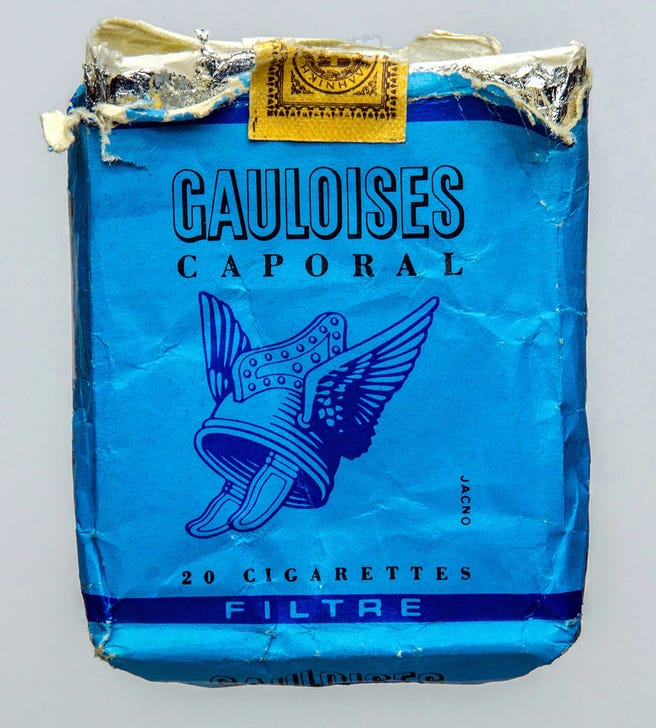
David took his stubby, blue packet of Gauloises out of his shirt pocket, shook one out and lit it up.
“You know, Erika…” he began on a smoky exhale, “I really admire your commitment to vegetarianism. I think it’s great that you are thinking responsibly about the world and your affect on it. It shows me that you are becoming a thoughtful adult.”
See? No other grownups ever talked to me like this. “Thanks, David.”
“One of the great things about being an adult, is that you get to decide what you want to do, and you are allowed to change your mind as you get new information about yourself and the world. You get to be the the boss of yourself, Erika.”
“I know,” I said, laughing knowingly, but I didn’t know.
“I hope you know that nobody here would ever judge you or think less of you if you made a different decision, just for today, to have a little Christmas roast.”
Reader, it was the best Christmas dinner of my life—and the end of my vegetarianism.
By 1987 my mother was all out of fresh starts and she and David split up. I lost touch with David but I invited him to my wedding because I felt he deserved to be there and partly because I knew he wouldn’t come.
A few weeks before my wedding I received a heavy box with with a Martha’s Vineyard return address. I knew his handwriting immediately. Inside was a beautiful, sleek, cast-iron skillet with the Griswold cross stamped on the underside, its bottom seasoned to a glassy finish.
That pan felt just like David: Sturdy, quintessential, appropriate, helpful, reliable. The pan was his blessing to me.
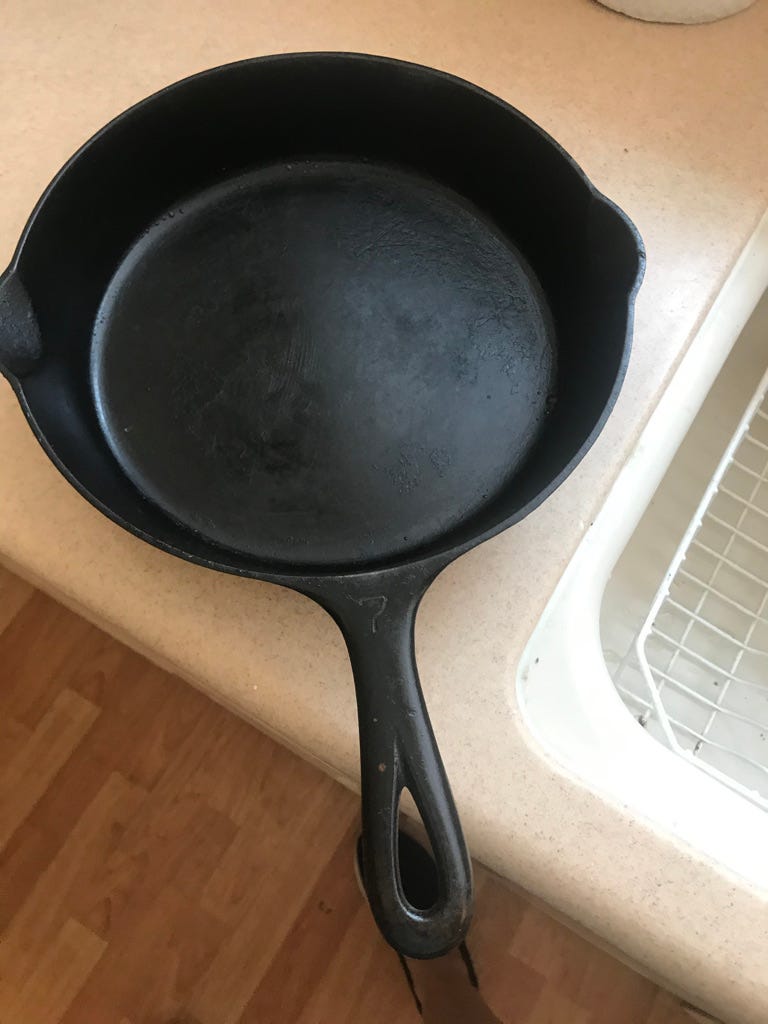
I will let other bloggers wax on about the superiority of cast iron cooking in general, but for me, this pan felt like home. Sliding a pancake out of it onto my child’s plate felt like winning in all categories. I added other pans to my cast iron collection over the years, but none of them ever gave me the feeling of protection that David’s Griswold #7.
David died in 2004. Five years later my marriage died, too. I packed up my Griswold and moved into an old, elegant, upper in a mid-city French Tudor-style building where I cooked sausages for a fancy man I had taken up with. Fancy man broke my heart, leaving me demented and unsure about the whole project that was my life.
One Sunday morning I got up, scrambled some eggs, and headed out to Malibu to visit a pal. After a day of hiking, snacking and venting, I headed back to town.
The moment I opened my front door, I could smell it. Metal. Hot hot fucking metal. I ran into the kitchen. There on the stovetop sat the Griswold glowing red and nearly molten. It had been stalwartly absorbing and evenly distributing the heat from the burner I had left on six hours earlier into the kitchen, making the air wavy with
I turned off the flame and threw open the windows, my heart in my mouth. Had I used any other pan it would have melted and torched the dry, old building. The pan had saved me. David had saved me. I fell to the floor and wept with gratitude for the second chance at life I had been granted.
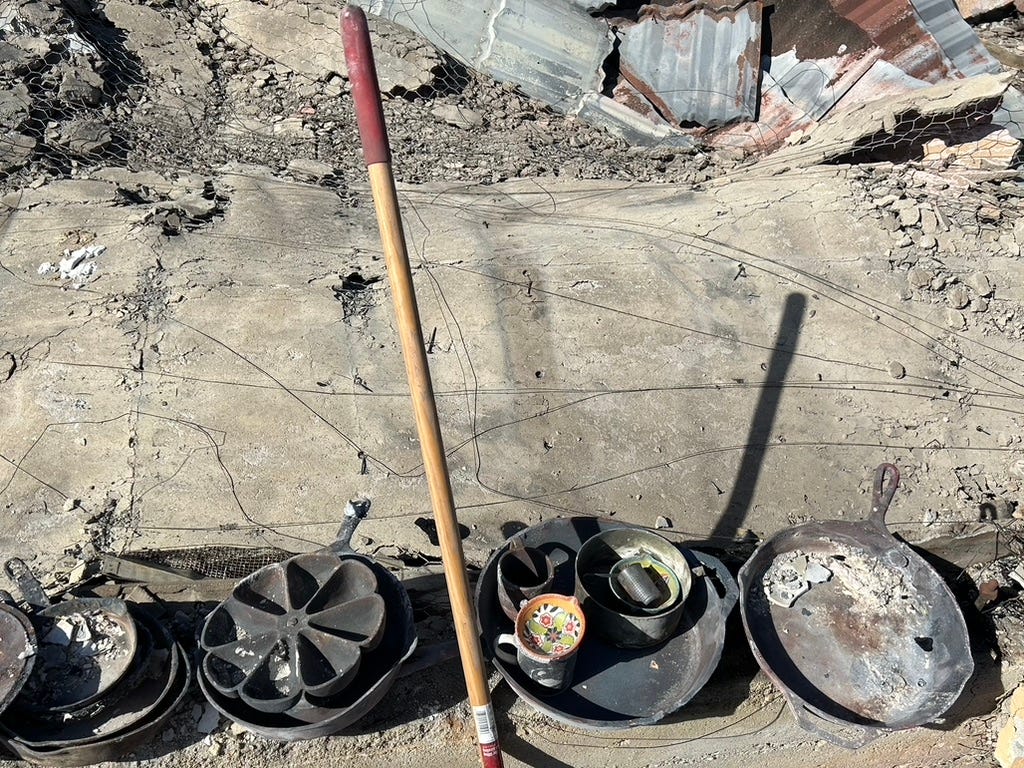
That’s why I felt sure the pan would survive the Eaton fire.
Reader, it did not. Even the Griswold could not survive the heat of that inferno.
Fire has been teaching me lessons all my life—lessons in luck and also in letting go. It’s all very profound and I’m sure I’m better off for it, but I fucking hate being in this class and I don’t remember ever signing up for it.
I prefer the lessons David taught me. If he were here I think we would tell me that it’s better to light a match in the wind than curse the darkness.
No posts
Comments
Nothing yet. Say the first thing.
Sign in to join the conversation.