
Answer: learning stuff.
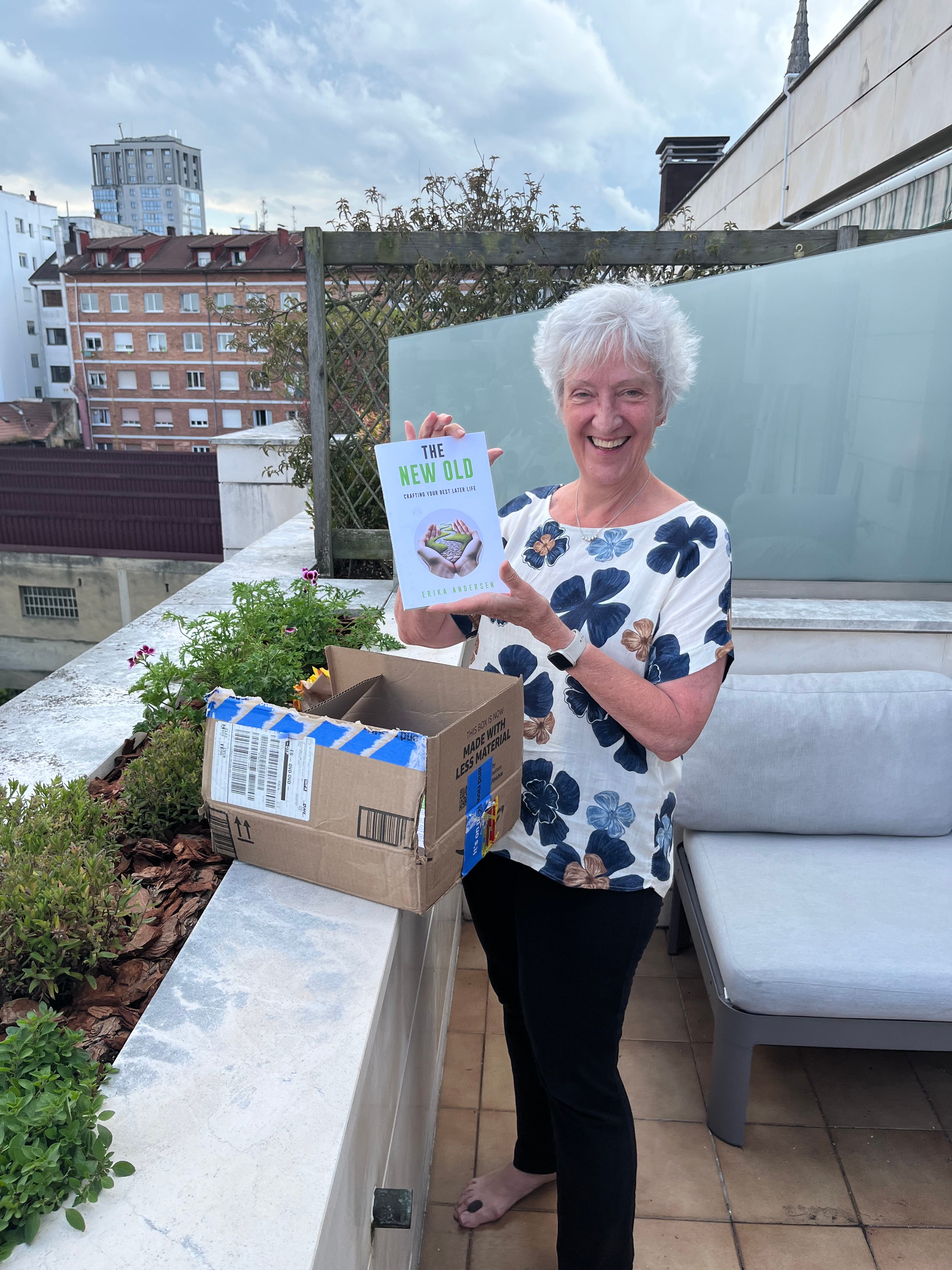
Mi ultimo libro se esta traduciendo en Español. Which means: my latest book is being translated into Spanish.
The most amazing (to me) part of this is that I’ve just reviewed it, understood it, and was even able to make suggestions/corrections to the translation to assure that it truly transmits my ideas and models. And to have long conversations in Spanish with my friend Carmen, who is also reviewing it, about what would be the best, most accurate, most appropriately Spanish ways of translating various words and phrases.
Astonishing.
When I decided to learn the language, about 10 years ago, I was armed only with my bit of middle-school Spanish, a brand-new membership in Duolingo, and a fairly high level of aspiration. Also the knowledge that when I decide to learn or do something, I’m generally very good at following through.
I had absolutely no idea that I would end up living in Oviedo, Asturias (in northern Spain), would be conducting much of my life here in Spanish, including having dear Spanish friends, taking classes at the Open University, and - soon - giving interviews and talks about my book.
And it all seems so appropriate because my book, The New Old: Crafting Your Best Later Life (in Spanish, La nueve vejez: Creando tu mejor madurez) is all about how to grow old well, and one of the chapters is called “Explore and Discover - Anything.” Talk about practicing what you preach!
Seriously, though, I do always work to do the things I encourage others to do. First, because I believe it gives me the moral authority to recommend them. But also, because I think I’m telling the truth: that the behaviors, skills and mindset shifts I teach and propose in my books are powerful and practical.
Acquiring new skills and knowledge as an older person is especially great, because it turns out that keeping our brains strong and vital depends primarily on exercising them. It’s a use-it-or-lose-it proposition.
And since, for most of us our “third act” (60s and beyond) is a time when we’re no longer raising kids or building demanding careers, we have the time and opportunity - some of us for the first time - to learn things just because we want to; just because we’re curious.
And it turns out that the more you learn, the more your brain responds. A fascinating study was done a few years ago with a group of adults between 58 and 86. For three months, the study participants chose to learn a new (to them) topic, in three 2-hour classes a week. (Some course options included singing, drawing, iPad use, photography, Spanish, and music composition.) After three months, their memory and cognition had improved significantly. Even more strikingly, when checked a year later, their cognitive abilities had improved even more; becoming similar to those of people 50 years younger….from just a simple 3-month focus on learning.
Other studies have shown that later-life learning is not only good for our brains, but also for our mental and physical health. Acquiring new skills and knowledge in later life can boost our mood, increase our self-esteem, improve social connections, lower our stress, and even improve our physical well-being.
If you’ve read any of my previous posts here on Substack or on Forbes (or any of my books), you’ll know I’m a big fan of the power of changing how we talk to ourselves in order to change how we behave and how we feel. I think it’s one of our most powerful and most under-recognized human capabilities.
And it turns out that our negative self-talk is often our main obstacle to learning new things as an older person. We say things to ourselves like: Old people can’t learn, or I’m too old and set in my ways to learn, or If I try to learn thing X, I’ll be surrounded by 25-year-olds, and they’ll think I’m an idiot…
It’s unlikely you’ll make the effort to learn something new if you’re talking to yourself like that. So, how to change it?
First, recognize what you’re saying to yourself that stops you from learning. Let’s say it’s something like, I’m old, so it will be really hard to learn new things.
Then, record it. Writing down your negative self-talk separates you from it, which somehow gives you permission to change or discard it.
Now, revise it. It’s important that your new self-talk feels real and believable to you, and that it supports you to move in the direction you want to go. So, for instance, you might revise your negative prediction to, I’ve learned lots of stuff in my life - why should it be any harder now? Realistic and hopeful.
Finally, repeat it. You may have a mental habit of telling yourself negative things about your learning ability - but you can just keep “talking back” to yourself.
This simple approach to shifting my self-talk has served me countless times throughout my life - and especially during these last few years living in Spain, learning a new language, a new culture, new systems (metric and celsius, anyone?), and ways of operating.
If this resonates for you, I’d love to hear your experiences with managing your interior dialogue. And if you’ve been learning new things as you age, please let us know how that’s going, too.
Onward!
No posts
Comments
Nothing yet. Say the first thing.
Sign in to join the conversation.