
To read this issue in your browser, click on the headline above.
Tuesdays at 11:30 a.m. I talk with WGN-AM 720 host John Williams about what’s making news and likely to be grist for the PS mill. The WGN listen-live link is here.
This news via WTTW —
The Rev. Michael Pfleger, the longtime leader of St. Sabina Catholic Church and a vocal social justice and antiviolence activist, has been removed from the South Side parish following a new allegation of sexual abuse.
Cardinal Blase Cupich announced Pfleger’s removal in a letter Saturday after Archdiocese of Chicago’s Office for Child Abuse Investigations and Review received an allegation that Pfleger sexually abused a minor more than 30 years ago.
— prompts me to dust off the above headline for the third time.
The first was over my Tribune column in January, 2021 (gift link):
The accusations against South Side activist priest the Rev. Michael Pfleger are, in a word, revolting.
Either way.
If they’re true, Pfleger repeatedly sexually abused two boys in the early and mid-1970s, a grotesque, inexcusable and scarring violation of trust and innocence that his accusers — two brothers who now live in Texas — say has haunted them ever since.
If they’re false, Pfleger’s good name is being dragged through the mud and his four decades of service to his parishioners at St. Sabina Church and Chicago’s African American community unfairly tainted. He may never get his reputation back. …
Time is the major enemy of anyone — citizen, church official, juror or prosecutor — trying to sort out truth from fiction in cases that go back many decades, as this one does.
When it comes to sexual abuse of minors, “there are usually no witnesses, and oftentimes no forensic evidence, even in more recent cases,” said Zach Hiner, executive director of Survivors Network of those Abused by Priests. “Obviously, with older cases, it’s more difficult to get access to (potentially corroborating) witnesses, memories may be hazier, and documents may have been lost or destroyed.”
“There is a reason that statutes of limitations exist,” said David F. Pierre Jr., author of “Catholic Priests Falsely Accused” and other books highly skeptical of many allegations against the clergy, as well as the proprietor of The Media Report, a website with a similar message. “It becomes almost impossible after so many years to prove a negative.”
Pierre pointed to a May 2017 report from the United States Conference of Catholic Bishops that reviewed nearly 500 investigations into clerical sexual abuse in which church officials had reached a conclusion. That report categorized 40% of the allegations as substantiated, 8% as unsubstantiated and 52% as “unable to be proven,” a category that leaves wreckage in the paths of both accusers and the accused.
An investigation by the Archdiocese of Chicago found “insufficient reason to suspect” that those allegations were true, and Pfleger was reinstated four months later.
The second time I used that headline was in the Picayune Sentinel in October, 2022 was when another man came forward alleging Pfleger sexually abused him in the late 1980s, where I reiterated the point that supporters who insist that the man they have long known and respected could not possibly have done such a thing is not evidence, as abusers tend to be very good at covering their tracks.
While reminding people to cool the understandable urge to have a hot take on Pfleger and wait for the investigation to run its course, I quoted a letter to the Sun-Times by Michele Beaulieux of Hyde Park:
The reflexive public displays of support for Pfleger are making it harder for others who have seen, suspected or suffered child sex crimes to come forward. As it is, the average age that a victim-survivor discloses child sex abuse is 52. And reporting on Pfleger’s supporters’ aghast responses without providing adequate counterbalance only contributes to the message that victim-survivors of all types of sexual violence are getting loud and clear: telling our truths is not safe; we will not be believed. Stay silent.
In 2022, the Archdiocese also concluded that those allegations were also false, and Pfleger has called this new allegation — reportedly coming from a woman who went to school at St. Sabina in the early 90’s — “an absolute lie (from) those who have sought to destroy me for years, and another attempt by someone to get money from the Archdiocese and to silence me.”
Pfleger’s activism has long made him a lightning rod for criticism. So even with this third eruption of smoke I advise caution about concluding that there’s fire.
As a non-Catholic, I have an utterly irrelevant opinion about the requirement for priestly celibacy that I will keep to myself, but I’ll note that most studies have shown that the requirement is not statistically related to the sexual abuse and exploitation of children.
In a lengthy article on this topic, Catholic Answers quoted historian Philip Jenkins, now the co-director of the Program on Historical Studies of Religion at Baylor University’s Institute for Studies of Religion:
My research of cases over the past 20 years indicates no evidence whatsoever that Catholic or other celibate clergy are any more likely to be involved in misconduct or abuse than clergy of any other denomination—or indeed, than non-clergy. However determined the news media may be to see this affair as a crisis of celibacy, the charge is just unsupported. … My concern over the “pedophile priest” issue is not to defend evil clergy, or a sinful church (I cannot be called a Catholic apologist, since I am not even a Catholic). But I am worried that justified anger over a few awful cases might be turned into ill-focused attacks against innocent clergy. The story of clerical misconduct is bad enough without turning into an unjustifiable outbreak of religious bigotry against the Catholic Church.
The article also quotes Santa Clara University psychology professor and researcher Thomas Plante:
Catholic clergy aren’t more likely to abuse children than other clergy or men in general. According to the best available data (which is pretty good, mostly coming from a comprehensive report by the John Jay College of Criminal Justice in 2004, as well as several other studies), 4% of Catholic priests in the USA sexually victimized minors during the past half century. No evidence has been published at this time that states that this number is higher than clergy from other religious traditions. The 4% figure is lower than school teachers (at 5%) during the same time frame and perhaps as much as half of the numbers of the general population of men.
But even if there is such a correlation disguised by secrecy, shame and threats, it would tell us nothing about the allegations in this particular case. I’ll say it again: Don’t make up your mind yet.

Hearing the obsequious, flip-flopping toady Lindsey Graham generously described as a “shape-shifter” on “Morning Joe” and elsewhere Monday was nauseating. So was hearing and reading all the declarations that he was a friendly, funny fellow with whom you could have a jolly dinner after engaging in a bitter political dispute, as though politics is a sport where fierce competitors can pal around afterwards because it’s just a game.
Look, condolences to those who knew and loved Graham, the Republican U.S. senator from South Carolina who died unexpectedly over the weekend, But “shape-shifter” puts a positive, even admiring spin on Graham’s legacy, suggesting he was adaptable to circumstances, open-minded, unbound by dogma and willing to evolve and not simply a craven, hypocritical sycophant who did several 180s to enable Trump.
I can’t say it better than former Washington Post columnist Gene Weingarten:
Lindsey Graham was a spineless sellout, a treasonous political hack, a consummate conscienceless opportunist, a prime architect of the revolting thing that the Republican Party has rolled over and become. … We have all been reading, in the last 24 hours, about Graham’s contortions of conscience and character decay in the Donald Trump era: His initial condemnation of Trump as a monster, a danger, an evil man, followed by his startlingly sudden turnabout when it became obvious Trump would be his party’s candidate.
And here’s Barack Obama in his 2020 memoir:
You know how in the spy thriller or the heist movie, you’re introduced to the crew at the beginning. Lindsey’s the guy who double-crosses everyone to save his own skin.
Politics matter. Governing matters. They’re not a game. Our prosperity, our freedoms, our health, our safety and by extension our lives are at stake in legislative bodies. It’s no laughing, back-slapping matter if those introducing laws and casting votes are not people of integrity.
I’ve never yet expressed pleasure in the death of a political figure — unlike Donald Trump, who tweeted “Robert Mueller just died. Good, I'm glad he's dead” earlier this year — and generally wish only a long, ignominious retirement for the worst of them.
But let me simply quote the admonition of Jake Vig on social media, “Live in such a way that, when you die, people don't need to be scolded for mentioning all the horrible shit you did.”
Neil Steinberg gave me a shout-out Monday in his Sun-Times column:
Not too long ago, drones were going to kill us all.
“We must ban drones before it’s too late,” my pal Eric Zorn warned in 2015.
“Treat these small, unmanned flying vehicles the way the law treats machine guns and chemical weapons,” he wrote, “as devices so inherently fraught with potential peril that whatever positive uses they may have aren’t worth the risks they pose.”
Maybe that peril is still coming. But a decade later, it’s whistling all the way.
Steinberg (and yes, we are pals) was making the point that new technology always seems to bring out the worry warts and nervous Nellies, and that fears about AI may well prove to be overblown.
New technology is scary. But fear of the new says more about our fear of change than any real threats. I don’t want to suggest that all potential dangers are illusions. Climate change is certainly real and deadly, and we have barely begun to suffer from its effects.
But I would suggest that people obsess over illusionary risks because it’s easier than confronting actual danger.
Yes, drone photography is really cool and the advent of drone package delivery could prove useful. But to my mind we already have a verdict on the dangers of drones that I warned about 11 years ago.
Call me Nellie.
Here is a quote from “The Rising Threat of Non-State Actor Commercial Drone Use: Emerging Capabilities and Threats” in the March, 2025 journal of the Combating Terrorism Center at West Point.
In recent years, the proliferation of drone technology by violent non-state actors has revolutionized modern warfare, introducing a new dimension to the security landscape and allowing violent non-state actors such as the Islamic State, Hamas, and the Houthis to project force in the sky.
The accessibility and versatility of drones have allowed violent non-state actors to attempt assassinations and carry out bomb-drop attacks, kamikaze strikes, and intelligence, surveillance, and reconnaissance missions with drones that cost just a few hundred dollars and can be ordered on consumer sites such as Amazon and eBay.
Violent non-state actors modify these drones to suit their operational needs, adding explosive payloads and munitions to carry out attacks using previously advertised “hobbyist” drones.
This threat continues to grow. Nation-states, as seen in Ukraine and Russia, have also replicated violent non-state actors’ drone tactics in armed conflicts. Current counter-unmanned aerial systems technology is also struggling to combat the threat of commercial drones. These counter-unmanned aerial systems systems can be expensive as well as ineffective against the smaller, lower-flying drones, leading to false alarms and missed threats. The proliferation of commercial-off-the-shelf drone technology has highlighted the importance of an evaluation of the future of counter-unmanned aerial systems strategies for the future.
This is from the conclusion of the Global Drone Threat Report (2026) by DroneSec, a security company that addresses issues related to unmanned weaponry:
The drone threat landscape has reached a critical inflection point, transitioning from unpredictable "black swan" events to "gray rhino" risks — high-probability threats that are often neglected until they cause major impact. Adversaries are rapidly moving beyond rudimentary munition drops toward sophisticated, AI-driven, and fiber-optic controlled systems that render traditional electronic warfare ineffective. This evolution is particularly relevant as battlefield innovations from Ukraine and the Middle East are quickly migrating into civilian and criminal contexts, necessitating a shift toward layered security strategies that account for autonomous threats across air, land and sea.
I’d never heard the term “gray rhino” risk, defined here as on that’s “big, obvious, and headed straight for you.”
Jails and prisons now regularly have to guard against inexpensive, consumer-grade drones dropping contraband into open areas, and a policy brief released in March by the Lowy Institute, a non-partisan Australian think tank painted a grim picture:
What was once the exclusive domain of state actors now rests within reach of nearly anyone with a credit card and a data signal. With un-crewed aircraft systems — or drone platforms — becoming cheaper, smaller, and easier to operate, the number of drone plots by domestic extremist groups has increased rapidly. In the last two years alone, U.S. law enforcement personnel thwarted two extremist plots involving drones …
Remote-controlled drones are a low-cost option for intelligence gathering, surveillance, reconnaissance, transport, and attack preparation. Drones are easily modified and weaponized, enhancing and expanding their capabilities. The combination of easy accessibility and payload potential, and the limitations of domestic counter-drone systems, presents a growing challenge.
We probably never could have banned drones, but it’s clearly too late now.


Mark K. — When I hear the right shrieking about “socialism” I think of what Harry Truman said in 1952:
Socialism is a scare word they have hurled at every advance the people have made in the last 20 years. Socialism is what they called public power. Socialism is what they called social security. Socialism is what they called farm price supports. Socialism is what they called bank deposit insurance. Socialism is what they called the growth of free and independent labor organizations. Socialism is their name for almost anything that helps all the people. …
Marc Martinez — There is no difference in economic or social policy and ideology between socialists and communists.
Socialism is the replacement of private property with collective ownership; replacement of private capital (means of production) with collective ownership of capital; and equal access to and distribution of all of the productive output of labor (the necessities of life).
The fundamental belief is that human behavior is corrupted by capitalism, and that capitalism under performs because it is oppressive and exploitative. People in the collective will all produce at their peak capability because they know that everyone will share equally and they value the esteem of their comrades. The observation and peer pressure of the collective will ensure that no one slacks off or behaves badly. This means that life under socialism will have a higher per capita standard of living, everyone will enjoy it equally, and there will be no need for police or prisons.
Marx defined communism as the final stage of socialism, when the state has completely ‘withered away’ because collectives and people’s boards fill all of the needs of social organization. He envisioned a hierarchy of collectives covering individual factories and farms up to the top of the state. When all states are socialist, there is also no longer a need for any states.
Zorn — Brittanica notes the distinction:
Exactly how communism differs from socialism has long been a matter of debate. Karl Marx used the terms interchangeably. For many, however, the difference can be seen in the two phases of communism as outlined by Marx. The first is a transitional system in which the working class controls the government and economy yet still pays people according to how long, hard, or well they work. Capitalism and private property exist, though to a limited degree. This phase is widely regarded as socialism. However, in Marx’s fully realized communism, society has no class divisions or government or personal property. The production and distribution of goods is based upon the principle “From each according to his ability, to each according to his needs.
My guess is you won’t find more than a few DSA members who dream of the abolition of government and personal property, and there is plainly negligible support for that proposition among the voting public. So this “threat” does not exist. It doesn’t even exist in states we think of as “communist,” which are in reality authoritarian and, I will note, have leaders that Donald Trump deeply admires.
Amy Rey — Regarding your objection to the new law in Rhode Island requiring one manually staffed cashier lane for every three self-checkout stations: Imagine if you were disabled and your closest grocery store opted not to compete and you were stuck with self-checkouts. Not everyone can easily travel to a preferred store.
Zorn — I’d be OK with a law requiring at least one staffed checkout lane for every supermarket, as I’m OK with laws requiring accommodations for the disabled. But the ratio required seems more like an effort to micromanage the retail experience.
Laurence E Siegel — I’m a big advocate for eliminating school sports in favor of club teams for those who wish to play them. Taxpayers get stuck for land acquisition, construction, coaching costs, travel costs, equipment, uniforms and everything else whether or not they or their kids have interest in athletics. This is in an era when too many districts are practically begging for more tax money.
Ken Bissett — I concur. Just an example, which is probably replicated throughout the area: Wheaton Warrenville South High School fields a varsity football team of somewhere between 80 and 100 kids. Yet only 35 or so will actually play. The rest are basically practice dummies. So we have all those resources dedicated for a few dozen kids in a school with several thousand students. I’d much rather see most of that money spent on intramural sports to encourage everyone to participate in some form of athletics.
Zorn — I played varsity basketball in high school and really enjoyed it — the level of competition was higher than it would have been in intramural sports and the coaches’ focus on improvement was helpful. My family could have afforded to put me on a club team, but that might not have been true for some more promising athletes in our city who needed the exposure and training of interscholastic sports to earn college scholarships.
Ted B. — For some deep thinking about soccer, how about a round of Monty Python Philosophy football?
Zorn — A classic!
Archimedes out to Socrates, Socrates back to Archimedes, Archimedes out to Heraclitus, he beats Hegel [who, like all the Germans, is still thinking]. Heraclitus a little flick, here he comes on the far post, Socrates is there, Socrates heads it in! Socrates has scored! The Greeks are going mad, the Greeks are going mad. Socrates scores, got a beautiful cross from Archimedes. The Germans are disputing it. Hegel is arguing that the reality is merely an a priori adjunct of non-naturalistic ethics, Kant via the categorical imperative is holding that ontologically it exists only in the imagination, and Marx is claiming it was offside.
The full transcript is here.
Joan Pederson — The thoughtful comments under each issue of the Picayune Sentinel — the sort that bring light to the discussion rather than heat — are just as important to me as a subscriber as Eric’s work itself. I ended my subscription around the start of last year (life upended, so no bandwidth). But once the dust cleared, I found I’d missed this forum. Of all the paid subscriptions I let go, this is the one I finally decided I needed to return to.
Zorn — On behalf of the comment community, I’m honored. Welcome back! To show you what a gracious place this is, I direct you to this comment in which a reader gracefully admits his analysis of the Monty Hall problem was wrong. Take that, Twitter!

A proposal to honor Chicago-born Pope Leo XIV by renaming Northerly Island in his honor failed to take off (July 7), with several members of the Chicago City Council saying the headline-grabbing proposal was deeply flawed.
Chicago Park District rules prohibit parks — including Northerly Island Park, home to a concert and event venue and once home to Meigs Field — from being renamed for anyone who has not yet been dead a year. The rules also prohibit parks from being named for anyone endorsing “a specific religious affiliation.”
The pope, the former Robert Prevost, was born in Chicago and raised in suburban Dolton. Area Catholics, in particular, have cause to be proud of the connection to the first American-born pope and in the fullness of time some local landmark or street will bear his name.
The one-mile stretch of West 43rd Street between Kenzie and Western Avenues is officially named Pope John Paul II Drive in honor of his visit to Chicago in 1979, and that pope was born and raised in Poland.
I like the Park District rules requiring a one-year wait after death before naming a park after a prominent person. In fact, I’d stretch it to five years, the length of time after retirement before a pro baseball or football player can be enshrined in their sports’ hall of fame. Allow time to render an honest assessment of greatness and significance.
So even if the Park District agrees to waive its rule, my vote would be “not yet.” Let’s see what his legacy turns out to be before honoring him with such a major park.
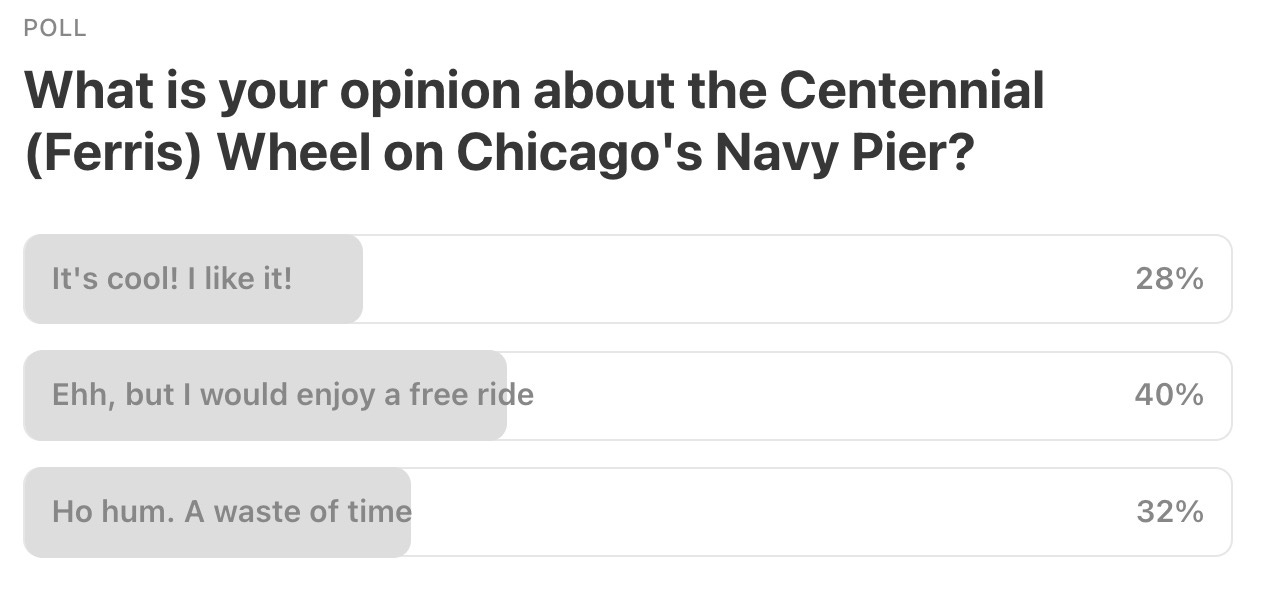
But I have only one vote. What’s yours?
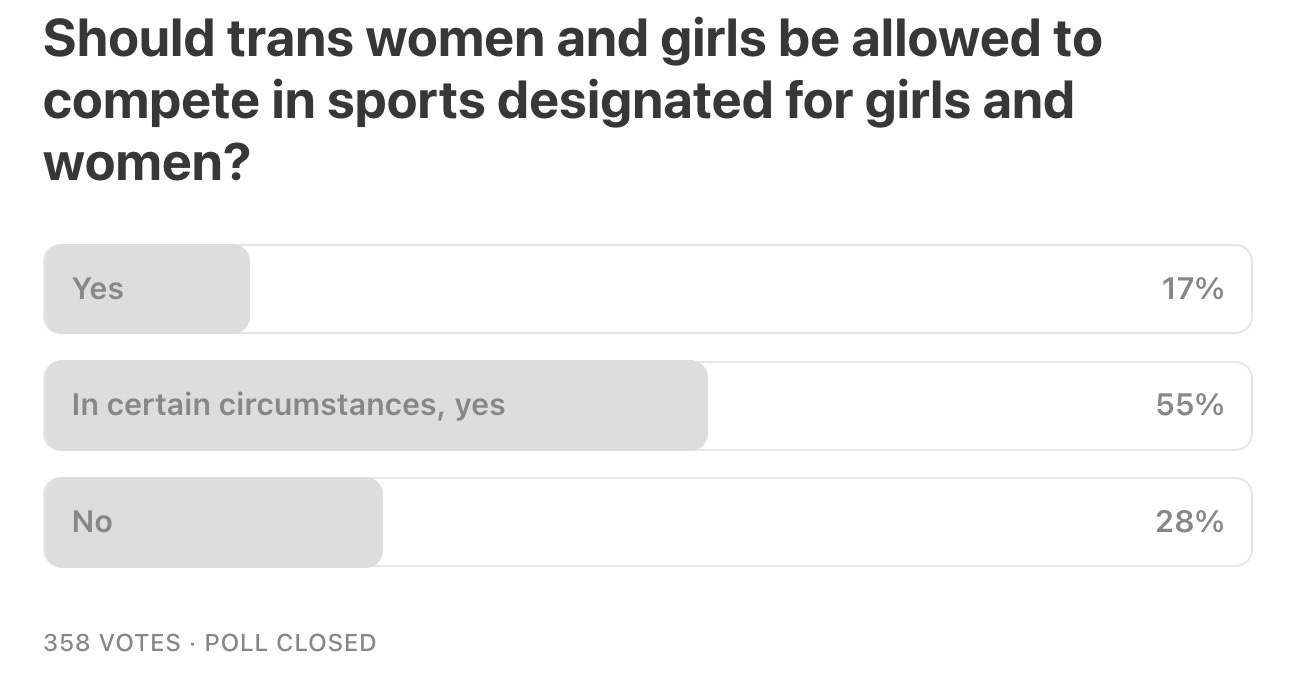
My fellow Mincing Rascal panelist Cate Plys has a response to Joanie Wimmer’s essay in support of this motion that you can read in the comment section below. Last week’s comment thread featured a lengthy discussion of this topic
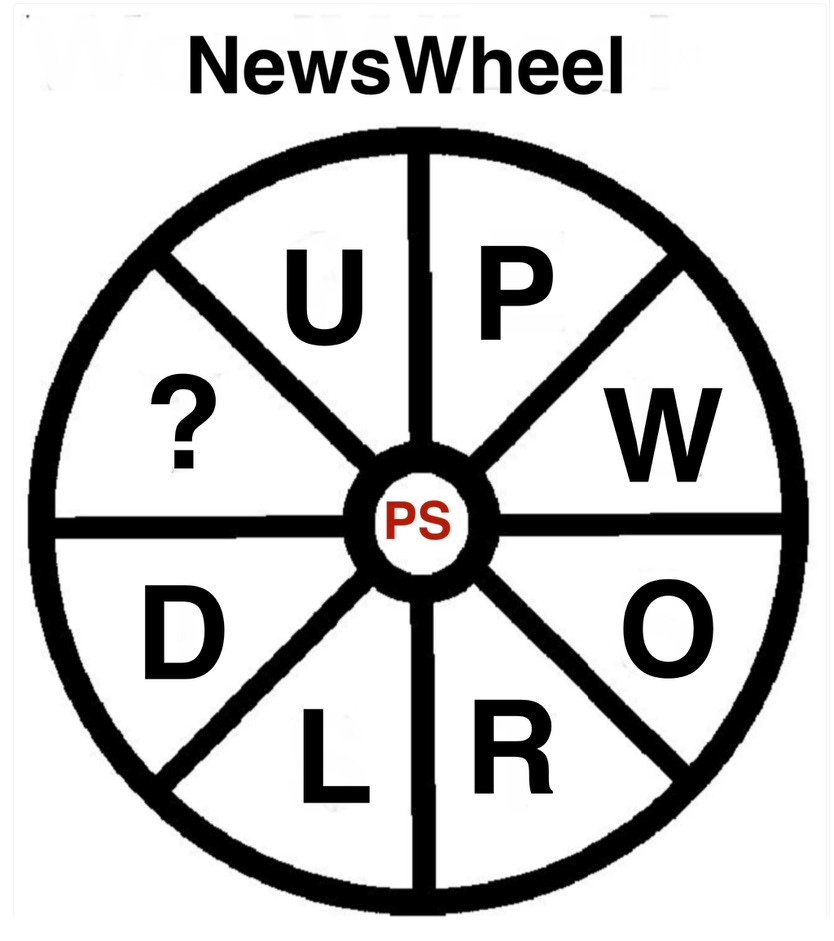
Inspired by the WordWheel puzzle in the Monday-Friday Chicago Tribune and other papers, this puzzle asks you to identify the missing letter that will make a word or words — possibly proper nouns; reading either clockwise or counterclockwise — related to a story in the news or other current event. I’m putting the solution at the bottom of the newsletter again as response has not been positive to asking readers to supply the answer in comments.
Here are some funny visual images I've come across recently on social media. Enjoy, then evaluate:
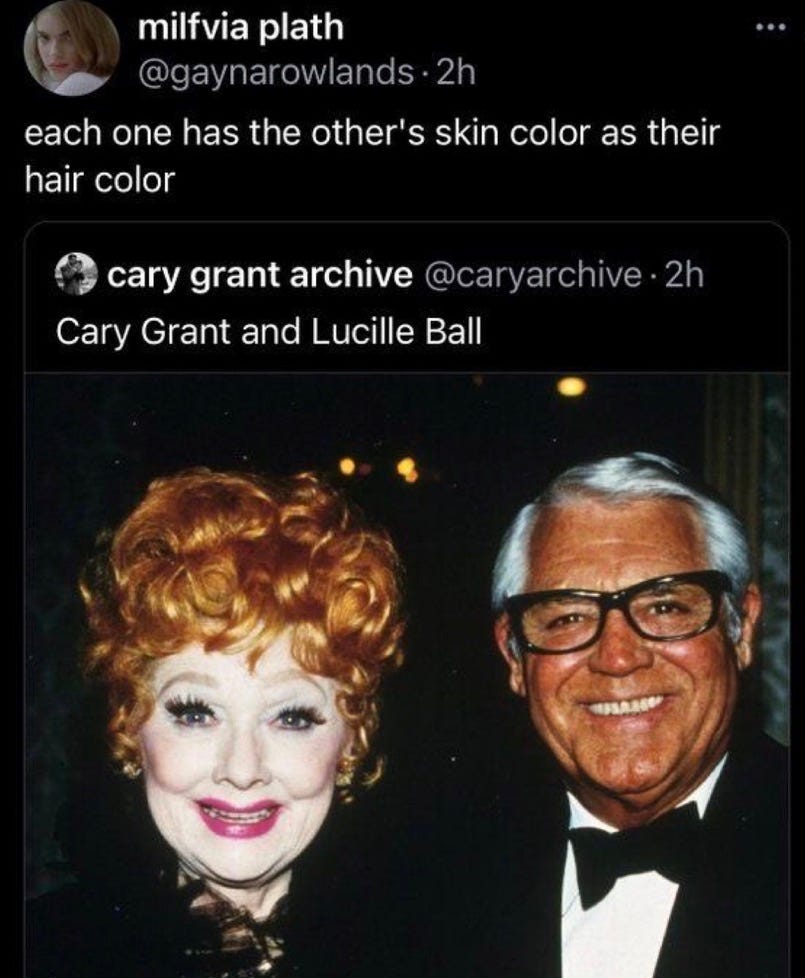
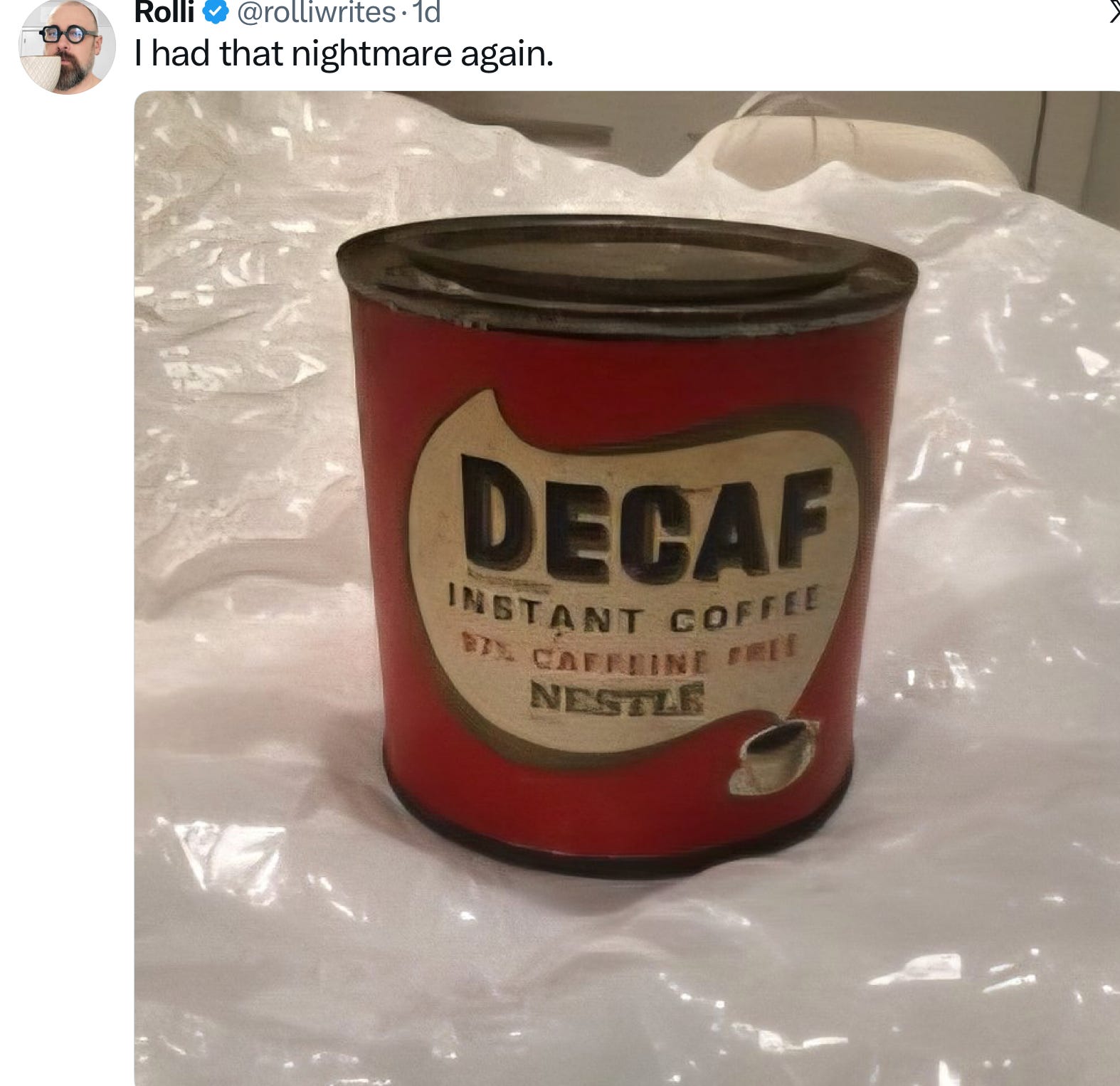

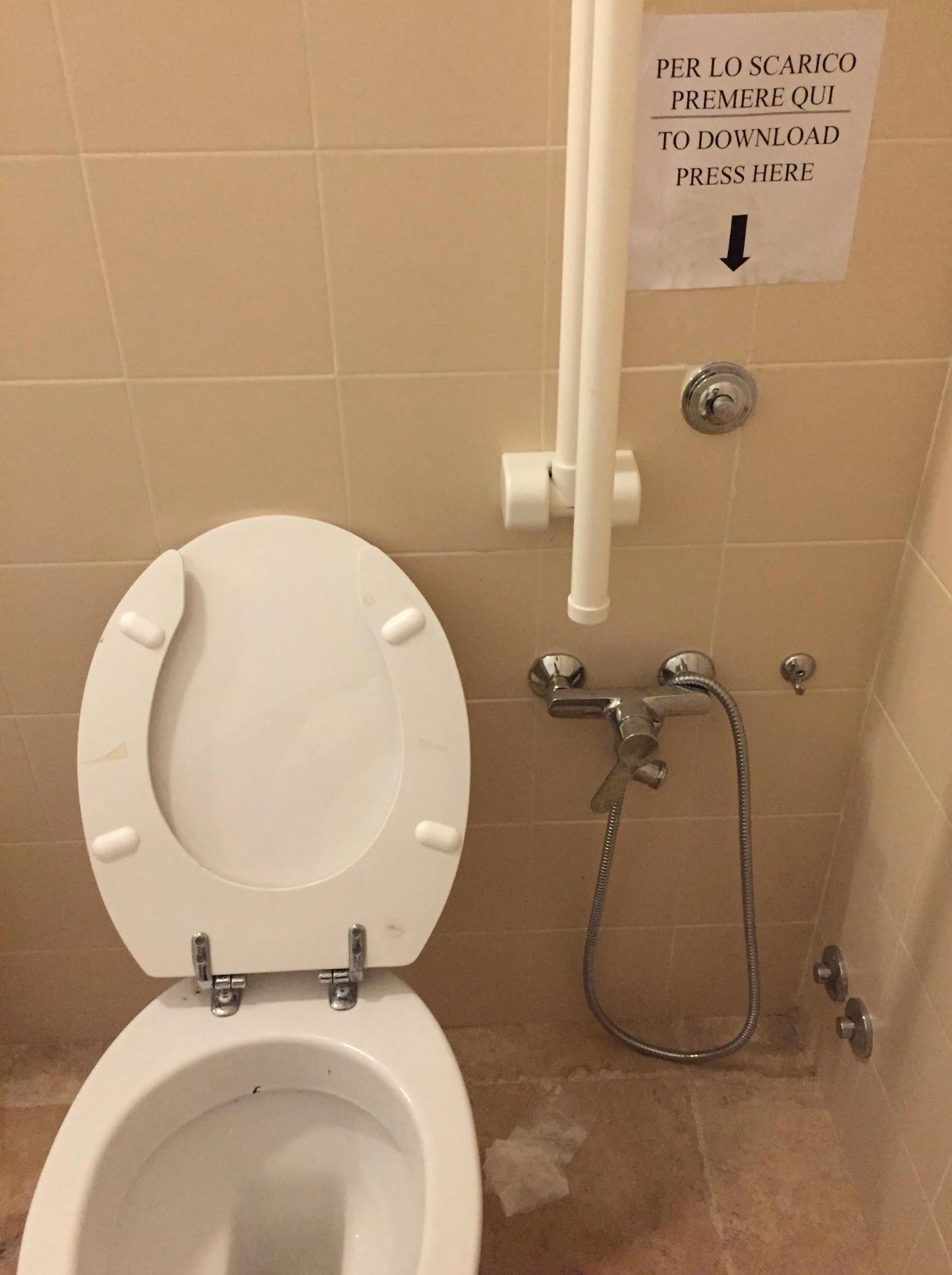
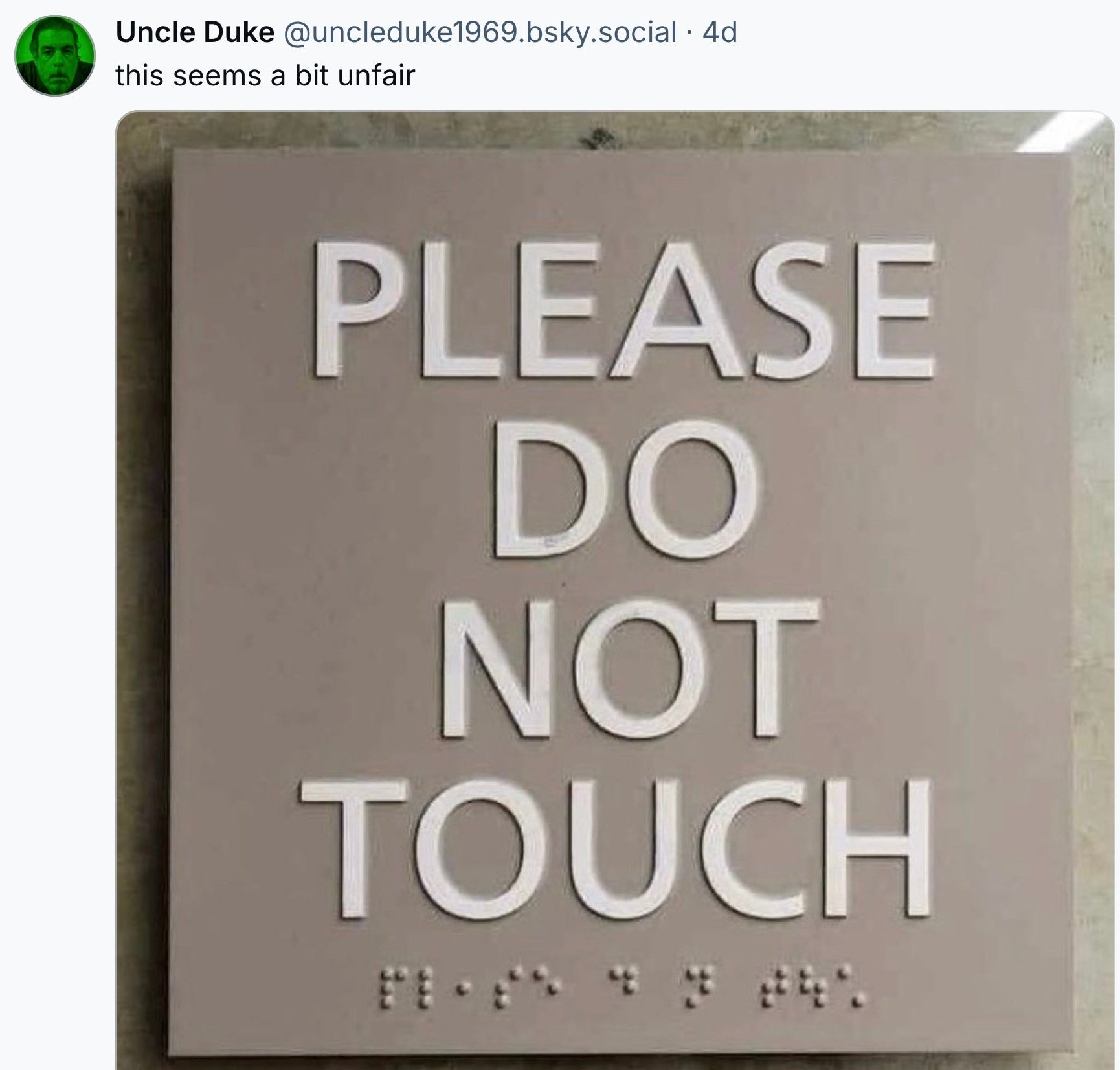
There’s still time to vote in the conventional Quip of the Week poll!

Thanks to paid subscribers for supporting the Picayune Sentinel. To help this publication grow, please consider spreading the word to friends, family, associates, neighbors and agreeable strangers.
Visit the Picayune Sentinel archives
Eric Zorn is a former opinion columnist for the Chicago Tribune. Find a longer bio and contact information here. This issue exceeds in size the maximum length for a standard email. To read the entire issue in your browser, click on the headline link above. Paid subscribers receive each Picayune Plus in their email inbox each Tuesday, are part of our civil and productive commenting community and enjoy the sublime satisfaction of supporting this enterprise.
You can email me at ericzorn@gmail.com or by clicking here:
I read all the messages that come in, but I do most of my interacting with readers in the comments section beneath each issue.
Some of those letters I reprint and respond to in the Z-mail section of Tuesday’s Picayune Plus, which is delivered to paid subscribers and available to all readers later Tuesday. Check there for responses.
If you don’t want me to use the full name on your email or your comments, let me know how you’d like to be identified.
Facebook: https://www.facebook.com/ejzorn
Twitter: https://x.com/EricZorn
Threads: https://www.threads.net/@ejzorn
Instagram: https://www.instagram.com/ejzorn/
Bluesky: https://bsky.app/profile/ericzorn.bsky.social


If you’re having troubles with Substack — delivery, billing and so forth — first try the Substack help page. And if that doesn’t work, shoot me an email and I’ll be happy to help.
Comments
Nothing yet. Say the first thing.
Sign in to join the conversation.