
To read this issue in your browser, click on the headline above.

Tuesdays at 11:30 a.m. I talk with WGN-AM 720 host John Williams about what’s making news and likely to be grist for the PS mill. The WGN listen-live link is here.
Eight months after the U.S. Mint pressed its last one penny coin, the U.S. House has stepped in to pass the Common Cents Act to alleviate the ridiculous confusion over how retailers should give change in cash transactions when they’re out of pennies.
It’s obvious: When the increasingly scarce one-cent coins aren’t available, register totals ending in 1, 2, 6 or 7 cents should round down to the nearest nickel, and totals ending in 3, 4, 8 or 9 cents should round up to the nearest nickel. In the long run, it will be more or less a wash for those who still pay cash, if experience in other countries is any guide. Credit card charges will not be subject to rounding.
If you’re a cash customer and are miffed at paying up to two extra cents for a transaction, consider that “data from Harvard Business School found that credit card interchange fees effectively transfer about $30 billion annually from consumers who pay with cash and debit cards to those who use rewards credit cards” because merchants pass along — in the form of higher prices — the fees credit card companies charge when customers use credit cards.
Put another way, absent different prices for cash and credit transactions, those who don’t or can’t use credit cards effectively subsidize those who do.

New York Times gift link: ‘Failed Immigration Cases Leave Chicago Prosecutor’s Office Reeling.’
The heads of all seven sections of the (Northern District of Illinois U.S. Attorney’s office in Chicago) office’s criminal division have left in the past year, as have many of their successors and deputies.
More than 100 former federal prosecutors from the office recently signed a letter criticizing Andrew S. Boutros, the U.S. attorney for the Northern District of Illinois, saying that “actions taken by leadership in the last year have tarnished the reputation” of the office.
Under Mr. Boutros, the office brought dozens of federal assault charges against immigrants and U.S. citizens who protested the Chicago sweep, known as Operation Midway Blitz. … The New York Times identified assault cases against 62 people that Mr. Boutros’s office brought under the once-obscure federal statute 18 U.S.C. 111. They have flopped at an extraordinary rate. Some 59 charges were abandoned by prosecutors or dismissed by judges, an analysis by The Times found. Only one resulted in a guilty plea, and there have been no convictions in court. Two cases are pending.
That 2% success rate is a stark reversal for the Justice Department, which wins an average of more than 90% of criminal cases.
Under any other presidential administration, Boutros would be out on his bout.

I’ve been a devotee of the free Waze online navigation app for nearly 11 years but I’ve finally had it with its pesky hazard alerts.
As those who use Waze know, you’ll be driving along and a message will pop up on a quarter of the dashboard screen reading something like, “Object in the road, .3 mile ahead. “Still there/ Not there.”
Really? How the hell should I know? I can’t see that far ahead, even with no cars in front of me. I often randomly touch and answer to just get the message to disappear, which doesn’t help the Waze program detect hazards and advise other motorists. But if I wait to come upon this purported object, the query usually disappears from my screen before I can submit a potentially useful answer.
I’m ready to move on to a different navigation app.
Waze, originally LinQmap, was founded in Israel in 2007 on the idea that if drivers on the road could pool their experiences in real time, they’d be able to guide one another through and around traffic jams, accidents, unexpected road closures and other obstacles, far better than centralized observation systems that feed updates on radio and TV.
Drivers with the app running on their phones become passive traffic reporters, showing how fast cars are moving at their locations.
In 2015, USA Today reported that Waze was the “hands down” winner of a reader survey to name the most-useful app of 2015. Today, it’s not clear if Waze is even the most useful navigation app.
Allow me to summarize “Google Maps vs. Apple Maps vs. Waze: 7 Key Differences to Help You Choose in 2026” from the Maps and Locations site. Here are the winners:
1. Real-Time Traffic Intelligence: Waze for granular, community-reported incident awareness; Google Maps for predictive accuracy over longer routes.
2. Map Quality and Points of Interest Data Google Maps, by a wide margin, for comprehensive global data. Apple Maps for premium visual map quality in supported cities.
3. Route Customization and Alternatives: Waze for aggressive real-time rerouting; Apple Maps for clean, proactive suggestions.
4. Privacy and Data Collection: Apple Maps, decisively, for privacy-first architecture.
5. Platform Integration and Ecosystem Compatibility: Google Maps for cross-platform flexibility; Apple Maps for deep Apple ecosystem integration.
6. Public Transit, Walking, and Cycling Navigation: Google Maps, comprehensively.
7. Driver-Focused Features and the Daily Commute Experience : Waze for commuter-focused, driver-centric features and active hazard alerts; Apple Maps for the most refined visual driving UI.
Here’s their summary recommendation.
Choose Google Maps if you want the most complete, globally accurate, multimodal navigation platform — especially if you split time between Android and iOS, or need transit directions anywhere in the world.
Choose Apple Maps if you’re embedded in the Apple ecosystem, privacy is a top priority, and you primarily navigate in major cities where its map quality shines. It’s now a genuinely excellent app that requires no apology.
Choose Waze if you’re a daily driver or commuter who wants aggressive rerouting, community-reported hazards, and police alerts. Its narrow focus on the driving experience is its greatest strength — and its greatest limitation.
Though Google owns Waze, they offer different information.
And none of the apps is all that smart when it comes to estimating actual travel time/ETAs, as they all operate on the assumption that you won’t need to stop for gas, food or to answer nature’s inevitable call.

Mark K. — Regarding the recent vote in the U.S. House to put the United States on permanent daylight saving time, I would be OK with either permanent DST or permanent standard time. It’s the shifts that leave me exhausted and unable to get good sleep for at least a week each time. I don’t have to rehash all the stats listing the adverse effects. But you sold me on picking DST as the option to keep permanent, it seems like the more balanced way to keep sunrise and sunset times reasonable during the year, so that was my vote.
Wendy C. — I’m indifferent to time changes since I retired. They don’t affect me one way or the other. If I had to choose, I’d go with permanent DST over standard time. I believe the savings in energy costs make it the obvious choice. I am concerned about children walking to school in the dark, though a solution would be to advance the starting time of classes by an hour.
Steven K. — The most balanced way to keep sunrise and sunset times reasonable throughout the year is to just leave things the way they are with the twice-yearly change. Keeping DST permanent would mean total darkness at 8am in late fall and early winter. Unacceptable! Keeping standard time permanent would mean blazing sunshine at 4 a.m. in late spring and early summer. It also would mean losing the very cool 8:30 sunset time at that time of year. Again, unacceptable. So much of this seems to stem from the fact that no one much likes that there is less daylight in the winter, but there isn’t much we can do about that. Doing away with the time changes will suck.
K. Mason — Year-round daylight saving time in a northern state such as Minnesota would be a complete disaster! Sunrise would be at 8:48am on December 21. Going to school in the dark would be unsafe for students. And the research I have read says that DST is bad for our health. Our bodies have evolved to synchronize with the sun. And Mother Nature is not amused when we dink around with things.
M. de Hendon — Winter is cold and dark whichever way you slice it.
Beth Bales — No to permanent DST. I predict we will all hate dark mornings in the winter, and having experienced standard time in the winter of 1974 (energy crisis), walking to the bus stop in the dark was very, very creepy. And I was a senior in high school!
Rick Weiland —- Besides the awfulness of DST in the winter, there is a philosophical reason for changing the clocks twice a year, namely a reminder that time of day is an arbitrary concept, not a law of the universe.
Marc Martinez — The dumbest thing possible is the Lock the Clock Alliance proposal that would allow each state to decide. This could result in states that are currently in the same time zone having different times. It would also have states in different time zones having the same time.
Zorn — There is a clear plurality in the PS family for leaving well enough alone:
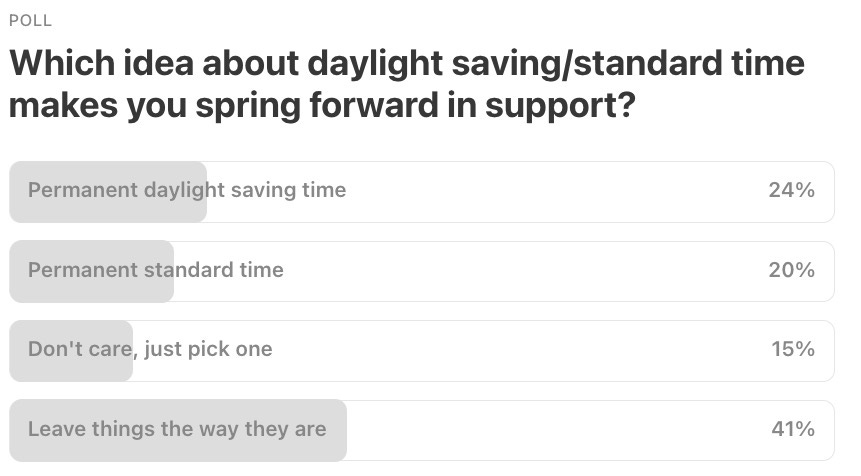
Here’s some other polling showing disparate results:
2025: “Only 12% of U.S. adults favor the current system of daylight saving time, which has people in most states changing the clocks twice a year, according to a new AP-NORC poll, while 47% are opposed and 40% are neutral. … If they had to choose one time for the country to use, more than half of adults — 56% – prefer making daylight saving time permanent.”
Gallup 2025: “The plurality of Americans, 48%, say they would prefer to have standard time the whole year, including summer. Half as many, 24%, prefer having daylight saving time in place the whole year, including winter. The smallest percentage, 19%, prefer the status quo of switching between the two each year.
FactCheck: “In a 2022 poll by CBS News, 46% of Americans said they’d like daylight saving time all year around, while 33% preferred standard time all year around. Just 21% said they would like to keep switching back and forth. A Monmouth University poll that same year similarly found 44% of Americans favored year-round daylight saving time, while 13% favored year-round standard time and 35% said they’d like to keep changing the clocks twice a year.”
Jake H. — You wrote, “My guess is you won’t find more than a few DSA members who dream of the abolition of government and personal property, and there is plainly negligible support for that proposition among the voting public. So this ‘threat’ does not exist.”
I agree that truly communist positions (i.e., “socialist” positions in the Marxist sense, as a “stage” on the way to a communist utopia) wouldn’t succeed. I also suspect that many DSA members don’t share those positions. At the same time, Chevalier’s social media posts give one pause.
During the early months of the Covid-19 pandemic, Avila Chevalier reposted a message calling for a sweeping government takeover of large parts of the economy. The repost advocated nationalizing utilities, hospitals and pharmaceutical companies; suspending rent and mortgage payments; dissolving private health insurance companies; and [seizing] all properties from landlords.
Other deleted posts and reposts included references to communism and anti-capitalist politics. In one April 2020 post, Avila Chevalier wrote that while most of the political theory she had read was communist, “the pyromania associated with anarchism is very intriguing to me,” adding a laughing emoji.
“Seize the means of production,” she wrote in a since-deleted 2019 post, the phrase commonly associated with Marxism.
If a prominent young Republican politician had a similar history of enthusiasm for fascist ideas, I think we would rightly worry about the direction of the party. We don’t really have to imagine this. I worry about the radicalization of young people on both ends of the political spectrum and so about what’s around the corner. The ground is shifting, and the new generation of people drawn to politics seems unmoored, overconfident, and nuts. I worry more about it on the right, where a serious fascination with fascism, Nazism, and blood-and-soil nationalism runs rampant among the young people drawn to Republican politics. But I also worry about it on the left, even to the extent one may see such far left views as more misguided than malicious, even putting aside ominous sympathies with militancy in the cause of resistance to white/Zionist power, etc. The odious Hassan Piker speaks for millions. Chevalier is not exactly the new darling of the left, true, but she was the choice of New York City’s democratic socialist Mayor Zohran Mamdani, who very much is the new darling of the left.
Zorn — Avila Chevalier is far out on the fringe, just like some in the tea party were way out on the fringe. But the fact that she won a primary over a conventionally progressive Democrat despite significant publicity for her radical tweets does suggest that some segments of the Democratic party are in a surly, burn-it-all-down mood. She said “I have grown considerably since in the years since these tweets, and I am focused on our community and our community’s future,” but as far as I know never explicitly disavowed them and explained what she now believes about police, prisons, national borders and so forth, and why her position has changed.
This “I am now focused on…” dodge is beyond irritating. Mamdani used it repeatedly in his interview with the New York Times that was posted over the weekend in which he came off as very charming and very slippery. Here’s a representative snippet of his conversation with the Times’ Lulu Garcia-Navarro:
Garcia-Navarro: Israel’s Prime Minister Benjamin Netanyahu is perhaps planning to visit New York for the UN General Assembly. You pledged during your campaign — and after you won— to order his arrest to comply with an international criminal court warrant. What will happen if he comes in September?
Mamdani: I believe that Prime Minister Netanyahu belongs in the Hague. He’s a war criminal who has been charged by the International Criminal Court. What you will find is that is an opinion that is held by many purely because of what his actions have wrought over these last many years. I’ve also said that I will follow the laws that we have here in New York City, because I believe that there is an importance in following the law as a leader who presides over our city, and that’s something that I plan to do.
Garcia-Navarro: Meaning? I’m sorry, I don’t understand what that means.
Mamdani: Meaning that whatever the law allows me to do in New York City, that’s what we will do, but we won’t be writing our own laws to that end.
Garcia-Navarro: What does the law allow you to do?”
Mamdani: That’s an active conversation with our legal department in seeing what the prospects are we have here in our municipality. However, what we’ve seen at the national level is a desire sometimes to write our own laws, to go outside of the bounds of legality. That’s not something we have an interest in.
Garcia-Navarro: I mean, normally when people come to a UN General Assembly, they’re granted a sort of amnesty because it is the seat of the United Nations. Is that what you’re thinking that you’ll honor or you’re actively looking to see if you can actually arrest him?
Mamdani: I think we are looking at all of our legal obligations, and one of them is with regards to the United Nations. But the other part of this is we’re not talking about the personal assessment of Benjamin Netanyahu. We’re talking about the International Criminal Court and the fact that they have a warrant out for this Prime Minister’s arrest. And I think it’s important to talk about the weight that that has as a charge, and also that as the mayor of New York City, I’ll be following the laws of New York City.
“An active conversation with our legal department” is some old-school humbug right there.
Marc Martinez —Communism as defined by Marx does not exist, true enough. This is because socialism and communism are utopian fantasies. They do not work as economic models, as social models, or as governing models at any ‘stage’ of development. The notion that socialism can be achieved without devolving into authoritarianism is one of the core fallacies that the DSA and socialists in non-communist countries cling to.
Socialists of all stripes have always acknowledged that even in a revolutionary transition to socialism not everything can be accomplished simultaneously. Collectives need to be organized, economic planning groups need to be organized by the collectives, and then property can be seized. Seizing profits and expropriating financial capitalists and capital can be done much more quickly. Land, housing, farms and small businesses are first to collectivize. Large businesses need their capitalist owners and managers longer, to ensure an orderly transition to the collective of workers. Many of the supporters of socialism have no understanding of it. Socialism is a combination of economic, government, and social systems that has never worked anywhere. No capitalist economy requires any aspect of socialism, and no socialist country can thrive without significant elements of capitalism. Every country that has tried socialism and planned economies has been far poorer for it.
Zorn — A pure capitalist system — no government regulation at all on any business, no public safety net and so on — is an equally ghastly naive fantasy. Yet “capitalist” is not a productive epithet because we know what it means even as we know that it needs to be balanced by such “socialist” things as public education, environmental and workplace regulation, public streets and sidewalks and so on. Given free rein, the hard right would abolish gay rights, reproductive rights, trans rights, Medicare, Medicaid, Social Security, public schools, public unions and direct election of U.S. Senators. I do not lie awake at night worrying about it.
Monica Metzler — I would like to live on Podcast Savings Time, where listening to them doesn’t actually take time out of a 24-hour day. When does anyone have time to listen to podcasts? If it’s quality content, I assume you want to hear what they’re saying and not lose track of the conversation. If you’re not retired, or have an hour-long commute, when do people have uninterrupted hours when you don’t need to speak to anyone, read or write anything, or use something loud. Mike Pesca spends 20 or more hours a week listening to podcasts? Mind blown.
Zorn — Speaking for myself, I listen while driving, working in the kitchen, walking and running. It’s a multi-tasking thing for me.
M. de Hendon — The anti-trans people (including the overt bigots who refer to trans women as “males” and “biological males”) always concentrate on the minuscule number of trans women (it’s always trans women who arouse their atavistic fears) who compete at an elite level. What about those who just want to be accepted and participate in games with their peers--not to win or to even compete but just to take part?
Zorn — The comment thread last Thursday had numerous points and counterpoints on this controversy, including posts from Joanie Wimmer, the author of the original post defending the inclusion of trans women in women’s sports, and journalist Cate Plys, who contributed a lengthy response taking the opposite position.
Terminology is clearly an important part of this debate — GLADD has deemed “biological males” to be a hate term “deployed to deliberately misgender transgender women and girls while collapsing the important distinction between gender identity and sex assigned at birth.”
Plys, who considers it a neutral descriptive term, writes, “A biological woman is a person whose reproductive system is organized to produce large gametes (eggs)—whether that person is currently capable of becoming pregnant or not. A biological male is a person whose reproductive system is organized to produce small gametes (sperm), whether or not they are currently capable of impregnating a female.”

Earlier this month, Tribune contributing columnist Laura Washington decried “double run” politicians who are “so enamored with getting elected that they campaign for and accept their party’s nominations for one office, while at the same time planning, plotting and raising money for another.”
Specifically she singled out U.S. Rep. Mike Quigley of Chicago, Cook County Board of Review commissioner George Cardenas and Cook County Treasurer Maria Pappas, all of whom are seeking re-election in November and also running for mayor of Chicago in February’s municipal election.
Then there’s Alexi Giannoulias, up for reelection as Illinois secretary of state. He has not yet announced but is widely expected to jump into the mayoral race.
Not only does Illinois law allow these politicians to run for two offices at the same time, but they also can hoard the campaign funds they are collecting for one race to fuel another. … Legal? Unfortunately, yes. Credible, democratic or fair? Certainly not. The hypocrisy of these politicians is stunning.
In these Trumpian times, the Democrats are wringing their hands over the assaults on democracy by the evil influences in Washington. They are pounding the podiums about how the Republicans are stealing our voting rights and electoral integrity. Democrats are “fighting” attempts at gerrymandering and voter suppression, they say.
Do they speak up about the double runners, who are gaming the electoral process in their own vested interests? Not a peep. … The most credible candidates are the ones who are bringing forward one message in one campaign, instead of flimflamming the voters with a double run.
She did not mention Gov. JB Pritzker, who seems to be laying the groundwork for a presidential run even as he campaigns for reelection to a third term.
I have no problem at all with Quigley, Cardenas or Pappas. They aren’t hiding their intentions and if voters or donors don’t want to support them because they’re double running, that’s certainly their right.
And my quibble with Giannoulias and Pritzker — apparently coyly refusing to disclose their intentions until after November’s election — is minor. Pols are gonna pol, and that hardly qualifies as flimflammery. Only the most starry-eyed idealist thinks most of them don’t have their eyes on the next rung of the ladder at all times.
I don’t particularly like the idea of Pritzker stumping around next year in Iowa, New Hampshire, Nevada, South Carolina or wherever the Democrats will be holding their first primaries instead of tending to Illinois, but I’m braced for it and not re-thinking my decision not to vote for Republican Darren Bailey.
Hate the game, not the players. If we held our mayoral election on the same date as we hold county and state elections, Illinois election law would prohibit double runs of the sort Washington is calling out. And it would likely increase turnout.
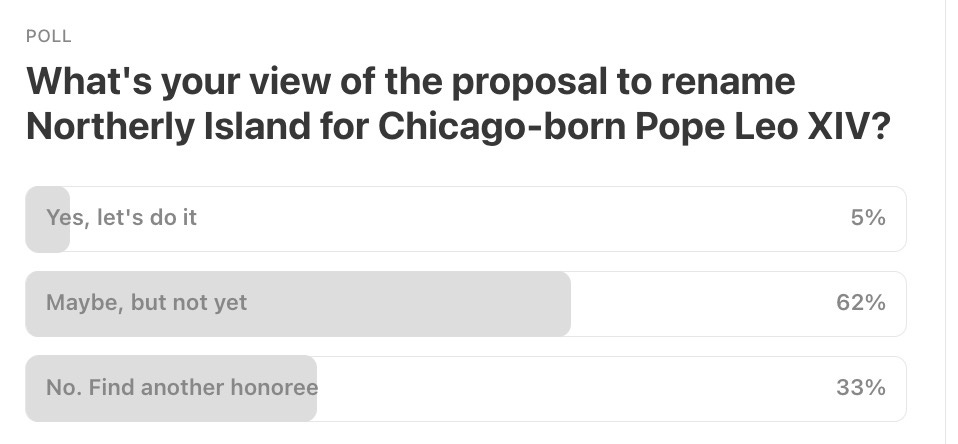
Several of you chastised me for not including the option “leave the name as it is.” Fair enough, but “Northerly Island” for a peninsula that is south of the north/south dividing line in Chicago (Madison Street) hardly seems inviolate. There is clearly no sentiment for reflexively naming the park after Leo XIV, but also considerable sentiment for being open to the possibility in the future.
Gillean Wilsak — I agree. What’s wrong with keeping it Northerly Island? With all the idols turning out to have clay feet, maybe we should just not name things after people.
Garry Spelled Correctly — To be more accurate, name it Central Peninsula, as there isn’t one north or south of it!
Rick Weiland — If there’s no north or south, then there’s no central. Maybe just call it Island.
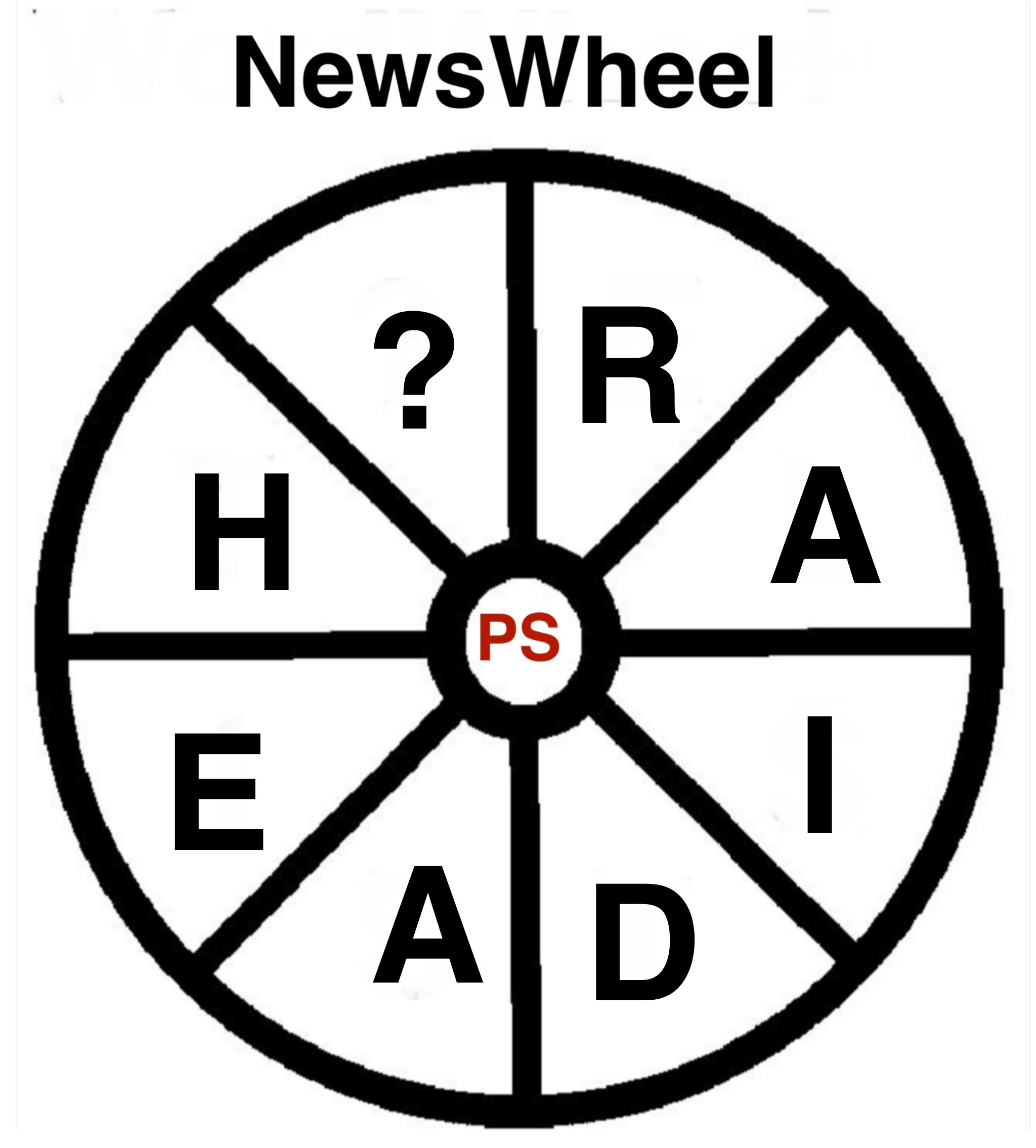
Inspired by the WordWheel puzzle in the Monday-Friday Chicago Tribune and other papers, this puzzle asks you to identify the missing letter that will make a word or words — possibly proper nouns; reading either clockwise or counterclockwise — related to a story in the news or other current event. See the end of the newsletter for the answer.
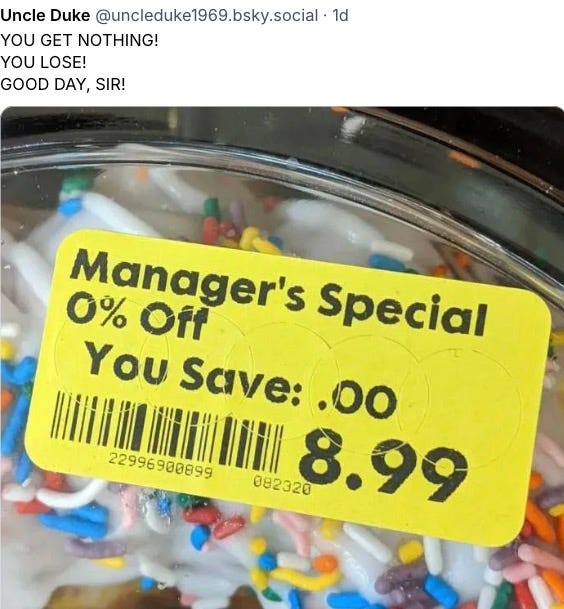
Here are some funny visual images I've come across recently on social media. Enjoy, then evaluate:

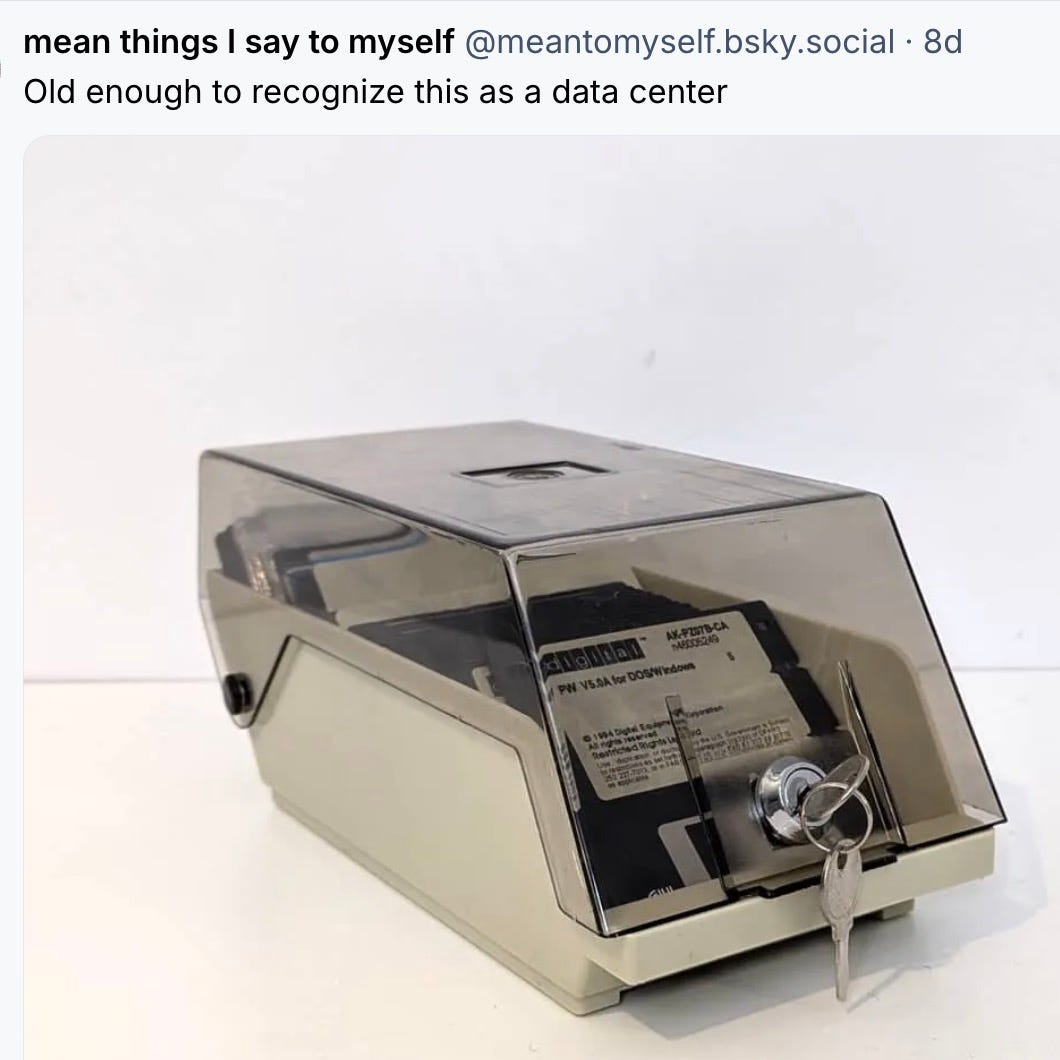


There’s still time to vote in the conventional Quip of the Week poll!

Thanks to paid subscribers for supporting the Picayune Sentinel. To help this publication grow, please consider spreading the word to friends, family, associates, neighbors and agreeable strangers.
Visit the Picayune Sentinel archives
Eric Zorn is a former opinion columnist for the Chicago Tribune. Find a longer bio and contact information here. This issue exceeds in size the maximum length for a standard email. To read the entire issue in your browser, click on the headline link above. Paid subscribers receive each Picayune Plus in their email inbox each Tuesday, are part of our civil and productive commenting community and enjoy the sublime satisfaction of supporting this enterprise.
You can email me at ericzorn@gmail.com or by clicking here:
I read all the messages that come in, but I do most of my interacting with readers in the comments section beneath each issue.
Some of those letters I reprint and respond to in the Z-mail section of Tuesday’s Picayune Plus, which is delivered to paid subscribers and available to all readers later Tuesday. Check there for responses.
If you don’t want me to use the full name on your email or your comments, let me know how you’d like to be identified.
Facebook: https://www.facebook.com/ejzorn
Twitter: https://x.com/EricZorn
Threads: https://www.threads.net/@ejzorn
Instagram: https://www.instagram.com/ejzorn/
Bluesky: https://bsky.app/profile/ericzorn.bsky.social


If you’re having troubles with Substack — delivery, billing and so forth — first try the Substack help page. And if that doesn’t work, shoot me an email and I’ll be happy to help.
Comments
Nothing yet. Say the first thing.
Sign in to join the conversation.