
“Life is not a problem to be solved, but a reality to be experienced.” –Kierkegaard
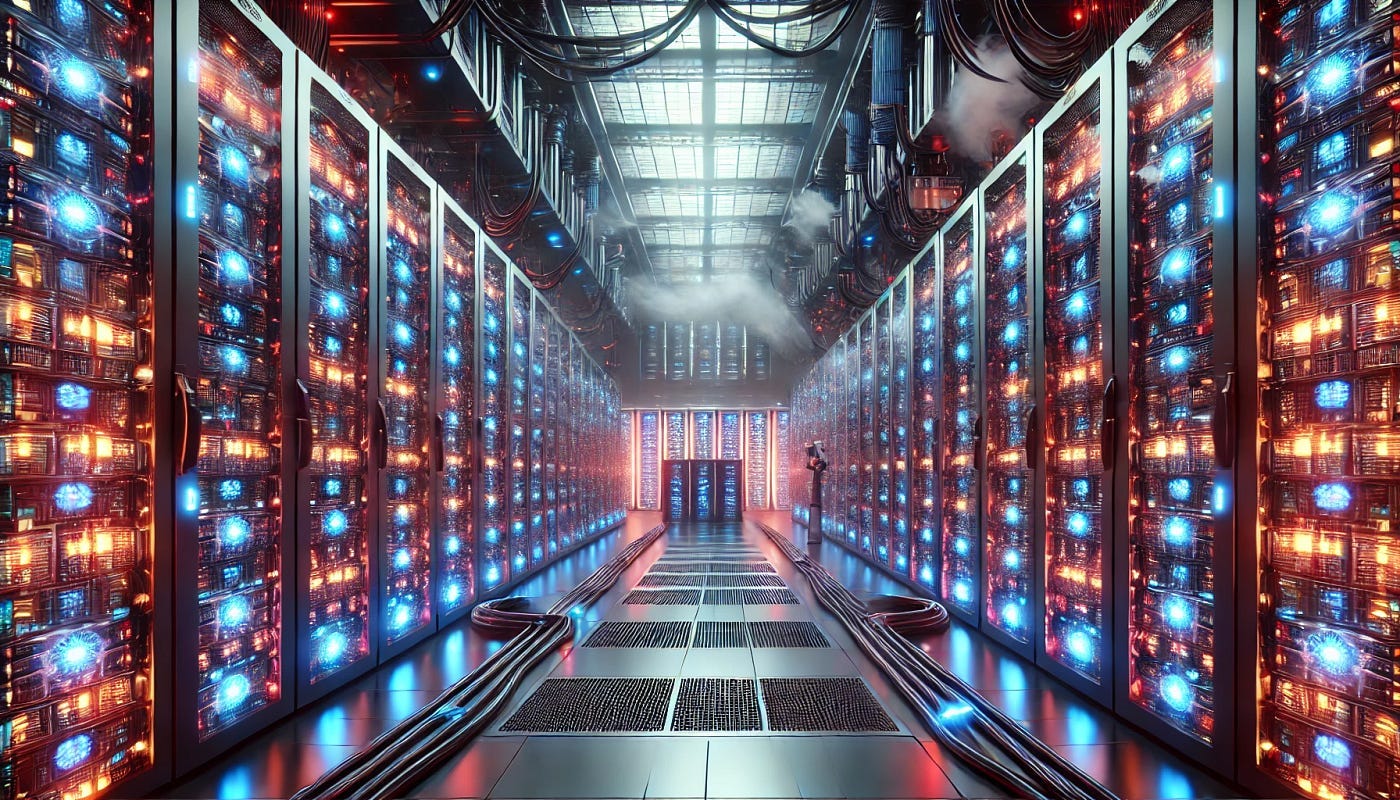
I don’t ask myself this often, but is the machine really the problem?
I feel like I’ve been chasing this boogeyman for decades. I’ve read everything I could find on the subject, written plenty about it myself, talk about it every day in counseling sessions, “put down your phone… go touch grass… talk to your wife and kids for once…,” etc. The machine has taken over. I’m not doubting that. But is it the problem?
Being as blunt as possible, I believe that at some point, technology will destroy everything. And we didn’t need the internet or AI to make the fear a real possibility; we’ve had it since at least the 1940s. But as T.S. Eliot said, the end will probably not come with a bang but a whimper. The whimper—the grind of our daily lives—is indeed being overrun by the machine. Slowly (yet with breakneck speed, depending on your vantage point), our lives are being conformed to inhuman ways of being, and we are exchanging real nature for a synthetic nothing on every imaginable front. This much is undeniable.
I often tell my clients that there is no going back; this “progress” will continue to cause destruction no matter what they do. That might sound pessimistic, but you either value history and its lessons or you don’t. Those who believe in the myth of progress think we are still heading toward utopia—for the ten thousandth time. It’s striking how many still trust in progress when history is overwhelmingly a story of the fall.
I’ve never had a client cry over this, this inability to halt the destruction. We all know we’re in danger, but we have other things to worry about. Our anxieties are not consumed with world-sized doomsdays, like a future AI Singularity deciding whether we live or die based on a social credit score (though I have spent a few sleepless nights on that rabbit trail, truth be told), or whether the pollution necessary to power the machine will do the job, or any of a thousand other scenarios.
No, our anxieties are usually fixed on our own doomsday; we’re stuck on things humans have been stuck on for the last several thousand years: Is there a God? Is life (my life) meaningful? What will I do with guilt and shame? What do I make of suffering and uncertainty? Am I alone?
In other words, how do I solve life?
Isn’t this what science was for? Isn’t this what technology was for? When did these saviors drop the ball?
Why was the local guide I met in Roatan happier with nothing but a pair of shorts and snorkeling gear, while my clients and I, who live in luxury greater than any king before us, can’t seem to buy an hour of genuine peace?
This is a well-rehearsed problem of modernity. I’ve said nothing new here, and there’s nothing new to be said; the guy in Roatan does not possess a secret. He just accepted life and never lost his sense of wonderment.
It wasn’t until we began seeing life as something that needed improving that our problems began. Talk about an old story. Who had it better than that primordial couple in that fabled Garden? They walked and talked with God; they lived in perfect harmony with each other and with nature; they had no cares and no restrictions in paradise except for that tree, the one in the middle of the Garden, the Tree of Knowledge. It was forbidden, but it promised godlikeness to the one who ate its fruit. Knowledge, more knowledge than they could imagine. Knowledge all the way from one end of eternity to the other—all the way from good to evil. It was irresistible. The temptation to eat was the urge to see existence and themselves in it as deficient and in need of improvement; a problem knowledge could solve.
Is this not our situation today? We have everything, but because of that—our desire for more—our souls have somehow died. Our souls find no peace in the machine, yet we keep creating more and more, hoping that the next outfit, the next car, the next phone will fix the insecurities raised earlier. Ironically, the very things we fill our lives with are the things that testify (falsely) to the meaninglessness of our existence. Somehow, perhaps unconsciously, we expect the endless stream of knowledge pouring in from our screens to give us a better life. The thought itself is laughable. Reality is actually the opposite.
But don’t blame the machine. The machine is merely the expected result of our discontent. Blaming the machine for the destruction is like blaming a circuit wire for electricity. The blame is not on the conduit but on the source. The source is greed (and ultimately pride).
That said, we face a dilemma: to find peace, we must first change our relationship with existence; however, our existence is deeply entangled with the machine, making experiencing life nearly impossible. Our greed created the division we feel between ourselves and others; this division led to the creation of the machine, and the machine, in turn, reinforces the division, which further fuels our greed. This cycle has not stopped since it first began.
Believe it or not, this isn’t meant to discourage but to encourage. Personally, I need to see the bare facts of reality—however gloomy they may seem— to realize that reality is not as bad as my anxious imagination makes it seem. Reality, undisturbed by anxious thoughts, is always better than whatever doom I imagined beforehand. I find that if I can gain insight into the reality of something, that insight also offers options for a way forward.
There is comfort in knowing that what we are experiencing now is not new. It is an age-old challenge set before all people everywhere and at all times. This means that one is not doomed as a matter of course, but has every chance to learn from the past how to navigate the machine and win.
There is also comfort in knowing that ultimately, it is not the machine that is the problem; it is not something out there that must be defeated, but rather something much closer. Remove the machine entirely, and we have not improved much from reenacting the Garden, where, incidentally, perfect man and perfect woman failed miserably. Collectively, we would fare no better. That is the lesson of history (that great rebuttal to the myth of progress).
But history, like statistics, is not primarily about individuals but about groups. While history is nearly flawless at predicting group behavior, it cannot predict what individuals will do with their lives. Believe what you want about free will, but this is a great example of personal agency: we have the power to shape ourselves into whatever we choose. Not in every sense, of course. All the adults I grew up around told me I could be whatever I wanted. I wanted to be the prince of Monaco (still haven’t given up hope).
Obviously, we are not at liberty to choose our situations, but we can choose how we handle our situations. As Viktor Frankl put it, referring to his experience in the Nazi prison camps, you can’t choose what’s before you, but you can choose how you are before it (paraphrased).
When it comes to the things that matter most, we truly have the power to make of ourselves what we will.
To the few readers who might be following these articles, I haven’t forgotten the promise I made at the end of my last piece. I didn’t provide any solutions in this article, but I promise (no, seriously) to outline practical ways, as the ancients might have counseled, to address the problems I’ve discussed over the last three articles.
Thanks for reading!
No posts
Comments
Nothing yet. Say the first thing.
Sign in to join the conversation.