
As you can tell by my dismal record at the prediction site Gold Derby, I do a terrible job forecasting how Hollywood is going honor itself at shindigs like the Emmy awards.
BUT – I still had a lot of fun talking about what it all means when the nominations were released Wednesday morning, bloviating on NPR’s midday show Here and Now and talking even more about it all later that day on All Things Considered. See the full list of nominees here.
Hear the ATC appearance below.
0:00
-3:46
Still, there were a few questions which occurred to me that I couldn’t explore in the time allotted on public radio. Which is, apparently, why God invented Substack.
So here’s a quick look at some things which I’m still puzzling over or ruminating on.
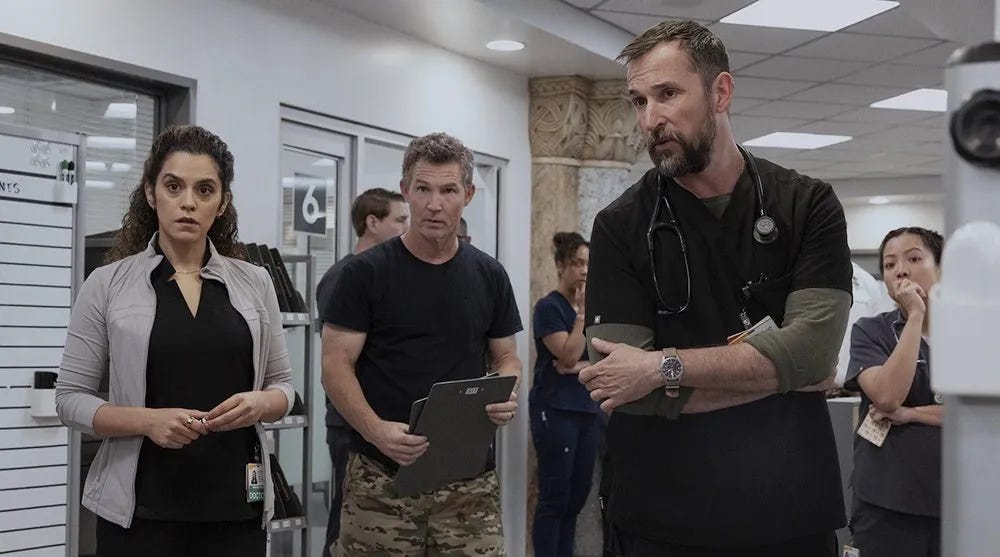
What’s up with diversity, Emmy nominees and The Pitt? It truly pains me to ask this about a series which I really love, but why are almost all the performing Emmy nominations from the most-nominated show in the contest given to the white actors?
The Pitt’s blockbuster success this year led to an astonishing 13 acting nominations, across supporting actor and actress in a drama, guest actor and actress in a drama and best actor in a drama for star Noah Wylie. Among all those nominations, just two non-white actors got nods: Iranian-American actress Sepideh Moafi as best supporting actress and Ernest Harding Jr., who is Black, as best guest actor.
My hunch, looking at these numbers, is not to blame the Emmy academy, even though The Wrap noted six fewer performers of color were nominated overall this year than last, just 18 of 91 nominees. And Isa Briones, who is Filipino, Swedish and Irish, was the only major castmember from The Pitt not nominated for an Emmy. Still, I think The Pitt places actors of color more often in recurring or smaller roles; they are, thusly, less likely to earn a nomination.
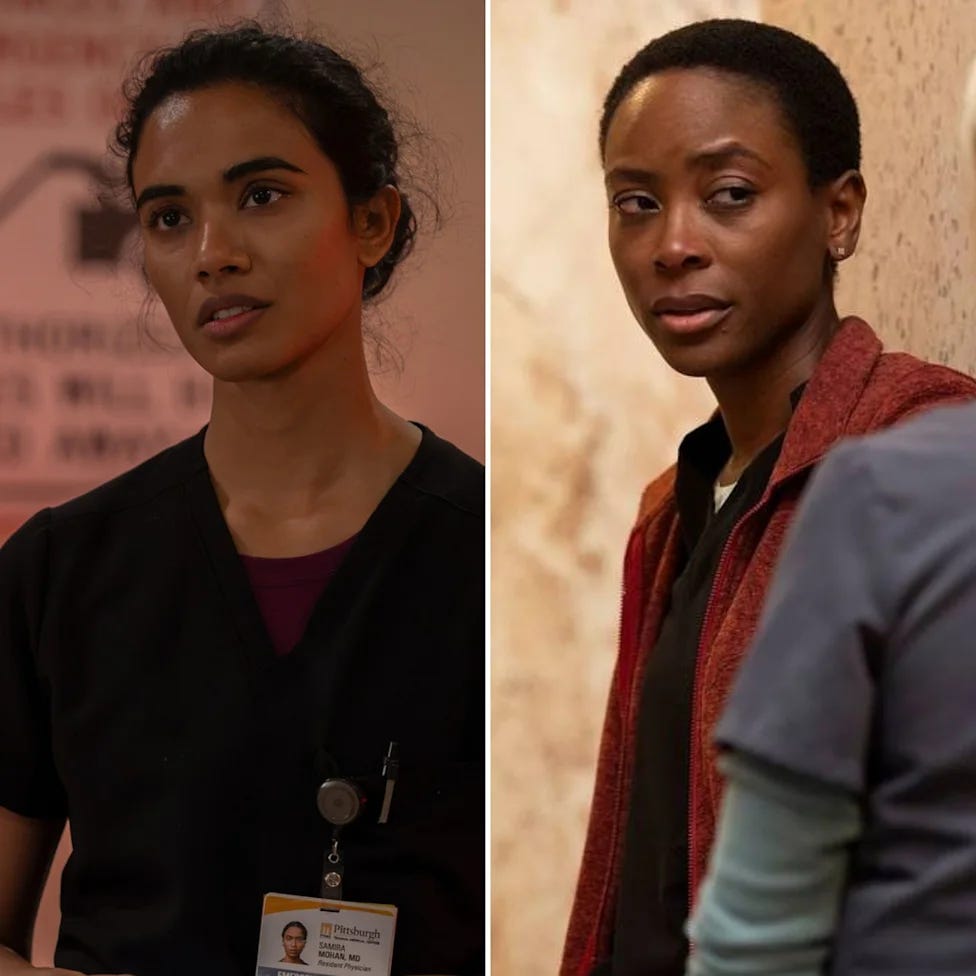
(Supriya Ganesh and Tracy Ifeachor)
If you watch The Pitt, its cast is pretty diverse. Supriya Ganesh, who plays Dr. Samira Mohan, is of east Indian descent. Shabana Azeez, who plays medical student Victoria Javadi, is an Australian actor of Indo-Fijian heritage. Ayesha Harris, who plays Dr. Parker Ellis, is a Black queer woman. Moafi, the show’s sole non-white nominee in a major acting category, played a new attending physician who butted heads with Wyle’s character. Luke Tennie, who viewers are more likely to recognize from playing Sean Mitchell on Apple TV’s Shrinking, is a Black man who played a fourth-year resident, Dr. Crus Henderson.
But Harris’ character was a smaller, recurring role in the show’s first two seasons; her turn as a full castmember doesn’t come until 2027. Tennie’s character also didn’t appear in most episodes this season. Ganesh’s character was written out of the show after this season. Tracy Ifeachor, a Black woman, played a senior resident who was secretly pregnant in the show’s first season but was written out of the second.
Time for The Pitt to give better parts to more non-white performers and let them stick around long enough to snag an Emmy nomination or two.
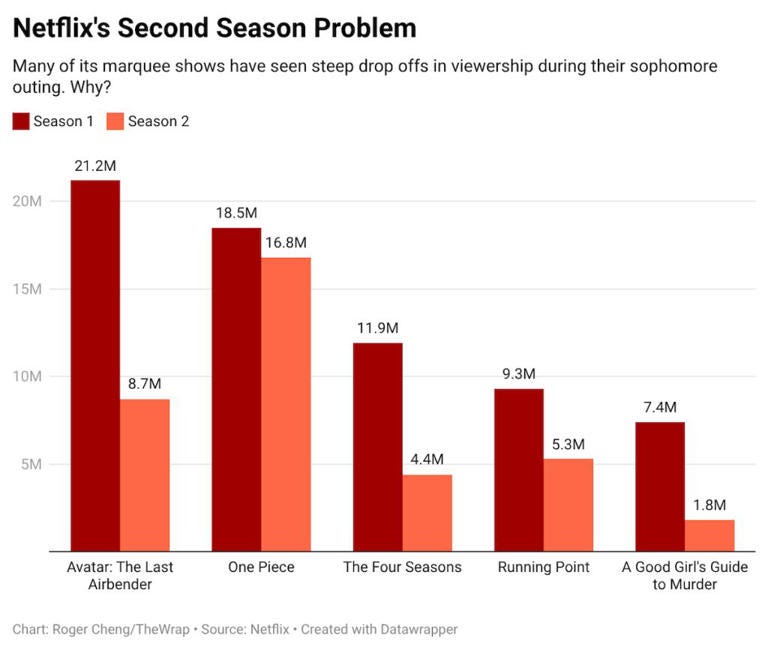
(Chart courtesy of The Wrap, from this story)
Perhaps declining quality is the reason so many Netflix series see extreme viewer drop off after the first season. I may be stretching the point a bit here. But it was striking to see how few Netflix shows landed in the best drama and comedy series categories this time around, compared to smaller competitors like HBO Max and Apple TV.
Netflix had one nominee in each of those categories: The Diplomat in drama and Nobody Wants This in comedy. Meanwhile, HBO Max had three nominees in drama (The Gilded Age, A Knights of the Seven Kingdoms, The Pitt) and one in comedy (Hacks). Apple TV had three nominees in EACH category (Pluribus, Slow Horses and Your Friends and Neighbors in drama and Margo’s Got Money Troubles, Shrinking and Widow’s Bay in comedy)
Lots of media outlets earlier this week discussed a Bloomberg story noting that popular Netflix shows like Beef (also nominated as best anthology series), Running Point and The Four Seasons saw viewership declines of 50 to 70 percent from their first to second season. I saw several stories where people talked about causes ranging from the glut of competition and long waits between seasons.
But I always thought the causes were pretty obvious. First problem is Netflix’s binge release model, making every episode in a season for most shows available at once. That tactic worked when there was less competition, watching TV online was more of a novelty and there was nothing else on TV like Netflix shows House of Cards and Orange is the New Black. Now, none of that is true, and it’s tough for most TV series to sustain viewer attention over weeks, especially when it’s a show people already think they know.
However, the biggest problem Netflix has is too much of their product is too mediocre. And too many shows which have impressive first seasons cough up second seasons which aren’t nearly as impressive. Hence viewer drop off and a streaming service with over 300 million subscribers getting fewer nominations in major categories than a competitor with likely a third the viewership.
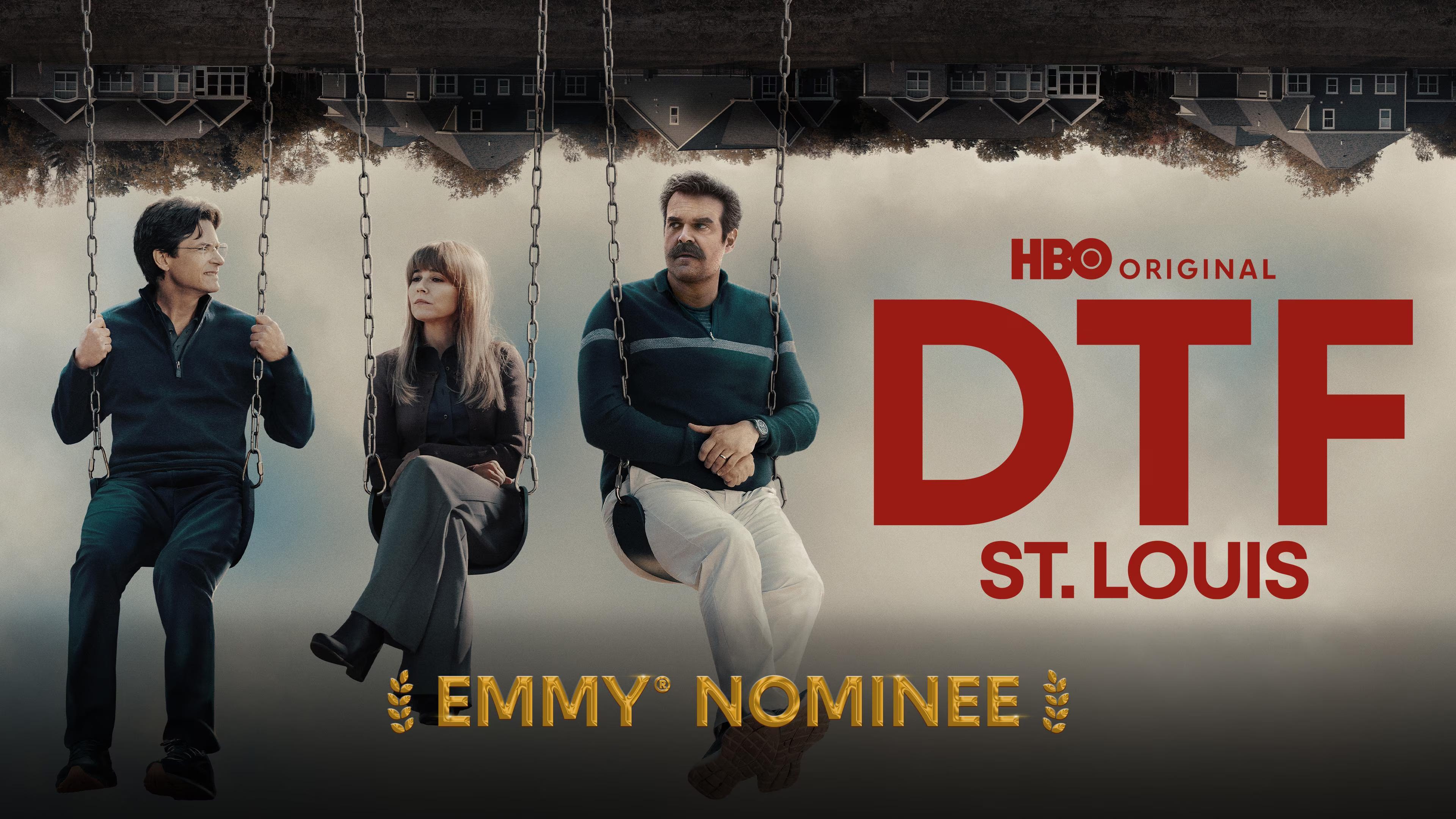
Has competition – and quality – ebbed in the limited series category? There was a time, not long ago, when the limited series category was so competitive, HBO classified The White Lotus as a drama likely to get it out of the line of fire (c’mon, you know it’s an anthology series. really.) Programs like The Mare of Easttown, The Queen’s Gambit, I May Destroy You, Watchmen and WandaVision made this easily the most competitive category just four or five years ago.
This year’s crop of nominees shows were good – particularly the quirkily creative drama DTF St. Louis. But series like All Her Fault and Love Story: John F. Kennedy Jr. & Carolyn Bessette are not quite at the zeitgeist-busting levels of previous years. Even the front-runner in the category, Beef, presented a less groundbreaking slate of episodes this year than its first season in 2023 with Ali Wong and Steven Yeun.
Feels as if the industry has shifted a bit, turning projects which might have been one-and-done a few years ago – Task and Your Friends and Neighbors, I’m looking at you – into series with multiple seasons.
Comments
Nothing yet. Say the first thing.
Sign in to join the conversation.