
New here? Welcome to All Too Well, where I draw on my 20+ years of expertise in wellness and healthy living to bring you bits and bites of free info you can actually use: low or no-cost tips, light on the preaching, with a side order of musical wordplay. 🤗 Let’s dive in.
2 min read
♀ News: As of May 12th, polycystic ovary syndrome (PCOS) has officially been rebranded as polyendocrine metabolic ovarian syndrome (PMOS). Why is this important? Because the old name was a misnomer: the "cysts" aren't pathological cysts, and the condition affects metabolism, cardiovascular health, and skin, not just the ovaries. Meaning: an estimated 70% of the roughly 1 in 8 women affected don't know they have it. Ladies, if stubborn weight, mood disruption, skin issues, irregular periods, or blood sugar irregularities have been plaguing you without a diagnosis, they may not be unrelated problems. Worth a second look before you chalk it up to something we just have to suffer through. That’s what jury duty is for! 🥳
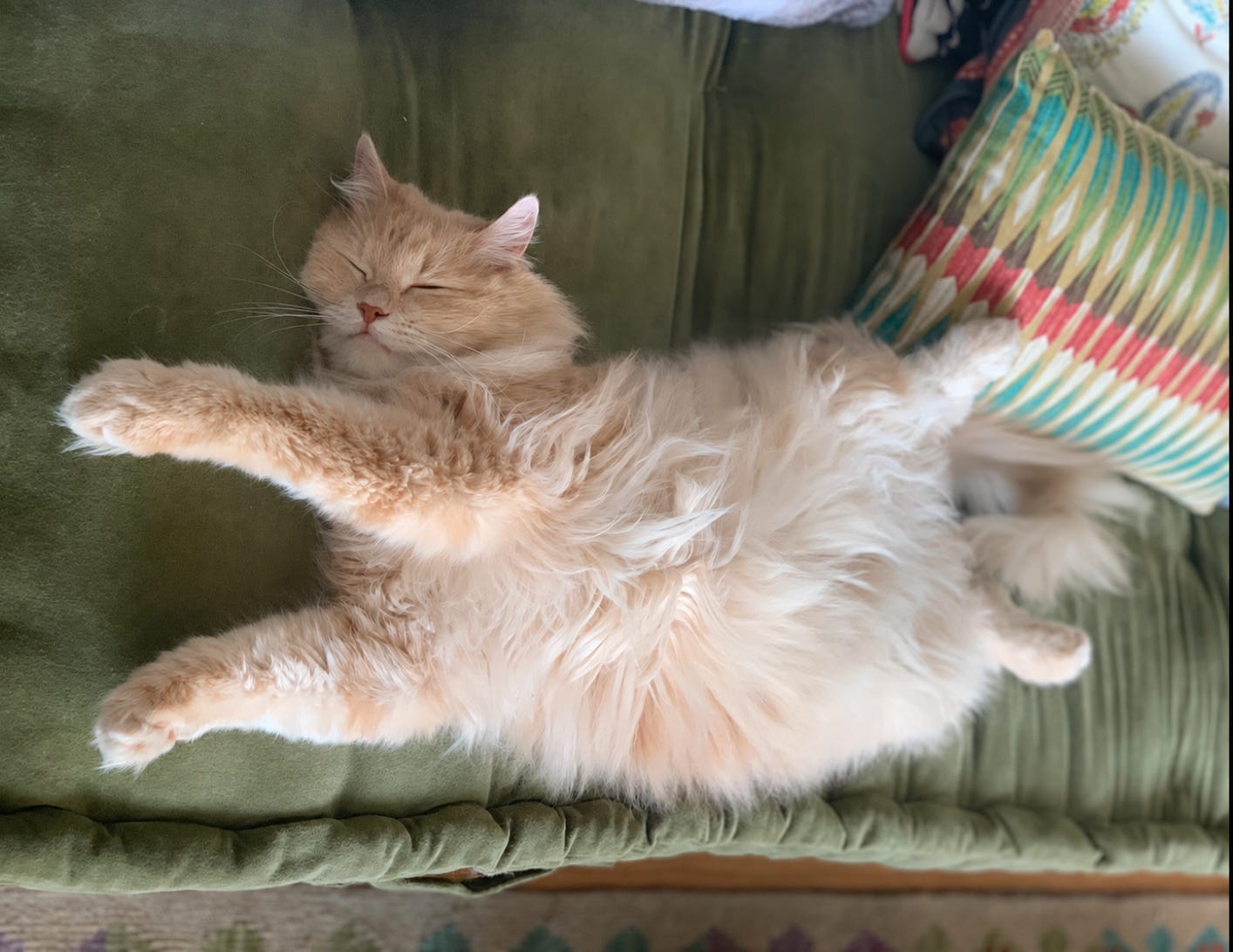
Most of us sleep in our preferred position because it’s just the most comfortable (me, I will never understand how stomach sleepers do it). But research consistently shows that there are serious benefits — and downsides — to which way you lay your head.
Brain detox: During sleep, the glymphatic system flushes out beta-amyloid and tau, the proteins that precede Alzheimer’s and dementia by decades. Side sleeping produces the most efficient clearance. Back sleeping blunts it.
Sleep apnea: Up to 75% of cases are position-dependent. Read that again. For many people, simply staying off their back reduces severity by more than half, no CPAP required. 🤿
Acid reflux and general digestion: Sleeping on the left side keeps your stomach valve above the acid pool. The right side submerges it. Read that again, too.
Shoulder health: Years of compressing the same rotator cuff against a mattress can produce measurable tendon damage, so alternate sides when you can.
Pregnancy: Multiple studies have linked back sleeping in the third trimester to significantly elevated risk. The data is consistent, and still not making it into enough prenatal appointments.
TLDR: the side sleeper has the upside, if you will.
🦖 Fun fact: if you sleep with your hands curled up all comfy under your chin, there’s a name for this: T-Rex Arms. This position can be a self-soothing and self-protective posture and is common among neurodivergent sleepers, and also, unsurprisingly — women. 🫠 The nervous system truly works in mysterious ways.
If you do find yourself frequently making tiny arms in your sleep, you may notice tingling and numbness caused by the sustained elbow flexion compressing the ulnar nerve. Some light stretching before bed and upon waking can help to alleviate and prevent future issues like tendonitis and carpal tunnel.

Doesn’t it blow your mind how much more there is to learn about sleep? If you’re a #sleepgeek like me, you can fast-track your education at the Equinox Hotel’s third annual Global Sleep Symposium on June 4th. Live conversations with Dr. Matt Walker and fellow sleep experts on how sleep drives recovery, cognition, and longevity, plus an immersive sound experience. Tickets here.
☀️ Happy Friday, wishing you minimal clouds and maximum ice cream castles this Memorial Day weekend!🍦🩷
All Too Well is totally free! Why wouldn’t you share it?
No posts
Comments
Nothing yet. Say the first thing.
Sign in to join the conversation.