
Last time, we asked: what if we stopped measuring achievement gaps and started measuring creativity? How can this shift change the Story?
Here's where that question leads us next.
If we are building a tool to help equity leaders imagine their way into what doesn't yet exist — a real co-pilot, not a chatbot, not a search engine — then we have to ask: what does that tool sound like? Because GLADYS is only as good as the relationship she can actually build. And the relationship starts before the first idea lands.
It starts the moment someone hears a voice and decides, in the body, whether they are safe.
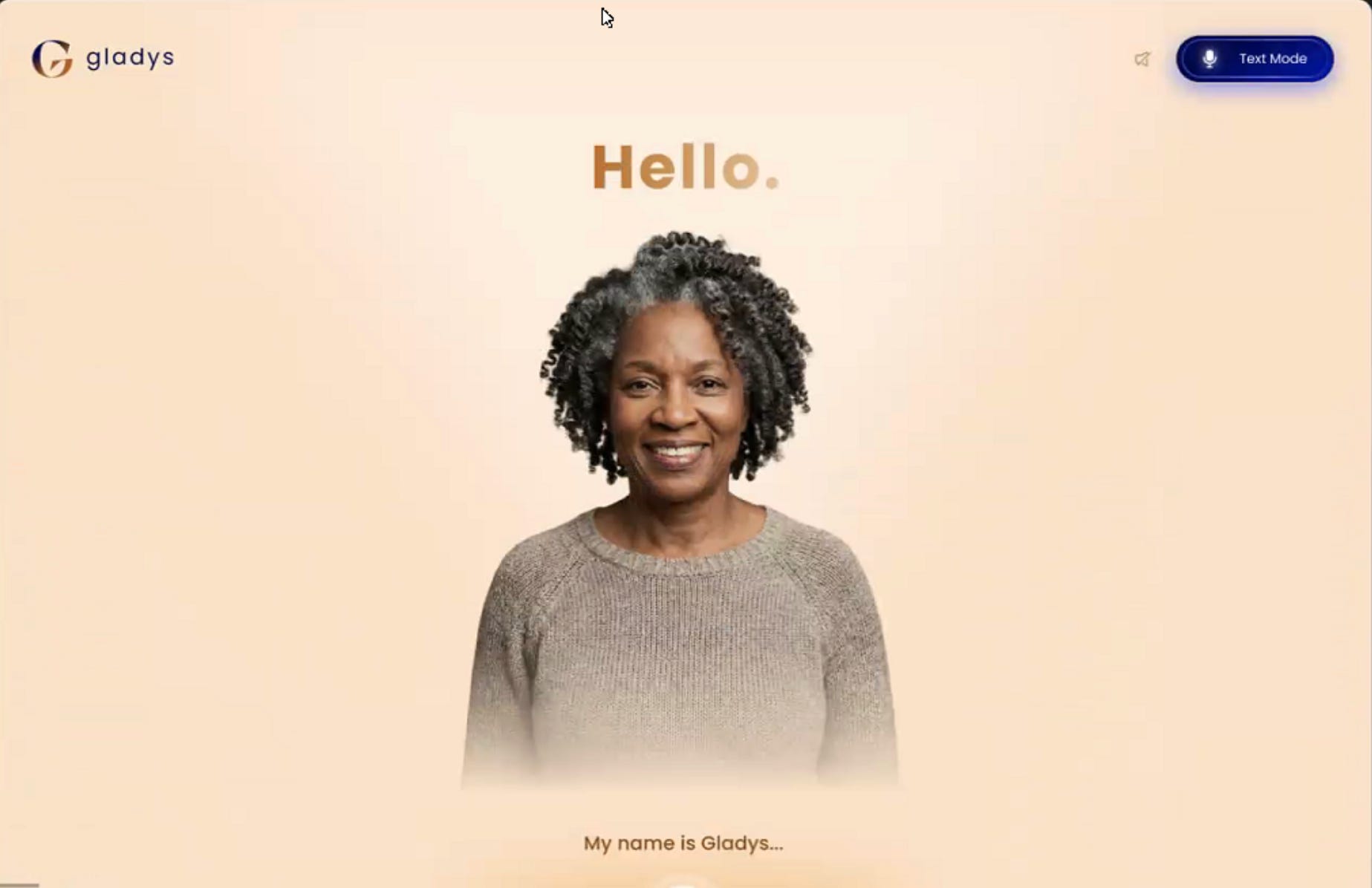
Voice is not neutral. It never has been. The sound of authority has always been raced, gendered, classed, credentialed. We've been trained since birth to hear competence in certain cadences and confusion in others. Safety in certain tones and threat in others.
As designers, we must hold these questions: How does our lived experience change our sound? How does grief sit in the larynx? Where do the vocal cords hold restoration and repair? What does possibility and promise sound like? And whose bodies have the resume’ to hold it?
In other words, what wavelength does the future hum on, and how do we all learn to pick it up? As we move closer to making choices about how to ethically shape these experiences, we need your perspective.
Listen to these voices and tell us what resonates with you.
We're going deep on what GLADYS sounds like — and what that means for the leaders she's designed to serve. We're talking voice cloning ethics, the equity implications of AI authority, and what it actually feels like when a tool speaks to you in a voice that was built to close the distance.
Impact starts in the ear. Can you dig it?
Stay Creative and Maladjusted,
Caroline
The concerns are real. Data centers consume enormous amounts of energy. Most of that energy comes from fossil fuels. And the communities bearing the heaviest pollution burden from those fuel sources — the ones living closest to the power plants, the cooling towers, the infrastructure — are disproportionately communities of color. That is not a coincidence. That is a pattern.
So when we say GLADYS is an equity tool, we mean all the way down.
Here's how to think about the environmental footprint of any AI system: three questions. Where is the data center located — and who lives nearby? What powers it — renewable sources like solar, wind, or hydroelectric, or fossil fuels? And how large is the server — because size determines how much energy is consumed at every query.
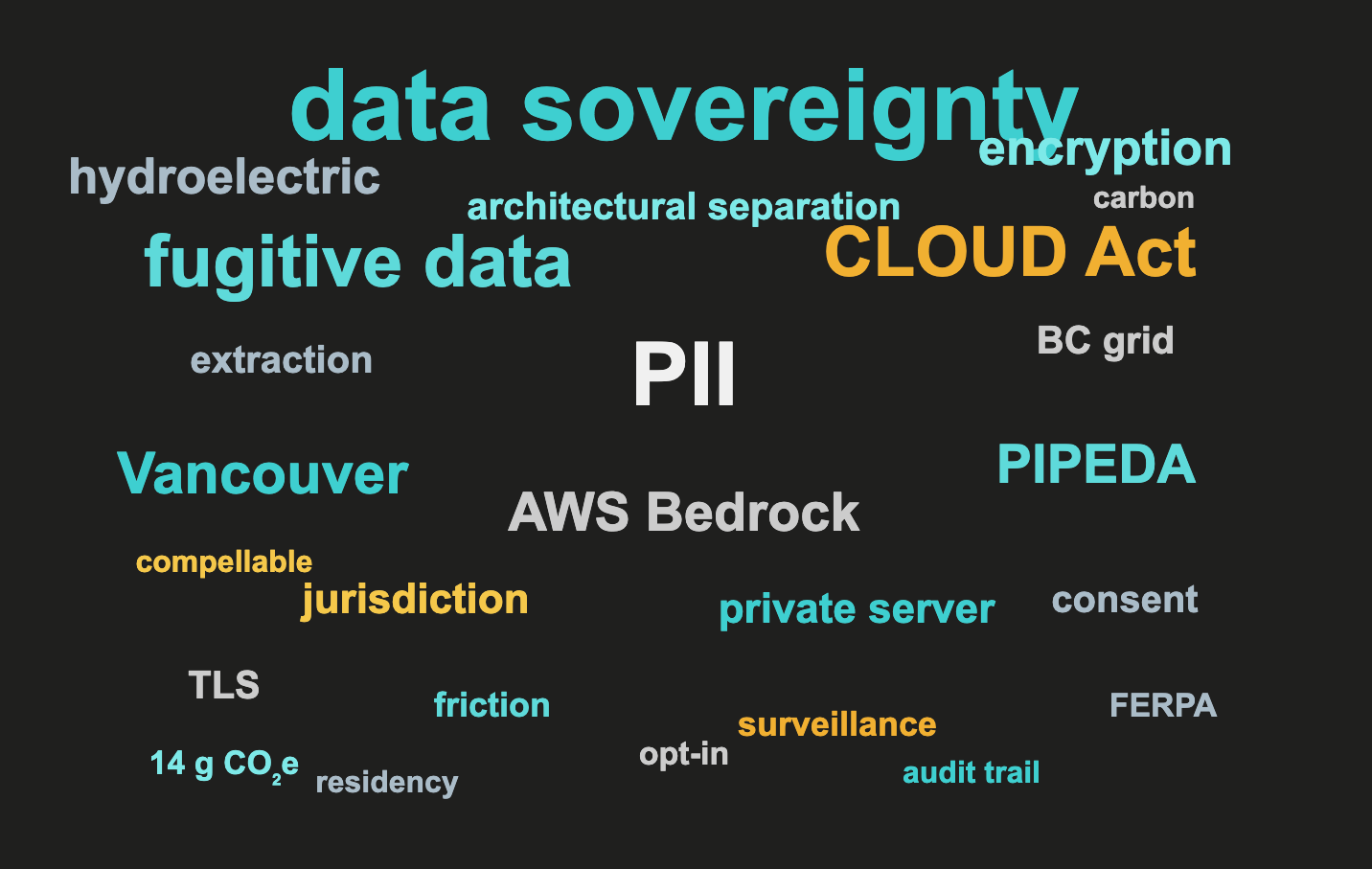
GLADYS runs on a private server powered by hydroelectric energy. That means the electricity moving through every interaction with GLADYS comes from water, not coal. No combustion. No carbon-heavy grid dependency. No emissions exported into someone's neighborhood.
And because GLADYS runs on a small, purpose-built private server rather than a massive commercial data center, the footprint is minimal by design. This is what our environmental impact white paper calls the lowest-emissions tier — API-first architecture, right-sized infrastructure, and a clean power source.
This is not greenwashing. It is a design commitment that matches the mission.
An equity co-pilot that harms the environment — that draws power from systems that already extract from vulnerable communities — would be a contradiction we cannot afford. GLADYS was built to close distances, not create new ones.
The power source is intentional. The infrastructure is intentional. The ethics run all the way to the outlet.
If you want to know more about what that is, why it is important and how understanding this design can help you make more informed decisions, join the Gladys pilot.
July belongs to life.
We’re pausing the newsletter for a month—not vanishing, but deliberately choosing presence over publishing. GLADYS pilot invitations stay open through the end of the month, and the work required to get there is exactly the kind that can’t be hurried: cultivating relationships, welcoming new leaders, and ensuring the human infrastructure is as sturdy and intentional as the technical one.

We’ll drop a note here and there when something can’t wait. But mostly we’ll be in rooms, in conversations, in the slow and necessary work of getting ready.
We’ll be back in August — fully, loudly — when the GLADYS pilot launches, and we start learning in public.
What the technology does. What we do with it. What it surfaces about ourselves and each other.
That’s the newsletter worth writing. The countdown begins…
Comments
Nothing yet. Say the first thing.
Sign in to join the conversation.