
Imagine you are buying a house. The bank approves your loan, your salary is stable, and your investments are growing. Everything looks perfect. Then someone asks, “Why are you paying for home insurance every year? Why not invest that money instead?” It sounds like a clever financial question until the day a fire breaks out.
Insurance is one of those things whose value becomes obvious only when something goes terribly wrong.
Foreign exchange reserves work in much the same way. They are not built to generate spectacular returns. They are built to prevent spectacular disasters.
That is why, every Friday afternoon, financial markets quietly watch a number released by the Reserve Bank of India (RBI). It rarely makes headlines outside business newspapers, yet it tells an important story about India’s economic resilience: the size of India’s foreign exchange reserves.

In July 2026, India’s forex reserves stood at US$676.24 billion, making it one of the largest reserve holders in the world. Just a few months earlier, in February 2026, reserves had touched a historic peak of US$728.49 billion. Then came geopolitical tensions in West Asia, renewed uncertainty around the Strait of Hormuz, rising crude oil prices, capital outflows from emerging markets, and pressure on the Indian rupee. The RBI stepped into the market, selling billions of dollars from its reserves to smooth excessive volatility rather than allowing panic to dictate exchange rates.
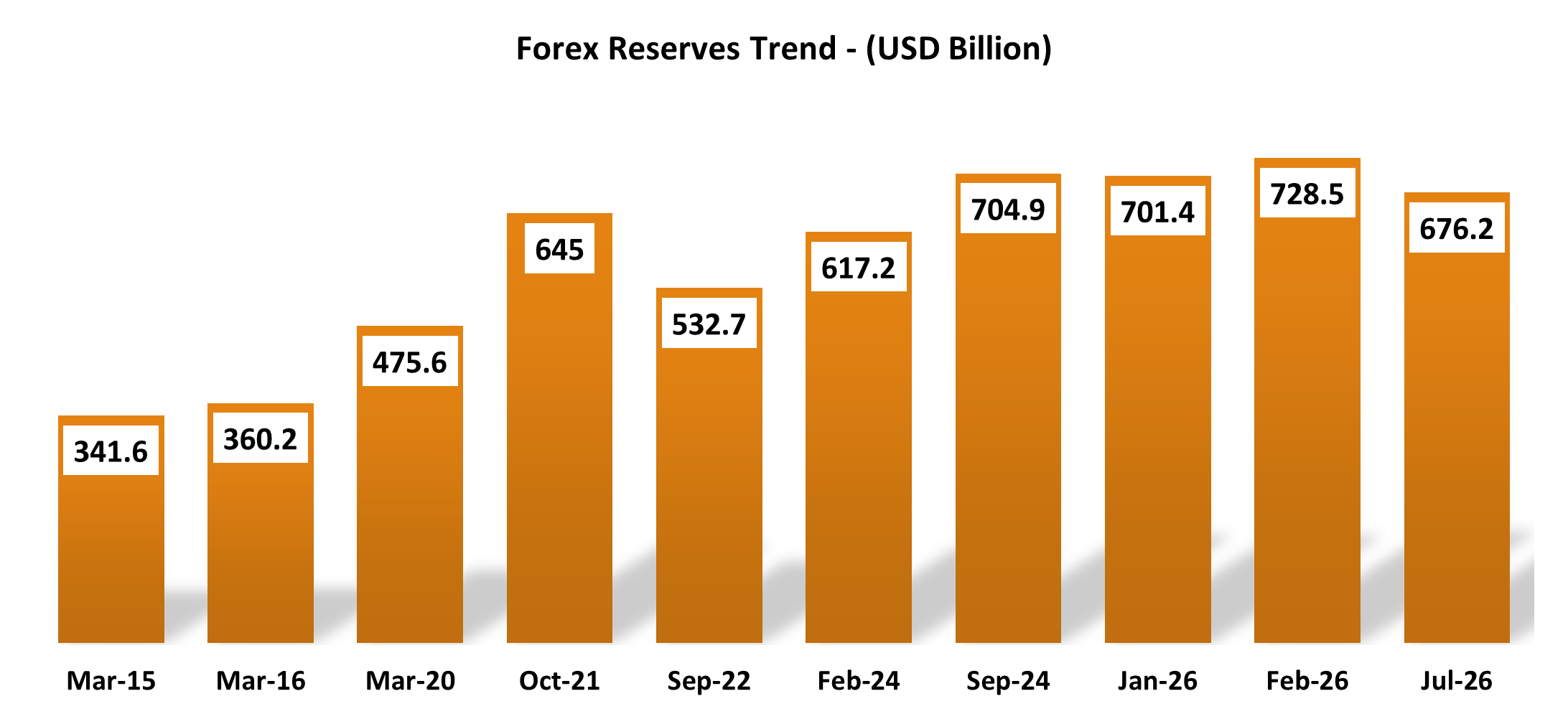
By July, reserves had stabilised once again, supported by fresh capital inflows, gains in foreign currency assets, rising gold valuations and the RBI’s steady reserve accumulation strategy.
To many people, this looks almost contradictory. If India still needs better roads, hospitals, schools and infrastructure, why is the country parking hundreds of billions of dollars in low-yielding foreign assets like US Treasury securities? Wouldn’t that money produce higher returns if invested inside India?
It is an attractive question. It is also based on a misunderstanding of what foreign exchange reserves actually are.
The real purpose of forex reserves is not to maximise returns. It is to minimise the probability of a national economic crisis. In a world where capital can leave countries overnight, wars can disrupt oil supplies within days, and currencies can come under speculative attack within hours, reserves have quietly become one of the most important forms of economic insurance a country can own.
The phrase “foreign exchange reserves” sounds technical enough to make most people immediately switch to another article. But the concept is surprisingly simple.
Think of India as a household not because countries behave exactly like families (economists have spent decades explaining why they don’t), but because the analogy helps.
Every family keeps some emergency savings. Not because they expect an accident tomorrow, but because uncertainty is part of life. A medical emergency, job loss or unexpected expense can arrive without invitation.
Countries face similar uncertainty, except their emergencies come in the form of oil price shocks, financial crises, sudden capital flight, geopolitical conflicts or disruptions in global trade. Foreign exchange reserves are that emergency savings account.
They are assets held exclusively by the Reserve Bank of India in foreign currencies and internationally accepted reserve assets. These reserves allow the central bank to make payments abroad, stabilise the value of the rupee, reassure investors, and ensure that India continues to pay for essential imports even when global markets become chaotic.
Unlike government budgets, however, these reserves are not a giant savings account waiting to be spent. That distinction is perhaps the single biggest source of confusion in public discussions.
Government finances and central bank finances operate under entirely different balance sheets. Tax collections, borrowing and government spending belong to the Union Government and flow through the Consolidated Fund of India. These resources finance highways, defence, education, healthcare and welfare programmes.
Foreign exchange reserves belong to the Reserve Bank of India. They are financial assets held on the RBI’s balance sheet and are matched by corresponding liabilities within the monetary system. This is where economics becomes far more interesting than accounting.
Whenever dollars enter India whether through exports, foreign direct investment, overseas borrowing or foreign portfolio investment the RBI often purchases part of those inflows to prevent the rupee from appreciating too rapidly.
Working of Foreign Reserves 101:
Suppose foreign investors bring US$1 billion into India.
The RBI buys those dollars by creating an equivalent amount of Indian rupees and injecting them into the banking system. The dollars become an asset on the RBI’s balance sheet, while the newly created rupees become a liability in the form of reserve money.
In other words, the reserves are not lying around like cash inside a government locker. They are backed by corresponding monetary liabilities.
That accounting identity is fundamental:
Total Assets (Foreign Assets + Domestic Assets) = Total Liabilities (Currency in Circulation + Bank Reserves).
If someone were to suggest, “Let’s simply spend the forex reserves on infrastructure,” they are effectively proposing that the RBI either sells foreign assets or creates unbacked domestic liquidity. Both actions would inject massive amounts of rupees into the economy, potentially fuelling inflation, destabilising financial markets and weakening the currency.
The reserves exist because the monetary system exists. They cannot simply be transferred into government spending without fundamentally altering the balance sheet of the central bank.
This is why economists often say that foreign exchange reserves are not government savings. They are monetary assets maintained to preserve confidence in the financial system itself.
Another common misconception is that India’s forex reserves are simply stacks of US dollars sitting inside vaults somewhere.
Reality, unsurprisingly, is far more sophisticated. India’s reserves are diversified across several internationally recognised reserve assets, each serving a different economic purpose.
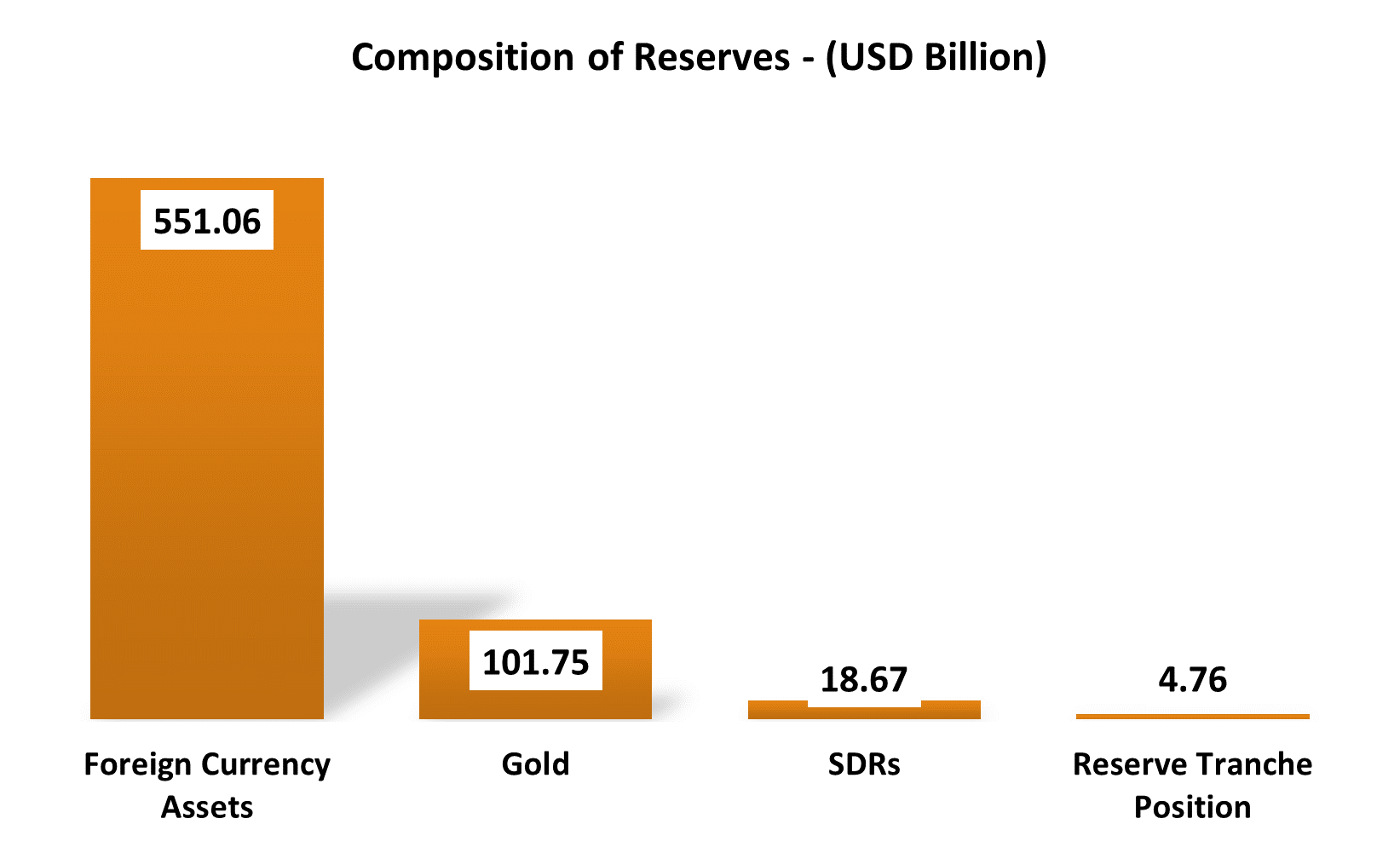
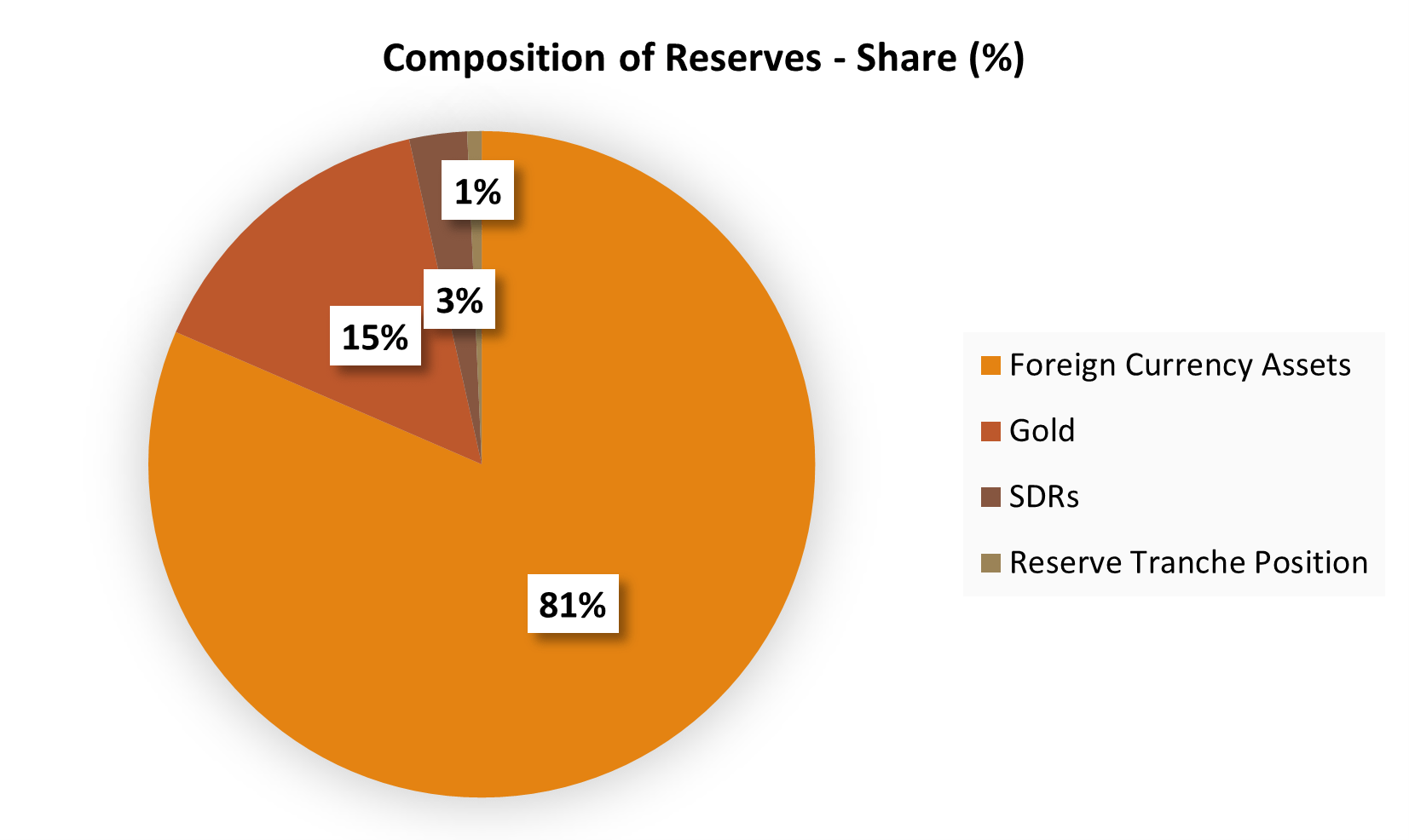
Foreign Currency Assets (FCA) account for the overwhelming majority around US$551.06 billion, or roughly 81.5% of total reserves. These include highly liquid investments such as US Treasury securities, UK government bonds, euro-area sovereign debt and deposits with major foreign central banks.
The second-largest component is gold, valued at around US$101.75 billion, representing approximately 15% of total reserves. Gold plays a very different role.
Unlike government bonds, gold carries no credit risk because it is not anyone else’s liability. It has served as a store of value across empires, monetary systems and financial crises for thousands of years. Whenever geopolitical uncertainty rises or confidence in paper currencies weakens, gold often becomes the asset investors instinctively trust.
India also holds around US$18.67 billion in Special Drawing Rights (SDRs) issued by the IMF. SDRs function like an international reserve asset that member countries can exchange for usable foreign currencies during periods of external stress. They are not a currency themselves but act as a global liquidity backstop.
Finally, India maintains a Reserve Tranche Position (RTP) of roughly US$4.76 billion with the IMF. One can think of this as a pre-approved international overdraft facility. Since these funds represent India’s quota contribution to the IMF, they can be accessed quickly without negotiating a fresh programme or accepting policy conditionalities.
If someone offered you two choices earn 4% safely or 15% by investing in a promising business the answer seems obvious. Most of us would choose the 15%. After all, that’s how wealth is created. So why doesn’t India follow the same logic?
Economics often teaches us that scarce capital should flow to places where returns are highest. Developing countries like India need infrastructure, factories and technology, so, in theory, they should be attracting and investing every available dollar domestically. Yet reality presents a curious contradiction. Many emerging economies simultaneously borrow capital from abroad while investing a part of their wealth in low-return assets overseas. Economists call this the Lucas Paradox. At first glance, it appears irrational. In reality, it is a deliberate trade-off between return and resilience.
The financial cost of this strategy is real. Short-term US Treasury securities and similar reserve assets typically earn around 3.5% to 4.5%, while investments in India’s infrastructure, manufacturing or logistics can often generate economic returns well above 12% to 15%. That gap represents an opportunity cost running into billions of dollars every year.
But that “loss” is better understood as an insurance premium.
Just as homeowners knowingly pay insurance every year hoping never to file a claim, countries willingly sacrifice some investment returns to protect themselves against events that are rare but potentially devastating. Most years, those reserves appear underutilised. During a crisis, they become priceless.
History offers enough reminders.
The Asian Financial Crisis of 1997, the Global Financial Crisis of 2008, the COVID-19 pandemic, and more recently the geopolitical disruptions affecting energy markets all had one thing in common: global capital became extremely selective, investors rushed towards safe assets, and countries with weak external buffers found themselves under immense pressure.
When foreign investors suddenly pull money out, the consequences unfold rapidly. The domestic currency weakens, imported goods become more expensive, inflation accelerates, companies with foreign currency borrowings face rising repayment costs, and governments often have little choice but to seek emergency financial assistance.
That is precisely the situation central banks are trying to avoid. The RBI, therefore, does not optimise its portfolio for the highest yield. It optimises for something far more valuable macroeconomic stability.
Because once confidence disappears, rebuilding it becomes far more expensive than preserving it in the first place.
Every country holds foreign exchange reserves, but not every country needs the same amount. The size of the cushion depends on how vulnerable an economy is to external shocks. In India’s case, that vulnerability is built into the very structure of its economy.
Unlike export powerhouses such as China, South Korea or Germany, which consistently earn more from exports than they spend on imports, India operates with a persistent merchandise trade deficit. Simply put, the country imports significantly more physical goods than it exports.
Fortunately, India’s globally competitive IT services sector and the steady flow of remittances from Indians working overseas offset a large part of this gap. Even so, the current account generally remains in deficit, hovering around 1% to 1.3% of GDP in recent years. That deficit must be financed every year through capital inflows such as foreign direct investment (FDI), foreign portfolio investment (FPI), external commercial borrowings and NRI deposits.
And this is where the challenge begins. Unlike exports, capital flows have emotions.
They arrive when investors are optimistic and leave when uncertainty rises. A shift in US interest rates, a geopolitical conflict thousands of kilometres away, or a bout of global risk aversion can trigger billions of dollars of outflows within days. The underlying strength of India’s economy may not have changed, but global investors often react first and analyse later.
India’s dependence on imported crude oil makes this vulnerability even more pronounced. The country imports more than 85% of its crude oil requirements, making energy security inseparable from foreign exchange management. Every US$10 increase in crude oil prices adds roughly US$13–15 billion to India’s annual import bill. That immediately widens the trade deficit, increases demand for dollars, weakens the rupee and pushes up imported inflation.
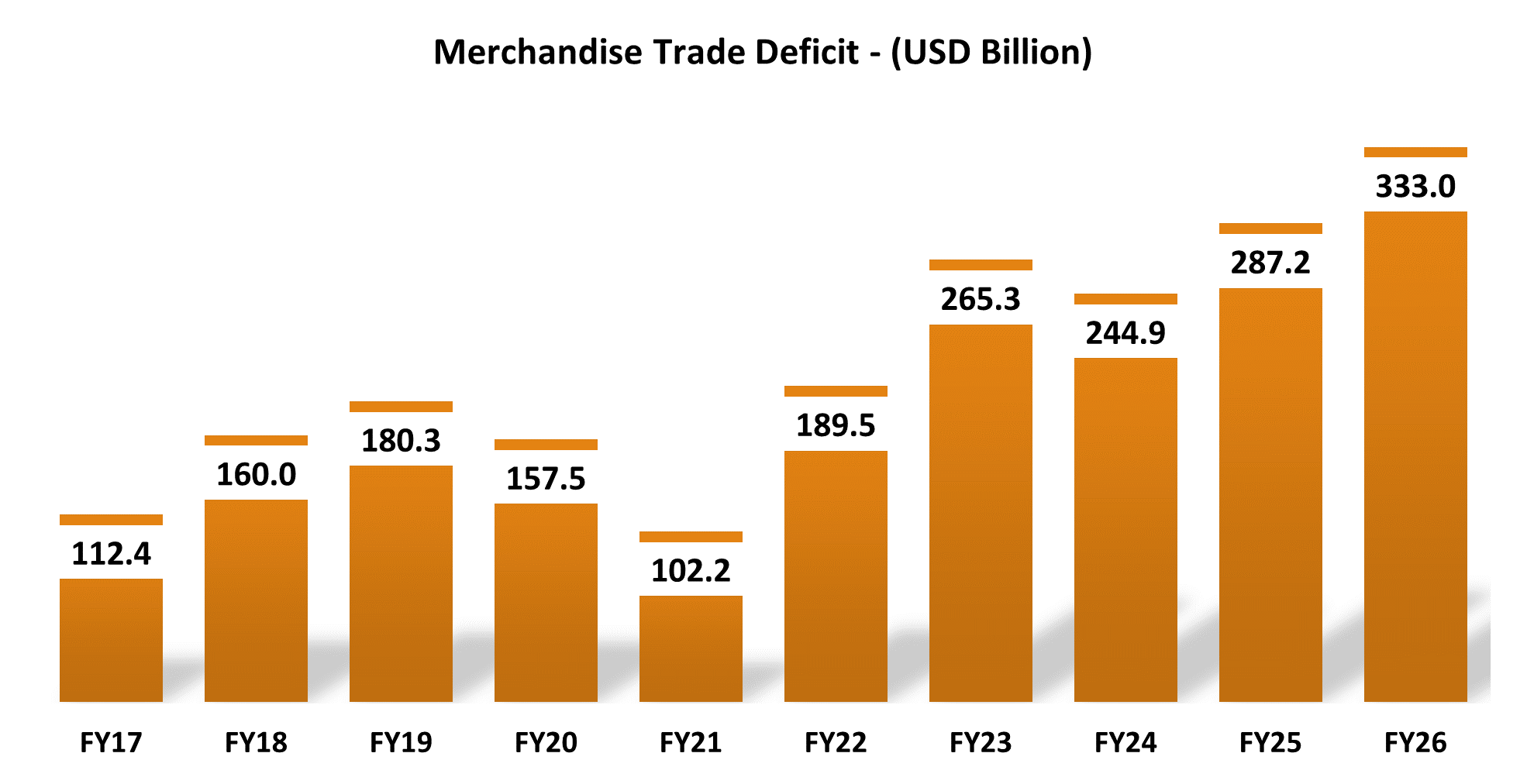
Recent numbers illustrate the scale of the challenge. India’s merchandise trade deficit widened to around US$333 billion in FY26, one of the highest on record. While services exports and remittances continue to cushion the blow, they do not eliminate the gap entirely. The economy still depends on a steady stream of foreign capital to finance what it imports.
There is another layer of vulnerability that often receives less attention.
Indian companies and financial institutions continuously roll over external commercial borrowings, trade credits and other short-term foreign liabilities. These obligations mature irrespective of global market conditions. Whether financial markets are calm or panicking, those payments still have to be made on time.
This is why economists closely monitor metrics such as import cover the number of months a country’s reserves can finance imports if external inflows suddenly stop.
Suppose, for some reason, exports collapse, foreign investors stop bringing money, overseas borrowing dries up, and global financial markets freeze. Can the country still pay for essential imports like crude oil, medicines, fertilisers and electronic components?
That is precisely what import cover measures.
Import cover tells us how many months a country can continue financing its imports using only its foreign exchange reserves if fresh foreign earnings suddenly stop. It is one of the simplest indicators of external financial strength, yet one of the most powerful.
For decades, the IMF considered three months of import cover to be the minimum level required for economic stability. But global finance has changed dramatically since those guidelines were framed. Today, countries not only trade more goods but also face trillions of dollars moving across borders at the click of a button. As a result, economists increasingly complement import cover with another benchmark the Guidotti-Greenspan Rule which suggests that countries should hold enough reserves to repay all short-term external debt coming due within one year, even if global credit markets suddenly shut.
In other words, reserves are no longer meant only for financing imports. They are also designed to survive financial panic. No country understands this lesson better than India. For younger Indians, the idea that the country could run out of foreign exchange sounds almost unimaginable. But just thirty-five years ago, it was a terrifying reality.
In 1991, India’s foreign exchange reserves had fallen to barely US$1.2 billion enough to finance less than five weeks of imports. Every incoming oil shipment, every debt repayment and every import bill became a matter of national anxiety. The government eventually had to pledge 67 tonnes of gold overseas to secure emergency financial assistance and prevent a sovereign default.
That episode permanently changed India’s economic thinking. The reforms of 1991 were not only about liberalisation; they were also about ensuring that India would never again find itself negotiating from a position of desperation.
The transformation since then has been remarkable. Forex reserves crossed US$100 billion in 2004, exceeded US$500 billion in 2020, reached a record US$728.5 billion in February 2026, and even after the RBI actively used reserves to calm markets during the West Asia crisis, they remained at a robust US$676.24 billion in July 2026.
That translates into roughly eleven months of import cover almost four times the traditional IMF benchmark.
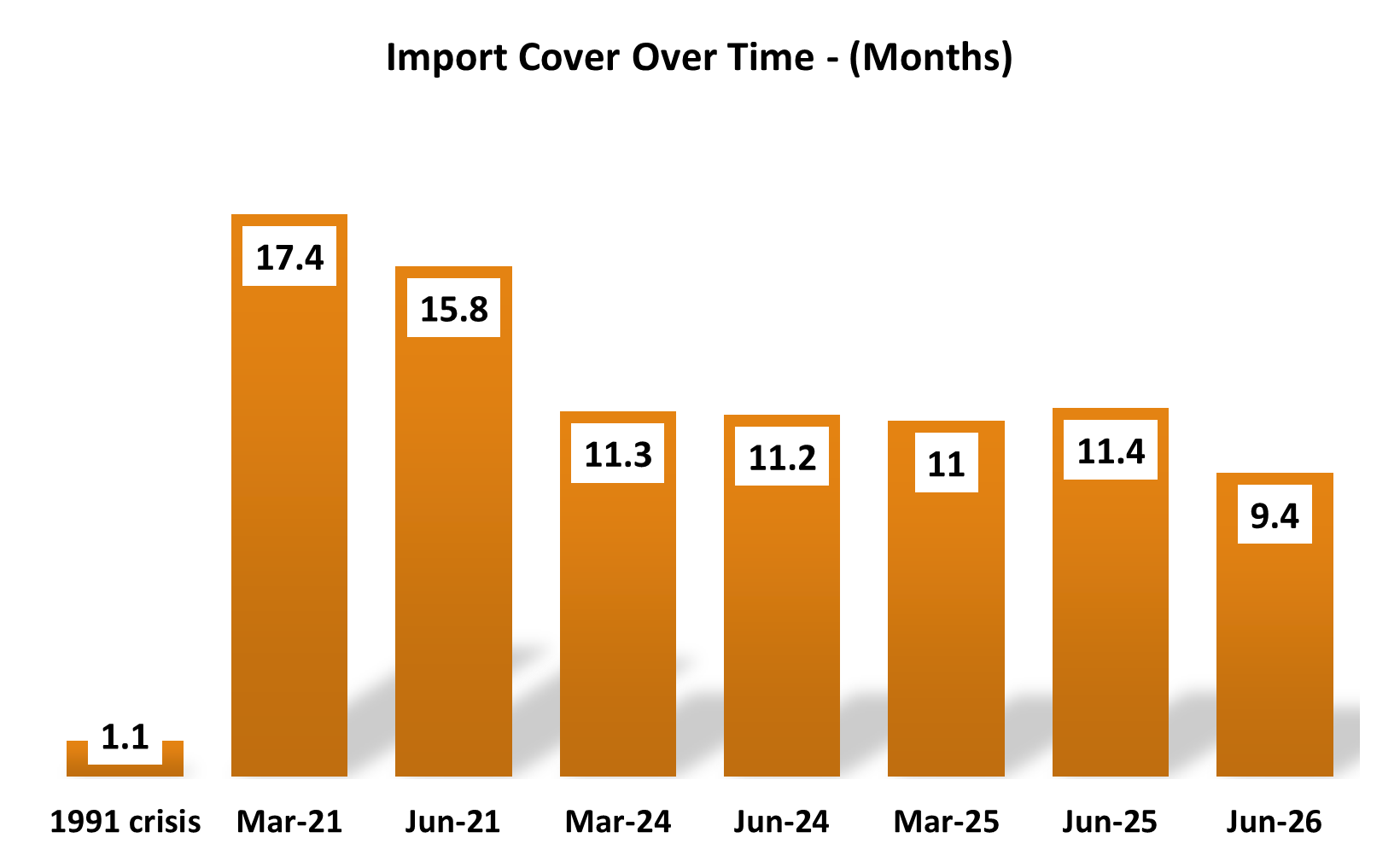
This does not mean India is immune to external shocks. It means India has bought itself something equally valuable: time.
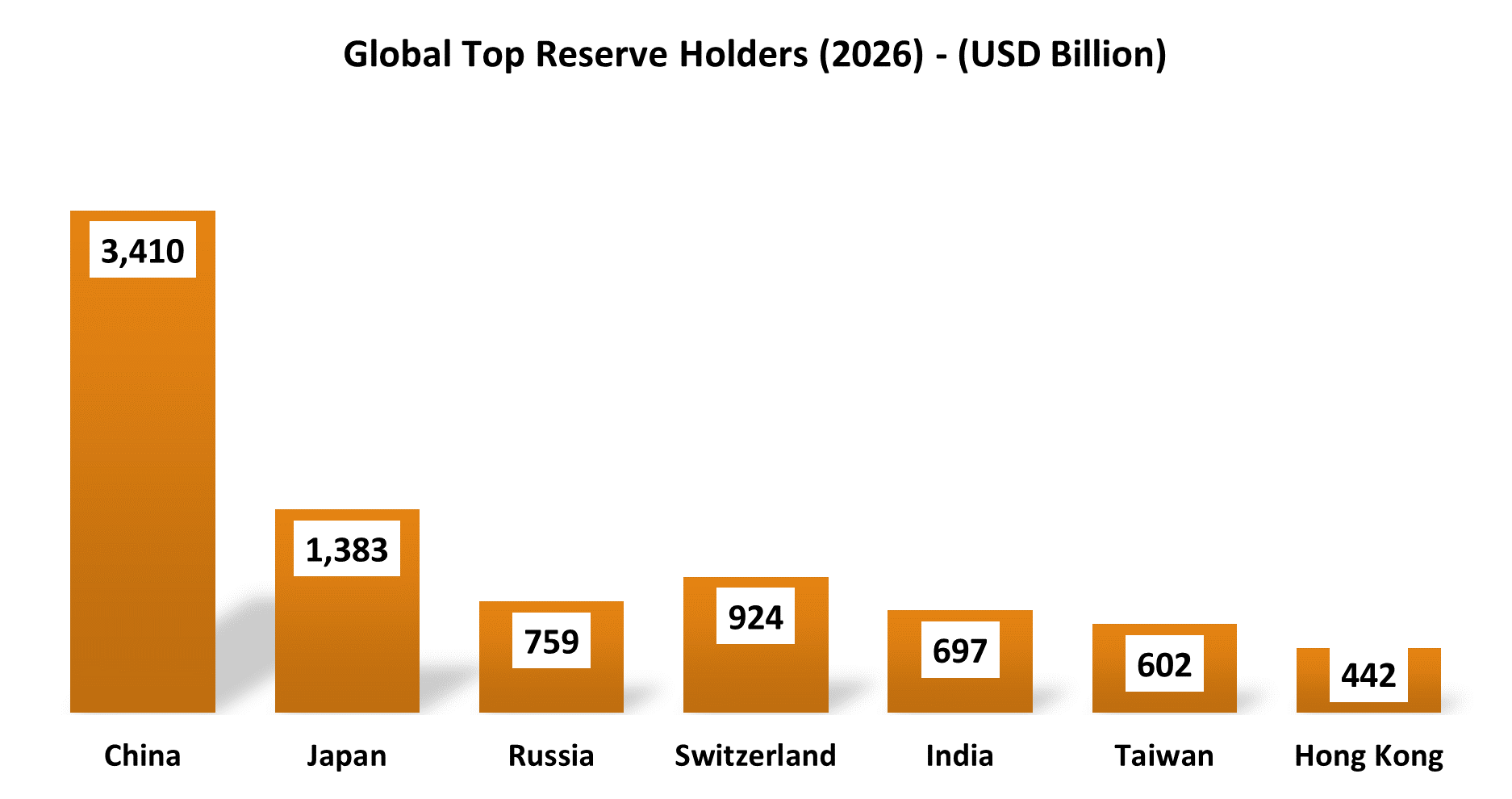
International comparisons reinforce this point. China maintains reserves exceeding US$3 trillion, supported by persistent current account surpluses and remains the world’s largest reserve holder. Commodity exporters like Brazil also maintain healthy reserve buffers, partly because export revenues naturally replenish foreign exchange. On the other hand, economies with relatively thin reserve cushions such as Turkey in recent years have found themselves far more vulnerable to currency crises, imported inflation and sudden capital outflows.
A common misconception is that the RBI decides what the rupee should be worth and simply uses its reserves to maintain that number. In reality, that is not how India’s exchange rate regime works.
The RBI does not target a fixed exchange rate. Instead, it follows a far more pragmatic objective: allowing the rupee to move according to market forces while preventing sudden, disorderly swings that could destabilise the economy.
When global uncertainty rises, foreign investors often sell Indian equities and bonds before moving their money into safer assets such as US Treasuries. This creates a sudden surge in demand for dollars. Left unchecked, the rupee could depreciate sharply within a short period, making imports costlier, worsening inflation and increasing repayment costs for companies with foreign currency debt.
At such moments, the RBI steps into the market. It sells dollars from its forex reserves, increasing the supply of dollars and easing pressure on the rupee. The objective is not to stop depreciation altogether, but to prevent panic from turning into a self-fulfilling crisis.
The opposite happens when optimism returns. During periods of strong foreign investment or export inflows, large quantities of dollars enter India. If the RBI did nothing, the rupee could appreciate rapidly, making Indian exports less competitive and widening the trade deficit. So the central bank purchases those excess dollars, adding them to its reserves while releasing rupees into the domestic financial system.
And this is where another economic puzzle emerges. Every time the RBI buys dollars, it pays for them by creating new rupees.
Suppose it purchases US$10 billion when the exchange rate is ₹85 per dollar. That transaction injects ₹85,000 crore into India’s banking system. More money in the banking system may sound like good news, but excessive liquidity can reduce interest rates, encourage excessive lending and eventually fuel inflation.
So the RBI finds itself solving one problem while unintentionally creating another. Economists call this the sterilisation problem.
To neutralise this excess liquidity, the RBI and the Government of India use the Market Stabilisation Scheme (MSS), introduced in 2004. Under this mechanism, the government issues special securities to banks and financial institutions. Investors purchase these securities using the same surplus rupee liquidity that entered the system when the RBI bought dollars. The money collected is parked in a separate account with the RBI and, crucially, cannot be spent by the government.
In effect, the extra rupees are quietly taken back out of circulation.
Of course, this stability is not free. The government pays interest on these Market Stabilisation Scheme bonds, creating what economists call the cost of carry. On paper, it may appear expensive to borrow domestically while simultaneously investing abroad at lower returns.
But that is the price of stability. Much like paying an insurance premium every year, the carrying cost of reserves is not the cost of failure.
Trust is difficult to measure, but incredibly easy to lose.
Every time India raises money overseas, global investors are not just evaluating its economic growth. They are judging its ability to withstand future shocks. Can it continue paying for imports if oil prices spike? Can it service external debt during a global financial crisis? Can it handle sudden capital outflows without losing control of its currency?
Foreign exchange reserves provide one of the strongest answers to those questions. This is why global credit rating agencies such as S&P, Moody’s and Fitch pay close attention to a country’s external balance sheet. They certainly examine familiar indicators like public debt, fiscal deficits and per-capita income. On several of these metrics, India still faces challenges. Public debt remains close to 80% of GDP, fiscal deficits continue to require careful management, and India’s per-capita income is far below that of advanced economies.
Viewed in isolation, these indicators would normally exert downward pressure on India’s sovereign credit rating. But sovereign ratings are never based on just one side of the balance sheet.
Rating agencies also assess a country’s ability to absorb external shocks. This is where India’s sizeable forex reserves, healthy import cover and relatively moderate external debt become powerful stabilising factors. They reassure investors that even during periods of global turmoil, India possesses enough foreign currency liquidity to meet its obligations without resorting to emergency financing.
The result is that India continues to retain its investment-grade sovereign rating. That may sound like a technical achievement, but its consequences are felt far beyond government finances.
When the sovereign is perceived as financially credible, Indian companies also benefit. Large corporations routinely borrow overseas through External Commercial Borrowings (ECBs) to finance factories, renewable energy projects, infrastructure and expansion plans. Since international lenders view sovereign stability as a benchmark for corporate risk, stronger national credibility translates into lower borrowing costs for private firms.
Even a small reduction in borrowing spreads can save Indian companies billions of dollars over time, improving profitability and making long-term investment more attractive.
The opposite would be far more painful.
If India’s sovereign rating were ever downgraded below investment grade, many global institutional investors such as pension funds and insurance companies would be required by their investment mandates to reduce or completely exit Indian debt. Borrowing costs would rise not only for the government but also for banks, infrastructure developers and businesses across the economy.
Forex reserves often make headlines, but they are also surrounded by misconceptions. Their sheer size makes them appear like an enormous savings account waiting to be spent. The reality is far more nuanced.
It is an understandable question because ₹50 billion sitting in foreign assets looks far less exciting than a new expressway. But forex reserves are not surplus tax collections. They are assets held on the RBI’s balance sheet against monetary liabilities. Spending them directly would inject massive amounts of rupees into the economy without a corresponding increase in production, fuelling inflation and weakening the currency. It would be like selling your home’s foundation to renovate the living room—the improvement is visible, but the structure becomes fragile.
It cannot. The reserves belong to the RBI, not the Ministry of Finance. What the government does receive is the RBI’s annual surplus, generated through its operations. In FY25, this transfer reached a record ₹2.68 lakh crore, providing valuable fiscal support. But that is very different from spending the underlying stock of reserves themselves.
Not necessarily. Reserves must always be interpreted alongside the broader economic context. A country could accumulate reserves because exports are booming and investment is flowing in which is positive. But another country might accumulate reserves simply because domestic investment is weak and imports have slowed. Conversely, a rapidly industrialising economy may temporarily draw down reserves to import machinery and technology that raise future productivity. The number itself tells only part of the story.
Gold certainly remains an important part of India’s reserve portfolio. It is trusted, universally accepted and carries no counterparty risk. But in a crisis, speed matters. Oil exporters, foreign creditors and international suppliers expect payment in liquid currencies such as US dollars or euros not gold bars. Gold often needs to be sold or pledged before it can finance international payments, making foreign currency assets indispensable during periods of acute stress.
Reserves are powerful, but they are not magical. They can provide liquidity, calm markets and buy policymakers valuable time. What they cannot do is permanently solve structural problems such as weak export competitiveness, persistent fiscal imbalances, low productivity or inflationary pressures.
Foreign exchange reserves are, ultimately, not a story about dollars. They are a story about choices. The choice to sacrifice a little return today to preserve far greater stability tomorrow. The choice to prepare for crises that may never come, precisely because no one can predict when they will. Every generation remembers a different economic shock the 1991 balance of payments crisis, the Global Financial Crisis, the pandemic, or today’s geopolitical fragmentation. The next one will almost certainly arrive wearing a different disguise. India’s reserves do not eliminate uncertainty; they simply buy the country something invaluable when uncertainty arrives: time, credibility, and the freedom to choose its own response.
The real question, then, is not whether US$676 billion is a large number. It is whether our understanding of economic security is keeping pace with a world that is becoming more fragmented, more digital, and more unpredictable. If trade routes shift, capital moves at the speed of algorithms, and the global monetary system slowly evolves beyond the dollar, what should India’s next generation of reserves look like? And perhaps the most uncomfortable question of all: when the next crisis arrives and history suggests it will will we discover that we prepared for the last crisis, or for the next one?
Sources- ET, RBI, TheGlobalEconomy, ET & ET.
Comments
Nothing yet. Say the first thing.
Sign in to join the conversation.