
Every three months, thousands of companies across banking, automobiles, consumer goods, pharmaceuticals, technology, metals, real estate, and manufacturing reveal what they are witnessing on the ground. They don’t merely report profits. They describe consumer behaviour, investment appetite, export demand, pricing power, wage pressures, borrowing costs, inventory accumulation, and management expectations for the future. Long before official GDP estimates arrive, CEOs have already narrated the economy one earnings call at a time.
This is why investors often pay more attention to earnings season than GDP day. GDP tells us what happened. Corporate earnings often tell us what is beginning to happen.
But, like every good story, there is a twist. Corporate earnings can illuminate the economy brilliantly, yet they can also cast long shadows. Sometimes profits rise because demand is booming. Sometimes they rise because oil companies benefited from price spikes, banks enjoyed wider lending spreads, or companies booked one-time gains. The headline number may look healthy while large parts of the economy remain weak.

Understanding corporate earnings, therefore, is less like reading a report card and more like interpreting a medical scan. It tells us where the economy is strong, where it is vulnerable, and where appearances can be misleading.
An earnings season is never just about whether companies beat or missed analysts' estimates. When hundreds of management teams simultaneously report their quarterly performance, they collectively reveal something much larger the direction of the economy itself. Strip away the stock-price reactions and brokerage forecasts, and four clear patterns emerge from Q1 FY27. Together, they explain where India's growth is coming from, where pressures are building, and what investors should watch over the coming quarters.
The strongest message from the earnings season is the resilience of India’s domestic economy.
Sectors linked directly to domestic demand banking, automobiles, telecom, infrastructure, metals, capital goods and consumer staples delivered the strongest earnings despite geopolitical uncertainty and slowing global growth.
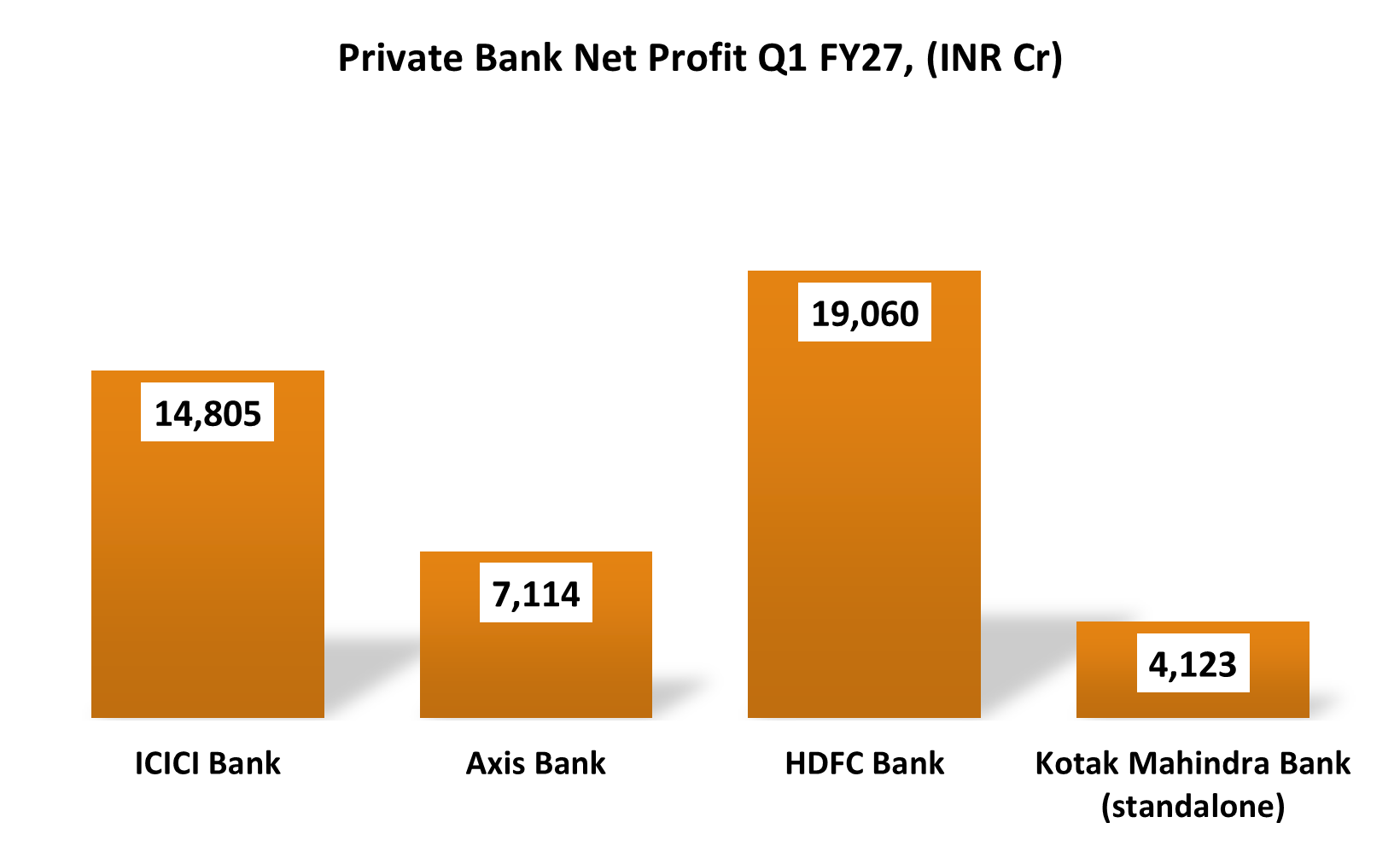
The automobile sector also reflected healthy domestic demand. Mahindra & Mahindra reported 27% revenue growth and 33% growth in net profit, driven by strong SUV and tractor sales. Telecom demand remained equally robust, with Bharti Airtel reporting 18% revenue growth and a 37% increase in profit, supported by rising ARPU and data consumption.
Infrastructure-linked companies continued benefiting from government capex. Larsen & Toubro grew revenues by 6.7% and profits by 14%, while maintaining an order pipeline exceeding ₹15 trillion, signalling that India’s investment cycle remains active.
Together, these sectors indicate that India’s domestic consumption, services and investment ecosystem continues to expand even as the global economy slows.
A second pattern is the widening divergence between companies serving domestic markets and those exposed to overseas demand. India’s export-oriented sectors delivered respectable earnings but increasingly cautious outlooks.
TCS reported 14% revenue growth and 5% profit growth, supported by strong AI-related deal wins, yet management remained cautious about discretionary spending. Infosys increased profits by 12% but simultaneously reduced FY27 constant-currency revenue guidance to just 1.5–3%, highlighting slowing demand from North America and Europe.
The pharmaceutical sector showed a similar split. Sun Pharma reported 10% revenue growth and nearly 27% growth in profits, driven by domestic formulations and specialty products. In contrast, Dr. Reddy’s Laboratories saw profits decline by 8% despite broadly stable revenues, reflecting continued pricing pressure in the US generics market.
The message is clear: India’s domestic economy remains significantly stronger than the global economy.
Unlike 2022–24, inflation is no longer significantly suppressing consumer demand. Instead, it is increasingly affecting corporate profitability by compressing operating margins.
The automobile sector illustrates this perfectly. Maruti Suzuki reported an impressive 36% increase in revenues, reflecting strong vehicle demand, yet net profit declined 11% because higher steel, aluminium and logistics costs offset revenue gains.
Consumer companies displayed a similar pattern. Hindustan Unilever’s revenues grew 10%, supported by 5% volume growth, yet profit declined 2% due to higher commodity costs. Nestlé India benefited from stronger pricing and rural demand, reporting 25% revenue growth and 48% profit growth, but management continued highlighting input-cost volatility.
Energy companies experienced the sharpest divergence. BPCL reported a quarterly loss of ₹1,873 crore, while upstream producer ONGC increased profits by 21%, illustrating how rising crude prices benefited producers while hurting fuel retailers constrained by regulated pricing.
Corporate earnings also point towards a strengthening investment cycle.
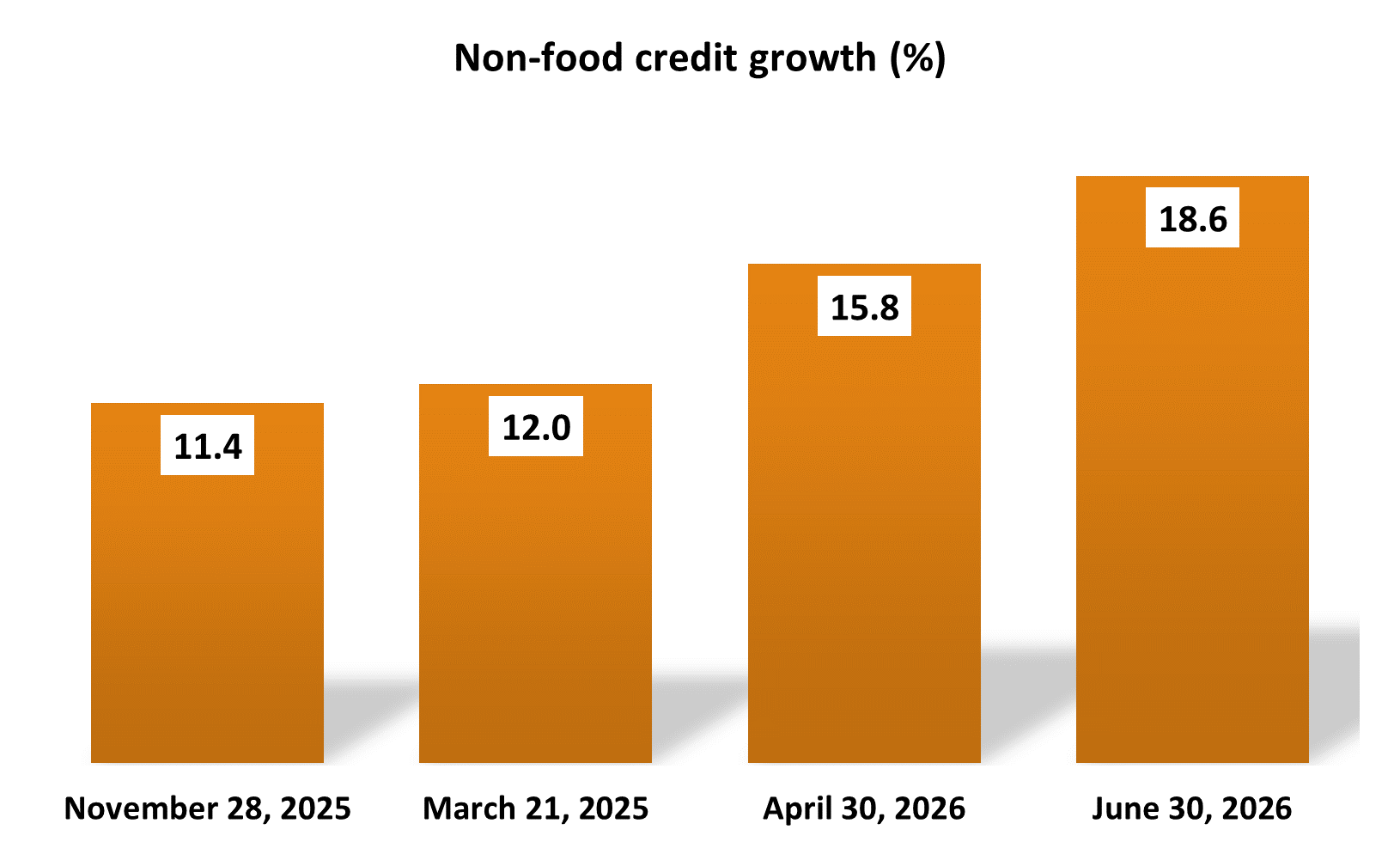
Bank credit growth remained exceptionally healthy. Aggregate non-food credit expanded by approximately 18.6% year-on-year by June 2026, one of the strongest growth rates in recent years. Lending to industry alone reportedly increased by around 17.5%, indicating renewed corporate borrowing.
Capital goods companies continued reporting strong order inflows. Larsen & Toubro secured new orders worth approximately ₹1.08 trillion during Q1, while maintaining an executable order book of nearly ₹15 trillion.
The metals sector reflected the same trend. JSW Steel reported 10% revenue growth but an extraordinary 113% increase in profits, while Tata Steel increased revenues by 14% and profits by 15%, supported by stronger domestic steel demand arising from infrastructure and construction activity.
Several energy companies also announced significant expansion plans. ONGC indicated offshore capital expenditure exceeding ₹40,000 crore, while Reliance continued scaling investments in renewable energy and digital infrastructure.
These numbers suggest that India’s capex cycle is no longer driven solely by government spending; private sector investment is gradually becoming a meaningful contributor.
Economists traditionally rely on indicators such as GDP growth, industrial production, employment, inflation, exports, and consumer spending to judge the health of an economy. These remain indispensable because they measure economic activity across households, firms, governments, and the informal sector. Yet they suffer from one unavoidable limitation they arrive late.
GDP figures are released with considerable delays, revised repeatedly, and often undergo methodological changes years later. By the time policymakers begin debating a quarterly GDP print, businesses have already made hiring decisions, consumers have altered spending habits, factories have adjusted production schedules, and investors have repositioned billions of dollars.
Corporate earnings operate on an entirely different clock.
Every quarter, thousands of listed companies disclose detailed financial statements accompanied by management commentary that explains not only what happened, but why it happened and what executives expect over the coming quarters.
Earnings reports reveal changes in pricing power, wage costs, inventory levels, export demand, credit conditions, raw material inflation, capital expenditure plans, and customer behaviour. They offer a remarkably granular view of the economy that aggregate macroeconomic statistics simply cannot replicate.
In India, this information has become increasingly valuable because the listed corporate sector itself has undergone profound transformation. The National Stock Exchange has expanded from just over 400 listed companies in the mid-1990s to more than 3,000 today, creating a far broader representation of India’s formal economy.
Financial institutions have simultaneously emerged as the dominant contributors to corporate profitability, accounting for nearly two-fifths of aggregate Nifty 500 earnings. Structural reforms such as GST, the Insolvency and Bankruptcy Code, digital payments, and increasing tax formalisation have gradually shifted economic activity towards organised enterprises, making listed companies a more representative window into India’s productive economy than they were a decade ago.
At the same time, global events have made earnings even more informative. Between 2024 and 2026, companies navigated volatile crude oil prices, geopolitical tensions in West Asia, supply-chain disruptions, changing global interest rates, and uncertain export demand. Each earnings season became less a financial reporting exercise and more a real-time assessment of how India’s economy was absorbing successive external shocks.
So far, we have established that corporate earnings are more than quarterly scorecards they are real-time signals about the economy’s direction. But the relationship runs much deeper than simply reflecting economic conditions.
Corporate earnings do not merely describe the economy; they actively shape it.
A profitable company doesn’t just make shareholders richer. It hires more workers, orders more machinery, expands factories, borrows to build new capacity, pays higher taxes, rewards suppliers, and sometimes even inspires competitors to invest. Every additional rupee of corporate profit has the potential to ripple through the broader economy in ways that rarely make headlines.
Conversely, when profits weaken, the first casualty is rarely dividends. Companies usually begin by delaying capital expenditure, slowing recruitment, cutting discretionary spending, reducing inventories, or becoming cautious about future expansion. These decisions eventually filter into employment, consumption, government revenues, and ultimately GDP itself.
Perhaps the strongest link between corporate earnings and economic growth is investment.
Businesses rarely invest because interest rates are low or because economists forecast strong GDP growth. They invest because they believe future profits justify today’s spending.
A company that consistently generates healthy cash flows is far more willing to purchase new machinery, expand production lines, build warehouses, adopt new technology, or enter new markets. Profits provide both the confidence and the financial resources needed for expansion. In that sense, today’s earnings often become tomorrow’s productive capacity.
This relationship is evident across economies. In the United States, business investment continued to expand during 2024 despite elevated interest rates, supported by resilient corporate profitability and strong investment in equipment. Companies continued spending because they expected future demand to remain healthy rather than because borrowing had suddenly become cheap.
India presents a similar, though uniquely structured, story.
Much of India’s recent investment cycle has been led by government capital expenditure. The Union Budget 2025 allocated more than ₹11.5 lakh crore towards capital expenditure, including a ₹1 lakh crore Urban Challenge Fund, creating a steady pipeline of infrastructure projects across roads, railways, housing, logistics, and urban development.
Government spending, however, is only the first domino.
Every highway, metro line, bridge, or industrial corridor generates demand for cement, steel, engineering equipment, construction services, logistics providers, and financing institutions. As corporate order books improve, earnings strengthen. Stronger earnings then encourage companies to expand capacity further, reinforcing the investment cycle.
The cement sector during Q2 FY26 illustrates this mechanism perfectly. Despite monsoon-related disruptions, cement companies recorded nearly 91% growth in net profits and contributed around 7% of the Nifty 500’s incremental profit growth, supported by stable pricing and sustained infrastructure demand. The profits were not merely an accounting outcome they reflected cranes operating, cement mixers running, and construction sites remaining active across the country.
Investment naturally leads to another question: who operates these new factories, warehouses, software centres, and logistics hubs?
People do. Corporate profitability and employment are closely intertwined, but not always in the simplistic manner often portrayed. Companies do not hire simply because profits increased during the last quarter. They hire when those profits convince management that customer demand is likely to persist.
Hiring is fundamentally a bet on the future. A CEO recruiting hundreds of engineers or factory workers is effectively making a prediction that orders will continue arriving months or even years ahead. Strong earnings strengthen that confidence. Weak earnings erode it.
Once employment expands, the effects spread rapidly through the broader economy. More jobs translate into higher household incomes. Rising incomes boost consumption. Stronger consumption lifts corporate revenues, which in turn supports further hiring and investment. Economists describe this as a virtuous cycle, although businesses might simply call it “good times.”
India’s labour market between 2024 and 2026 reflected precisely this nuanced dynamic.
The unemployment rate improved modestly to 4.9% in 2024, helped primarily by a slight improvement in rural employment, while urban unemployment remained broadly stable. Labour force participation changed little, suggesting that employment conditions were improving gradually rather than dramatically.
Beneath these aggregate figures, however, the story was uneven.
Delayed monsoon rains weakened rural employment during parts of the year, constraining rural purchasing power and affecting demand for tractors, entry-level motorcycles, FMCG products, and consumer durables. Urban employment, on the other hand, recovered more strongly during mid-2026, supporting discretionary spending in cities.
Corporate earnings reflected these differences almost immediately. Companies with greater exposure to urban consumers generally reported stronger resilience than businesses dependent on rural demand.
If investment is the engine of long-term growth, consumption remains the fuel that keeps India’s economy moving.
Private consumption accounts for nearly 57% of India’s GDP, making household spending the single largest driver of economic activity. Every purchase from a packet of biscuits to a family car eventually appears somewhere on a company’s income statement.
This is why consumer-facing companies often serve as the economy’s earliest storytellers. When FMCG companies report slowing sales volumes, it suggests households are becoming cautious. When automobile manufacturers see rising bookings, consumers are displaying greater confidence. When retailers discount aggressively to clear inventories, demand is probably weaker than headline GDP numbers suggest.
The earnings season of Q2 FY26 highlighted exactly how quickly consumption patterns can change.
Following the announcement of GST reforms in August 2025 and before their implementation in September, many households postponed discretionary purchases, preferring to wait for greater clarity. The result was visible almost immediately.
Interestingly, not every consumption category behaved alike.
While staples and durable goods softened, the automobile sector remained surprisingly resilient. Premium vehicle launches, export demand, festive-season purchases, and accelerating electric vehicle adoption allowed automobile companies to continue generating healthy earnings despite broader consumption uncertainty.
This divergence offers an important lesson.
There is no such thing as “the consumer.”
Urban and rural households behave differently. Premium and mass-market consumers respond differently. First-time buyers and affluent households react differently to inflation, taxation, and interest rates. Corporate earnings expose these differences with remarkable clarity, whereas aggregate consumption statistics often smooth them into a single number.
Looking only at headline earnings would therefore miss one of the most valuable insights they provide: which consumers are still spending and which have quietly stepped back.
Among all sectors, none occupies a more influential position in India’s earnings landscape than financial services. Banks and NBFCs do not merely participate in economic activity they finance it.
Every home loan, business expansion, vehicle purchase, infrastructure project, education loan, or working capital facility eventually passes through the financial system. When credit expands, businesses invest, households spend, and the economy accelerates. When lending slows, growth often follows.
This explains why financial companies today account for nearly 38.5% of aggregate Nifty 500 profits, up dramatically from about 25% at the turn of the century.
Their growing weight reflects the increasing financialisation of the Indian economy but it also introduces a subtle distortion.
A strong year for banks can significantly lift aggregate corporate earnings even if manufacturing or consumer demand remains relatively subdued. Conversely, stress within the banking system can rapidly drag down headline profits despite healthy performance elsewhere.
In other words, financials have become both the economy’s heartbeat and one of its biggest statistical blind spots.
The experience of Bajaj Finance during Q1 FY27 illustrates this perfectly. The company reported 24% growth in assets under management, supported by strong demand for small-business credit and consumer loans. Such growth indicates more than a successful lender. It signals that businesses remain willing to borrow, households remain confident enough to spend, and lenders continue believing that borrowers will repay.
Credit, after all, is fundamentally an expression of optimism. Banks lend because they expect tomorrow to be better than today. Borrowers borrow because they believe future income will comfortably repay today’s obligations.
But optimism can reverse quickly.
If defaults begin rising, borrowers struggle to service debt, or interest rates remain elevated for prolonged periods, financial stress first appears on bank balance sheets before spreading elsewhere. Rising non-performing assets, narrowing margins, or slowing loan growth therefore become early warning signals of broader economic weakness.
Viewed together, these channels reveal why corporate earnings occupy such a unique position in economic analysis.
Profits finance investment. Investment creates jobs. Jobs generate incomes. Incomes support consumption. Consumption raises business revenues. Stronger revenues improve profits once again. Simultaneously, healthier profits expand the tax base, strengthen government finances, encourage further public investment, and improve the banking system’s willingness to extend credit.
It is not a straight line but a continuous feedback loop.
This is precisely why every earnings season matters. Quarterly results are not merely about whether companies beat analysts’ estimates by a few percentage points. They offer a glimpse into how investment decisions, hiring plans, consumer confidence, credit creation, and fiscal capacity are evolving together.
Corporate earnings, therefore, are much more than financial statements. They are the transmission belt through which the confidence or anxiety of businesses gradually spreads across the entire economy. And that is precisely what makes them one of India’s most powerful, and most closely watched, economic indicators.
So far, we’ve looked at corporate earnings as numbers revenues, margins, profits and growth rates. But anyone who has spent time listening to earnings season knows that the most valuable information often isn’t buried in the balance sheet.
It is buried in the conversation that follows.
Every quarter, after releasing financial results, management teams spend nearly an hour answering questions from investors and analysts. On the surface, it looks like another corporate ritual. In reality, it is one of the richest sources of real-time economic intelligence available anywhere.
Think about it.
GDP may tell us that consumption grew by 6%. An FMCG CEO tells us urban consumers are buying premium skincare products while rural households are switching to smaller shampoo sachets.
Inflation data may indicate prices are moderating. A steel company explains that customers are delaying orders because they expect prices to fall further.
Employment statistics may show little change. An IT company quietly announces that it is hiring fewer fresh graduates because artificial intelligence is improving employee productivity.
The difference is profound. Macroeconomic statistics tell us what happened. Corporate earnings calls explain why it happened and what is likely to happen next.
One of the greatest advantages of earnings calls is their ability to capture economic shifts while they are still unfolding.
Unlike official statistics, which aggregate millions of transactions into a single national number, management commentary reflects thousands of individual business decisions taking place in real time.
Executives discuss customer enquiries, cancelled orders, inventory accumulation, wage negotiations, supplier behaviour, freight costs, export demand, pricing strategies, hiring plans and future investment intentions. None of these observations individually constitute macroeconomic data. Together, however, they provide a remarkably detailed picture of an economy in motion.
This is why experienced investors often pay as much attention to the tone of management commentary as they do to reported profits.
A company may beat earnings expectations yet sound unusually cautious about future demand. Another may report disappointing quarterly numbers while confidently discussing a rapidly improving order book. Markets frequently react more to these qualitative signals than to the financial statements themselves.
In many ways, quarterly conference calls function as thousands of decentralized economic surveys conducted simultaneously across the country.
And unlike government surveys, CEOs have little incentive to hide deteriorating demand from investors who will question every optimistic statement over subsequent quarters.
Perhaps the greatest strength of earnings calls lies in their ability to reveal economic fault lines that disappear inside aggregate statistics.
Take consumption.
Headline national accounts may report steady household spending, creating the impression that demand remains broadly healthy. Yet FMCG companies have repeatedly highlighted an entirely different reality: urban consumers continue upgrading to premium brands while rural demand remains considerably weaker.
Those two statements are not contradictory. They simply reveal that India’s consumers are not moving together.
An executive selling biscuits, detergents or motorcycles often notices these shifts months before they become visible in official consumption surveys. Earnings calls therefore expose the distribution of demand—not merely its aggregate level.
The same applies to inflation. Official CPI tells us whether prices have increased.
Corporate management tells us whether customers are actually willing to accept those higher prices.
When executives repeatedly discuss successful price increases with little impact on sales volumes, they are effectively signalling strong pricing power. Conversely, when companies begin offering discounts despite rising costs, they reveal weakening consumer demand long before inflation data fully reflects changing market dynamics.
Labour markets offer another example.
Employment statistics typically arrive with delays and present broad national averages. IT companies, however, discuss employee utilisation rates, campus recruitment, wage revisions and attrition every quarter.
When major software exporters simultaneously reduce fresher hiring or postpone salary increases, they provide an early indication that high-income urban employment may be softening—even before labour market surveys capture the trend.
Capital expenditure follows a similar pattern.
Government announcements frequently celebrate ambitious investment plans worth thousands of crores. Earnings calls answer a far more important question:
Are companies actually spending the money?
Engineering firms discussing full order books, machinery manufacturers reporting rising capacity utilisation, and industrial companies announcing factory expansions provide tangible evidence that announced investments are being translated into real economic activity.
This is where corporate commentary becomes uniquely valuable.
It transforms macroeconomic statistics into economic stories.
If the previous sections established that corporate earnings are one of the best real-time indicators of economic activity, they also exposed an uncomfortable truth: strong corporate earnings do not automatically translate into a strong economy for everyone.
This is perhaps the biggest paradox of India’s post-pandemic growth story.
On one side, listed companies have reported record profitability, healthier balance sheets, improving returns on equity, and buoyant stock prices. On the other, policymakers continue to worry about weak mass consumption, subdued rural demand, and uneven wage growth.
How can both be true at the same time?
The answer lies in understanding that an economy can create wealth without distributing income evenly. When the gains from growth accrue disproportionately to owners of capital rather than workers, corporate profits can flourish even as household spending remains under pressure.
In other words, the corporate sector and the household sector can temporarily live in two different economic realities.
One of the defining features of India’s recent corporate cycle has been the remarkable recovery in profitability.
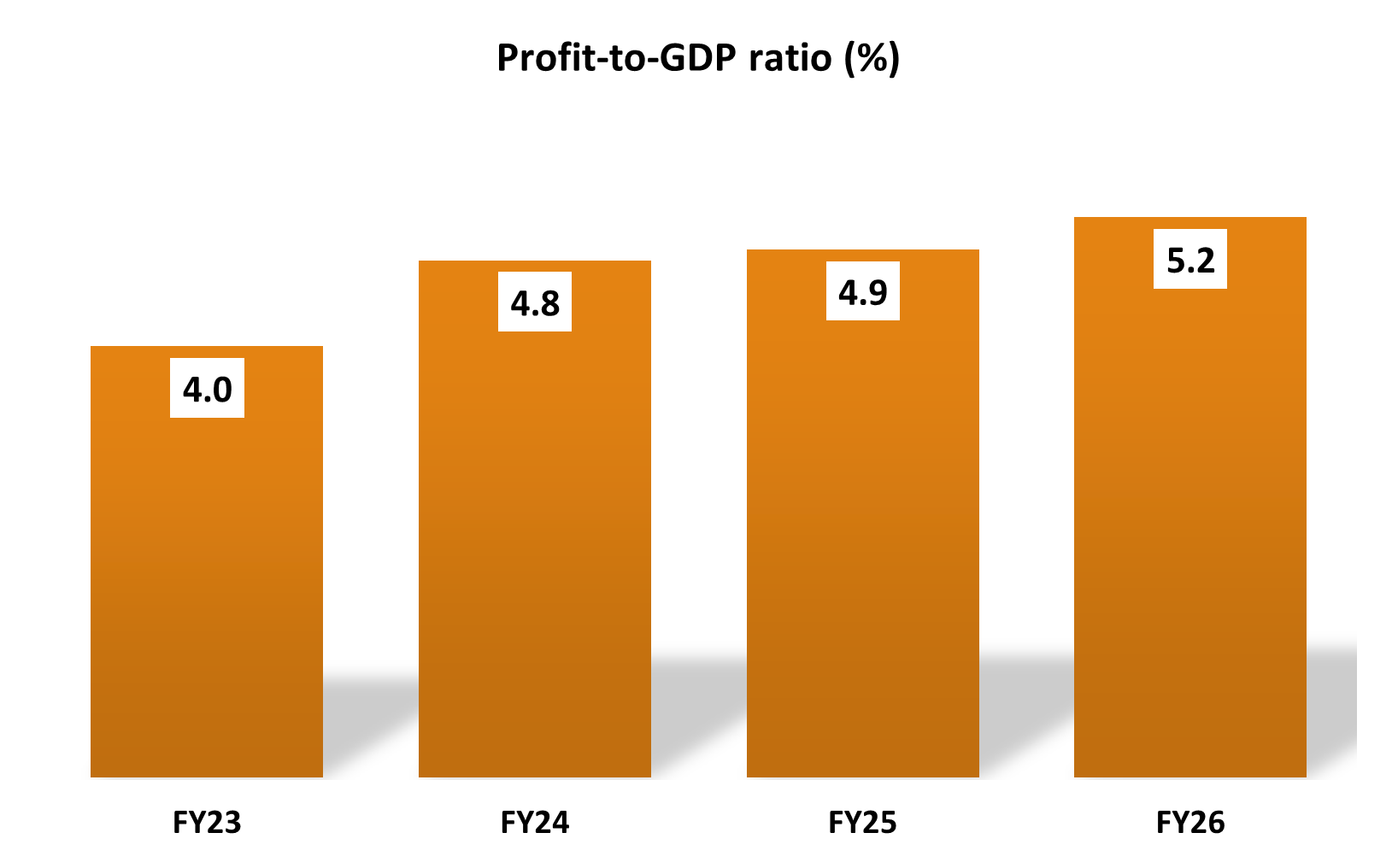
Following the pandemic, listed companies repaired their balance sheets, reduced debt, improved operational efficiency, digitised supply chains, and benefited from lower interest burdens. As a result, the corporate profit-to-GDP ratio nearly doubled—from around 2–2.5% during the post-pandemic period to roughly 4.5–5% by FY26. At the same time, Return on Equity (ROE) across listed firms recovered from nearly 7% in FY20 to around 14–15% over FY24–FY26.
For investors, this was excellent news.
For the broader economy, however, the picture was more nuanced.
While returns to capital improved rapidly, wage growth—particularly among lower- and middle-income workers—expanded much more gradually. Large listed companies became leaner and more productive, but that productivity did not immediately translate into proportionately higher incomes across the informal economy or labour-intensive sectors.
This divergence matters because companies spend profits differently from households. Businesses often reinvest earnings, repay debt, or return cash to shareholders. Households, particularly middle and lower-income families, tend to spend a much larger share of every additional rupee they earn.
When profits rise much faster than wages, aggregate consumption naturally grows more slowly than corporate profitability.
That is precisely what India’s earnings data increasingly began to suggest.
Economists often describe this phenomenon as a K-shaped recovery.
The image is simple. After a shock, one part of the economy moves upward while another struggles to recover. Instead of everyone growing together, different income groups begin travelling in different directions.
India’s corporate earnings between 2024 and 2026 reflected this pattern remarkably clearly.
At the upper end of the income distribution, households benefited from rising equity markets, appreciating real estate, growing financial assets, and healthy dividend income. Their spending remained resilient, supporting demand for premium automobiles, luxury housing, high-end consumer electronics, overseas travel, branded lifestyle products, and premium financial services.
At the other end, many households dependent primarily on wages experienced a much slower improvement.
Entry-level motorcycles remained under pressure for longer than premium SUVs. Smaller consumer-packaged goods witnessed slower volume growth than premium personal care products. Affordable housing recovered more gradually than luxury residential projects.
The same economy was producing two very different consumption stories.
This explains why companies selling premium products often sounded considerably more optimistic during earnings calls than firms catering to value-conscious consumers. Corporate earnings, once again, revealed an important economic reality that aggregate GDP numbers could easily conceal.
The recovery wasn’t simply uneven across sectors. It was uneven across households.
There is, however, another layer to this story one that is quietly reshaping India’s economic landscape. For decades, Indian households primarily built wealth through physical assets: gold, real estate and bank deposits.
That pattern is changing. The rapid financialisation of household savings has fundamentally altered the relationship between corporate earnings and consumer spending.
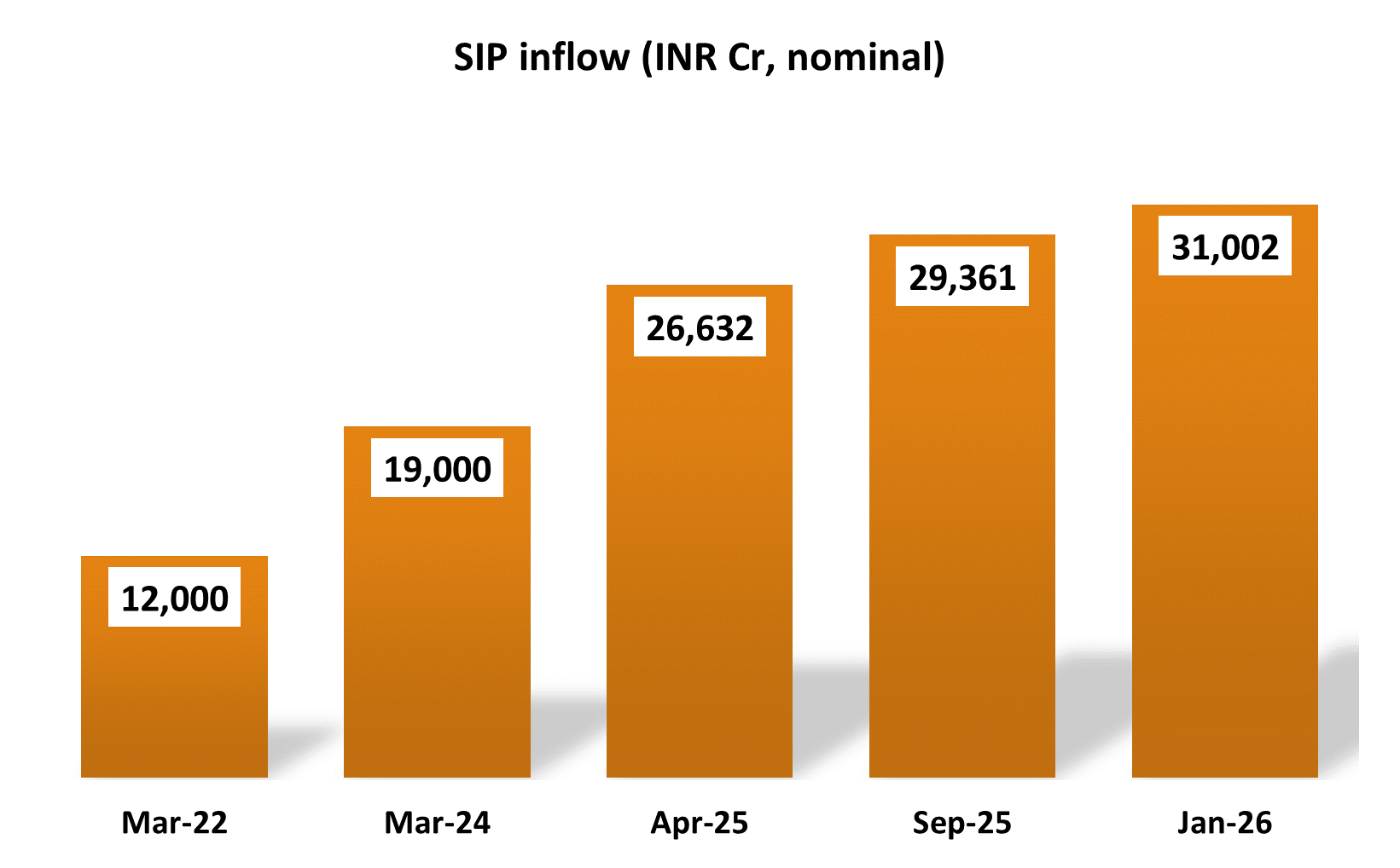
This matters because corporate earnings now influence households through an entirely new channel. When listed companies report strong profits, equity prices often rise. Higher equity prices increase the value of mutual funds, retirement savings and direct stock investments. Households consequently feel wealthier—even if their monthly salaries have changed very little.
Economists refer to this as the wealth effect. People tend to spend more when the value of their financial assets increases, even without a corresponding rise in wages.
This partly explains one of India’s recent consumption puzzles.
Discretionary spending among financially affluent households remained relatively resilient despite moderate income growth because rising stock markets were supplementing traditional wage income with capital gains.
Corporate earnings were therefore influencing consumption not merely through employment or wages, but increasingly through household balance sheets.
India is gradually becoming an economy where Wall Street or perhaps more accurately, Dalal Street has begun influencing Main Street.
This naturally raises another question. If corporate earnings are such valuable economic indicators, how early do they actually signal changes in the economy?
The answer depends on which part of the earnings report we are examining. Some components look forward. Others merely summarise the past.
Perhaps the strongest leading indicator within earnings season is management guidance.
When executives announce expanding order books, increasing capital expenditure, stronger enquiry pipelines or improving customer sentiment, they are describing decisions that will influence production, hiring and investment over the coming quarters. These signals frequently precede measurable improvements in GDP by several months.
Revenue growth occupies the middle ground.
Sales growth generally moves alongside current economic activity, making it a useful coincident indicator of conditions within the organised economy. If companies are selling more products today, households and businesses are almost certainly spending more today as well.
Net profits, however, often arrive relatively late in the economic cycle. Profits reflect pricing decisions, cost reductions, productivity improvements and operational adjustments that companies have already implemented over previous quarters. Similarly, bank asset quality or non-performing loans usually deteriorate only after economic stress has persisted for some time.
Understanding this distinction is crucial. Treating every earnings metric as equally forward-looking is rather like assuming a car’s rear-view mirror, windshield and GPS all perform the same function.
They don’t. Each tells us something different about where we have been, where we are, and where we may be heading.
This distinction also explains one of the most confusing phenomena in financial markets. Why do stock markets sometimes rally during periods of disappointing economic data?
And why do markets occasionally fall despite robust GDP growth? The answer lies in expectations. Financial markets do not price today’s economy.
They price tomorrow’s.
Every share price represents investors’ collective estimate of future cash flows, discounted back to the present. Consequently, markets respond less to what companies earned last quarter and more to what management believes will happen over the next several quarters.
If CEOs express confidence about rising demand, expanding order books or accelerating investment, investors immediately revise future earnings expectations upward. Share prices respond within minutes.
GDP, by contrast, simply records economic activity that has already occurred. This explains why stock markets frequently appear disconnected from contemporary economic headlines.
They are not ignoring the economy. They are looking further ahead. The sequence is remarkably consistent.
Businesses observe customers. Management revises expectations. Earnings guidance changes. Markets reprice assets. Investment decisions adjust. Only much later do these developments become visible in official GDP statistics.
By the time national accounts confirm the economy has strengthened or weakened, financial markets have often been reacting to that reality for several quarters.
Taken together, these paradoxes fundamentally change how we should interpret corporate earnings.
Strong profits do not necessarily imply strong household incomes. Rising stock markets do not always reflect current economic conditions. Healthy corporate balance sheets can coexist with subdued wage growth. And premium consumption can flourish even while mass-market demand remains restrained.
Yet none of these contradictions diminish the importance of earnings.
If anything, they make them even more valuable. Because earnings are not merely accounting statements. They are records of expectations.
Every investment decision, hiring plan, production target, pricing strategy and capital allocation choice contained within corporate results reflects what businesses believe about India’s future not simply what happened in its recent past.
And in economics, expectations often become reality long before the statistics acknowledge them.
By now, one conclusion should be becoming clear.
Corporate earnings are among the most powerful tools available for understanding the economy but they are not a magic mirror.
Like every economic indicator, they answer some questions exceptionally well while remaining almost silent on others. Problems arise not because earnings are misleading, but because we often ask them to answer questions they were never designed to answer.
This has given rise to several persistent myths that shape how investors, commentators and even policymakers interpret both the stock market and the economy. The challenge is not merely correcting these misconceptions; it is understanding why they persist in the first place.
Perhaps the most common misconception is that rising corporate profits automatically imply a healthy economy.
It is an understandable assumption. If companies are making record profits, surely households must also be prospering.
Not necessarily.
Corporate earnings primarily capture the organised, listed portion of the economy. India, however, remains far larger than its stock market. Millions of farmers, informal workers, micro-enterprises, neighbourhood retailers and family-owned businesses generate economic activity without ever appearing in a quarterly earnings report.
This explains why periods of exceptional profitability among listed companies can coexist with subdued rural demand or stress within informal sectors.
The post-pandemic period offers a perfect illustration. Large corporations benefited from formalisation, digitalisation, stronger balance sheets and operating efficiencies. At the same time, several labour-intensive informal sectors recovered much more gradually.
The stock market was describing one India. The broader economy contained several others.
GDP enjoys an almost mythical status in public discourse. Every quarter, headlines proclaim that the economy grew by a certain percentage, often treating the first estimate as an unquestionable measure of reality.
Economists know better.
Initial GDP estimates are built using incomplete administrative records, high-frequency indicators and statistical projections. As additional information becomes available, these estimates are revised sometimes substantially over subsequent quarters and even years.
GDP is therefore best understood as an evolving estimate rather than an instant measurement. Corporate earnings operate differently.
Companies report audited financial statements within weeks of the quarter ending, accompanied by detailed explanations from management. Investors therefore receive relatively immediate evidence of changing demand, pricing power, hiring intentions and investment plans.
This does not make earnings superior to GDP. It simply makes them faster. GDP eventually tells us how much the economy produced. Corporate earnings often tell us how businesses felt while producing it.
The previous section explored India’s growing divergence between profits and wages. This myth emerges directly from that misunderstanding.
Corporate profitability certainly creates opportunities for investment, employment and economic expansion over time. But the transmission is neither immediate nor automatic.
A company can improve profits by becoming more productive, automating operations, reducing costs, refinancing debt or exercising greater pricing power—all without significantly increasing employment or wages.
These improvements undoubtedly strengthen businesses. They do not necessarily strengthen household purchasing power in the short run.
India’s recent earnings cycle demonstrated exactly this phenomenon.
Returns on equity improved significantly, while consumption among higher-income households remained resilient. Yet mass-market demand recovered much more gradually because wage growth across several segments lagged improvements in corporate profitability.
The result was an economy where premium SUVs outsold expectations while entry-level products struggled to achieve similar momentum.
Strong profits, therefore, are a necessary ingredient for long-term prosperity.
They are not sufficient by themselves.
Throughout this report, we have argued that corporate earnings often provide an earlier glimpse of economic conditions than official national accounts.
That statement is broadly true but it requires an important qualification. Not every part of an earnings report leads the economy.
Management guidance, capital expenditure plans, order books and hiring intentions are fundamentally forward-looking. These indicators frequently anticipate changes in investment and GDP several quarters ahead.
Reported profits, however, often tell a different story. Net income reflects decisions that companies have already taken pricing adjustments, productivity improvements, tax provisions, depreciation policies and accounting treatments accumulated over previous months.
In other words, the earnings report itself contains both leading and lagging indicators. Confusing these different layers is rather like assuming a weather forecast and yesterday’s rainfall report provide identical information.
Before every earnings season, investors ask a familiar question: Will companies beat expectations? Perhaps the more interesting question is one they rarely ask: What are these companies quietly telling us about the economy?
Quarterly results are no longer just about profits and losses. They have become a running conversation about how India is changing who is spending, who is borrowing, who is investing, and who is hesitating. GDP will eventually record that story. Earnings often narrate it while it is still unfolding.
But the challenge is learning to separate signal from noise. A strong quarter may reflect genuine demand or merely higher margins. Weak profits may conceal aggressive investment that pays off years later. Sometimes the most important number isn’t in the income statement at all, but in a CEO’s answer to an analyst’s final question.
The next earnings season will arrive in another three months. The numbers will change. The stock prices will swing. But the deeper questions will remain.
Are India’s profits becoming broader, or simply more concentrated? Is the next phase of growth being driven by rising productivity or rising inequality? And when corporate earnings and GDP begin telling different stories again, which one will you choose to believe first?
Sources- BusinessToday, BusinessStandard, PolicyEdge, FADA, ET, MoneyControl, Reuters, AngelOne, TOI, FitchRating.
Comments
Nothing yet. Say the first thing.
Sign in to join the conversation.