
Hey Folks, here at EquityEdge Research, we make Small-Cap Investing easy for you by Backing you up with Robust & Full-Fledged Research.
Yes, we do use AI in our articles, but only to create a structure. We fact check and write the drafts on our own. If you find anything that seems suspicious/ erroneous, please feel free to comment below the article.
Please fill the form below if you are interested to know and would like a Free Sample Report showcasing what we offer in our Premium Services!
Check out our Previous Report here:
Table of Contents:
Key Highlights.
Company Price Chart Analysis.
About the Company.
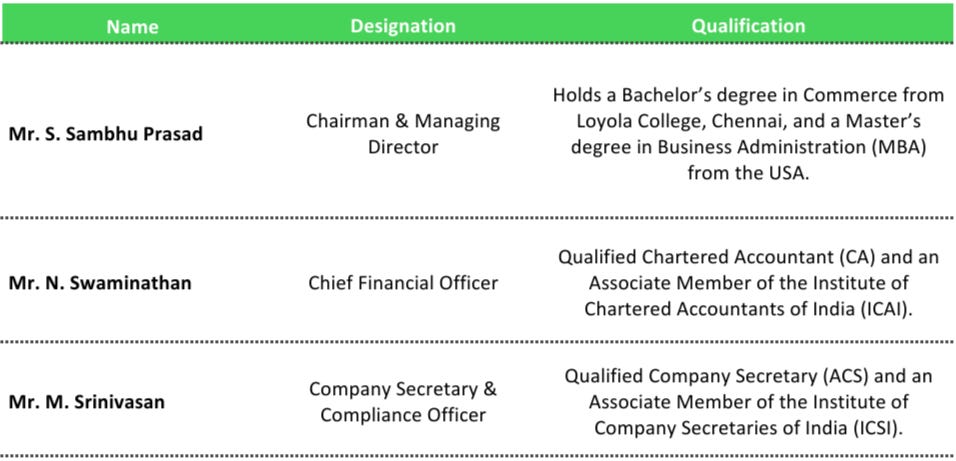
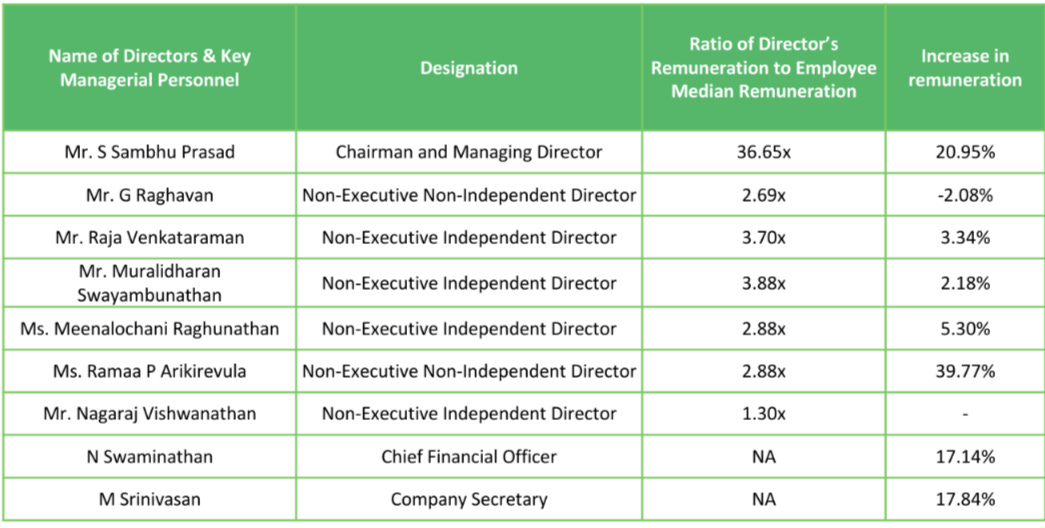
Management Analysis.
Financial Analysis
Ratio Analysis.
Shareholding Analysis.
SWOT Analysis.
Competitors.
Global Electrical Equipment Industry.
Indian Electrical Equipment Industry.
Financial Analysis- Quarterly.
Segment Wise Data.
Competitive Analysis- Bio & Financials.
Daily Share price trend TTM- Peer comparison.
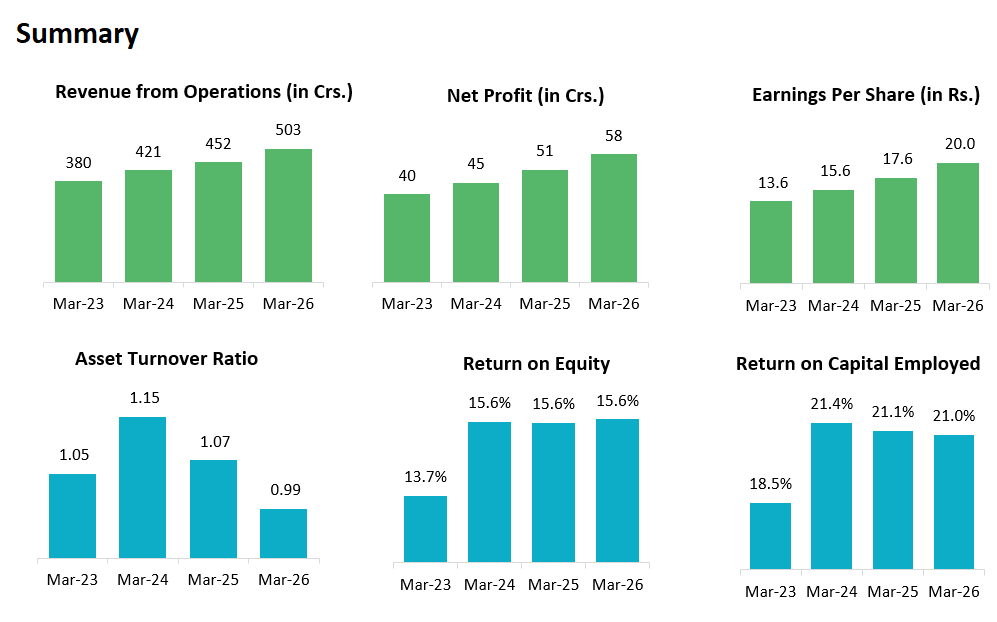
FY26
REVENUE: ₹ 503 Cr. (+11.28% YoY)
EBITDA: ₹ 76 Cr. (+31.03% YoY)
EBITDA MARGIN: 15% (+200 bps YoY)
PAT: ₹ 58 Cr. (+13.73% YoY)
Q1FY27
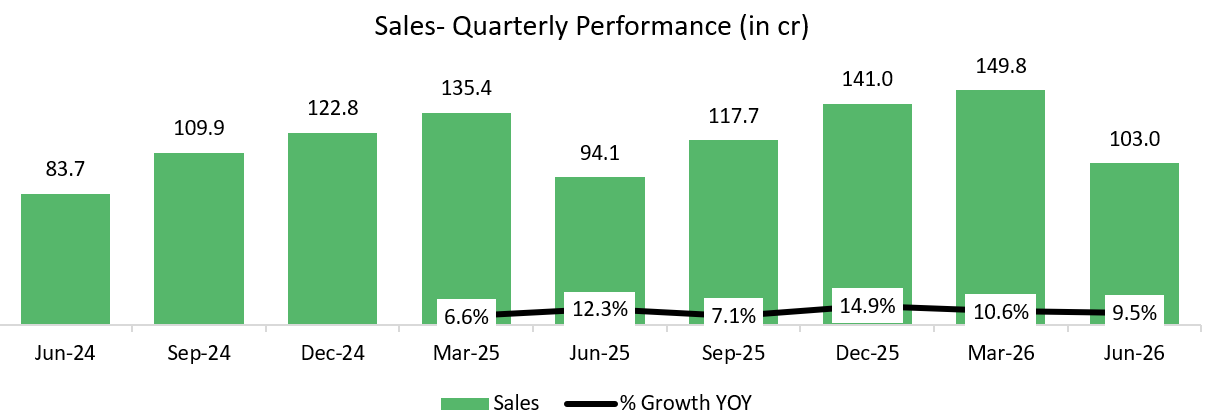
REVENUE: ₹ 102.97 Cr. (-31.25% QoQ, +9.48% YoY)
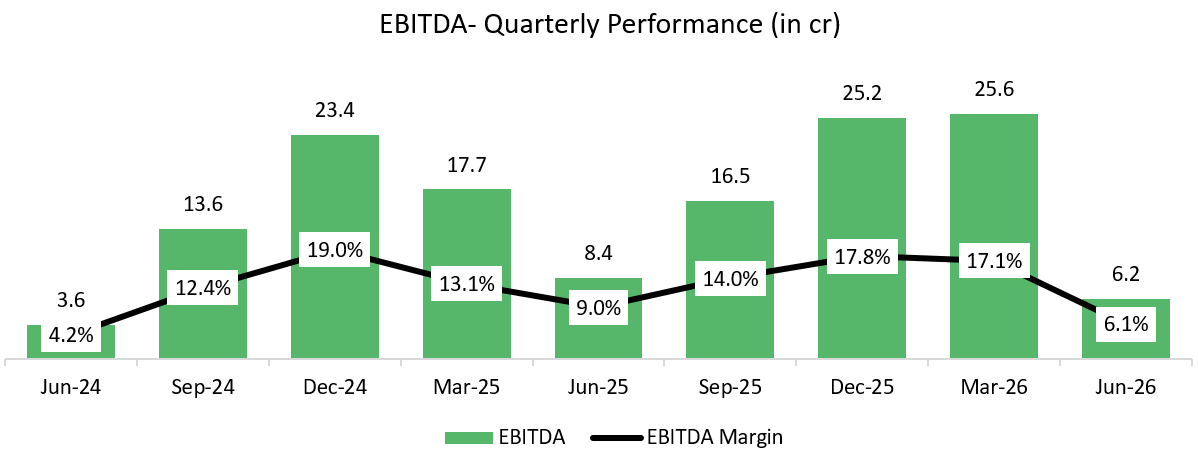
EBITDA: ₹ 6.24 Cr. (-75.59% QoQ, -26.07% YoY)
EBITDA MARGIN: 6.06% (+ bps QoQ, + in YoY)
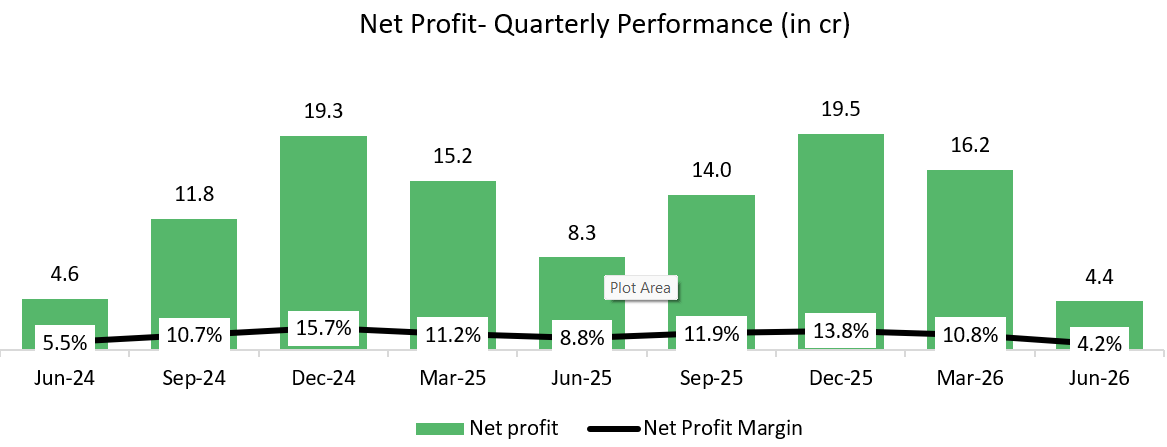
PAT: ₹ 4.37 Cr. (-73.01% QoQ, -47.41% YoY)
OTHER HIGHLIGHTS:
New Launches Gaining Traction: The newly launched categories (Men’s & Women’s Razors, Antiseptic Plaster, Ortho Pain Oil, Nasal Spray) contributed 4% to total sales in Q1 FY27. Razors and Plasty alone are projected to generate annual revenues of ₹15 crore and ₹10 crore, respectively.
Women’s Hygiene Growth: The Women’s Hygiene segment witnessed double-digit growth in Q1 FY27, driven by strong demand across town classes and for larger pad sizes.
New Factory Commissioned: The company commissioned a new ₹150 crore Greenfield Sanitary Napkin Manufacturing Facility in Telangana, its fifth plant, featuring high-speed automated production lines from Japan.
Distribution Expansion: The new razor brands achieved distribution at 70,000 outlets within their first quarter of launch.
Increased Sales Activity: Productive sales calls increased by 9% and total lines sold increased by 20% compared to the previous period.
Pain Management: The category experienced a slowdown, with IQVIA data showing a -3.4% volume growth in Q1 FY27 (vs. +6.6% in Q1 FY26). This was attributed to post-GST retailer inventory issues and a high base effect.
Women’s Hygiene & Rehydration: Both segments showed positive growth, with Rehydration (Beverages) posting an 11% growth.
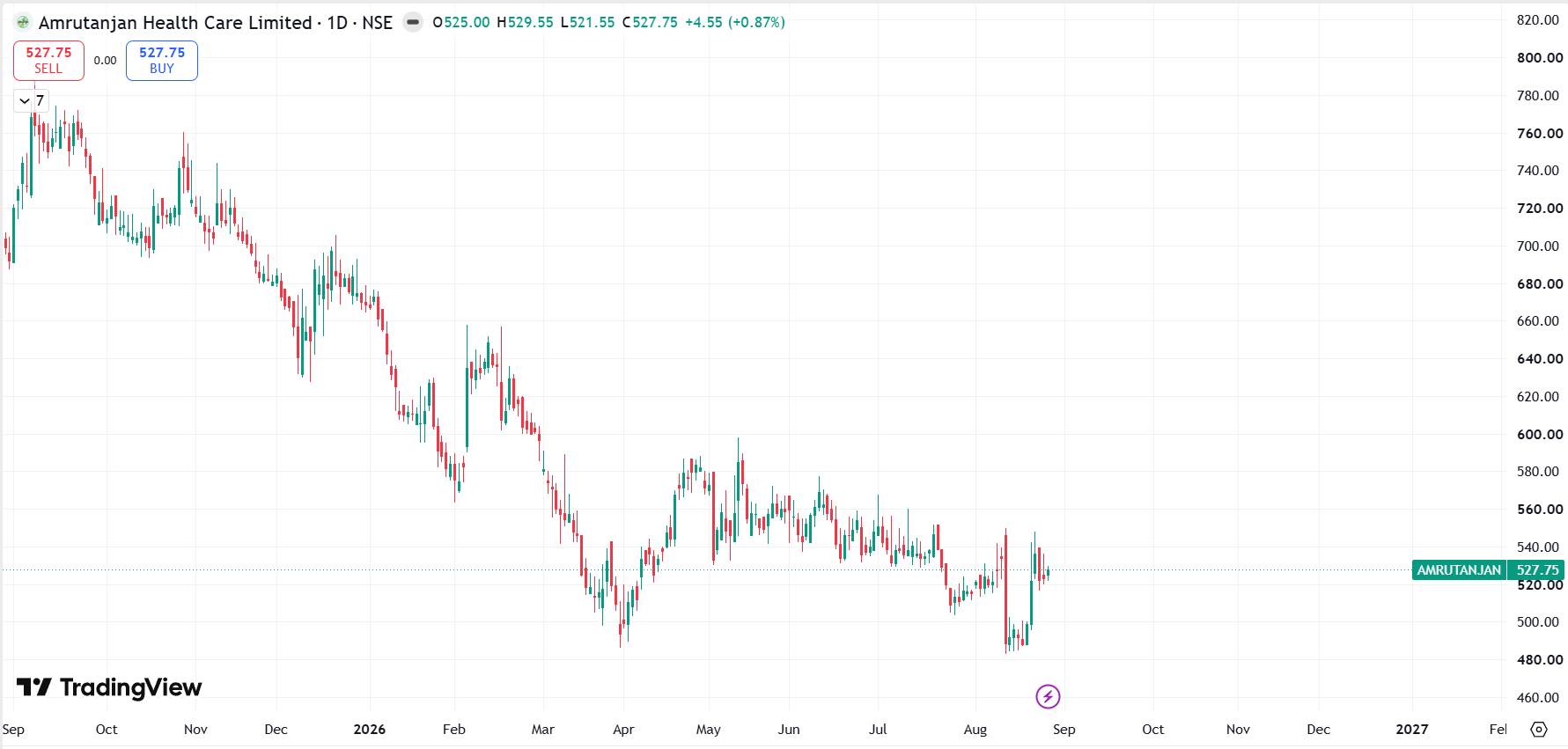
2.1 Amrutanjan Health Care Ltd. Performance:
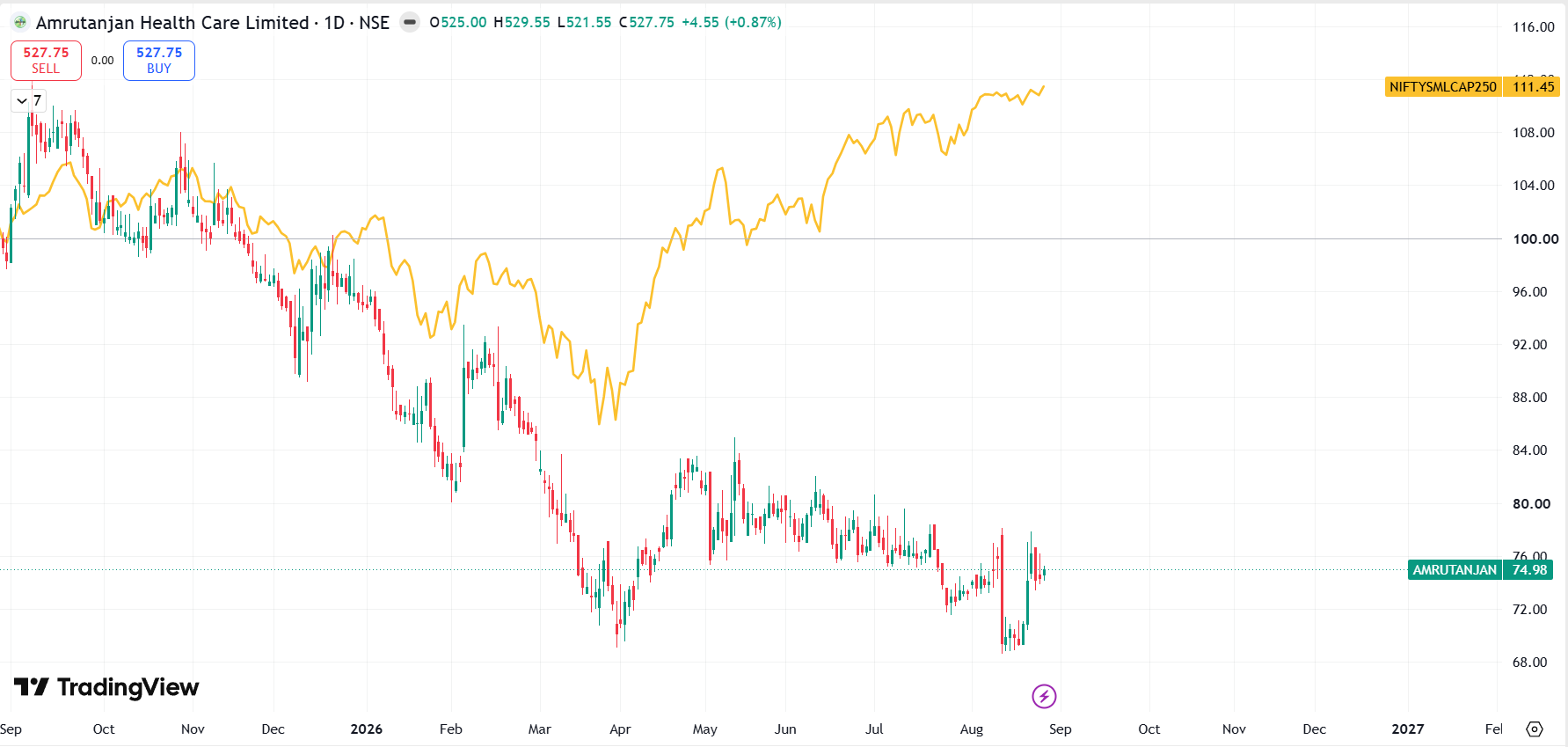
2.2 Amrutanjan Health Care Ltd. Vs. NFTYSMLCAP250:
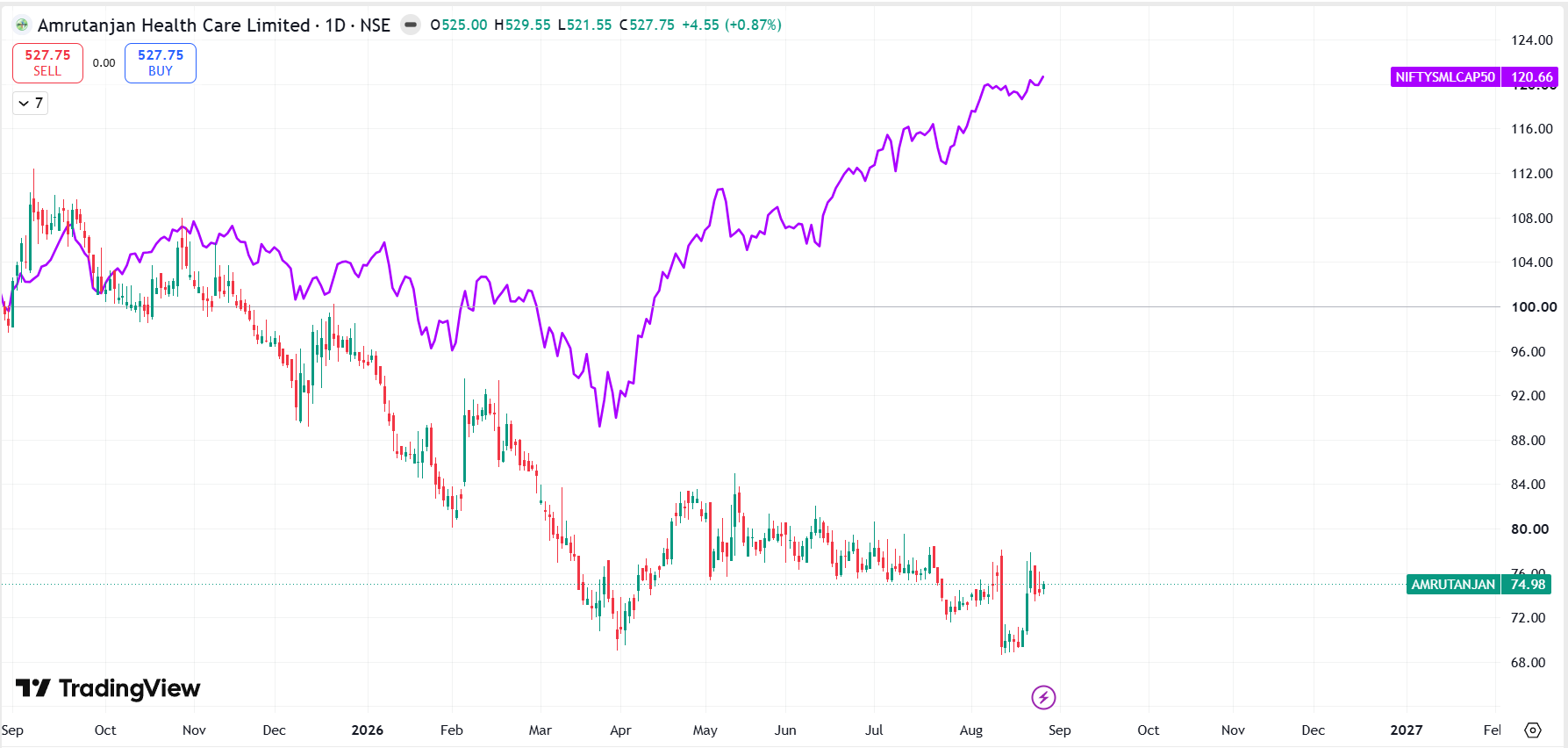
2.3 Amrutanjan Health Care Ltd. Vs. NFTYSMLCAP50:

Amrutanjan Health Care Ltd. is a consumer healthcare company with a history of more than a century, established in 1893. The company is primarily engaged in the development, manufacturing and marketing of over-the-counter (OTC) healthcare products, with a strong presence in pain-management and congestion-management categories. Over the years, it has expanded beyond its traditional pain-relief portfolio into women’s hygiene and beverages, while also operating a specialised pain-management centre. The company has built a portfolio of consumer brands and distributes its products through traditional retail as well as modern trade and e-commerce channels.
3.1 BUSINESS SEGMENTS:
The company broadly operates through four segments: OTC Products, Women’s Hygiene, Beverages and Others. Women’s Hygiene was separately identified as a reportable segment from April 2024, having previously been included within the OTC Products segment.
1. OTC Products: The OTC Products segment focuses on consumer healthcare products for pain management, congestion management and related everyday health needs. It represents the company's traditional healthcare business and includes products addressing common ailments such as headaches, body pain, muscular pain, cold and nasal congestion.
2. Women’s Hygiene: The Women’s Hygiene segment focuses on menstrual hygiene products, primarily through the Comfy brand. The business is aimed at providing sanitary products for women's menstrual-care needs and represents the company's expansion into the broader personal-care market.
3. Beverages: The Beverages segment focuses on the manufacturing of fruit-based beverages and oral rehydration drinks. It operates as a consumer beverage business alongside the company's healthcare portfolio.
4. Others: The Others segment primarily comprises the company's Pain Management Centre, which provides pain-management services using non-surgical approaches. This segment is separate from the company's consumer healthcare product operations.
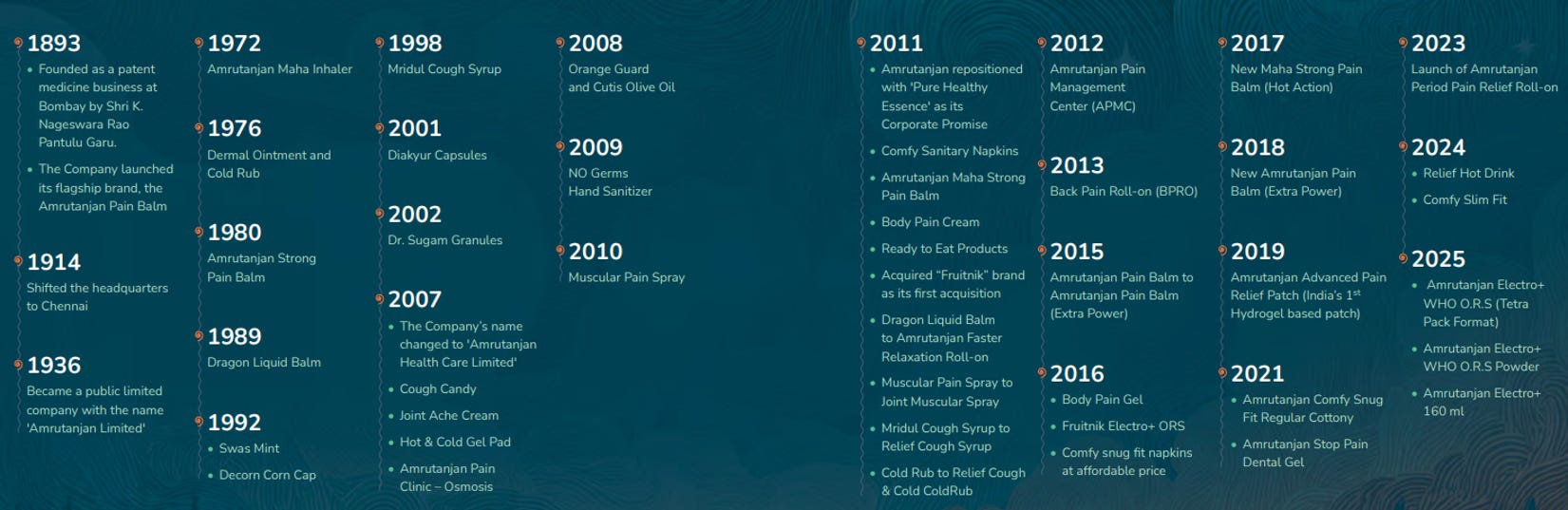
3.2 Company Journey
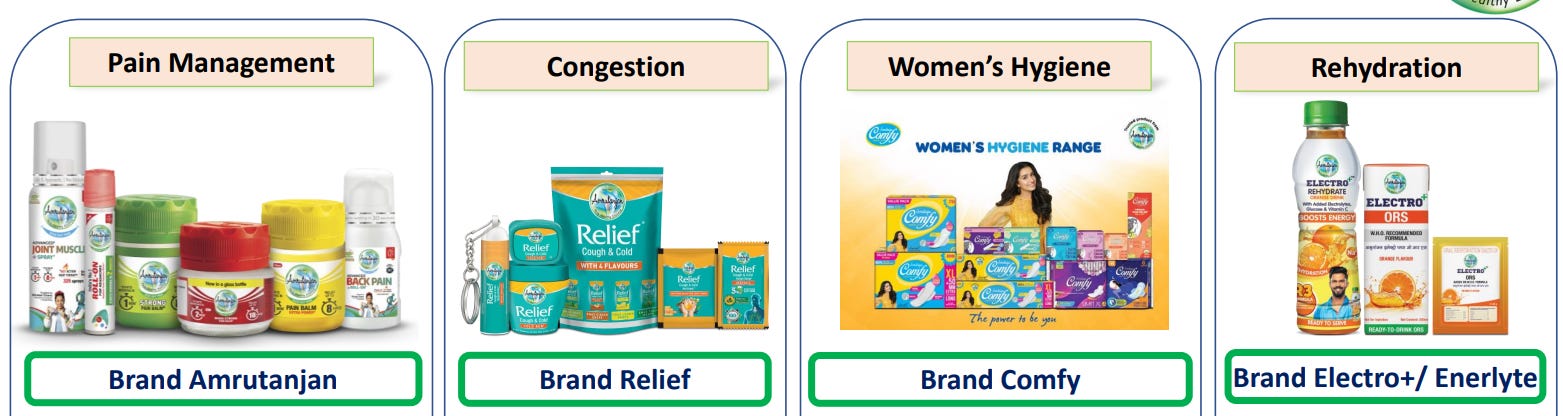
3.3 Company Brands
(Read detailed Quarterly Analysis in the Premium Version)
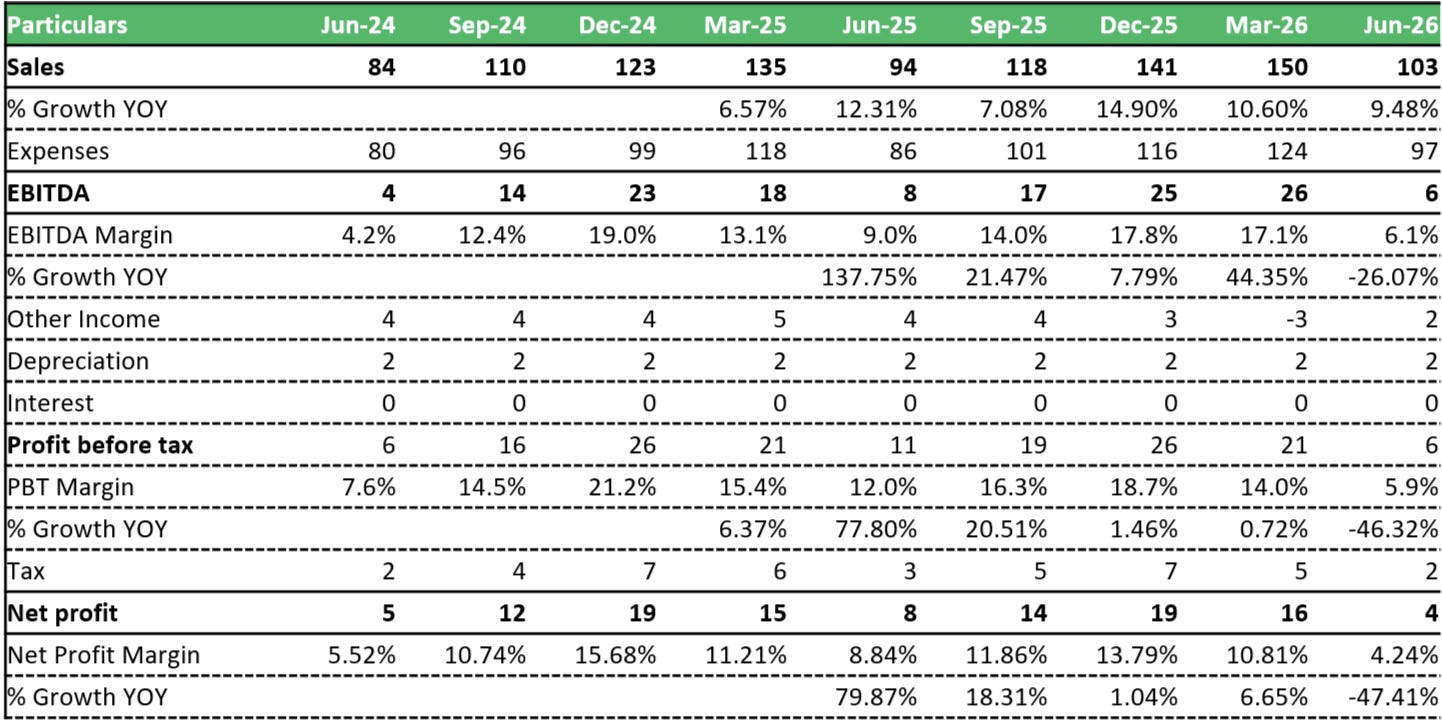
Growing at a CGR of 2.6% in last 9 Quarters.
Growing at a CGR of 7.3% in last 9 Quarters.
Growing at a CGR of -0.7% in last 9 Quarters.
(Read detailed Annual Analysis and Forecasts in the Premium Version)
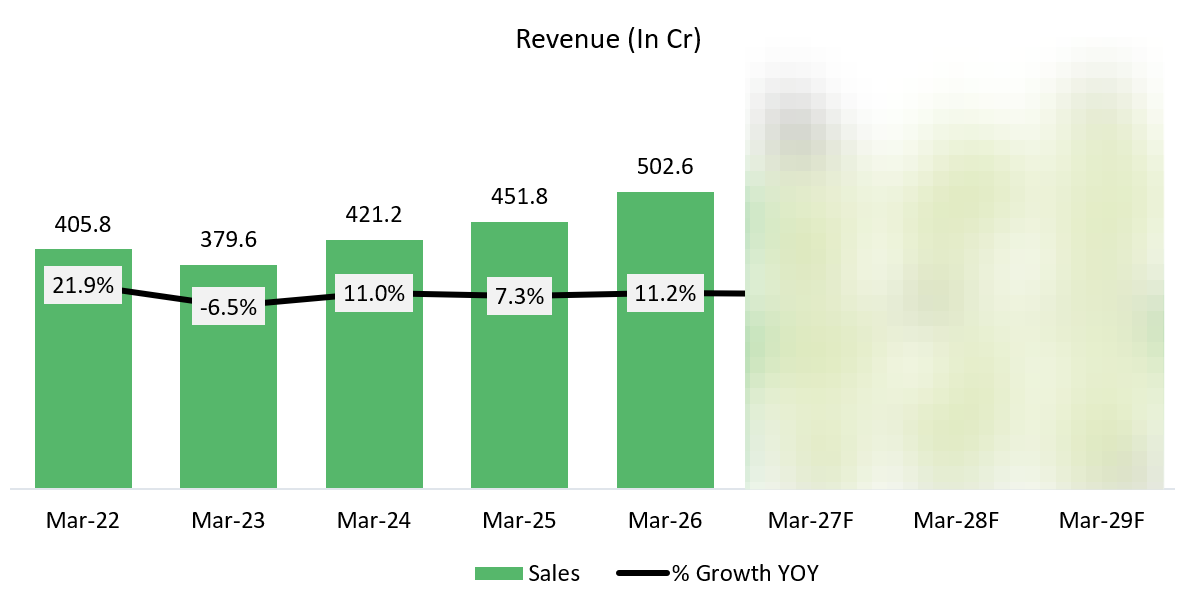
5Y CAGR: 5.5%
Revenue dipped in FY23 before recovering through FY24, FY25 and FY26, with FY26 the fastest growth year in the window (net sales ₹502.55 cr, +11.2%). The FY23 dip coincides with the peak in raw material costs that year, suggesting input inflation pressured both volumes and realizations. The recovery since has been broad based: OTC products grew 13.1% and Women’s Hygiene & Personal Care grew 12.9% in FY26, with Comfy alone up 12.0% (19% on a gross sales basis before IND AS 115 adjustment).
New personal care launches (razors, Plastry) added roughly 4% of Q1 FY27 sales, management targeting ₹15 cr annualized run rate for razors and ₹10 cr for Plastry. Pain Management grew 10% for FY26 overall before hitting the GST-related air pocket in Q1 FY27.
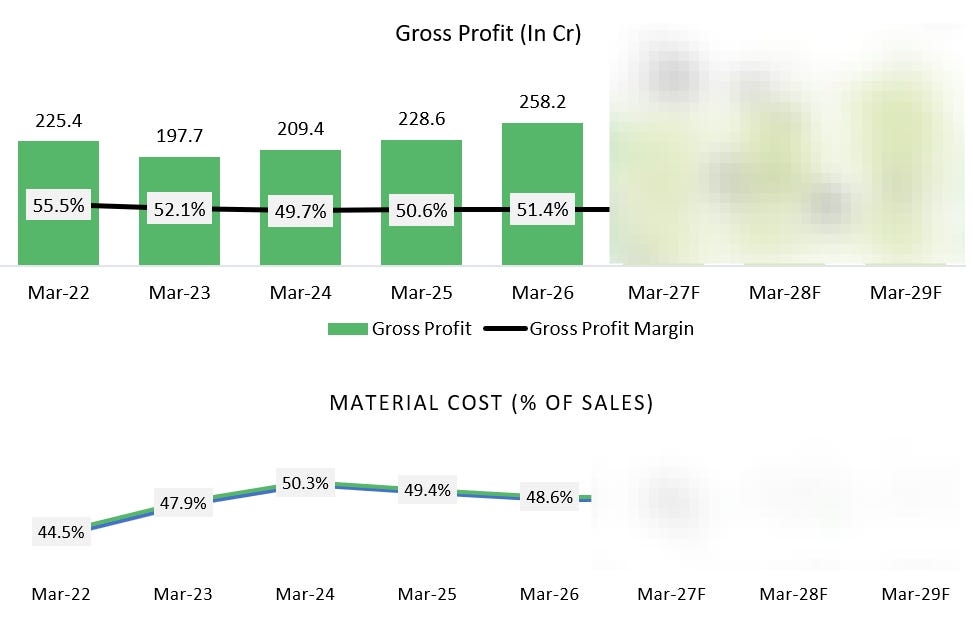
5Y CAGR: 3.5%
Gross margin bottomed in FY24 at 49.7% and has recovered to 51.4% by FY26, still short of the 55.5% seen in FY22. This tracks material cost as a percentage of sales almost exactly, which peaked at 50.3% in FY24 and eased to 48.6% by FY26.
In FY27, however, with raw material and packing prices running higher than the year-ago quarter, which is worth watching given management’s own outlook flags COGS inflation risk this year tied to Middle East crude and supply chain disruption.
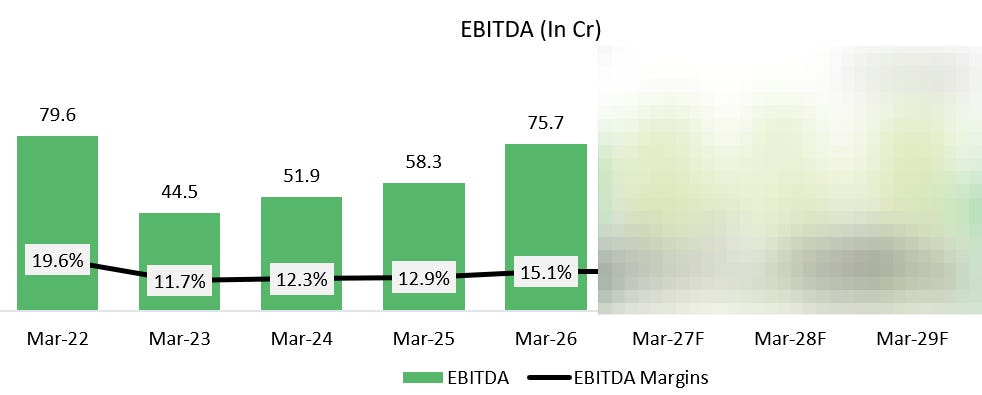
5Y CAGR: -1.2%
EBITDA margin fell sharply in FY23 (to 11.7%) and rebuilt steadily to 15.1% by FY26, still below the 19.6% FY22 print. Part of the rebuild is the gross margin recovery; the rest is operating leverage, with FY26 expenses growing 8.5% against 11.2% revenue growth.
Within that, Employee Benefit Expenses grew 7.88% (₹63.76 cr vs ₹59.10 cr) and Other Expenses grew 6.36% (₹58.71 cr vs ₹55.20 cr), both slower than revenue. Advertising and selling spend actually grew faster, up 7.00% to ₹60.04 cr, with Comfy’s own ad spend up sharply from ₹8.03 cr to ₹9.56 cr, reflecting continued investment behind the women’s hygiene brand build.
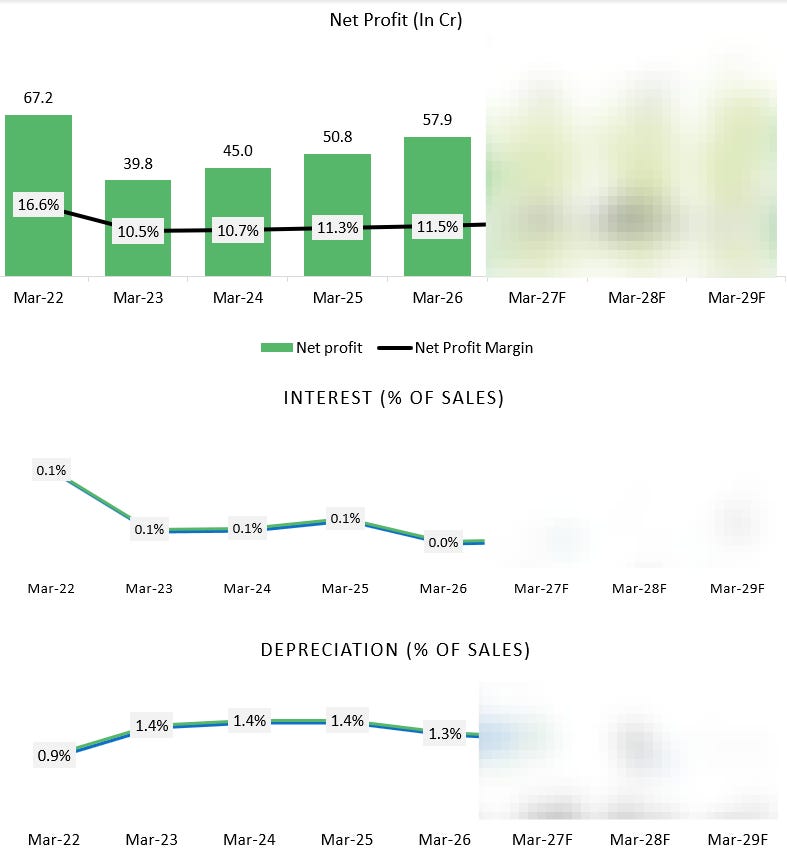
5Y CAGR: -3.6%
PAT margin has lagged the EBITDA recovery by a wide margin, and the reason isn’t tax, which has stayed in a narrow, stable band throughout. It’s Other Income, which fell from ₹18 cr (FY25) to ₹9 cr (FY26), roughly 3.9% to 1.7% of sales. PBT margin has been flat at 15% for three straight years despite EBIT margin rising from 10.9% to 13.8% over the same stretch, because the Other Income decline absorbed nearly all of the operating margin gain before it reached PBT.
FY26 also carries two exceptional items that widen the gap between operating profit and reported PAT further: a one-time ₹7.6 cr (₹76 mn) provision tied to the Tamil Nadu lease-rent legal matter, and a ₹1.25 cr (₹12.5 mn) impact from the new Labour Code wage definition change, both flagged separately from the core P&L.
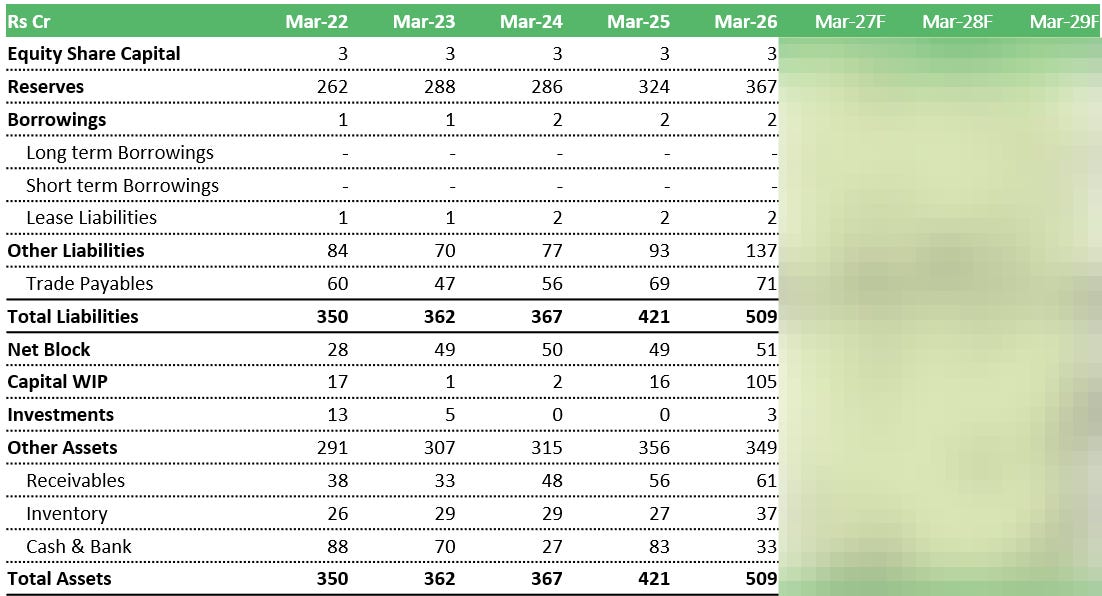
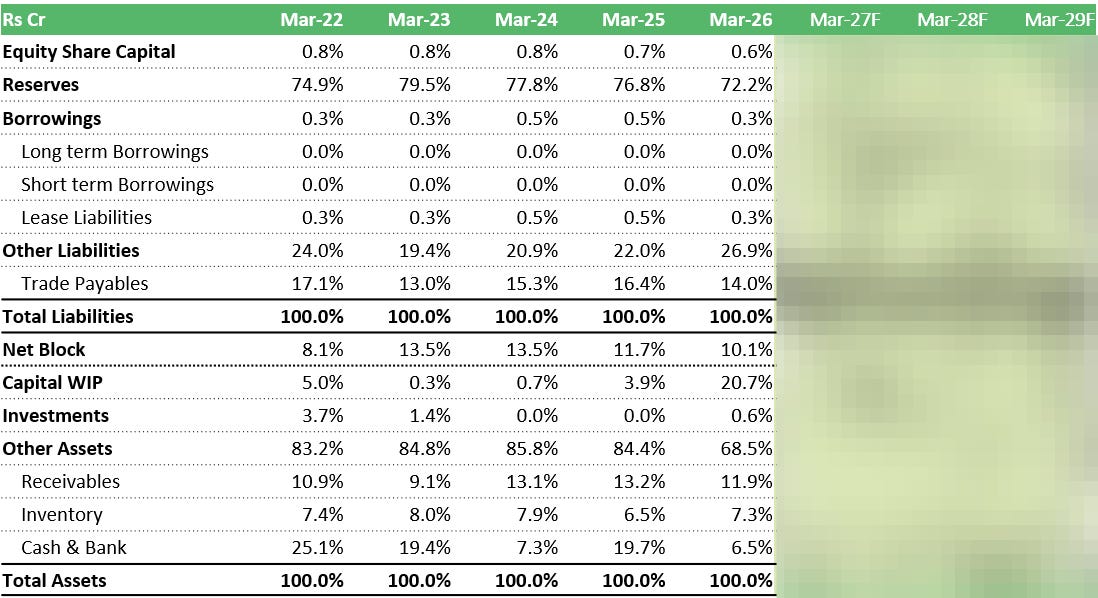
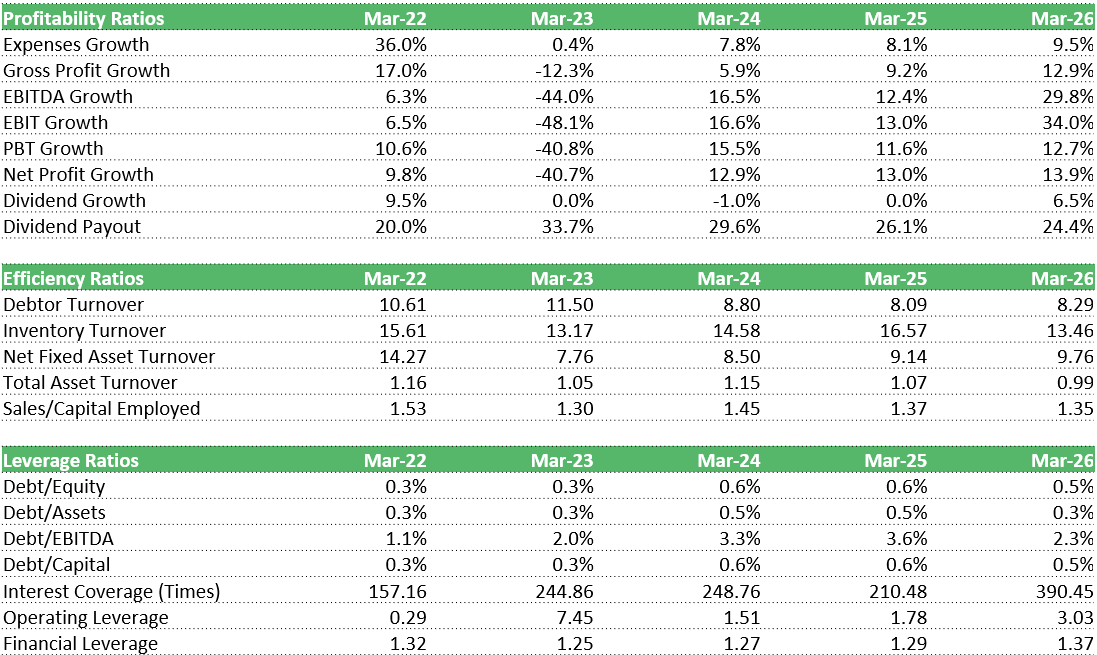
The company operates on zero debt which is a good sign. At the same time, it is worth noting company is not deploying debt to expand it’s operations.
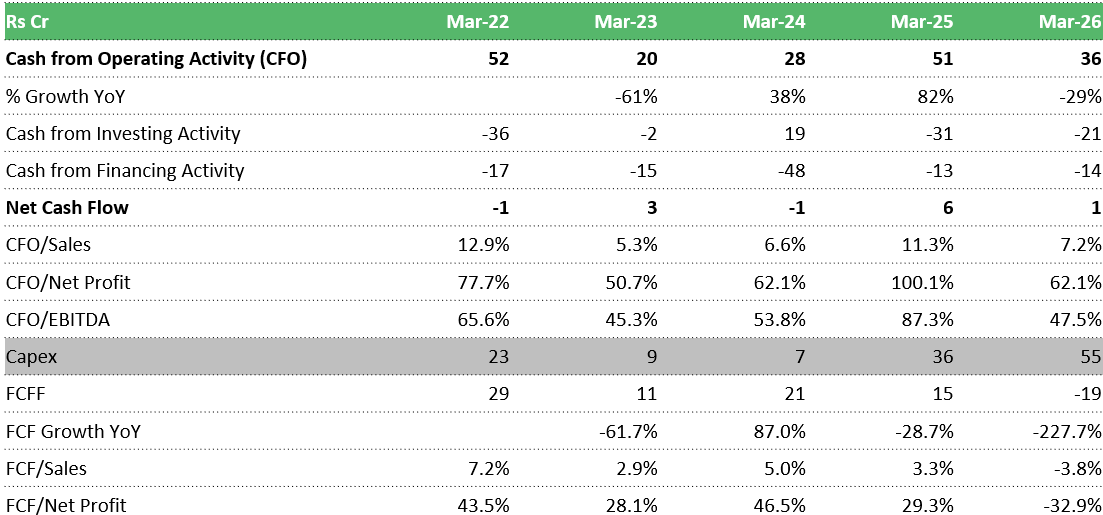
CFF negative continuously
Cash from Financing has stayed negative every year because the business carries effectively no debt. Repayment of borrowings is zero in almost every year, and interest paid on financing is negligible. The outflow is almost entirely dividends paid, running ₹5 to 14 cr a year, alongside a small recurring financial liabilities line of roughly -₹0.5 cr.
This points to a debt-free company distributing surplus cash to shareholders each year rather than raising or repaying borrowings. Mar-24 is the exception, with Other financing items at -₹35.50 cr against a near-zero print in every other year.
CFI Trend
Cash from Investing turned negative in Mar-25 (-₹31 cr) and Mar-26 (-₹21 cr), reversing the +₹19 cr seen in Mar-24. Fixed assets purchased rose from -₹7 cr (Mar-24) to -₹36 cr (Mar-25) to -₹55 cr (Mar-26), the driver behind both years.
This lines up with the new Greenfield Sanitary Napkin Manufacturing Facility in Telangana, a ₹150 cr investment under the Comfy brand with two automated production lines sourced from Japan, now commissioned.
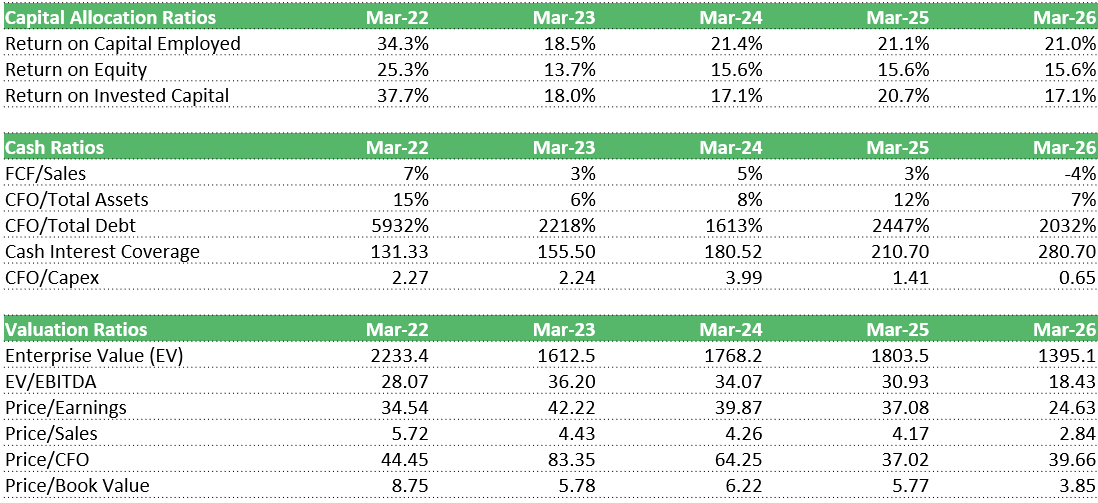
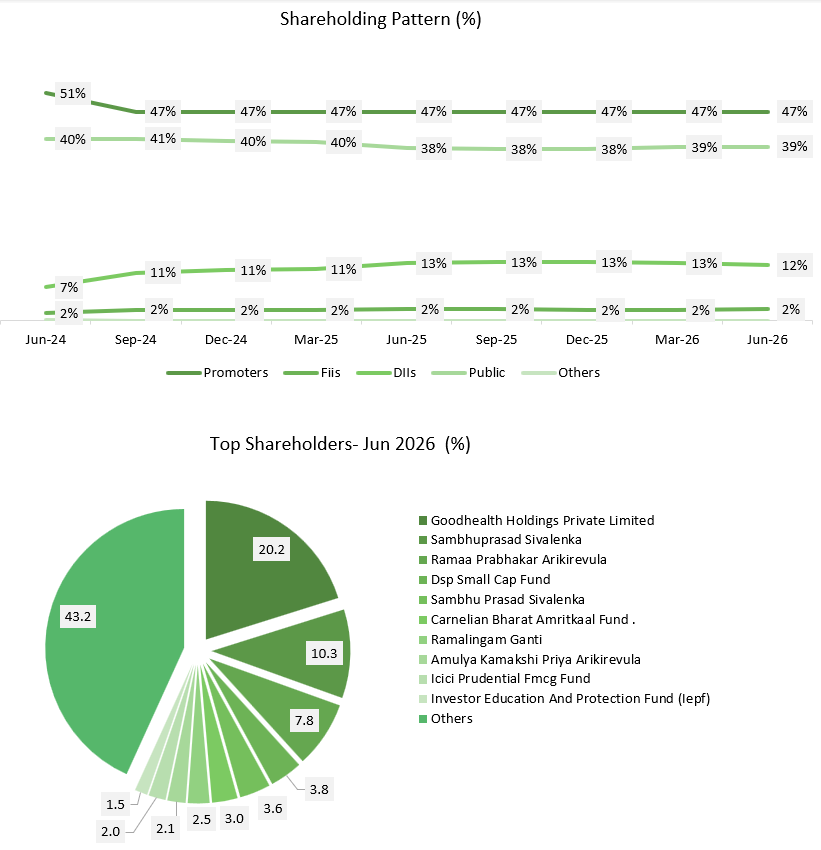
DIIs have increased their holdings showcasing confidence in the business.
You know, we have 3 Tiers to Our Offerings:
I am just starting out! – ₹999/month (Monthly Plan)
I know what I am doing! – ₹2,699/quarter (~₹899/month, Best Value)
I want to create wealth – ₹11,999/year (~₹999/month, Plus You get all access to all reports prepared till date)
You can start with any and can upgrade in between with no additional charges.
To know more, you can reach out to us at:
Email: team@equityedgereaearch.in
Ph No: +91 88590 79630
Please Continue….
1. Performance Overview: Resilient Top-Line Growth Amidst Segmental Re-alignment
Key Growth Categories: Double-digit growth in the Women’s Hygiene, Congestion, and Rehydration segments helped partly offset the weaker performance in the core Pain Management portfolio.
Strategic Focus: For the fiscal year, management is primarily focused on making the Comfy brand profitable, monetizing the newly commissioned Greenfield sanitary napkin plant, and managing input cost inflation through calibrated price increases.
2. Strategic Initiatives & Growth Levers
New Greenfield Sanitary Napkins Plant: AHCL commissioned a state-of-the-art Greenfield Sanitary Napkin Manufacturing Facility in Telangana. Built at a major capex of Rs. 150 crores, the facility is spread across 10 acres with a 1.4 lakh sq. ft. built-up area and is the company’s fifth manufacturing unit. It houses two fully automated, high-speed production lines imported from Japan, among the fastest feminine hygiene manufacturing lines in India.
Entry into Complementary FMCG Categories: AHCL expanded its personal care portfolio in Q4 FY26 with the launch of Comfy Women’s Razors, Smoothe Men’s Razors, Amrutanjan Plastry (Antiseptic Plaster), Ortho Pain Oil, and Nasal Sprays. The newly launched razors and plaster categories accounted for 4% of total AHCL sales in Q1 FY27.
Enhanced Sales & Distribution Infrastructure: The stockist network increased by 7%, while total outlet coverage rose by 17% and effective outlet coverage improved by 8% during the quarter. On the sales front, productive calls increased by 9%, while total lines sold rose by 20%, indicating stronger field execution.
3. Capacity & Future Targets
Monetization of Telangana Comfy Facility: With the new Rs. 150-crore high-speed facility now operational, the immediate priority is to ramp up utilization and capture manufacturing efficiencies, with the aim of making the Comfy brand profitable for the full year.
Revenue Projections for New Personal Care Lines:
Razors (Comfy and Smoothe): Generated Rs. 3 crores in revenue in Q1 FY27 and reached a distribution presence of over 70,000 outlets. Management has set an annual revenue projection of Rs. 15 crores for these brands.
Wound Care (Plastry): Generated Rs. 1.12 crores in Q1 FY27, with a full-year revenue target of Rs. 10 crores.
4. Margin Analysis & Expense Headwinds
Elevated COGS and Geopolitical Impacts: Cost of Goods Sold (COGS) continued to face pressure from supply chain disruptions linked to conflicts in West Asia. The company responded with selective price increases to partly absorb the higher costs.
Surge in Branding & Promotional Investments: Branding spends for OTC products increased to Rs. 3.03 crores in Q1 FY27, compared to Rs. 1.59 crores in Q1 FY26. Branding spends for the Comfy range also rose to Rs. 2.14 crores in Q1 FY27 from Rs. 0.48 crores in Q1 FY26, supporting geographical expansion and higher volumes.
Operational and Administrative Expense Analysis:
Employee Benefit Expenses: Increased by 10.06% YoY to Rs. 17.62 crores.
Advertisement & Selling Expenses: Increased by 5.97% YoY to Rs. 7.81 crores.
Other Expenses: Rose sharply by 32.58% YoY to Rs. 17.01 crores.
5. Working Capital & Exceptional Items
Resolution of Retrospective Lease Rent Dispute: The Government of Tamil Nadu retrospectively revised the lease rent for leasehold land, effective from November 2001. Following multiple appeals, the High Court of Madras dismissed the company’s petition. AHCL had already created a provision of Rs. 760.50 lakhs in the previous fiscal year. In July 2026, the company received a final demand notice of Rs. 974.67 lakhs, including arrears, and fully settled the amount on August 1, 2026. As a result, an additional provision of Rs. 202.75 lakhs (Rs. 2.03 crores) was recognized as an exceptional item in Q1 FY27. The matter has now been fully settled and closed.
HR Restructuring: The company has completed its salary restructuring program to comply with the new labor wage codes, thereby removing future compliance risks from its P&L.
6. Key Category & Operations Insights
Pain Management Segment Performance (65% of Revenue): The overall pain category declined by 9% YoY, with Headache down 10% and Bodyache down 9%. According to IQVIA data, market volume growth in the pain management category fell to -3.4% in Q1, compared to growth of 6.6% in Q1 FY26.
Reasons for decline: Retail-level demand began slowing from Q3 amid uncertainty around GST pricing, which led to a reduction in retailer inventories. Performance was also affected by a high base and a shift in the market, with analgesic pills overtaking rubs in terms of value share.
SKU Dynamics: Headache small 1ml SKUs grew 20%, while the 8ml SKU declined 23%. Maha Strong Bodyache SKU declined 21%.
Feminine Hygiene Segment (Comfy Brand): Comfy net sales increased by 18.14% to Rs. 33.80 crores in Q1 FY27. The segment continued to perform well, with the Comfy XL variant growing 43% and the 18-units Value Pack growing 24%. Comfy’s share of AHCL’s overall revenue increased to 33%, compared with 29% in Q1 FY26.
Beverages and Rehydration Segment: Net sales of beverages increased by 11.34% to Rs. 8.64 crores, while net sales of hydration drinks grew 13.88% to Rs. 8.04 crores. Growth was driven by the Electro+ (Tetra) pack, which grew 4X over last year. Advertising expenditure in this segment was sharply rationalized to Rs. 0.33 crores from Rs. 2.08 crores in Q1 FY26, as the company focused on managing segment profitability during the transition under the FSSAI regime.
Strengths
Manufacturing Capacity: The Telangana facility with 1.4 lakh sq. ft. of automation and two state-of-the-art production facilities from Japan provides the company additional leeway to expand production capacity. This will be helpful to improve efficiency, boost productivity, and cater to rising demand due to growth in the business.
Fast Growth of Network of Chemists: The company increased its network of chemists to 44,000 in just one year and is now approaching its target of 100,000 accounts. Along with this, the numbers for stockists, outlets, effective coverage, and lines per call have also improved.
Direct-To-Market Capability for Deep Rural: The company has established rural van networks operating in nine states giving it the capability to reach out to small markets directly. In addition to this, the company has visibility programs running for its in-store products in general trade and modern trade segments
Diversification of Category: The company is increasingly diversifying from its conventional products like razors and antiseptic plasters. These provide it with more offerings for its consumer base and after a few months of their launch, these had already covered 70,000 retail outlets.
Weaknesses
High Pain-Management Concentration: Given the fact that a major portion of its business comes from pain management products (topical pain relief), any slowdown in the pain-relief segment impacts the company immediately.
Preference for Oral Analgesics: There is a growing trend for oral analgesics over topical products. This, coupled with GST-driven de-stocking, has impacted traditional balm sales and even certain key SKUs of the company.
Disruption in Hydration and Beverage Segment Due to Regulatory Issues: Changes in the guidelines of FSSAI for product nomenclature, formulations, and health claims have disrupted its hydration and beverages segment. There were changes in packaging also.
Higher Depreciation and Fixed Overheads: Additional costs due to depreciation and fixed overheads will arise due to the new greenfield plant at Telangana in the short run.
Opportunities
Manufacture of Feminine Hygiene Products and Margin Enhancement: The Telangana plant will provide the company with its own manufacturing capacity for sanitary pads. Higher in-house production could contribute to faster growth and reduce dependence on contract manufacturers, thereby helping to enhance margins.
Cross-selling via Chemist Network: After attaining a 100,000-strong chemist network, the company will have a much bigger platform for selling its products other than the pain range of products, including nasal sprays, pain oils, and plasters.
Respiratory Range Expansion: Growth in congestion rubs, throat mints, and inhalers is already in evidence. There is an opportunity to develop the respiratory range as a new growth driver along with the current lines of business.
Rural Low-Unit-Pack Penetration: Expanding the rural van operations could help the company penetrate more customers via low-priced sachets and trial packs. If successful, such products could lead to purchase of higher SKU packs by consumers.
Threats
Growing Trend towards Oral Analgesics: As the shift of consumers towards oral analgesics continues, the traditional pain relief business could come under volume pressure over a period of time. Defending the same could require heavy marketing investments.
Strong Competitiveness in Personal Care Products: Sanitary pads, razors, and plasters are very competitive categories. Besides competing with the big FMCG players, the company will have to fight domestic competition, which might mean higher trade spends and marketing costs.
Geopolitical Risks and Input Cost Inflation: Any further disruption in West Asia or increase in the price of crude oil could lead to inflation in packaging and pharmaceutical input costs. Failure to pass such inflation via pricing could hurt margins.
Higher Regulatory Costs: Further FSSAI regulations and changes in labour codes could lead to higher compliance and administrative costs as well as higher labor-related costs.
Market Cap: ₹ 17,698 Cr.
Emami Ltd., headquartered in Kolkata, West Bengal, operates in the FMCG – Personal Care and Healthcare Industry. The company manufactures and markets branded consumer products across healthcare, skincare, haircare, male grooming and pain management, with well-known brands such as Zandu, Navratna, BoroPlus, Dermicool, Kesh King and Smart & Handsome.
Business Model:
Emami follows a brand-led FMCG model, focusing on niche categories with strong consumer recognition. Its portfolio spans personal care and healthcare products, with a growing presence in D2C, e-commerce and quick-commerce channels.
Revenue is generated primarily through:
Healthcare products
Skin and personal care products
Hair care products
Male grooming products
Internationalsales
The company has a broad distribution network reaching 5.4 million+ outlets and operates across 70+ countries.
What Sets Them Apart:
Strong Brand Portfolio: Established brands such as Zandu, Navratna, BoroPlus and Dermicool.
Niche Category Leadership: Strong presence in specialised healthcare and personal-care categories.
Ayurveda & Natural Products: Significant focus on Ayurvedic and wellness-oriented products.
Wide Distribution: Strong rural and urban reach with increasing digital-channel penetration.
Comments
Nothing yet. Say the first thing.
Sign in to join the conversation.