
NOTE: This essay develops a line of inquiry explored in two book chapters by Sasha Shilina, co-founder of Episteme, published in 2026:
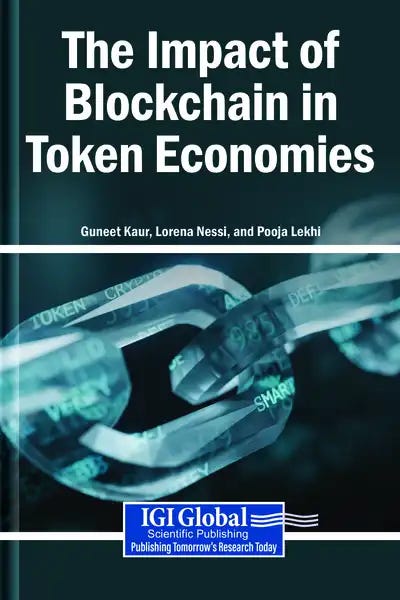
“DeSci and Tokenized Science Economies: Rewiring Research Incentives With Blockchain”, in The Impact of Blockchain in Token Economies (IGI Global).
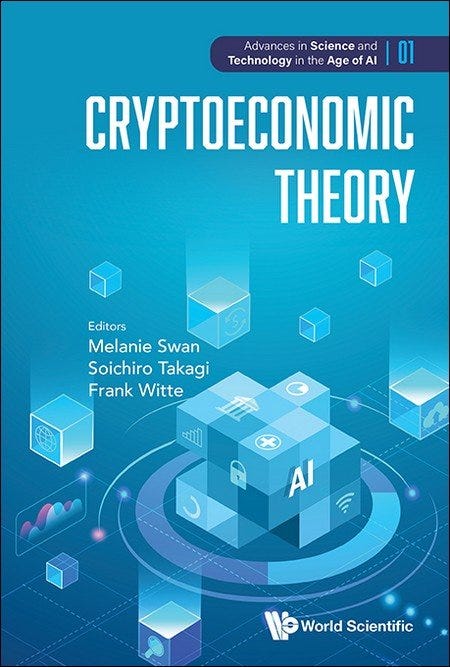
“DeSci and DeScAI: Distributed Epistemic Economies”, in Cryptoeconomic Theory (World Scientific).
Every scientific result enters public life late. By the time a paper is published, a claim has acquired a stable form, survived review, and begun to gather citations. The long interval that preceded it has already started to disappear: abandoned directions, uncertain evidence, failed predictions, changing degrees of confidence, and questions for which no institution had yet developed a language.
Long before a claim becomes knowledge, an economy has formed around it. Time has been granted or withheld. Attention has gathered unevenly. Access to funding, data, equipment, computation, and institutional patience has been distributed according to judgments made before the truth of the matter could be known. Some questions remain open for decades, protected by reputation, infrastructure, or collective confidence. Others vanish before they acquire a form that institutions can recognize. This is the economy before knowledge: the distribution of conditions under which uncertainty is allowed to persist.
Scientific archives preserve outcomes far more reliably than expectations.
A paper records a method, an argument, and a conclusion. It rarely preserves the earlier distribution of belief around the claim: who considered it plausible, who dismissed it, which evidence prompted revision, how long disagreement remained reasonable, and where confidence exceeded what the available evidence could support.
What remains is the answer. Much of the institutional history that carried the question toward it becomes harder to see.
Research institutions shape that history by allocating duration. Grants, laboratories, journals, peer review, and reputation determine which questions receive time, when claims can circulate, and whose uncertainty will be taken seriously.
These arrangements influence which unknowns survive long enough to become legible.
A failed experiment may remain private. A rejected hypothesis may leave no trace. A researcher may revise a position several times before publication, while the final paper presents only the last version. The scientific record retains the result and loses much of the process through which that result acquired credibility.
Those missing traces contain valuable information. Revision reveals responsiveness to evidence. Hesitation may indicate judgment. Failed predictions expose the limits of a model. Persistent disagreement can show that a result remains fragile even after publication.
DeSci made parts of this economy more explicit by introducing protocols, collective funding, markets, contribution records, and new forms of governance into scientific coordination.
Every mechanism carries assumptions about knowledge. A funding system determines which signals of value deserve resources. A market requires a definition of resolution. A reputation system formalizes credibility. A governance process distributes authority over shared decisions.
Once these assumptions settle into infrastructure, they acquire operational force. They begin to influence which questions receive resources, which contributions become visible, which forms of evidence circulate easily, and which judgments shape what comes next.
AI extends this institutional field. Models now participate in literature review, forecasting, hypothesis generation, and evaluation. Scientific judgment increasingly moves across researchers, communities, protocols, and computational systems, each operating according to different standards of relevance, confidence, and proof.
The speed and scale of these systems make their underlying assumptions more consequential. A weak metric can be repeated across an entire field. A narrow resolution criterion can erase meaningful ambiguity. A model can amplify signals that are easy to quantify while leaving less legible forms of evidence outside the frame.
The deeper question concerns the kind of institutional life an unresolved claim requires.
An unknown needs resources, time, memory, and structures capable of carrying disagreement without forcing it too quickly into the shape of an answer. It needs a record that can preserve hesitation, revision, neglected evidence, misplaced confidence, failed predictions, and the gradual emergence of credibility.
A richer scientific record would begin while the outcome remained unresolved.
At Episteme, scientific claims enter the record at this earlier stage. Each claim receives a defined time horizon and a transparent source or procedure for resolution. Researchers, communities, and computational systems can record their expectations, attach evidence, and revise their estimates as the surrounding field changes.
Earlier judgments remain visible instead of being replaced by the latest position.
Over time, these records can show which forms of evidence prompted useful revision, which communities recognized change early, where experts and models diverged, and who understood the limits of their own confidence. They can distinguish sustained insight from retrospective certainty and reveal moments when consensus concealed unresolved disagreement.
Their value extends beyond prediction accuracy. Together, they form a public memory of expectations.
Science would gain access to a part of its own history that currently disappears: the interval in which a claim has begun to matter, resources and belief have gathered around it, and its truth remains unsettled.
The economy before knowledge already exists. The question is what it should sustain, what it should make visible, and what it should remember.
This essay develops questions explored in two book chapters published in 2026:
DeSci and DeScAI: Distributed Epistemic Economies
In Cryptoeconomic Theory
World Scientific, 2026
DOI: 10.1142/9781800618664_0007
DeSci and Tokenized Science Economies: Rewiring Research Incentives With Blockchain
In The Impact of Blockchain in Token Economies
IGI Global, 2026
DOI: 10.4018/979-8-3373-3371-7.ch007
No posts
Comments
Nothing yet. Say the first thing.
Sign in to join the conversation.