
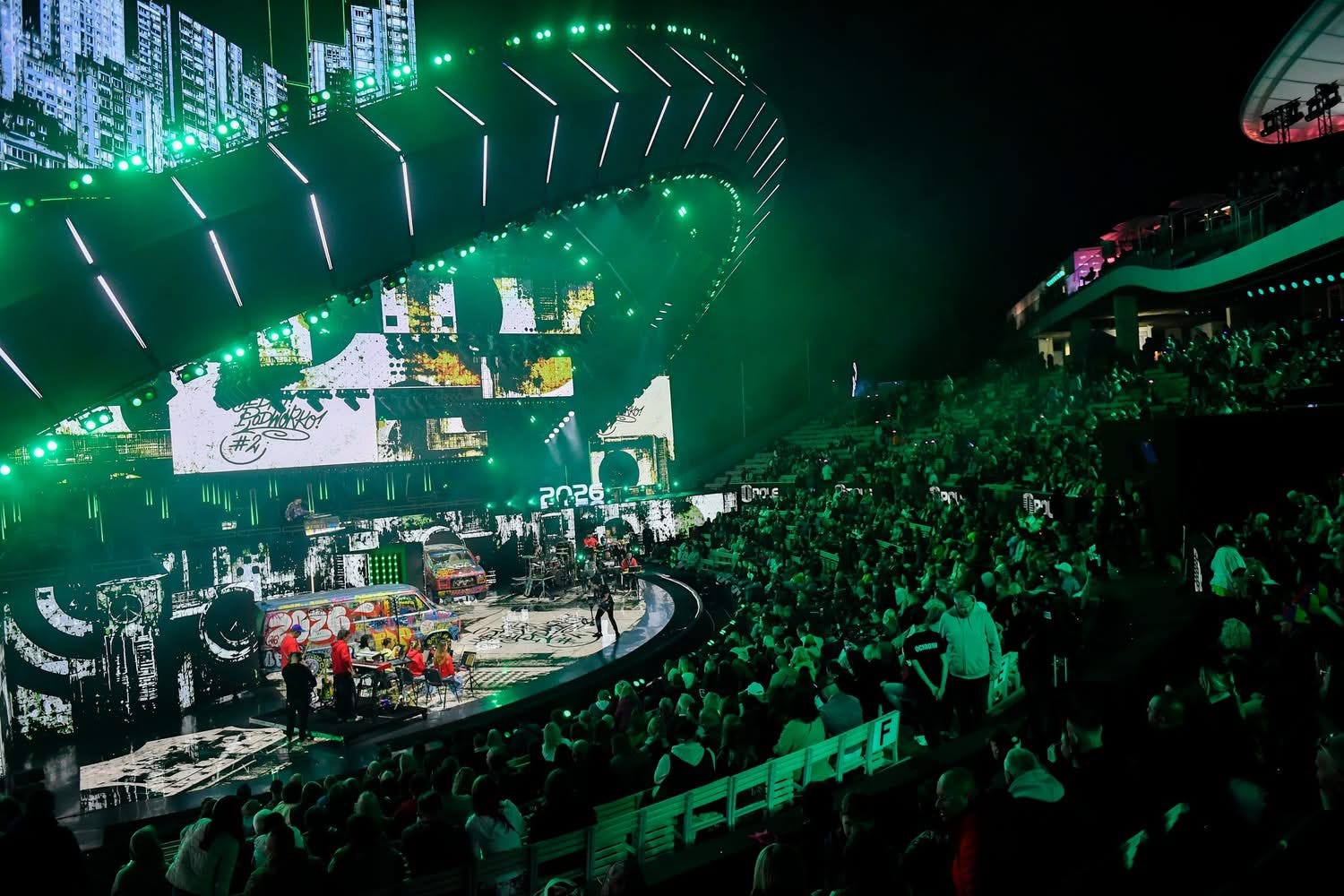
Technical production companies are fighting harder than ever for the biggest festival stages. But perhaps we should also look at everything happening around them…
If you work in event technology, you probably know how the festival market looks from our side.
Every year production companies compete for the major stages. LED suppliers want the biggest screens. Lighting comanies want their fixtures on the biggest rigs. Audio companies fight for PA packages, staging companies for structures, and everyone wants their logo somewhere on the production supplier list of a major festival
There is nothing wrong with that. Main stages are still where the biggest budgets, most demanding riders and highest techncal expectations usually meet
But I think there is another part of the festival market that our industry should be paying much more atetntion to
As festivals become larger and audiences expect more from the entire day, the amount of technology needed across a festival site can grow signifiantly. Not necessarily through another 500 m² LED wall on the main stage, but through dozens of smaller experiences distributed across the venue
And for technical production companies, rental houses and technology manufacturers, this could become a very interesting new market.
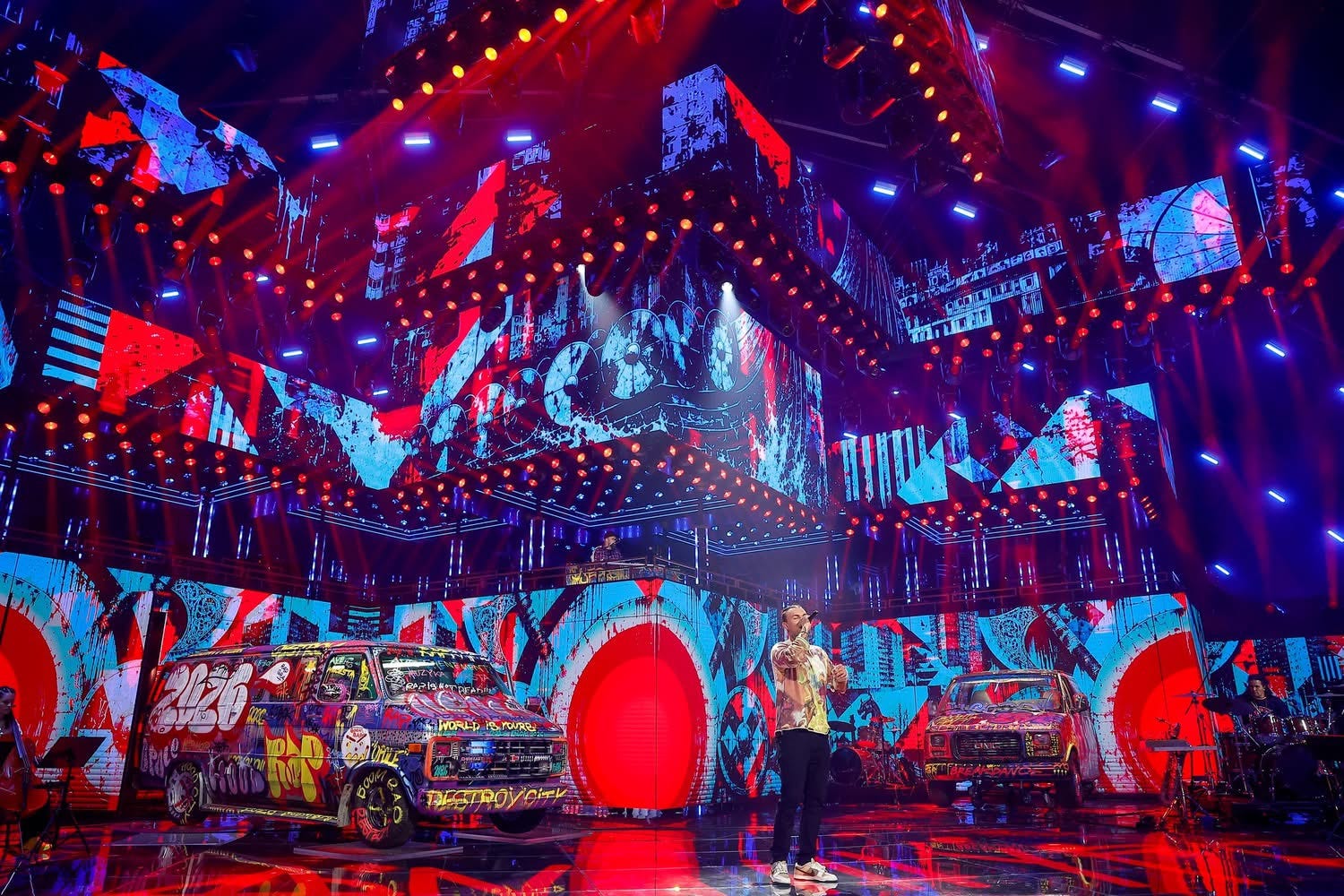
Look at how dramatically festival stages have evolved over the last 20 years
LED surfaces became enormous. Lighting rigs became more sophisticated. Media servers, automation, tracking, lasers, transparent LED, kinetic systems and real-time content became normal components of top-level productions.
Our industry has become extremely good at creating spectacle.
At the same time, the competition to supply these productions has become intense.
There may be ten or twenty serious companies capable of supplying the technology for a large festival, but there is still only one main stage.
So perhaps the next opportunity isn’t simply making that stage even bigger.
Perhaps it is taking the technology and know-how developed for the stage and spreading it across the rest of the festival.
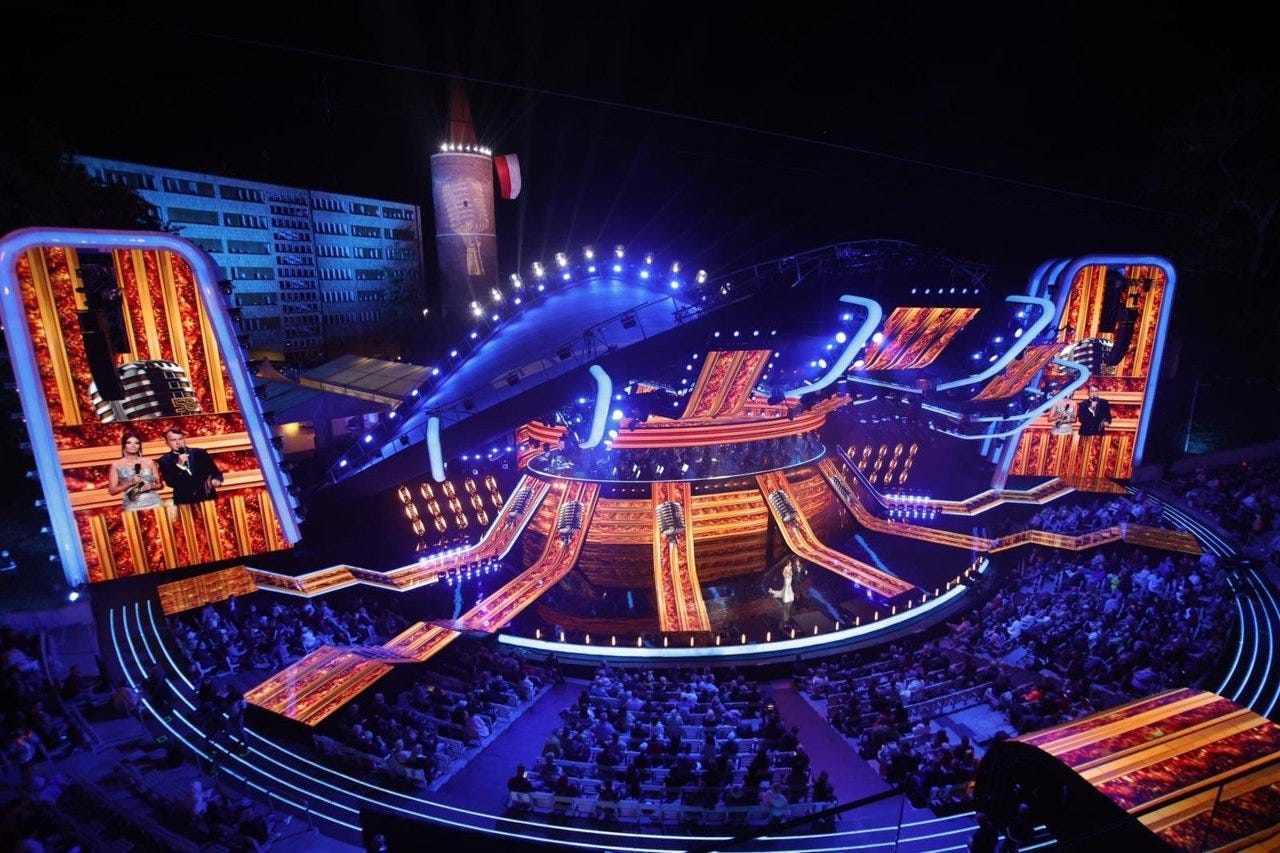
Audience behaviour is changing.
People obviously still come for artists, but a festival visitor might spend eight, ten or twelve hours on site. Only part of that time is spent directly in front of a stage.
The rest is spent moving around, meeting people, eating, drinking, resting, discovering things, taking photographs and interacting with brands.
This wider change is part of what we have described on Entertainment Insights as the growing European live experience economy. Live entertainment is increasingly overlapping with experiential marketing, immersive entertainment, cultural formats, sponsorship platforms and technology-driven environments.
That means a festival site is no longer simply a few stages connected by food and beverage areas.
Potentially, almost every part of it can become an experienceAnd this is where technology companies should start looking.
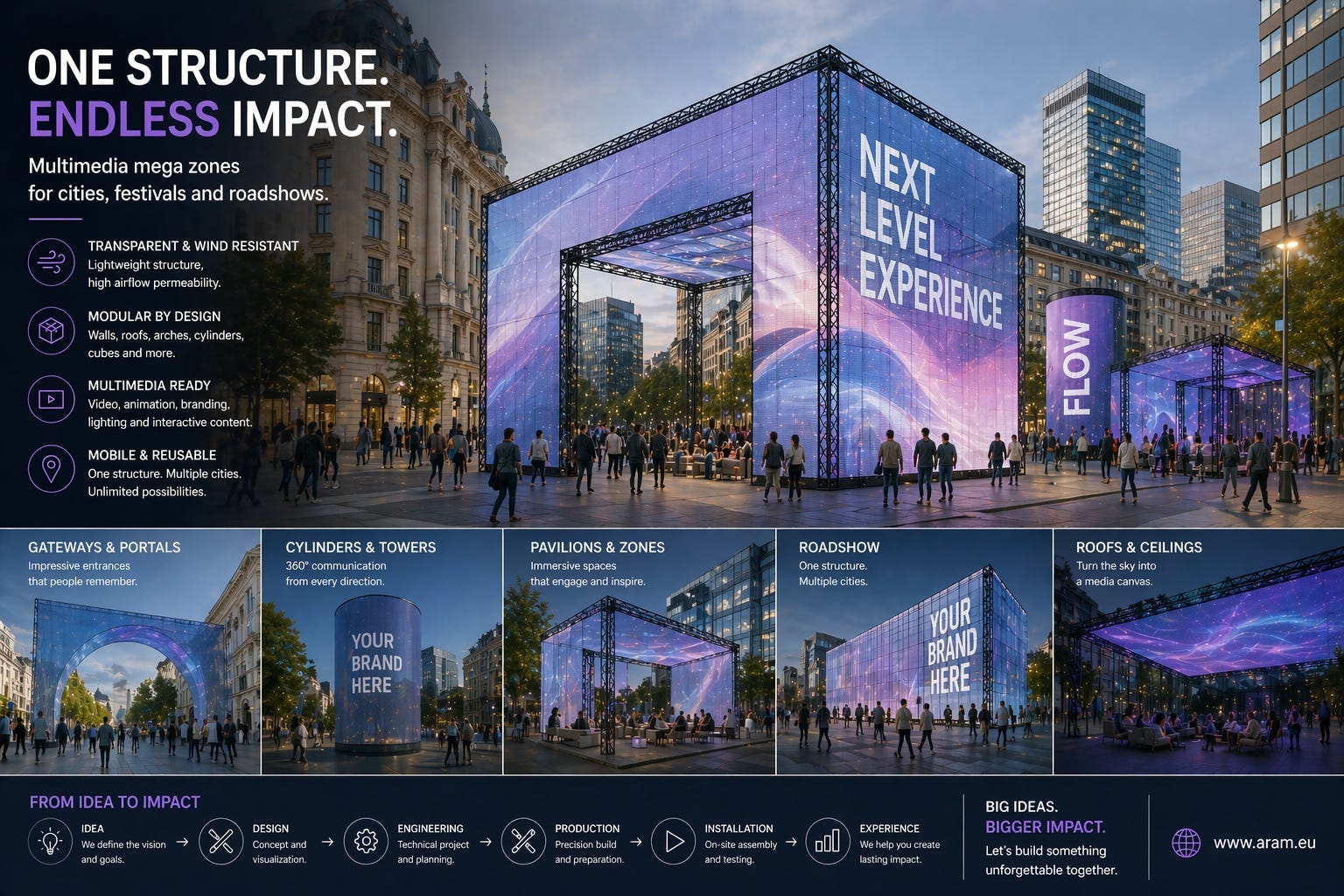
Imagine a festival site not as a production plan, but as a collection of potential multimedia destinations
The entrance can become an immersive gateway.
A sponsor area can become an interactive installation.
A VIP zone can become a programmable multimedia environment.
A chillout area can use projection, lighting and spatial content to create a completely different atmosphere.
A walkway can become a light installation.
A food area can have its own visual identity.
A gaming partner can build an interactive environment.
A beauty or fashion brand can create a digital content space.
A car brand can build an immersive product experience.
Even toilets, charging areas, information points or covered waiting zones could be designed differently if somebdy approaches them creatively enough.
Some of these installations can be huge.
Others don’t need to be.
A good example is the immersive entrance tunnel described recently on Event Production Insights. It demonstrates a simple but important point: immersion doesn’t always require hundreds of square metres of LED. A relatively compact technological intervention can completely change the way visitors experience a transition from one space to another.
Multiply that thinking across a festival site and suddenly the technology requirement looks very different.
There is another reason why I find this direction interesting.
Many festival sponsor areas still look surprisingly traditionall.
Containers. Printed graphics. Furniture. A bar. Some branding. Perhaps a small screen or DJ booth.
Of course, there are brilliant exceptions, but we’ve all seen plenty of activations that look more or less like exhibition stands temporarily moved outdoors.
I think audiences are getting tired of this format.
Brands are competing for attention in an environment where almost everyone already has a spectacular display in their pocket. Putting a television on the wall of a branded container isn’t exactly technological innovation anymore.
Why couldn’t these spaces become much more dynamic?
Instead of a static sponsor container, imagine a lightweight multimedia structure that can completely change its identity through content.
Instead of printed walls, use transparent LED, video strips, projection or light.
Instead of simply displaying the sponsor’s campaign, let visitors enter it.
This is something we’ve already discussed on Entertainment Technology in relation to how LED is changing exhibition environments. Cylinders, cubes, curved displays and other non-traditional formats already allow brands to move beyond the conventional flat-screen approach.
The same thinking can move outdoors.
This is actually a concept I find increasingly important.
We previously discussed it in the context of how technology and LED are changing nightlife environments: instead of treating screens and lighting as equipment added to architecture, technology itself can become part of the architecture.
The same logic works perfectly for festivals.
LED doesn’t necessarily have to be a rectangular screen.
Lighting doesn’t have to be a rig above a stage.
Video doesn’t have to mean IMAG.
Technology can form walls, ceilings, corridors, sculptures, landmarks and interactive objects.
And because much of it is programmable, the same physical structure can potentially serve completely different sponsors or purposes during different festivals.
That last point is especially interesting for rental companies.
Imagine developing modular festival experience systems specifically for rental.
Not a traditional LED wall package.
An actual experience package.
For example, a modular 6 × 6 metre immersive sponsor pavilion that can be configured differently depending on the brand.
A transparent LED cube.
A multimedia entrance gate.
A digital tunnel.
A programmable VIP lounge.
A lightweight media sculpture.
A circular LED environment.
An interactive photo installation.
A kinetic light object.
These assets could travel from festival to festival, while the content and branding change.
This starts looking very attractive from a rental perspective because the physical infrastructure can be monetised repeatedly.
One festival might use the structure for a sports brand. Two weeks later it becomes a gaming activation. A month later it becomes a premium beverage experience.
That is the kind of thinking our industry understands very well.
This direction is also becoming more realistic because the equipment itself is changing.
LED is lighter.
Pixel pitches are smaller.
Processing is better.
Media servers are more accessible.
Lighting fixtures are increasingly pixel-addressable.
Tracking and sensors are easier to deploy.
Real-time content tools are more powerful.
Networking is more mature.
Transparent and semi-transparent display technologies allow us to build visual environments without creating massive solid walls.
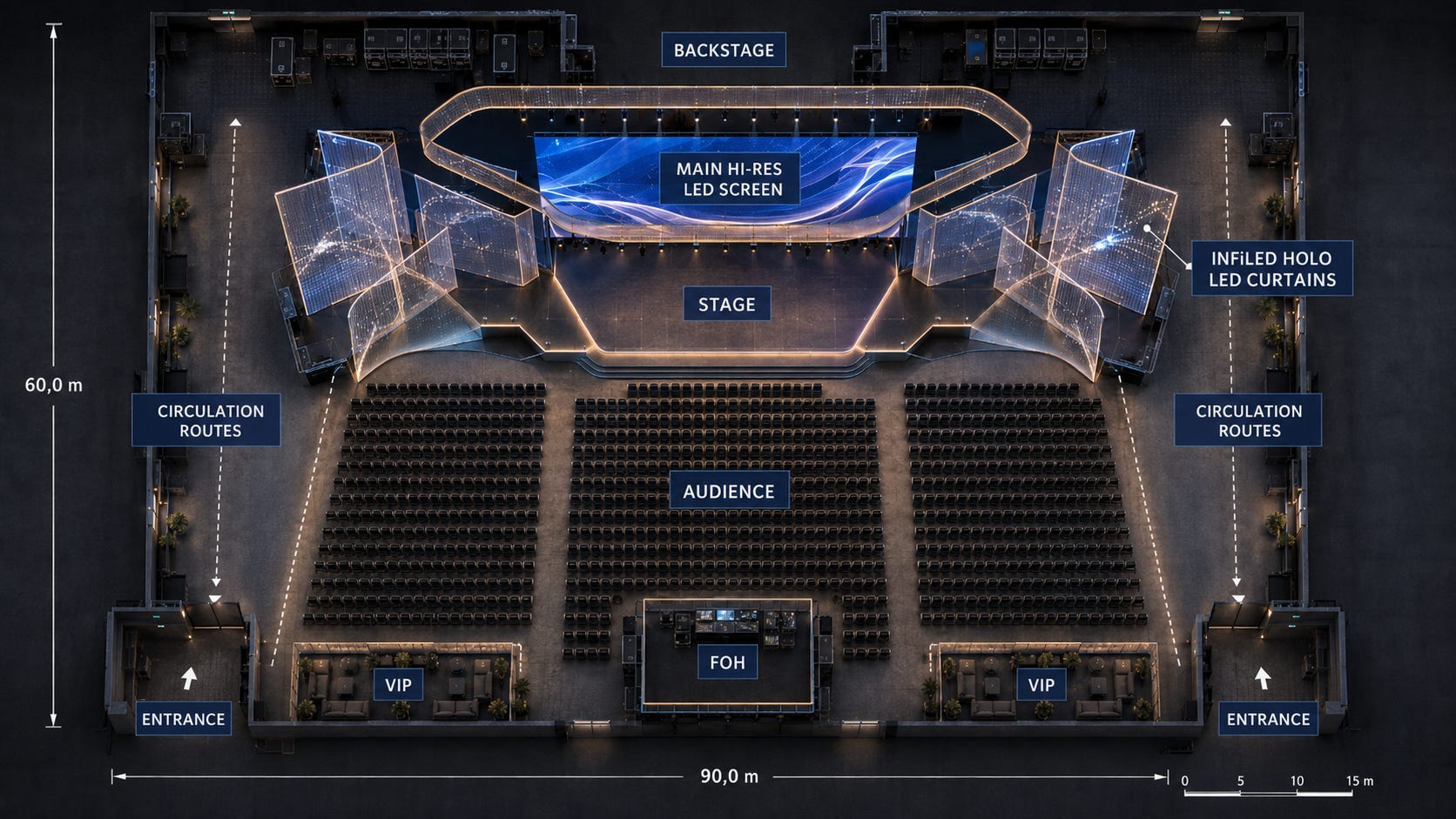
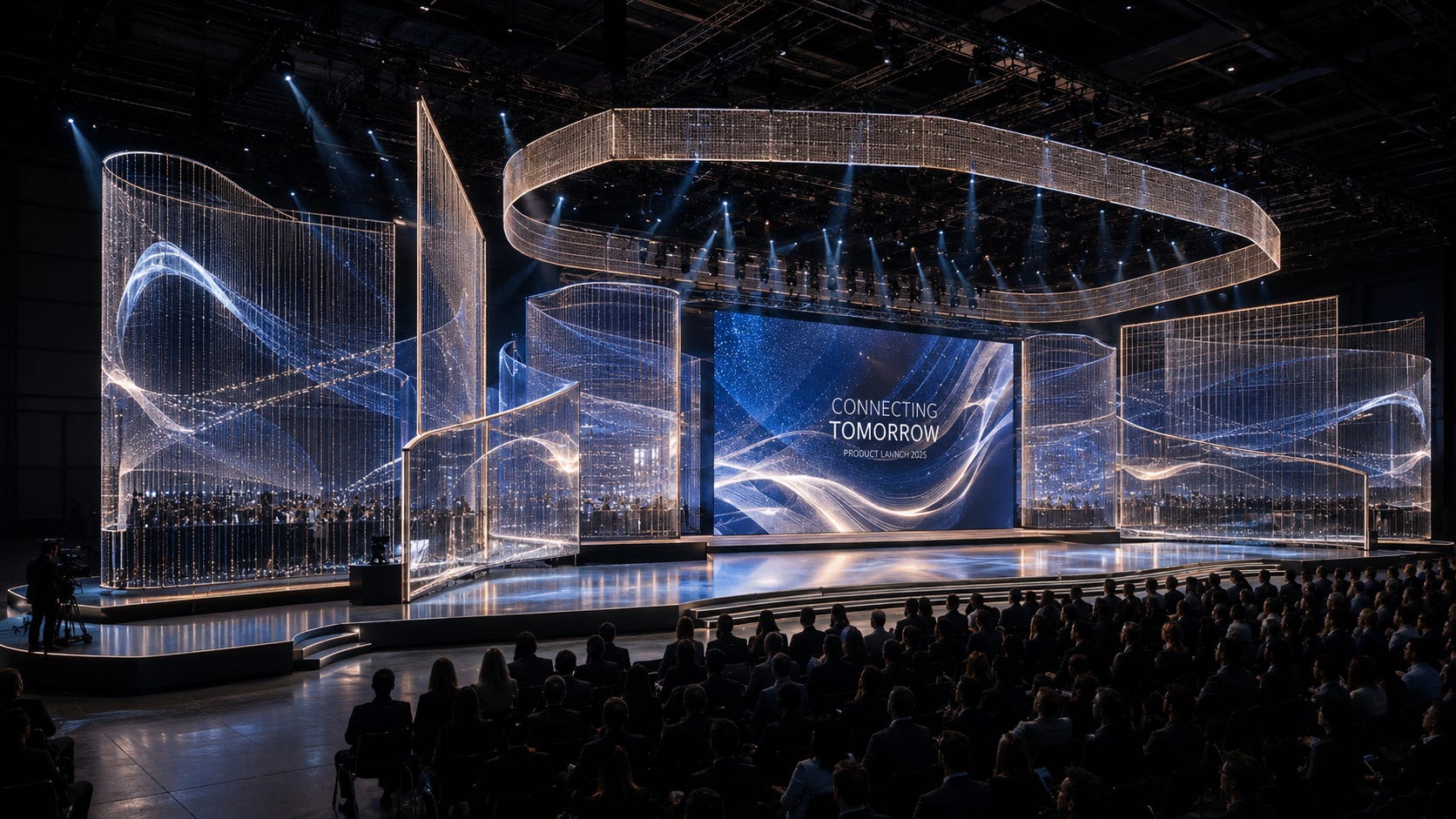
For example, the large inventories of transparent INFiLED Holo LED currently available for touring and rental can be used not only as traditional concert backdrops, but also for cubes, multi-plane scenography and immersive structures.
Creative video products are developing in the same direction. Systems such as FRAMELED Pulse are interesting precisely because modular video strips can become cubes, tunnels, geometric structures and other spatial objects rather than simply another rectangular display.
That matters.
Because suddenly an equipment inventory doesn’t only have to generate revenue from stages.
It can generate revenue from experiences.
There is another potential consequence.
Normally a festival production company talks mainly to the festival’s technical department.
But who commissions an immersive sponsor environment?
Possibly the festival organizer.
Possibly the sponsorship department.
Possibly a brand.
Possibly a creative agency.
Possibly an experiential agency.
Possibly a media agency managing a major sponsorship account.
That expands the customer base considerably.
And it means technical companies need to become comfortable entering projects earlier.
Instead of waiting for a drawing and an equipment list, we need to be able to sit with an agency and say:
Then help them determine how it can actually be built.
This is increasingly important because creating the visual concept itself has become much easier. As we recently wrote on Event Production Insights, the real problem for event agencies is often not a lack of ideas — it begins when those ideas need to be priced and built.
That gap between idea and execution is exactly where technically experienced companies can create much more value.
This is perhaps the most important point.
We don’t necessarily need to reinvent ourselves.
Companies competing for major festivals already understand outdoor production, temporary structures, power, signal distribution, rigging, LED, lighting, media servers, networking, logistics, weather protection, redundancy, safety and tight installation schedules.
That is a huge amount of know-how.
The technical production guide published by Event Production Insights describes technical production as the discipline that converts creative concepts into operational reality. That is exactly the capability required here.
The difference is simply where we apply it.
Today:
Main stage → technology → audience.
Tomorrow it could increasingly be:
Entire festival → technology → experience.
That’s a much bigger canvas.
It could also change how rental companies invest
For rental houses, this raises another interesting question.
When buying equipment, we normally think about riders and utilization.
Which fixture will appear on tours?
Which LED product will production companies request?
Which media server platform is becoming standard?
Those questions remain important.
But perhaps another question should enter the investment discussion:
A creative LED system might work on a concert one week, inside a sponsor pavilion the next week and inside an immersive installatin after that.
An IP65 pixel fixture could move between festival stage design, architectural lighting and branded instalations
A transparent LED inventory might work as a touring backdrop but also create temporary multimedia architecture.
This kind of cross-market utilization can improve the economics of technology investment significantly.
And it makes equipment flexibility much more valuable.
Our industry naturally likes scale.
Largest screen.
Most fixtures.
Biggest roof.
Highest resolution.
Most powerful system.
There will always be something exciting about that.
But scale isn’t the only form of innovation.
Sometimes twenty smart installations distributed across a festival site may create more total engagement than adding another hundred square metres of LED to a stage that is already enormous.
And commercially, twenty installations may also mean twenty budgets.
Some paid by the organizer.
Some by sponsors.
Some by agencies.
Some by premium partners.
Some reused across multiple festivals.
That is worth thinking about.
I believe the technical production market should start treating the entire festival site as a potential technology environment.
Not every square metre needs a screen. Absolutely not.
The point isn’t to cover festivals with LED.
The point is to use technology where it genuinely improves the experience.
Sometimes that might mean a huge immersive structure. Sometimes a five-metre interactive installation is enough. Sometimes the right solution is projection. Sometimes lighting. Sometimes transparent LED. Sometimes audio or sensors. And sometimes the correct technical solution is deliberately almost invisible.
What matters is that we stop thinking about festival technology only through the main-stage equipment list.
Because audience expectations are changing, brands want more meaningful engagement and agencies increasingly want ideas that feel modern, interactive, multimedia-driven and shareable.
The old branded container isn’t going to disappear tomorrow.
But I suspect we’re going to see fewer clients getting excited about putting another logo on one.
The largest festival stages will remain prestigious projects, and technical companies will continue competing fiercely for them.
We certainly will.
But there is another market developing around those stages.
Sponsor environments. Immersive installations. Digital architecture. Interactive zones. VIP experiences. Entrances. Gaming spaces. Social environments. Multimedia landmarks. Temporary attractions.
Individually, many of these projects may be smaller than a main stage.
Together, they could represent a significant new category of festival technology.
And perhaps the most interesting part is that our industry already has most of the tools required to build it.
We have the LED.
We have the lighting.
We have the media servers.
We have the structures.
We have the control systems.
We have the engineering.
We have the crews.
We have decades of experience making impossible things work outdoors, overnight and on time.
Maybe now we simply need to use all of that knowledge in more places than the stage.
The next big opportunity in festival technology may be everything happening around it.
Comments
Nothing yet. Say the first thing.
Sign in to join the conversation.