
If you had told me 25, or even just 15, years ago that I'd be this excited about AI-powered emotional support, I probably would've just stared at you blankly. As a psychoanalyst, my training was about as traditional as it gets. Picture this: five grueling years of deep immersion, which included my own psychoanalysis four to five times a week, plus three supervisions per week that felt just as intense, but focused on my cases. We learned the very specific way a "patient" (a term rooted in the medical model, which often gets confused with "client") should sit. You don't go through that kind of rigorous, belief-shaping experience without truly committing to every pillar of the discipline. Professionally speaking, that's where I was "raised."
However, over the years, my perspective has shifted significantly. I hear the chatter: "Chatbots aren't real therapy!" And, you know what? They're right – it's not the same thing. However, people begin their mental wellness journeys at incredibly different starting points. If you had therapy as a child or teenager, there's a certain familiarity and trust that let you dive right into the work.
Yet, for countless others – and I see this frequently in the ENRICH community – walking through a therapist's door just isn't an option. The cost, the time commitment, the location, cultural barriers, and a whole host of other incredibly valid reasons stand in the way.
Consider this: data from the American Psychological Association in 2023 showed that cost remains a significant barrier, with over a third (35%) of adults reporting difficulty accessing mental health care due to financial reasons. This challenge disproportionately affects certain groups. For instance, Black (43%) and Hispanic adults (39%) were more likely than White adults (33%) to say they could not access needed mental health care due to cost. Similarly, rural areas often face a severe shortage of providers, making in-person therapy physically inaccessible for many.
So, where do people begin their wellness journey when these hurdles are so high?
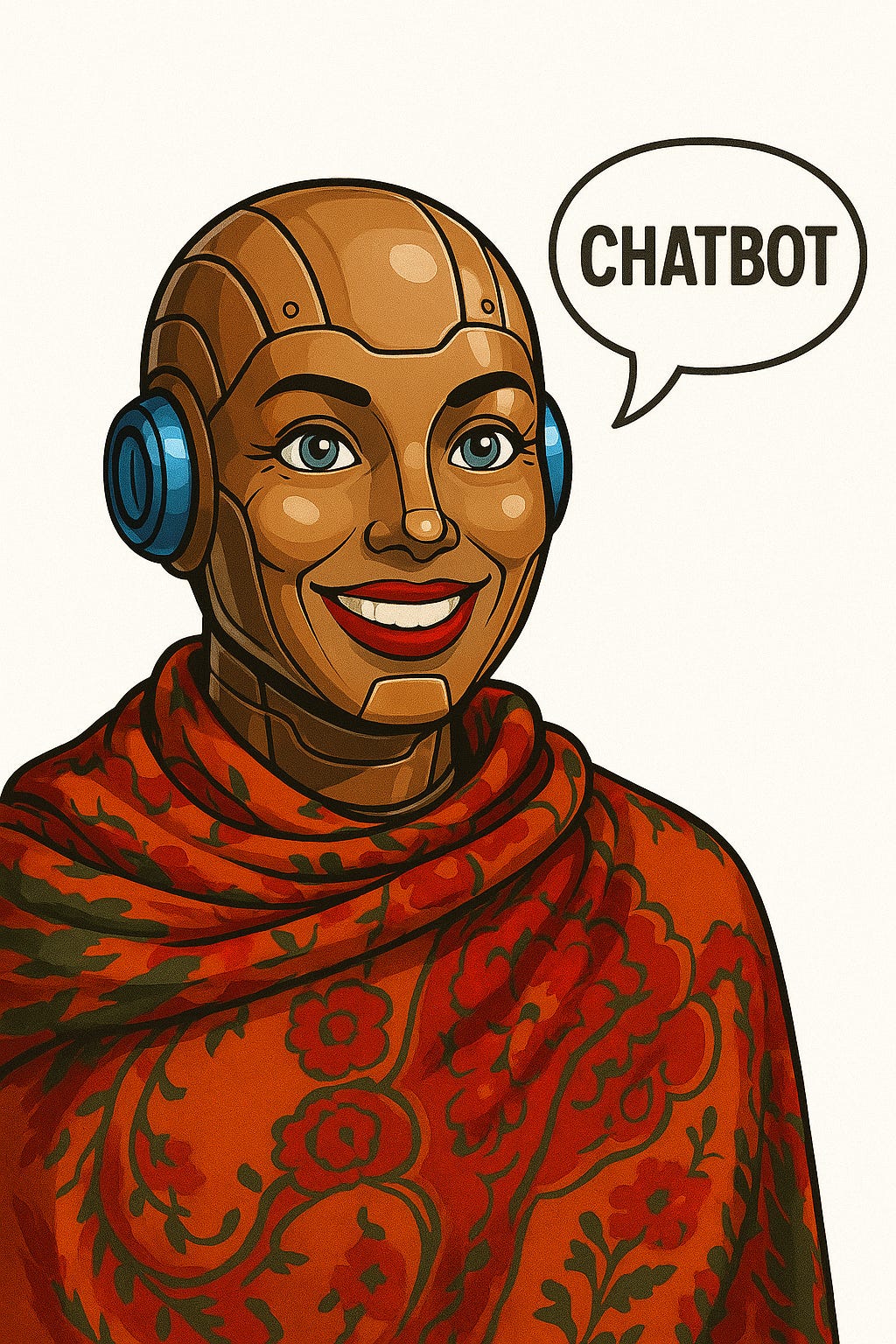
This is precisely why we created ENRICH AI. Our chatbots aren't designed to be therapy; they're designed to be therapeutic. And here's where we stand apart: Unlike other chatbots often built by tech experts, our entire suite of AI-driven services, including our chatbots, were created, trained, and customized by me, an experienced psychoanalyst who maintains a private practice in NYC and virtually.
These aren't generic algorithms. These chatbots were specifically built by us, shaped by the real-world questions, concerns, and needs of patients I've worked with over the last 26 years. This vast experience transcends just one community, encompassing a wide range of individuals across Ethnicity, Nationality, Race, Identity, Culture, and Heritage (ENRICH).
When technology first began to emerge, I started creating custom chatbots to supplement my work with my patients. The results were so compelling that it sparked an idea: to build an entire practice where technology could genuinely enhance human oversight and wisdom.
So, am I trying to replace traditional therapy? Absolutely not. Here's a fundamental psychoanalytic truth: if you've been hurt by another human being, it's that interpersonal connection, that warmth, that profound human presence, that ultimately heals. A chatbot can't replicate that.
However, what I have seen are the incredible benefits for our chatbot users in introducing them to the self-awareness process. After 26 years and thousands of hours working with patients, I genuinely believe many people can benefit from custom chatbots, especially those who need to start their journey here due to issues with access, finances, geography, or finding culturally aligned clinicians.
We're proud to be the first to offer custom chatbots created and trained by a certified psychoanalyst. This isn't just about cool tech; it's about leveraging the best of human understanding and AI innovation to meet people exactly where they are.
It’s not ideal if you're in crisis or at risk of harming yourself or others.
If you are in crisis in the US, please reach out to:
988 Suicide & Crisis Lifeline: Call or text 988 anytime, 24/7.
Crisis Text Line: Text HOME to 741741.
National Domestic Violence Hotline: 1-800-799-SAFE (7233
)
The Trevor Project (for LGBTQ youth): 1-866-488-738
For many others, exploring self-awareness and taking that crucial first step on an emotional journey, a well-crafted chatbot can be truly transformative.
What are your thoughts on AI's evolving role in mental wellness, especially when guided by clinical expertise? I'd love to hear them!
Discover how psychoanalytic wisdom meets innovative AI. Get 30 free chats to experience the difference for yourself!
Visit us today:
No posts
Comments
Nothing yet. Say the first thing.
Sign in to join the conversation.