
In our inaugural Data Brief, we test Premier Danielle Smith’s pipeline gamble by modeling how government intervention could change the odds of success for Alberta’s major projects. Using Energy Nation’s counterfactual “government override” simulator, we examine how stronger policy signals affect project outcomes across the entire Major Projects Inventory (MPI), rather than a single oil pipeline that doesn’t yet exist even on paper.
At a Glance
The Energy Nation simulator defines four levels of intervention, from Guidance (α = 0.25) to Priority (α = 0.5) to Mandate (α = 0.75) to Emergency (α = 1.00). As α increases, projects receive progressively stronger boosts in success odds, rising to roughly twice as likely to succeed at the Emergency level, compared to the base case. For this analysis, we focus on the two highest settings:
Mandate (α = 0.75): comparable to the Building Canada Act and Major Projects Office.
Emergency (α = 1.00): where government effectively takes charge to ensure completion.
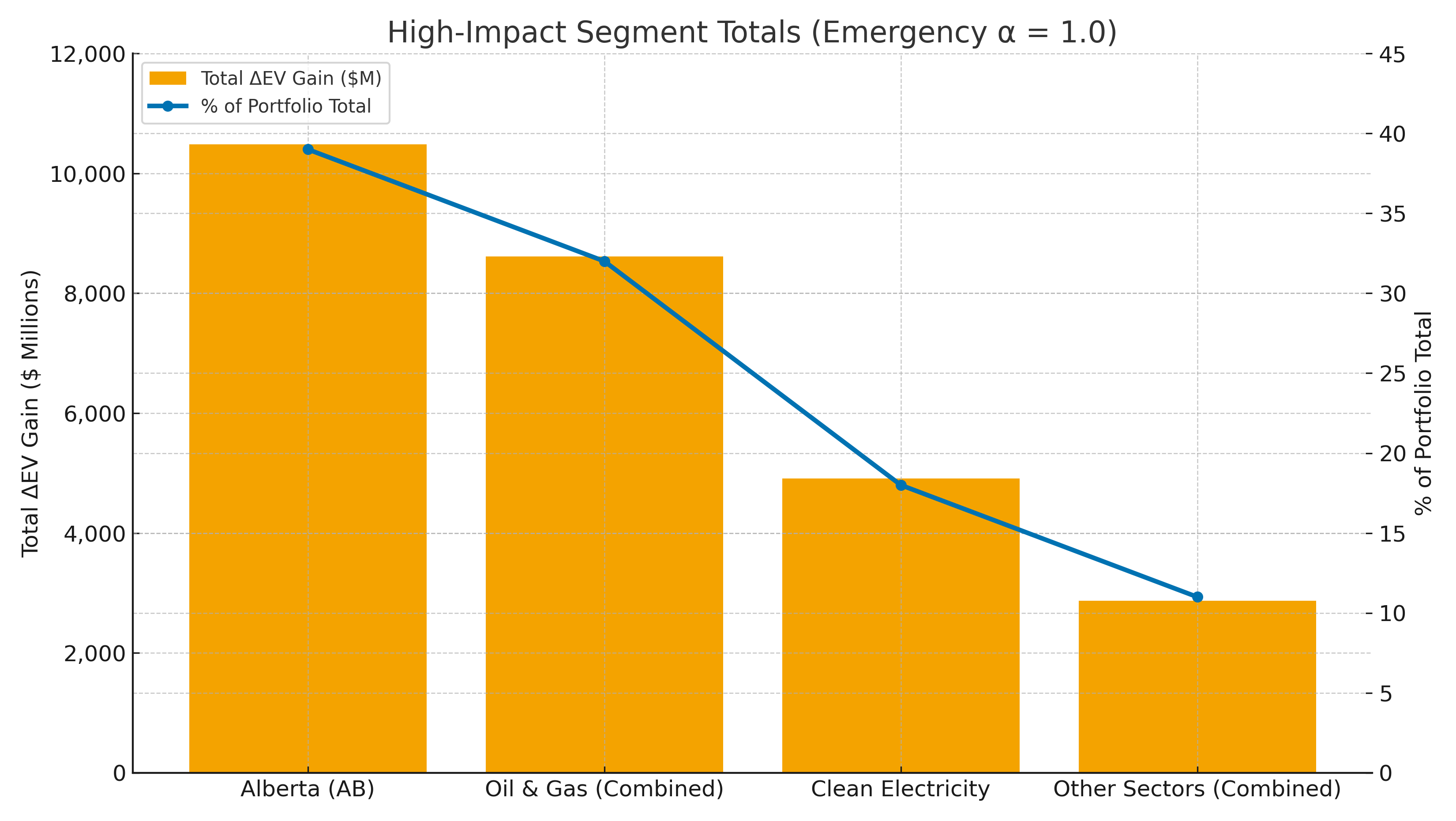
At Emergency, the model detects the largest uplift in projects tagged to Alberta and Oil & Gas. The shift from Mandate to Emergency adds roughly $7 billion in total expected value (EV) across the MPI, bringing the overall uplift to about $26.9 billion. Alberta accounts for about 40% of that gain, and Oil & Gas for roughly one-third. This doesn’t mean a single oil pipeline would create that value. Rather, it signals that decisive, coordinated policy can measurably improve the investment climate for Alberta’s energy projects, countering uncertainty and unlocking latent economic potential.
Key Findings
Maximal Policy Added ~$7B in Value: Raising the override from Mandate to Emergency produced a 5% increase in total EV, from $143B to $150B (and a 22% increase from a base case of $123B).
Alberta and Oil & Gas Lead the Gains: Under Emergency, Alberta projects, especially in Oil & Gas, captured the largest share of the total uplift, showing where clear government signals have the greatest impact.
Emergency Unlocks More “Even-Money” Projects: The stronger setting pushed 10 additional projects above the 0.50 investment threshold, giving them a better than 50/50 chance of success (159 vs. 149 under Mandate and 90 under base case). Together these new “even-money” projects accounted for nearly all of the incremental EV gain above the base case.
So, Is Alberta’s Pipeline Proposal a Good Bet?
Potentially, if viewed as a policy signal rather than a construction plan. Alberta’s decision to act as proponent, applying to the Major Projects Office under the Building Canada Act with support from Enbridge, Trans Mountain, and South Bow, illustrates how coordinated government action can strengthen odds and EV. If the province can demonstrate that it can align government, industry, and Indigenous partners around a credible, executable project, it sends a powerful message of public certainty, private delivery, and Indigenous partnership. That formula, according to the model, is what actually moves the needle.
Charts & Figures
Figure 1. Overall Override Policy Performance
Increasing the override from Mandate to Emergency boosted average project probabilities and added about $7 billion in total EV across the MPI portfolio.
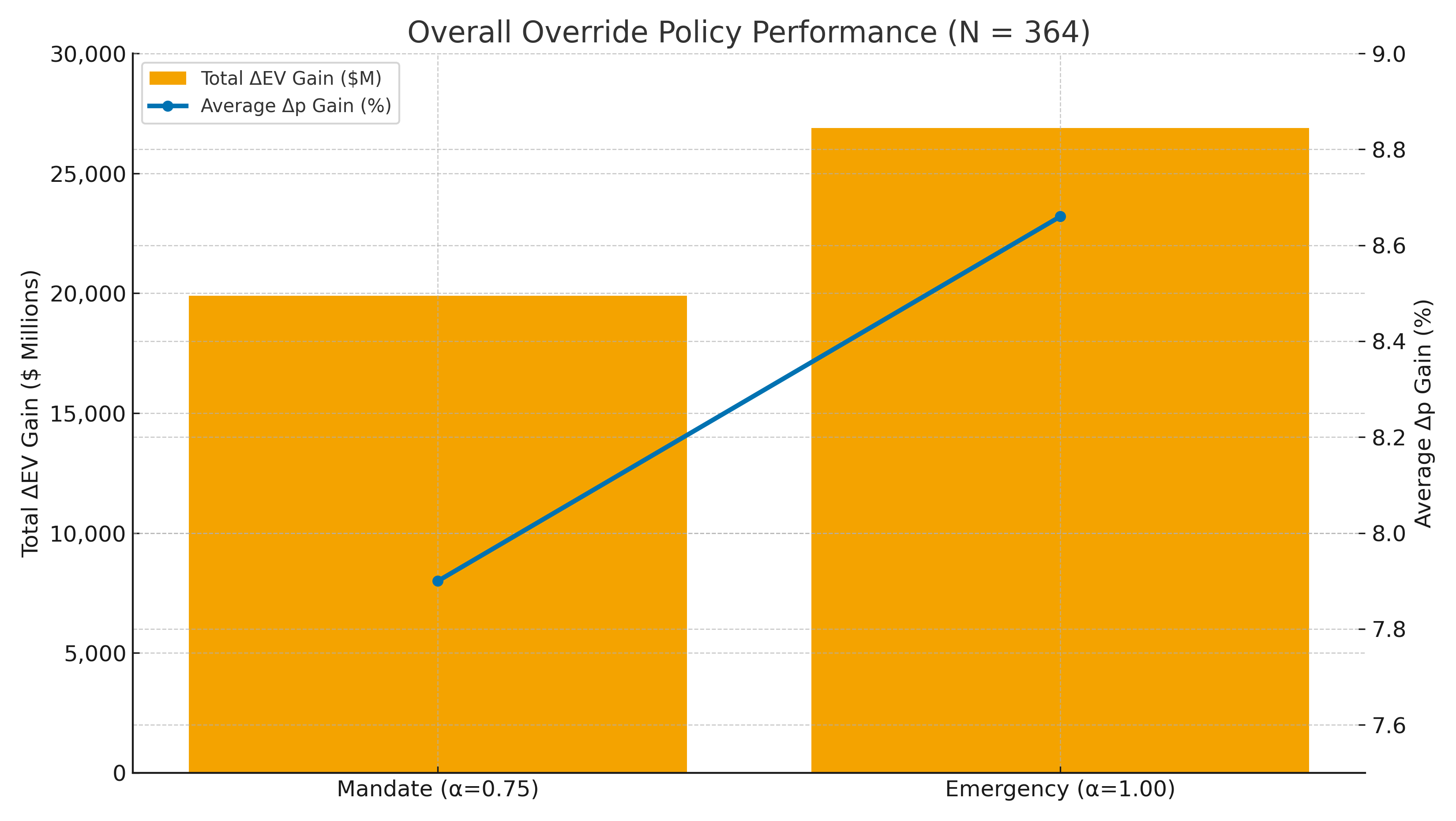
Figure 2. Marginal Cohort Analysis (“The Even-Money Story”)
The Emergency override not only increased total value but also expanded the pool of even-money projects, the main driver of the overall uplift.
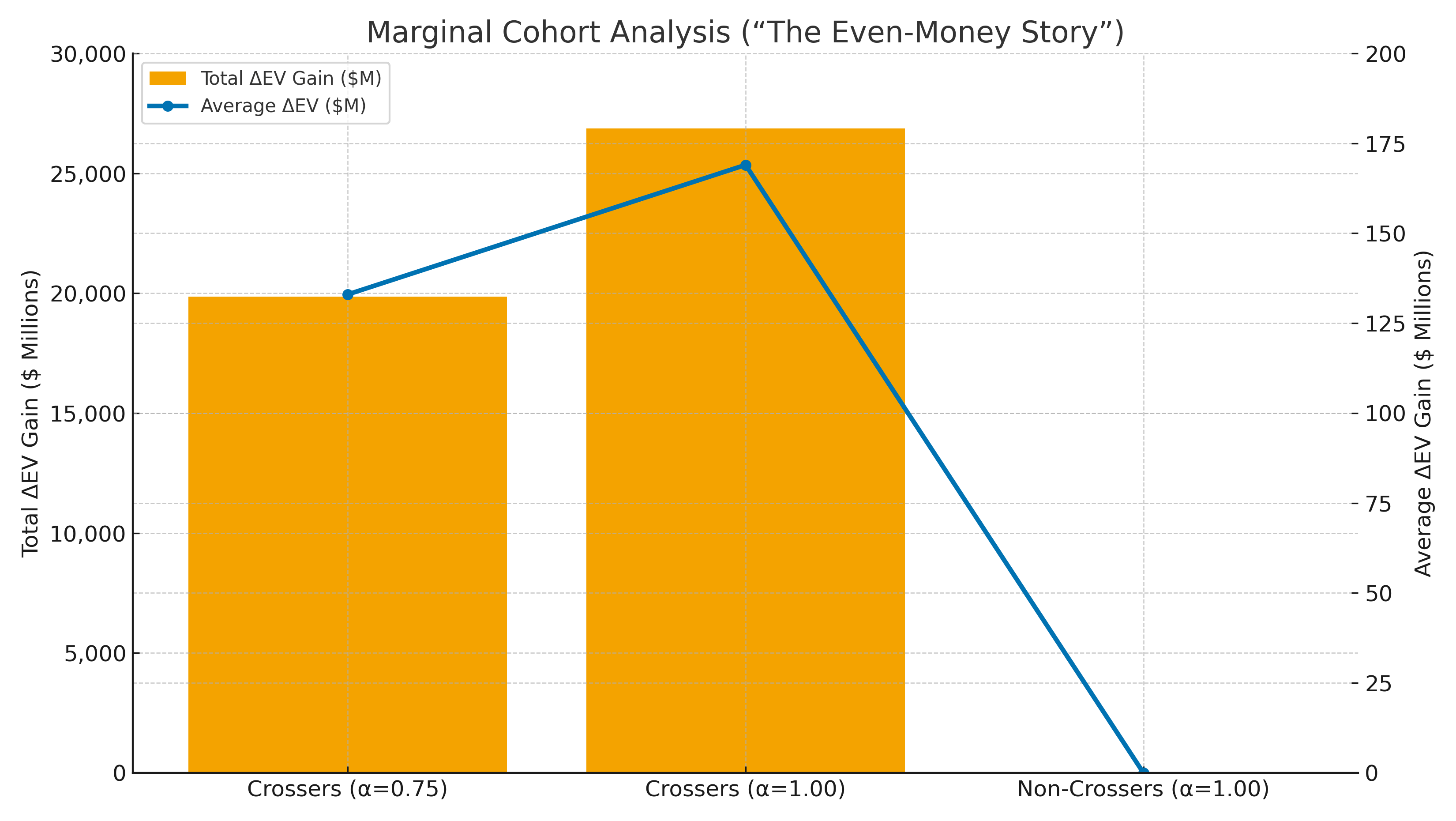
Figure 3. High-Impact Segment Totals (Emergency α = 1.0)
Under the Emergency setting, Alberta and the combined Oil & Gas sector account for the largest share of the MPI portfolio uplift.
Limitations
This analysis is illustrative, not predictive. It models hypothetical “what-if” scenarios rather than real-world outcomes. Results simulate parameter changes, not observed performance. Stylized parameters (“Guidance,” “Priority,” “Mandate,” “Emergency”) are conceptual dials; α = 1.0 corresponds to an odds ratio ≈ 2.12 and a hazard ratio ≈ 1.65. Expected-value gains are analytical estimates, not predictions of future success or returns.
Comments
Nothing yet. Say the first thing.
Sign in to join the conversation.