
When writing any story for The Energy Mix, one of the biggest challenges I’ve faced is getting answers from governments at all levels.
A healthy democracy requires that reporters ask the tough questions on behalf of the public, and governments are obligated to do their best to respond. Without public access to information, all democracies are at risk.
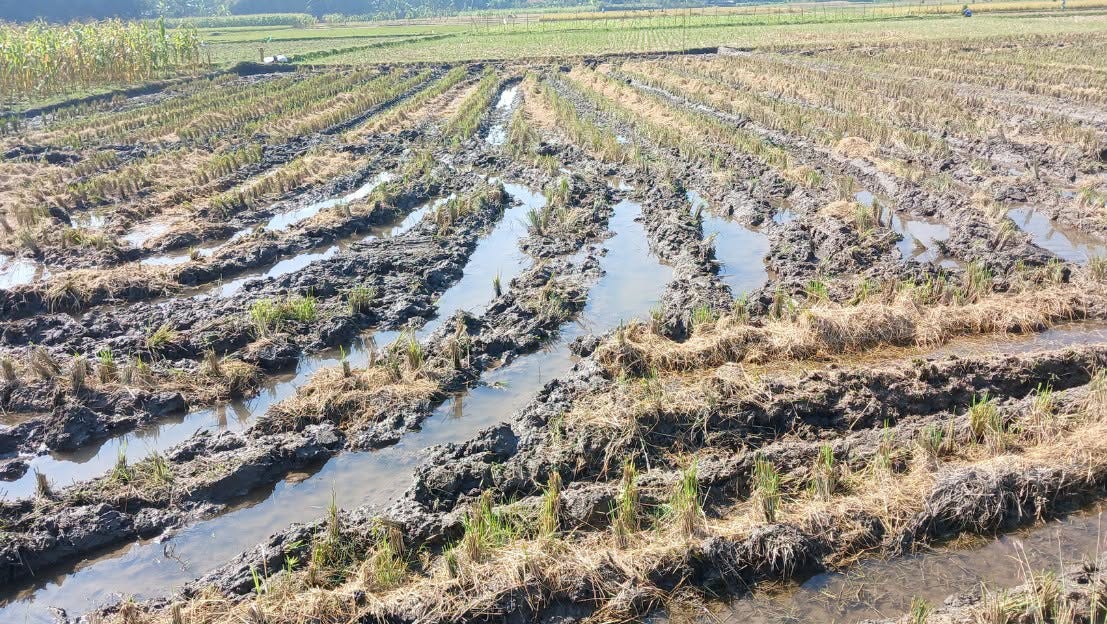
Recently, I wrote about Sturgeon County, Alberta’s declaration of an agricultural disaster, less than a month after welcoming Meta’s $1- billion hyperscale artificial intelligence (AI) data centre. Before writing the story, I contacted Sturgeon County with a request for an interview with the mayor. I indicated that I could wait a few days for the interview, and in case that was not possible, I provided my list of questions and a deadline. Almost immediately, their media team responded that they would provide written answers to my questions. No interview with the mayor, but they would work within my deadline.
In the end, their answers didn’t arrive until a day and a half after the story was published. Nevertheless, our editorial team felt the delayed response deserved to be read in its entirety, with added clarification and commentary. Publishing these answers to The Energy Mix Weekender is the most timely, flexible way we can get the information out.
The responses have been edited for length, and adapted to Canadian Press style. Some links were added. These answers are attributed to Milad Asdaghi, General Manager of Development and Economic Services, Sturgeon County.
The Mix: Did any Sturgeon County staff or elected officials sign a non-disclosure agreement (NDA) with Meta prior to issuing permits? When did/does the non-disclosure agreement expire?
Sturgeon County: The county does not confirm or deny the existence of NDA’s as this is often a requirement of the NDA, but there is nothing in any NDA that would hold the county back from publicly sharing information that was used in evaluating and approving a development permit. That is why if requested through our privacy policy process, the county would disclose all material provided to the county to assist in the approval process. The NDA is not a shield that the municipality hides behind, we are committed to sharing through our disclosure procedures any information that can be requested by the public.
Reporter’s note: This was one of the last questions I asked, but it’s the context for the county’s other replies related to Meta or its Sturgeon Data Centre development permit. Asdaghi could not say whether or not he was bound by an NDA because he is clearly a party to an NDA that prevents him from answering the question. If he were not under an NDA, he would just be able to say so. What Asdaghi does not clarify is the timing for sharing information. It would appear that he is allowed to share the information “used in evaluating and approving” Meta’s development, but not until after it has been approved.
Sturgeon County continues: Non-disclosure agreements are a standard practice in development and serve a specific purpose— to protect a company’s commercially confidential information and/or intellectual property/technology. They are also intended to ensure fair and unbiased discussions and negotiations for things like land purchases (which the county does not participate in). What a non-disclosure agreement does NOT do is prevent the county from following our standard development practices and sharing information about the development at the appropriate time. The county’s development processes, including the information required for permit approvals, is public. It is guided by the land use bylaw and governed by provincial legislation (the Municipal Government Act). Our ability to deviate from this process, including disclosure of information and public engagement, is limited.
Reporter’s note: Sturgeon County changed its land use bylaw to make data centres a “permitted use” in April, 2022. By doing so, the county made it possible for data centres to be approved without a public hearing. The county’s website explains, “for permitted uses, the county is required to approve the application if it meets all bylaw requirements. Approvals are based on the rules set out in the bylaw, not on personal preference or public opinion.” This almost certainly factored into Meta’s decision to choose this location: Meta representatives indicated as much in a presentation to council’s Committee of the Whole on July 14 (a meeting well worth watching, by the way).
The Mix: In 2022, the Sturgeon County Climate Adaptation Action Plan identified the risk of flooding (and drought), among other high risks, as a possible outcome of a warming climate. Does the county weigh the damaging impact on agriculture (due to increasing greenhouse gas emissions) against the approval of two gas-powered hyperscale data centres (Meta and Beacon AI) that together will contribute as much as eight megatonnes of carbon dioxide (CO2) annually to the atmosphere?
Sturgeon County: Sturgeon County takes the potential impacts of climate change seriously, including risks identified in our Climate Adaptation Action Plan. At the same time, our role is to evaluate proposed developments within our jurisdiction based on applicable regulations, environmental requirements, infrastructure capacity, and long-term community benefits.
The county recognizes the importance of both agriculture and industry to our region. Alberta’s Industrial Heartland is home to industries, including fertilizer production, that support agricultural productivity across Alberta, North America, and around the world. Our focus is on achieving a balanced approach that supports economic growth while encouraging environmental responsibility and innovation.
Both Meta’s Sturgeon Data Centre and Beacon’s proposed Heartland Data Centre Hub projects are subject to extensive provincial and federal regulatory review processes. In addition, the Greenlight Electricity Centre (that would supply power to Meta’s development) is being designed as a highly efficient combined-cycle natural gas facility and is intended to be carbon capture-ready. While the county would like to see carbon capture technology implemented as early as possible, project decisions regarding technology deployment are influenced by broader market conditions and regulatory frameworks.
Reporter’s note: Whether “provincial and federal regulatory review processes” are “extensive” is up for debate. No data centre proposed or built in Alberta to date has been required by Alberta or Ottawa to undergo an environmental impact assessment. And “carbon capture-ready” is a term used by industry that no one can explain. I asked celebrity investor Kevin O’Leary’s representatives for the public open house held in June to define it and received no reply. Meta did not acknowledge my emails, so I can’t get the answer from them, either. Now, here we have government officials repeating vague, meaningless industry jargon that no one is willing to define.
Sturgeon County Continues: It is important to recognize that greenhouse gas emissions, carbon assessments, and climate-related environmental effects are primarily regulated through provincial and federal legislative frameworks. Where applicable, federal agencies such as Impact Assessment Canada and provincial regulators such as Alberta Environment and the Alberta Utility Commission are responsible for reviewing and evaluating the broader environmental implications of major projects. For example, greenhouse gas emissions need a broader lens as they are not limited by property lines or a municipal boundary. As such, the provincial/federal lens is most appropriate to assess impacts over a larger geographic area.
On the other hand, because Sturgeon County monitors things like traffic volumes related to construction, it is better positioned to consider community impacts at this level. As a municipality, Sturgeon County must respect the jurisdiction and decision-making authority of senior levels of government while fulfilling its own responsibilities related to land use planning, servicing, infrastructure, and local development matters.
Reporter’s note: I’d like to interrupt here. I was having trouble understanding what was being said, so I went back to the media team and requested they answer this question with “yes or no, please.” The clarified question: Does Sturgeon County have the authority to consider greenhouse gas emissions when granting development permits? Yes or no, please. Asdaghi replied with “no.” So, although it was the county that changed its land use bylaw to block public opinion from being considered when approving data centres, they contend they have no authority in the matter. Perhaps they haven’t heard of the City of Calgary’s experience with changing zoning bylaws without public support?
Sturgeon County Continues: In the end, these projects are being built in the right place for industrial development in our Industrial Heartland, which was set aside more than two decades ago specifically for industrial use. The county was happy to see Meta’s water stewardship and clean energy goals, committing to be water positive by 2030 and matching annual electricity use with 100% clean and renewable energy projects locally.
Reporter’s note: Alberta’s Industrial Heartland was created in 1998, long before AI data centres existed or became a major public concern. It’s doubtful that anyone at the time would have prepared for or anticipated the circumstances we find ourselves in today. This was back when most of the planet was in a Y2K panic over whether everyone’s computers would fail when the clock switched to Jan. 1, 2000. At a Meta news conference, Alberta’s Technology and Innovation Minister Nate Glubish said there are 60 projects working with the province’s “concierge team”, all in Alberta alone. It’s irresponsible to argue that decisions made almost 30 years ago will protect people from the risks associated with AI data centres today.
Sturgeon County Continues: The county, along with all the regulating bodies involved, will hold development to account through monitoring and enforcement. Industries in the Heartland provide jobs, community investments, and business opportunities to our region. They do so while navigating difficult global economic conditions, and with a commitment to being good corporate citizens.
Reporter’s note: Asdaghi refers generally to “industries in the Heartland” and the fact they have to navigate “difficult global economic conditions” (so do all of Sturgeon’s residents, has he heard about the affordability crisis?) while being “good corporate citizens.” Hold that thought because, in a later question, he makes a surprising claim about Meta’s corporate reputation which led me to ask a follow-up.
The Mix: Did the county discuss or mention climate change impacts with any of the companies proposing these projects prior to approving their development permits?
Sturgeon County: Sturgeon County’s discussions with data centre proponents include a range of sustainability and environmental considerations, including energy sources, infrastructure requirements, and opportunities to leverage the region’s strengths in renewable energy and carbon capture technologies.
Prospective developers are made aware of the innovative energy ecosystem within Sturgeon County’s portion of Alberta’s Industrial Heartland, including Bison Low Carbon’s Meadowbrook Carbon Storage Hub, Wolf Midstream’s carbon network connected to the Alberta Carbon Trunk Line, and Enbridge’s proposed Open Access Wabamun Carbon Hub. Together, these projects position the region as one of Canada’s leading centres for carbon capture, utilization and storage (CCUS) and provide important infrastructure to support industrial decarbonization.
Reporter’s note: The $17-million Bison Low Carbon Ventures project is a carbon capture and storage facility the government announced was ready to go in early June. No word on customers. Wolf Midstream operates a carbon pipeline that has “significant excess capacity to provide immediate decarbonization solutions to emitters.” As for Enbridge’s Wabumum Carbon Hub, announced in 2022 and expected to open in 2027, the links to that project on the Enbridge website are broken. Matchmakers out there may be wondering why billionaire Mark Zuckerberg’s Meta is “carbon capture-ready” but not willing to make the first move on any of these companies seemingly looking for a partner.
Sturgeon County Continues: Meta is committed to being water positive by 2030 and is working with Alberta Utilities Commission to identify and contract new clean energy projects within the region to match their data centre’s electricity use. Meta matches all its annual electricity use with 100% clean and renewable energy.
While climate-related considerations form part of the broader context for responsible development, development permit decisions are based on applicable bylaws, planning requirements, technical reviews, and the merits of each proposal (including adherence to provincial and federal standards). The county’s objective is to attract projects that align with our guiding principles for data centre development, including responsible economic growth, infrastructure readiness, and long-term community benefit. These principles are communicated openly to prospective proponents as part of our ongoing discussions with industry.
Reporter’s note: I had a look at Sturgeon County’s guiding principles for data centre development and had further questions. Briefly, the principles are:
Bring Your Own Power
Minimize Water Use
No Municipal Incentives
Annual Public Reporting
Developer-Funded Infrastructure
Minimal Community Impacts
Location must be in a heavy industrial zone
The Mix: Why does the county’s principle #4 for data centres not include annual public reporting of greenhouse gas emissions?
Sturgeon County: The reporting expectations presented in principle #4 is not an exhaustive list and the county is reviewing its legal authority to compel companies to report GHG/NOx emissions as these fall outside of traditional municipal authority. Of note, Meta does publicly report their GHG emissions per site, along with power, water, fuel use, etc. We would encourage similar reporting standards for any data centre developing in the county.
The Mix: Does the county’s principle #6 on minimal community impacts consider climate change impacts on the surrounding communities?
Sturgeon County: Principle #6 is intended to mitigate community impacts that can be directly attributed to a company’s operations and can be enforced by the municipality. This includes things like noise, light, water consumption, etc. The county recognizes that climate change is the result of cumulative impacts of multiple activities, some of which are beyond our ability to control or enforce. We encourage development to explore alternative fuel use such as hydrogen, or renewables, or consider connecting to one of four provincially approved carbon capture and sequestration hubs that operate in the county.
The Mix: Local governments are on the front lines of the climate crisis, witnessing the damage first hand. An agricultural disaster is an example. How does the county approach its responsibility to protect the local farming community against further damage due to climate change?
Sturgeon County: The county supports programs and initiatives within its legislative authority to help mitigate the impacts of a changing climate. This includes working directly with farmers on enhancing regenerative agriculture practices and supporting nature-based solutions for water management through participation in programs such as Alternative Land Use Services (ALUS) and the Wetland Replacement Program, as well as partnering with industry on projects that rewild local landscapes to capture carbon naturally, such as Project Forest in the Sandy Lake Wilderness Area.
The county takes a balanced, evidence-based approach that recognizes the importance of both agriculture and industry to our region. Alberta’s Industrial Heartland is home to industries that help support agricultural productivity across North America and around the world. We also support opportunities in renewable energy, carbon capture and storage, and other innovations that contribute to long-term sustainability. Our focus is on responsible development that strengthens economic resilience, protects environmental assets, and delivers lasting benefits for residents, farmers, and businesses.
Reporter’s note: Now, back to the issue of being a good corporate citizen, which Asdaghi claimed companies in the Industrial Heartland are trying to become under difficult global economic conditions. My final question went to the bigger question of the ethics of Meta’s operations and a recent court decision in the United States.
The Mix: A judge in New Mexico has ordered Meta to pay another $567 million for its failure to warn the public about dangers its platforms posed to children. The ruling is in addition to $375 million in fines Meta was already ordered to pay in the case, for a total of $942 million. Judge Biedscheid compared Meta to a factory, with advertising and content as its product and “the psychological harm and sexual exploitation of children to be the pollution that must be abated.” Why should people in Sturgeon County be welcoming a Meta AI data centre that facilitates child exploitation? How can anyone trust Meta to be a responsible corporate citizen based on its track record?
Sturgeon County: Respectfully, the premise of that question relates to Meta’s global operations and corporate conduct, which falls outside Sturgeon County’s jurisdiction. Those are questions that should be directed to Meta.
Reporter’s note: Throughout the responses to these questions, Asdaghi has repeated Meta’s messages and talking points without questioning them. In doing so, he has chosen to take the company at its word, yet he does not want to answer a question about why others should do the same. But it does get worse. I decided to press him on this issue, and in response to a follow-up question, he says corporate conduct does not factor into development permit decisions. Where is the due diligence?
The Mix: Does a company’s corporate conduct (for example, breaking the law elsewhere) factor into the granting of development permits?
Sturgeon County: No, there are clear guidelines that a municipality must follow in approving a permit, if those conditions are met, then a permit is issued. There are many complexities related to an effort to limit approvals for companies that have “broken the law” in another jurisdiction and could easily work around this by establishing a numbered company and then applying for a permit.
Jody MacPherson is a freelance writer for The Energy Mix who started as a reporter in the booming town of Fort McMurray, Alberta in the 1980s. Then she worked for 30+ years as a public relations professional in industry and government before switching back to journalism in her “retirement.”

O’Leary Loses, First Nation Wins in Bid for Judicial Review of Data Centre Water Permits
What a Supercharged El Niño Could Mean for Canada
Greenland Issues ‘Strong Warning’ After Texas Fossil’s Activity Triggers Annexation Fears
Alberta County Declares Farm Disaster After Approving $13B Meta Data Centre
Wildfires Pushing Canadian Forests from Carbon Sink to Source, New Study Finds
Climate Change Made Canada’s Ferocious Fire Weather Twice as Likely, Attribution Study Finds
Trump Allies in Congress Go Down to Defeat as U.S. Renewables Flex Political Muscle
Lawyer Warns of Cumulative Impact as First Nations Group Challenges Ring of Fire Road
Climate Change Comes to Sesame Street as Today’s Kids Confront 7x More Extreme Weather

Harry Potter elf’s ‘grave’ forces diversion of £430M pipeline project (The Telegraph)
State of the Climate: A Dimming, Overheated Planet, With Degraded Oceans (Inside Climate News)
World’s seas have hit hottest temperature on record for July, say scientists (The Guardian)
Fact check: How nuclear, gas, wind and solar power are affected during heat waves (Carbon Brief)
China bypasses shipping chokepoints with ‘Ice Silk Road’ through Arctic (Financial Times)
Middle East buyers interested in LNG cargoes from Canada, Pacific Energy says (Reuters)
Top U.S. Science Body Deletes Climate Chapter From Judges’ Manual (New York Times)
Hybrid drivers relying too much on petrol, UK ministers fear (The Sunday Times)
Nigeria targets up to $50B of offshore oil and gas investment by 2030, regulator says (Reuters)
Lake Mead, the Largest U.S. Reservoir, Is Smaller Than Ever (New York Times)
This High Schooler Invented a Plant-Based Plastic That Removes Microplastics From the Environment as It Biodegrades (Smithsonian Magazine)
Suncor says Rich Kruger to step aside as CEO in 2027 (Globe and Mail)
Comments
Nothing yet. Say the first thing.
Sign in to join the conversation.