
After suffering four years of the crippling effects of long COVID, lifelong runner Matt Fitzgerald is desperate to reclaim his life. Hell-bent on finishing one last race, Matt enters the Javelina Jundred, a 100-km ultramarathon. It’s a race that could just as easily kill him as provide his redemption from disease. In this excerpt from his epic memoir, Dying to Run, Fitzgerald shares his philosophy about enduring pain and suffering during endurance workouts and races.
At gathering time one day, I asked the Dream Runners a simple question: “What’s the worst pain you’ve ever felt?” They all gave different answers, of course, but none of them had any trouble pinpointing their most painful moment, which was what I expected. Pain leaves a mark.
What’s interesting to me is that our individual answers to the pain question change over time. If the worst pain you’ve ever felt doesn’t kill you, it will eventually be surpassed by an even greater pain, which in turn will be surpassed in due time.
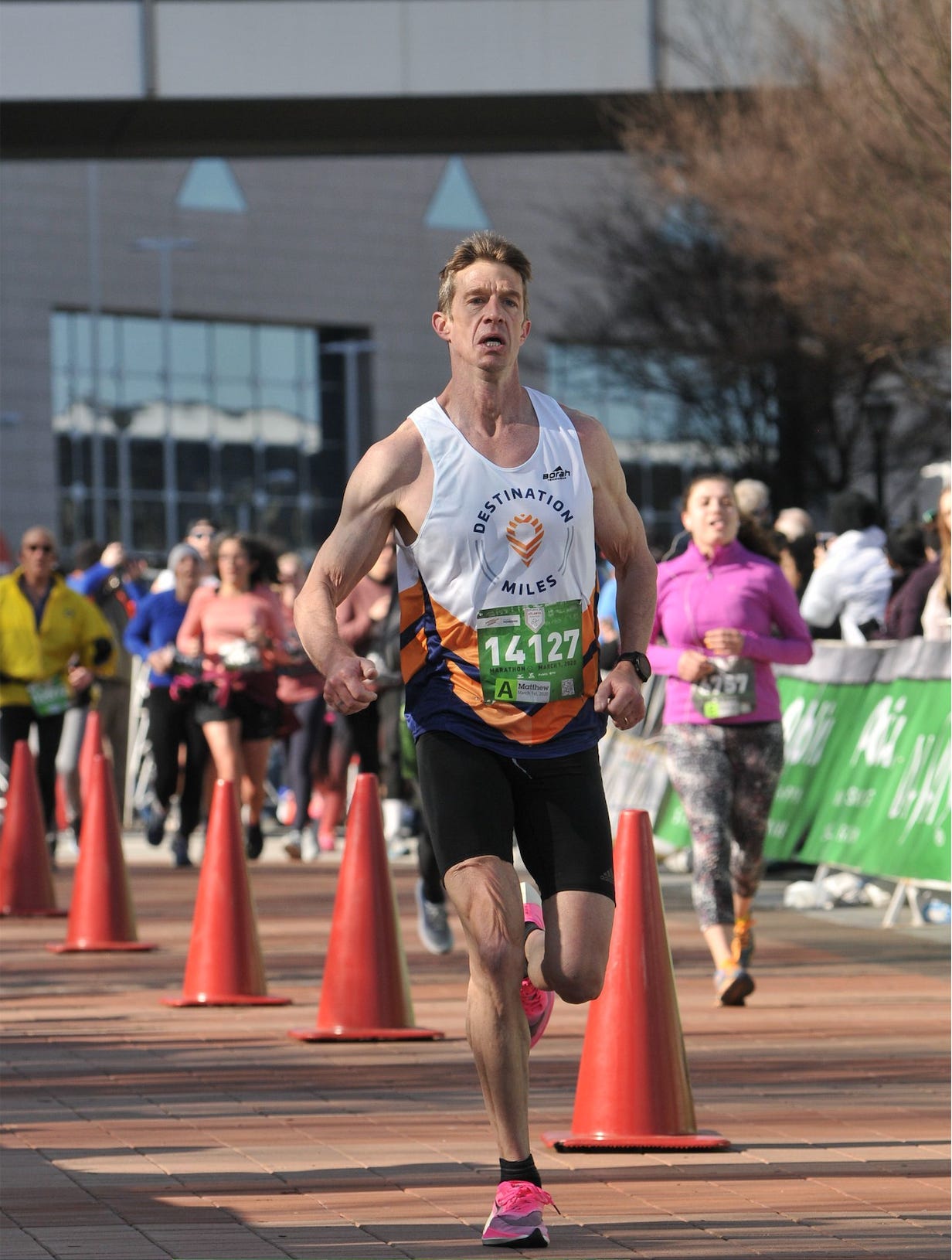
The worst pain I experienced growing up was when I blew out my knee on a soccer field at fourteen—not the injury itself but the physical therapy that came after surgery. Once a week for eight weeks, a ham-fisted PT lay me face down on a padded table, gripped my left ankle in two hands, and pressed my heel toward my butt, groaning like a weight lifter as gruesome popping sounds issued from the knee, all in the name of restoring range of motion. My scrawny muscles contracted with full force in some primal effort to create a sensory distraction, my teeth practically soldering themselves together as my fingernails cut semipermanent indentations in the table’s vinyl cover and my brow contracted with such force that my eyeballs were sore the next day. It took 34 years, a pandemic, and a coughing injury to surpass the torture I endured on that padded table.
I’ve always been a cougher. When we were kids, my brother Sean— who had the bedroom across from mine and was kept awake on many a winter’s night by my incessant woofing—accused me of exaggerating the symptom for attention’s sake, but if so, I never outgrew my fakery, and when I caught COVID-19 the woof came back with a vengeance.
Each day began and ended with a half-hour fit of expiratory violence that struck the moment I lifted my head off the pillow in the morning and again the moment I lay down at night. My entire body seized with each hammering convulsion, blowing out a concussive roar so ghastly that Nataki fled the room, unable to bear the sound of me, much less the sight. If you’ve ever encountered a demon-possessed middle-aged man wearing cotton pajamas in the throes of an ill-fated exorcism, you have some idea how I looked and sounded. I coughed up mucus, bile, blood, and—on two occasions—my dinner.
One night I coughed so hard I broke a rib. My brother Josh, who’s a nurse practitioner, says it’s more likely I tore cartilage. Maybe so, but I’m confident an actual broken rib wouldn’t have hurt any more than whatever it was I’d done to myself.
“Imagine being stabbed in the lung with a letter opener,” I told Nataki in an effort to explain why my coughing now conjured images of a gorilla undergoing live castration, each thrust of the letter opener producing a satanic blend of plosive bark and shrill involuntary scream. “Now imagine being stabbed with a letter opener twenty times per minute for thirty minutes.”
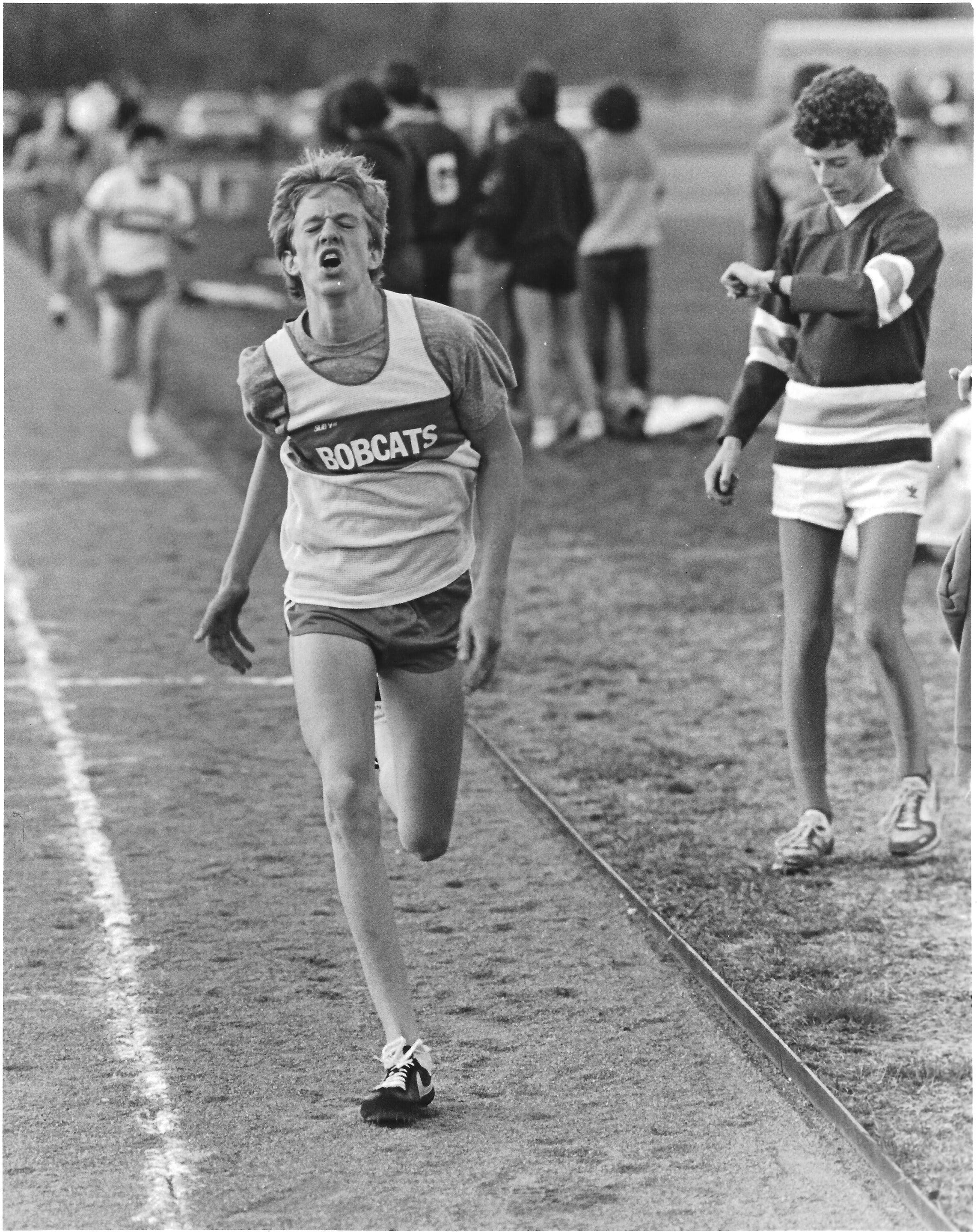
The dread itself was dreadful. I braced myself mentally for each new round of torture, knowing exactly what was coming. But there came a night when, braced once more for the letter opener, I coughed with a mite less violence than I had in the morning, and for not as long. Realizing I’d been spared the expected exorcism, I felt a pinch of disappointment followed by a smack of disbelief.
Disappointment! Why? My best guess was that on some level I regarded my coughing fits as tests. COVID-19 wanted to break my spirit, and I wanted to prove it couldn’t. The decades I’d spent cultivating an ability to dominate athletic suffering had bent my mind in such a way that I welcomed my painful coughing fits as opportunities to prove myself. Which is pretty fucked up. But is it any more fucked up than, say, a junkie dying of withdrawal from the very drug that’s killing them? If there’s one thing I’ve learned in my 53 years, it’s that our bodies and minds can become dependent on just about anything, pain included.
Mind you, I was very glad when my coughing fits petered out. But in the meantime, I accepted them as a personal challenge, and it’s the same now with long COVID. I sometimes imagine I’m in a competition with 99 other long-haulers, and whoever copes most effectively with their suffering wins a prize. Don’t ask me how one measures coping, or what the prize ought to be. It just helps me to think this way.
At dinner last night, Diane asked me what my goal was for today, and I gave a slightly different but no less truthful answer than I’d given Dhani in the van: “I want this race to be the most painful thing I’ve ever done.” Which sounds masochistic, but it’s not. Pain is life’s greatest inevitability. You have to be good at pain to get by in life. That’s why long-distance running is so popular—it strengthens not only the heart and lungs but also the spirit, and a strong spirit is pain’s worst enemy.
No sane person seeks pain as an end in itself, nor do I, but for me there is no greater pleasure than conquering pain, and no greater happiness than knowing my strength. I want this race to prove that I am stronger for what I’ve endured. It’s not the easiest way to score a serotonin hit, but it’s my way.
Extreme pain is often described as “blinding,” and I get it now. A flying saucer could land in front of me and I wouldn’t see it. The universe has shrunk to the exact proportions of my body. Nothing exists outside my skin, while inside a final showdown is happening between two elemental forces: pain and will, the first telling me to quit and the other urging me to keep going. I keep going, but the real action is in my head, where I continue to stare into my suffering like a monk meditating on his breath, and as I do, its many dimensions—battered legs, pleading lungs, broiled innards—fuse together, becoming a single composite excruciation that perfectly replicates the Worst Day of My Life, with a little extra thrown in. The pain wants me to look away, but I refuse. What began as an ultramarathon has become a game of chicken. Pain versus will. Will versus pain. Who blinks?
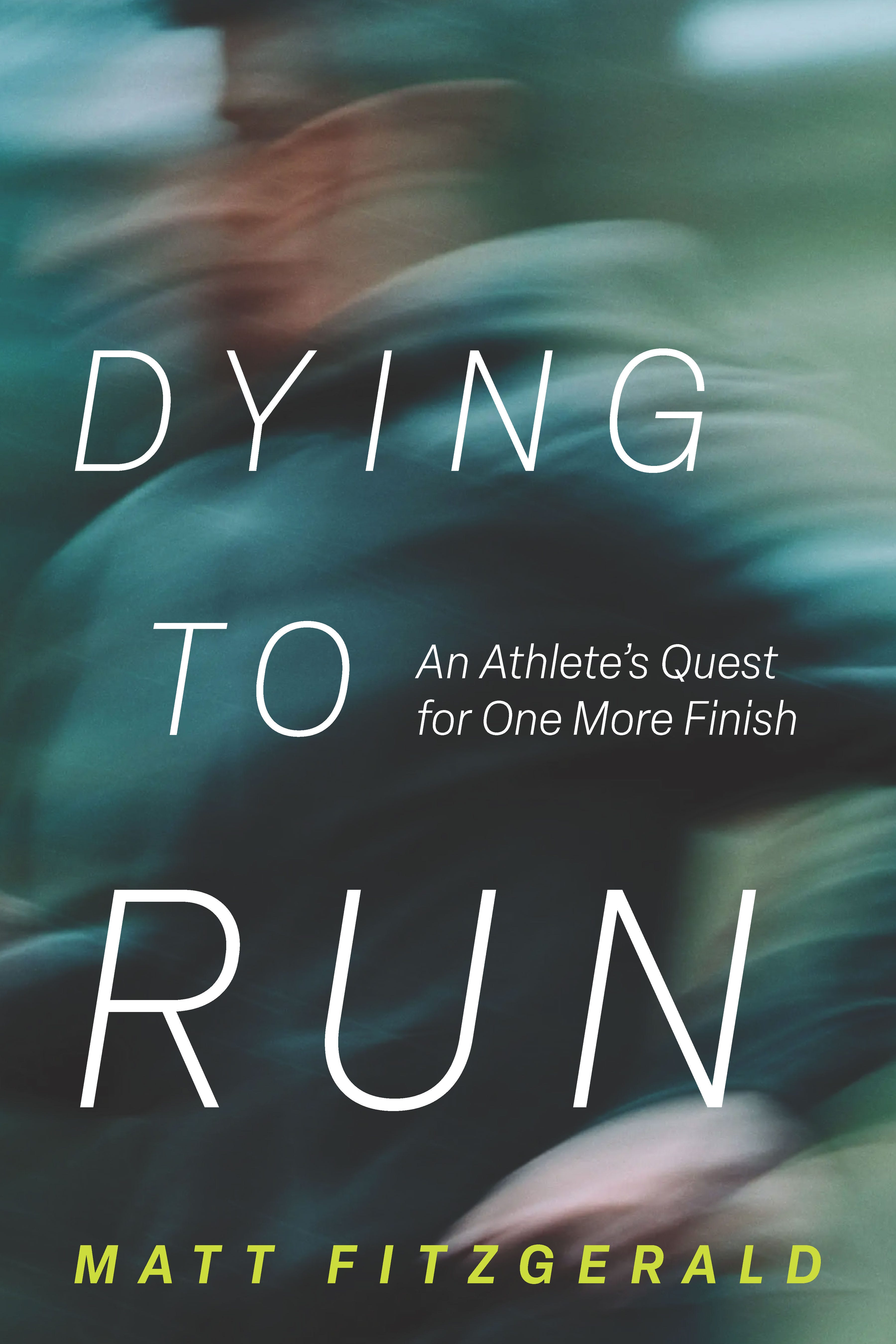
Enjoyed this excerpt? Keep reading! Order your copy of Dying to Run: An Athlete’s Quest for One More Finish today.
No posts
Comments
Nothing yet. Say the first thing.
Sign in to join the conversation.