
0:00
-16:02
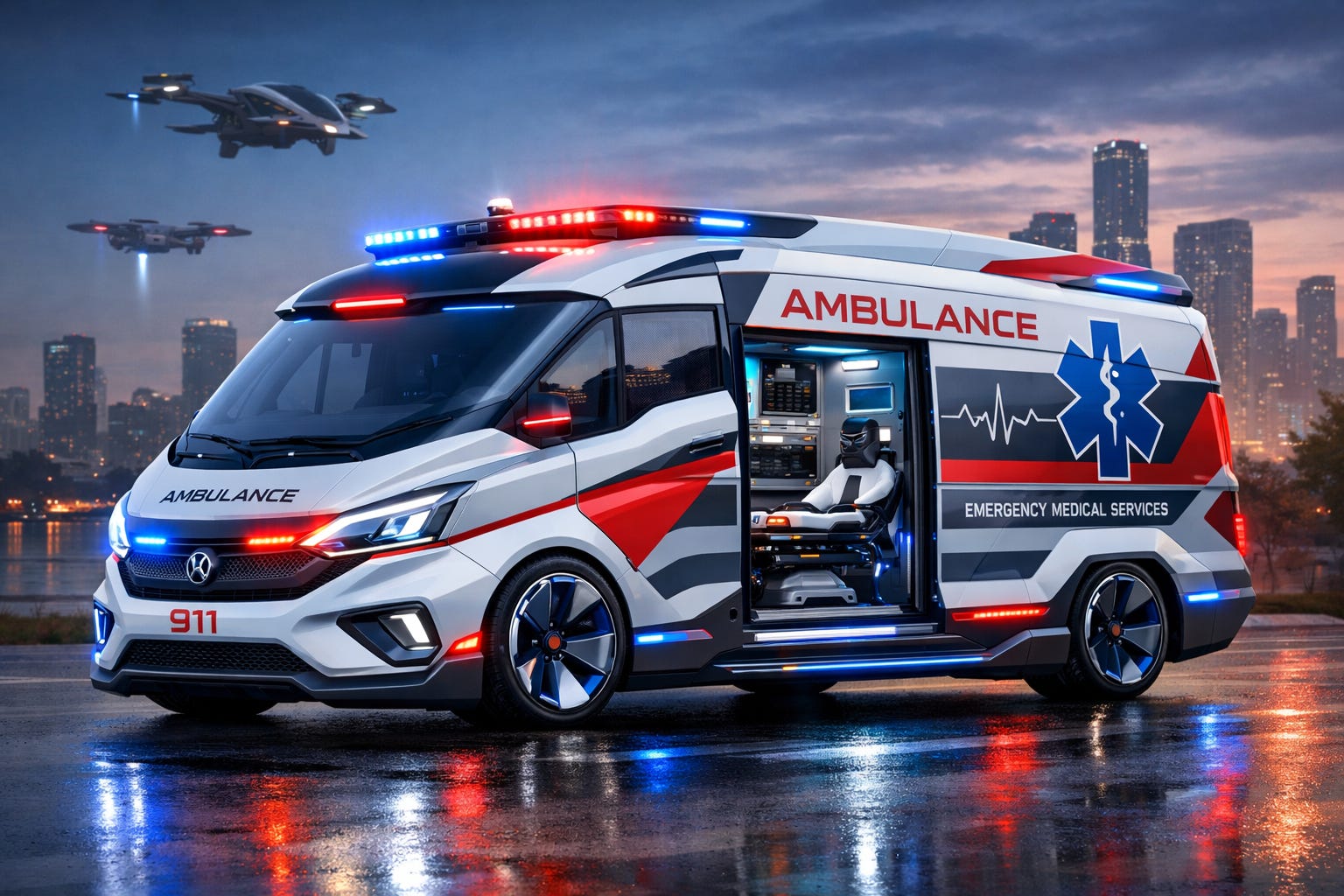
Ambulances are evolving from transport vehicles into mobile, connected clinical platforms. Vehicle, technology, and procurement decisions made today will shape patient safety, operational resilience, and cybersecurity risk for the next 10–15 years.
WHY THIS MATTERS NOW
• Ambulances ordered today will remain in service through 2035–2040
• Retrofitting cybersecurity and connectivity costs 3–5× more than designing it in
• Patient data captured today must remain protected for decades
• Grant, bond, and fleet decisions lock in technology risk
• Manufacturers that lead here will define next-generation ambulance standards
The Ambulance Is Becoming a Rolling Clinical Network
Within five years, ambulances will function as mobile ICUs, secure network nodes, AI-assisted treatment spaces, and telemedicine platforms. Documentation will increasingly auto-populate as care is delivered.
What Changes for Paramedics
• Less charting, more auto-population
• Fewer cables and faster patient access
• AI alerts as guardrails, not commands
• Telemedicine as backup support, not oversight
Cybersecurity = Patient Safety
A compromised camera or telematics system must never be able to reach a cardiac monitor. Cybersecurity must be designed in, not bolted on.
Core Design Expectations
• Power as the platform
• Built-in segmented network architecture
• Designed-in telemedicine
• Resilient multi-network connectivity
EXECUTIVE BOTTOM LINE
The connected ambulance is inevitable. Whether it is resilient, secure, and trusted is a design choice. Early investment reduces risk, protects patients, and preserves public trust.
Full Whitepaper here:
Comments
Nothing yet. Say the first thing.
Sign in to join the conversation.