
Welcome to Empowerment Ave! Learn more about our history, partnerships, and past published work here. Subscribe to the newsletter here.
Some moments change what people believe is possible.
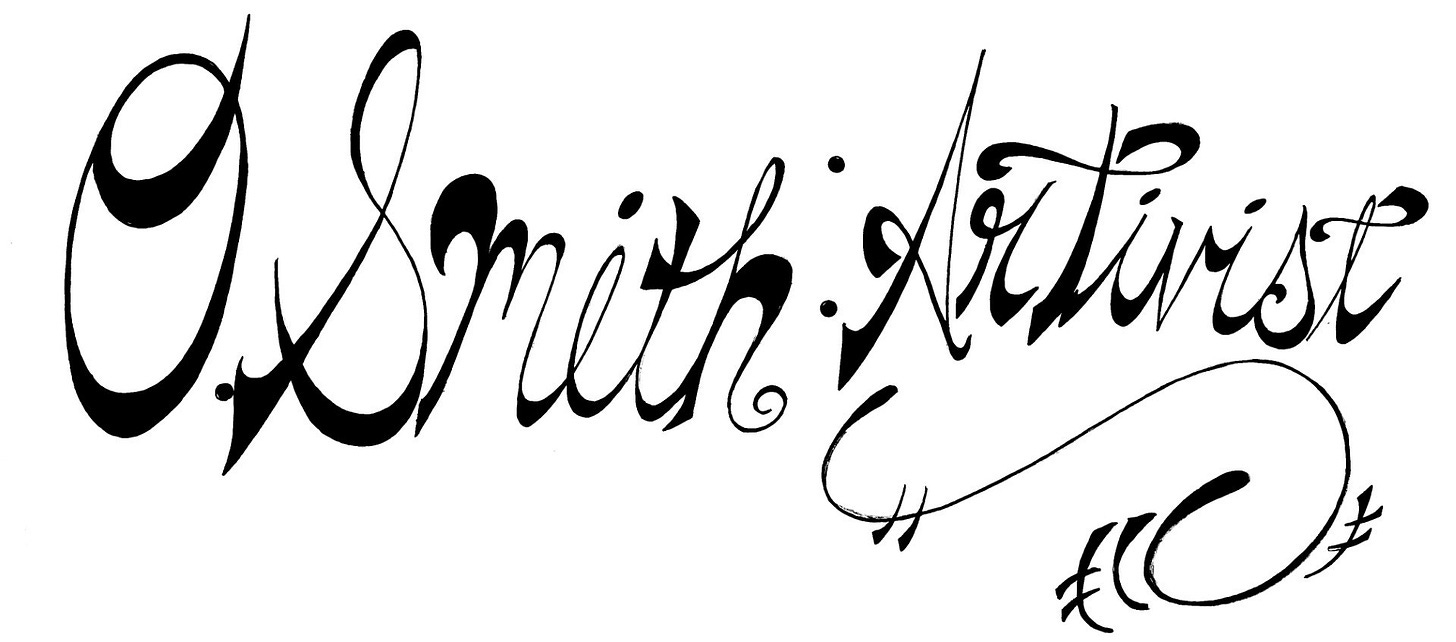
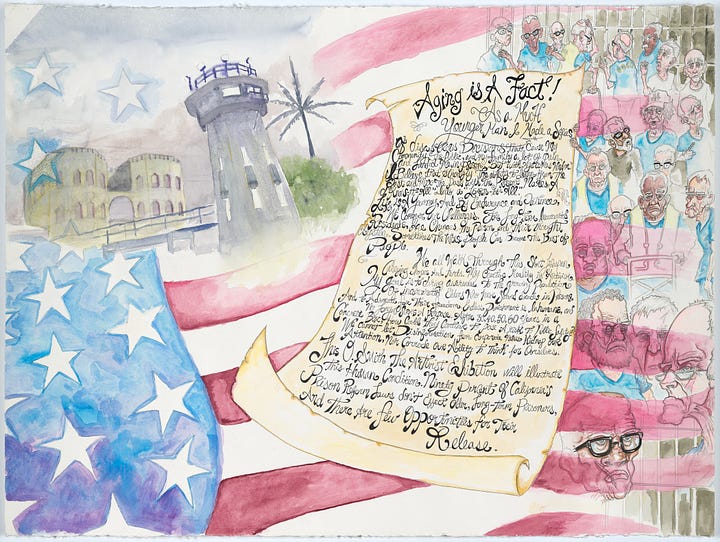
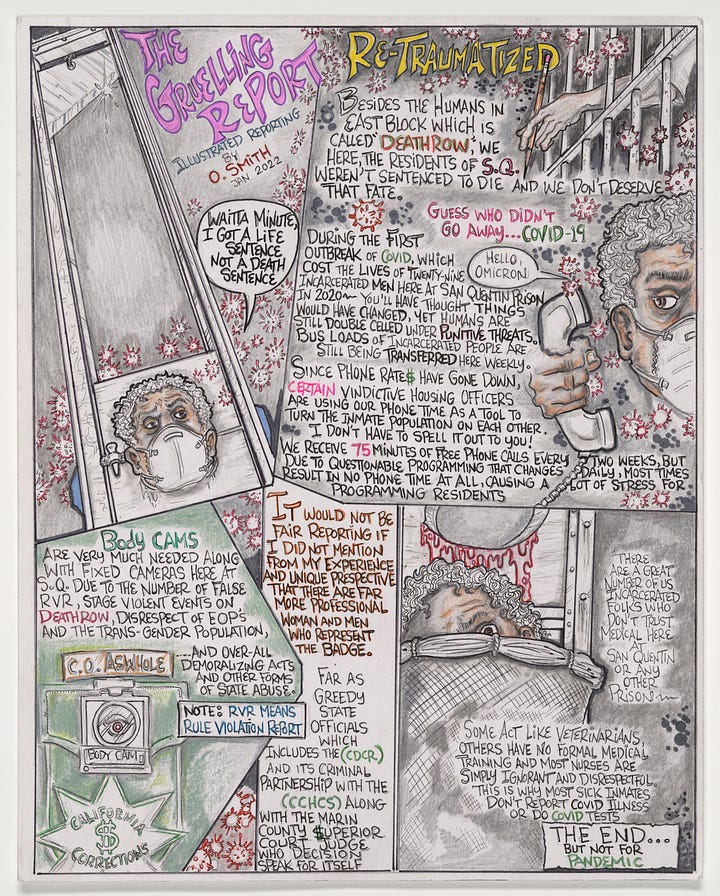
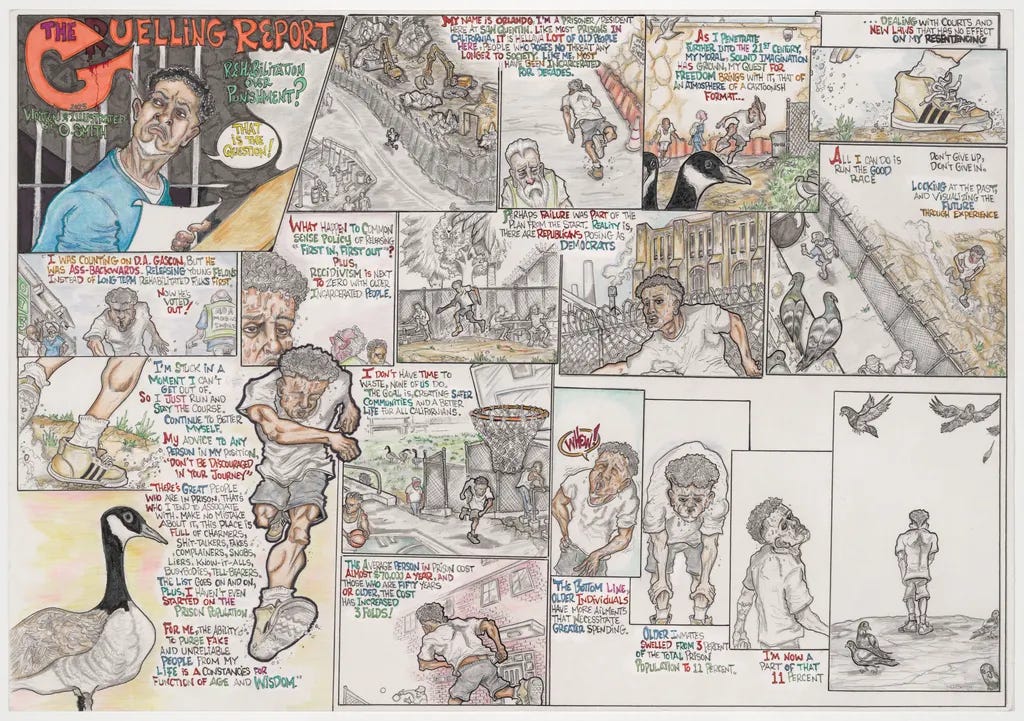
On July 25, Orlando Smith (known professionally as O. Smith) will debut O. Smith: Artivist at the San Francisco Museum of Modern Art (SFMOMA), making him the first currently incarcerated visual artist to have a solo exhibition at the museum.
Think about that for a moment. An artist creating work from inside prison will have a solo exhibition at one of the country’s leading art museums—not because someone made an exception, but because the work demands to be seen.
For more than four decades, Orlando has used art to document the realities of incarceration, challenge injustice, and imagine a more humane future. His drawings are deeply personal while also speaking to issues that affect communities across the country. Through his self-described role as an “artivist,” Orlando reminds us that art can be both a form of expression and a force for change.
At Empowerment Avenue, we’ve always believed that talent exists everywhere, even when opportunity does not. Our role is to help remove barriers so artists can be seen for the quality of their work rather than the circumstances of their incarceration.
This exhibition is a powerful example of that mission in action.
SFMOMA recognized not only Orlando’s extraordinary artistic practice, but also the importance of bringing voices from the inside into one of the nation’s leading cultural institutions. We are honored that Empowerment Avenue’s support helped make this historic exhibition possible, alongside the many individuals and organizations who have supported Orlando’s journey
This moment belongs to Orlando. It also belongs to every incarcerated artist who continues creating despite enormous obstacles, and to everyone who believes art has the power to expand empathy, challenge assumptions, and create opportunity.
If you’re in the Bay Area, we hope you’ll stop by SFMOMA to celebrate Orlando and witness his work. O. Smith: Artivist will be on view at the San Francisco Museum of Modern Art from July 25, 2026 through June 20, 2027.Learn more about the exhibition →
SFMOMA will also be announcing a series of public programming in the near future. You can check out their website to learn more.
Congratulations, Orlando! We can’t wait for the world to experience your work.
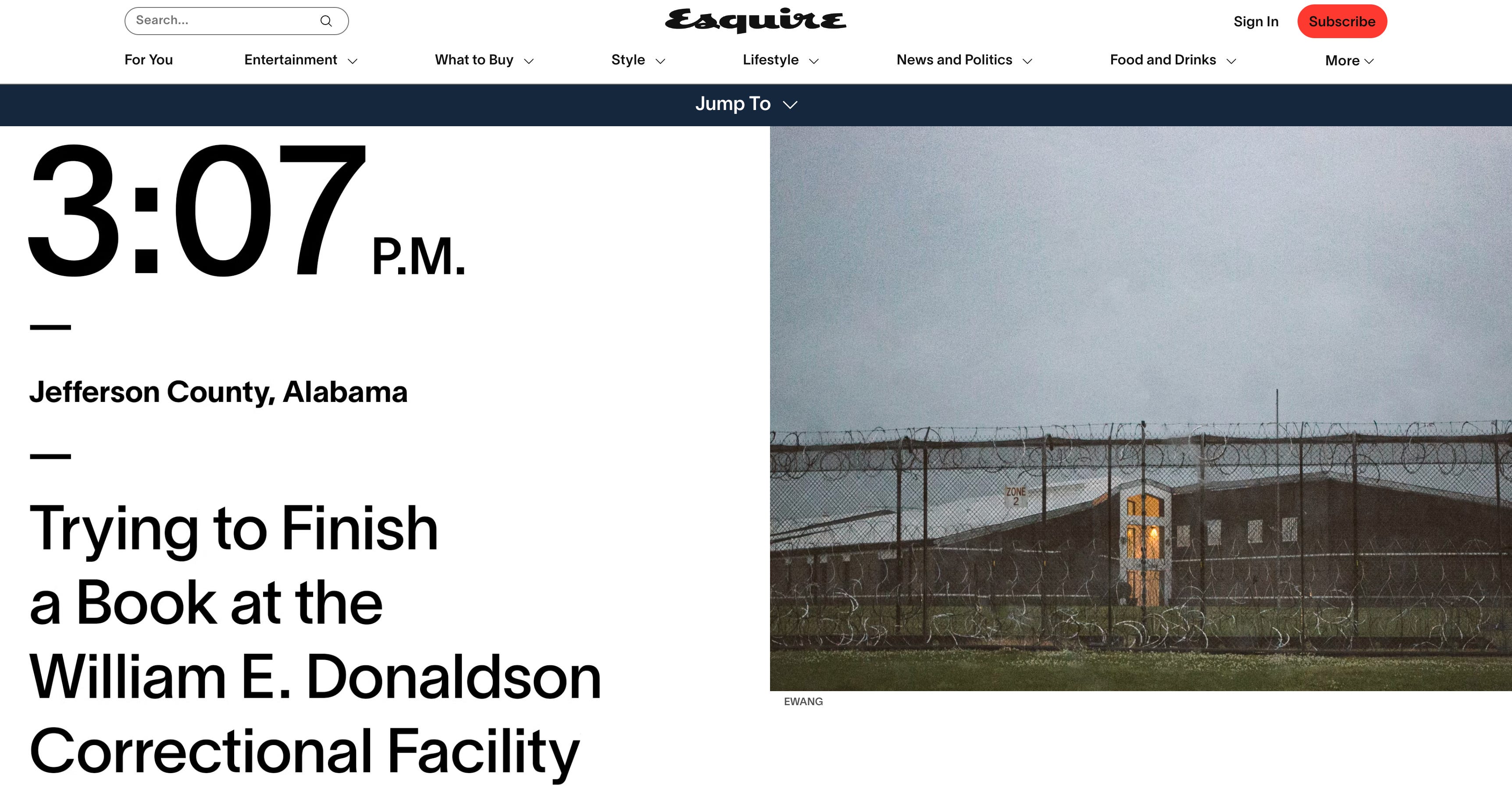
We’re proud to celebrate another milestone in our mission to expand the reach of incarcerated voices. This month, Esquire published “One Day in America,” a sweeping collection of stories reflecting life across the country as America approached its 250th anniversary. Among the contributors is Empowerment Avenue writer Bennu Hannibal Ra-Sun (Melvin Ray), co-founder of the Free Alabama Movement and the subject of the film, The Alabama Solution.
Bennu’s contribution offers a powerful glimpse into daily life inside Alabama’s prison system and stands alongside stories from people across the country. His inclusion reflects something we’ve been working toward for years—building lasting relationships with mainstream publications that recognize incarcerated writers not as exceptions or sources to quote, but as journalists, essayists, and storytellers whose perspectives are essential to understanding America.
Every byline like this helps normalize the inclusion of incarcerated writers in national publications. It reminds readers that people behind prison walls are not separate from American life. They are part of our communities, our culture, and our collective story.
Congratulations to Bennu on this well-deserved publication, and thank you to the editors at Esquire for making space for voices that too often go unheard.
Empowerment Ave News amplifies the work of incarcerated writers, filmmakers and artists. Subscribe to receive new posts and support the collective.
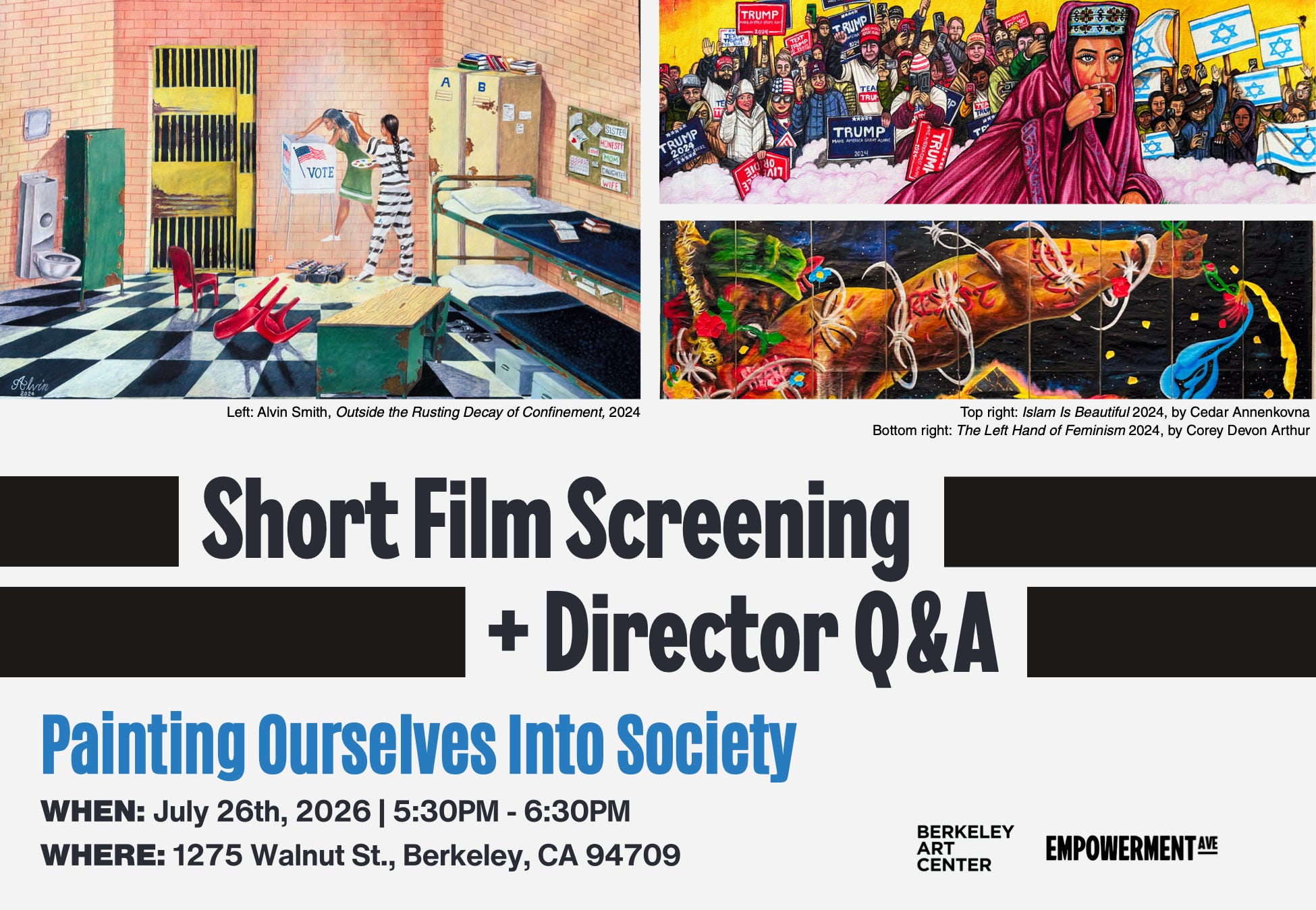
Short Film Screening + Director Q&A — Painting Ourselves Into Society
Join us as we return to the Berkeley Art Center for a special screening that tells the story behind Painting Ourselves Into Society, the groundbreaking 2024 exhibition co-curated by incarcerated artist Orlando O. Smith.
Rather than revisiting the exhibition itself, this documentary explores what it took to make it possible. From organizing across prison walls to navigating unexpected challenges, the film offers a look at the collaboration, persistence, and community required to bring the work of incarcerated artists into a public museum space.
Stay after the screening for a live Q&A with the director and members of the project team as we reflect on the exhibition’s lasting impact and our ongoing mission to create opportunities for incarcerated artists, writers, and filmmakers.
Free but RSVP highly suggested (limited seating)
When: July 26th, 5:30 PM to 6:30 PM
Where: 1275 Walnut St., Berkeley, California 94709
The Writing for Liberation program supports more than 30 incarcerated journalists, essayists, and poets. Each month, we’ll be using this section of the newsletter to spotlight one of the writers we support. This month, we’re highlighting Sara G. Kielly.
Here is more about what inspires Sara to write:
As a child, the world felt heavy and unaccepting. Reading provided me the opportunity to step out of that—into worlds that allowed me to rest and find joy. However, when I learned the power of writing, that rest and joy turned into a calling. A calling to not only build worlds, but also to provide respite and a voice for others who also needed an escape.
For me, writing for journalism, film, and fiction is a conduit to heal wounds that hurt too much to face head on. I can safely open my scars and allow the pages of ink to mix with my blood and tears, acting as a salve that begins to mend the broken heart I’ve cradled for 36 years. Most profoundly is the ability to give that gift to others as I write—to speak truth and to remind others that they are not alone in whatever they may be surviving.
I have been given the blessing and gift of a writer’s voice, and I want that voice to open doors, pivot hearts and minds, and build resistance to hate and intolerance. I want my work to reach into your heart and make you pause as you contemplate assumptions, bias, and preconceived notions. I want my work to not only build worlds, but to also tear down the walls that divide us.
Writing is revolution, good trouble, the record of our history and lessons for our ancestors—as we read, we hear and hold space for voices that are no longer with us mixed with the hope of the voices yet to come.
1. Recently, incarcerated women housed at the Homestead Correctional Institution in South Florida participated in a 12-week logic and rhetoric class designed to “cultivate intellectual humility.” In a reflective essay for Minutes before Six1, Paula Grieve explores how this class helped the women embody an “inspiring model of tolerance, open-mindedness and intellectual humility.”
2. Since his daughter was 2, Demetrius “Meech” Buckley has been incarcerated. Prison has broken their connection, but as he writes in a moving essay for The Marshall Project2, he hasn’t given up on their bond because “part of being a father is understanding my child’s pain and respecting her emotions.”
3. There’s a well-established phenomenon known as the “trial tax” in which people who reject plea deals face increased penalties if they are convicted at trial. For Filter3, Tony Vick surveyed 35 people currently incarcerated at South Central Correctional Facility, a private prison in Tennessee, to show how the “trial tax” is used to punish people for exercising one of their core constitutional rights.
4. In June, Daniel “Des” Sanchez Estrada was sentenced to 30 years in federal prison. The federal government accused him of transporting a box of zines that discussed anarchism to prevent them from being used in a criminal case against his wife, who attended a July 2025 protest at the Prairieland immigration jail in Texas. But Estrada was never present at the protest itself. This case is a five-alarm attack on free speech, writes Jeremy Busby and Seth Stern in The Intercept4, and we should all be paying attention.
5. “Fox News is the media I am required to consume,” writes Kwaneta Harris in Prism5. “And it is not an accident.” Instead, the decision to subject women incarcerated in Texas to a constant stream of disinformation and misinformation is intentional and “designed to control what we understand about the world, about power, and about the violence that has been done to women like us.”
6. The $239 million state-of-the-art learning center at San Quentin Rehabilitation Center is supposed to be the centerpiece of California Governor Gavin Newsom’s prison reform effort. However, as Steve Brooks reports for Bay City News6, the learning center is frequently empty due to staffing shortages and budget constraints. (Steve followed up this piece with an article on Substack about the retaliation he’s facing for reporting this story. Consider subscribing to his Substack as a sign of support).
7. The latest issue of Tacenda Magazine7 features “Where Does the Fault Lie?” and “She’s Still Here,” two beautiful poems written by Paula Grieve about the various plights women face.
8. In another piece for Filter, Tony Vick explores an interesting new trend: how jailhouse lawyers are attracting new clients by becoming fluent in using AI chatbots such as ChatGPT to prepare appeals and file motions.
9. Jeremy Busby went two for two in The Intercept last month! In another eye-opening op-ed, he writes about how Indiana’s decision to ban media members from attending executions isn’t about respecting the dignity of the condemned person, as the state has claimed in court. Instead, the ban allows the state to operate in secrecy as botched executions continue to make headlines.
1. CONGRATULATIONS: Directors Corey Devon Arthur and Sandro Ramani spoke to The Film Comment about how they approached the creation of their short but powerful film, In Exchange for Flesh. Congratulations Corey!
Walk through any major American city and you’ll pass museums, galleries, and cultural institutions filled with extraordinary work. Yet sometimes, you can’t help but feel that something is missing, a connection that hasn’t yet been made.
We often talk about changing institutions, but institutions don’t change on their own. People do.
All it takes is one person with enough patience, enough conviction, and enough care to ask a different question. One person willing to build trust. One person willing to open the smallest pathway.
In this case, that person was Nancy Lim, Associate Curator of Painting and Sculpture at the San Francisco Museum of Modern Art. That’s how an artist like Orlando Smith finds his work inside one of the country’s leading museums. This exhibition didn’t happen because of a single conversation or a single opportunity. It grew through relationships. Through trust. Through people who believe that the voices, ideas, and creativity of artists inside belong in our shared cultural spaces.
As we continue building relationships with institutions like the San Francisco Museum of Modern Art, we are seeing ways to push the museum to not only see Orlando’s work, but to value his illustrative journalism, his creativity, his perspective, and what he has to say about the world.
This kind of institutional shift is made possible through ongoing dialogue, trust, and collaboration with people inside these spaces who are open to expanding how artists from inside are recognized and engaged. That’s the kind of relationship building we hope for.
Because this work has never been just about placing artwork on gallery walls or publishing stories. It’s about creating genuine connections between people who believe in the power of art and storytelling to expand understanding.
Relationship by relationship. Person by person.
That’s how we affect change.
In solidarity,
EA Team
Want to connect with us more?
Follow us on Instagram | Donate to our work here | Learn more on our website here | Build with us at hello@empowermentave.org
Minutes Before Six is an online platform that publishes stories by incarcerated writers. It is unclear how much they pay for stories.
The Marshall Project’s Life Inside series publishes weekly first-person essays from people who live or work in the criminal justice system. Pieces are between 1,000 and 1,400 words, and the rate per story is $200.
Filter’s mission is to advocate through journalism for rational and compassionate approaches to drug use, drug policy, and human rights. They pay $300 per essay.
The Intercept investigates powerful individuals and institutions to expose corruption and injustice. It is unclear how much they pay for stories.
Prism is an independent, nonprofit newsroom led by and for people of color that launched the Right to Write Project to feature and pay incarcerated writers. They pay $.50 per word.
Local News Matters is a nonprofit newsroom that publishes community coverage about the San Francisco Bay Area. They pay between $150 for timely short reported stories (400-500 words with one to two sources) and between $250-$300 for longer stories (800-1000 words with several sources).
Tacenda Magazine is an independent publication that amplifies the voices of formerly and currently incarcerated individuals. They do not offer compensation for stories.
No posts
Comments
Nothing yet. Say the first thing.
Sign in to join the conversation.