
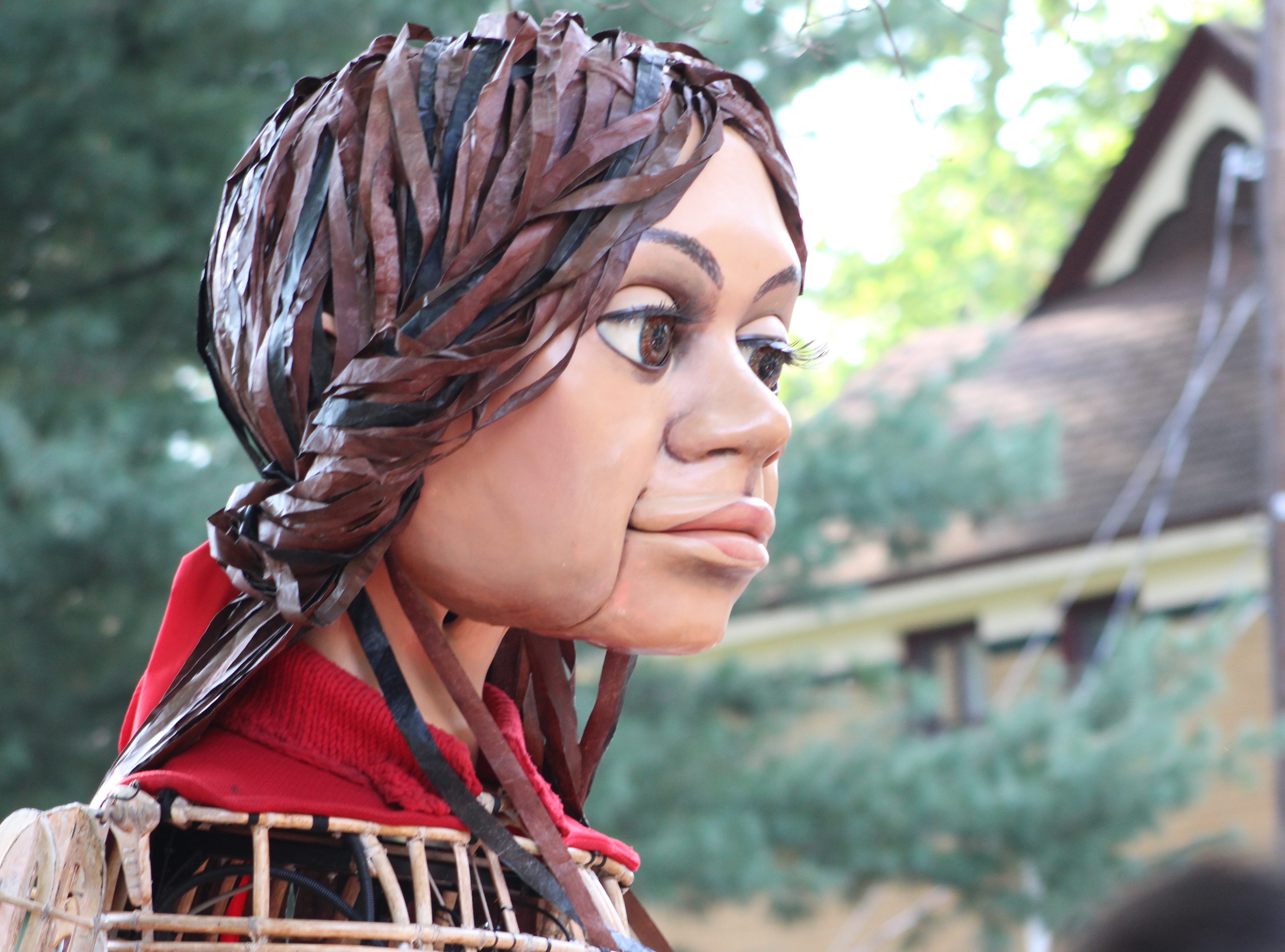
The other day, I watched a 12-foot puppet walk through a park, and I cried.
Little Amal, a puppet made of cane and carbon fiber in the likeness of a 10-year-old Syrian refugee child, visited the Pittsburgh area recently.
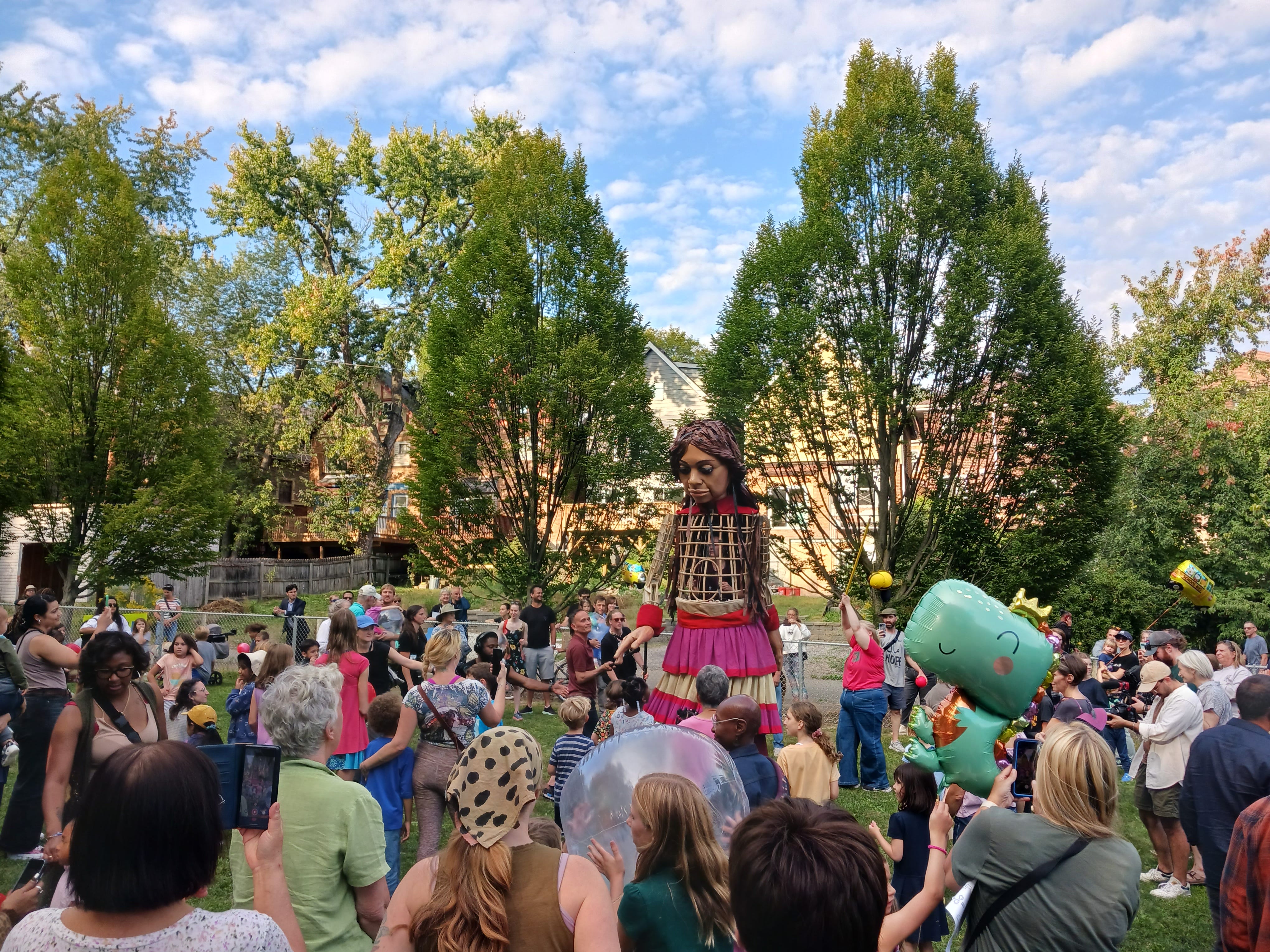
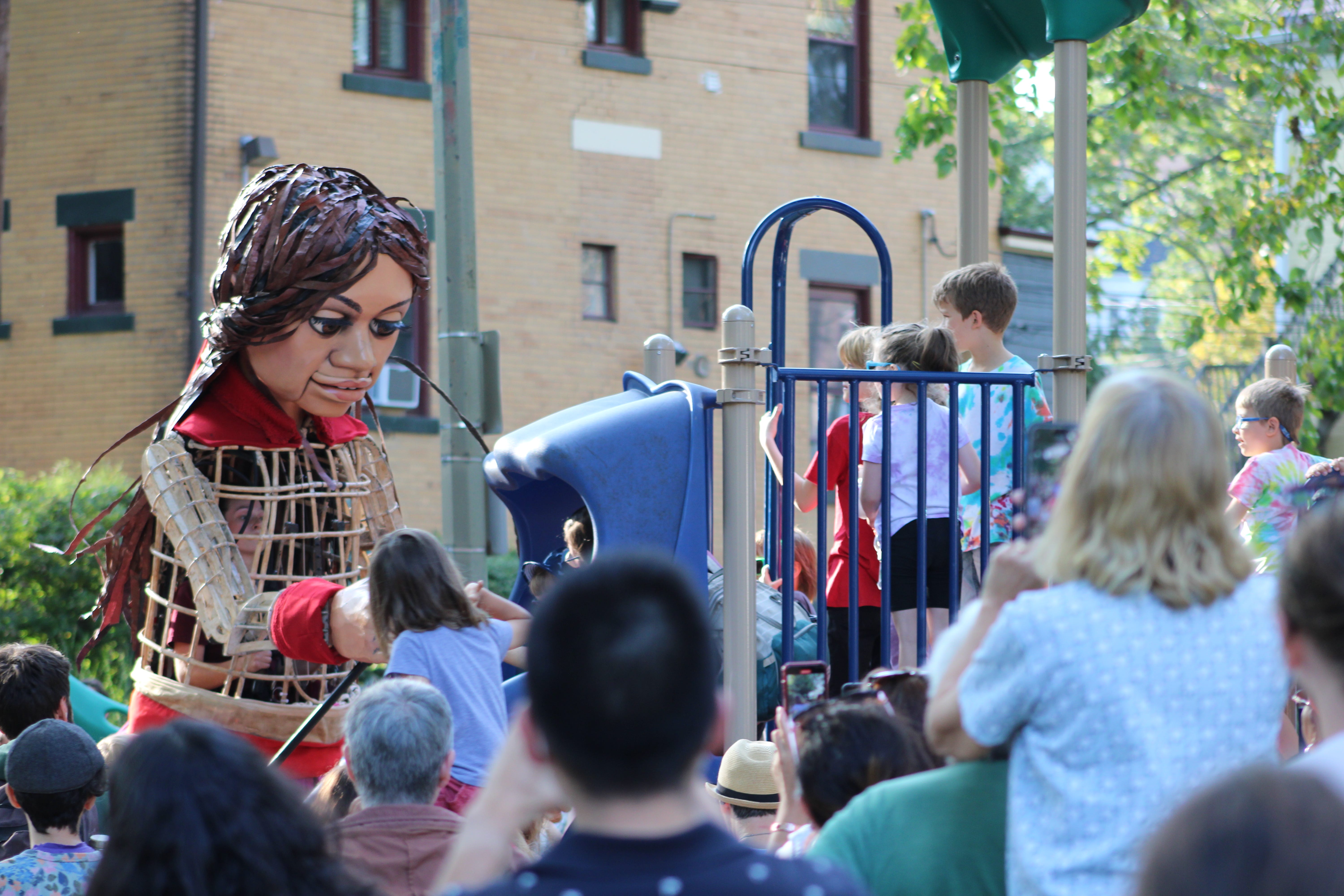
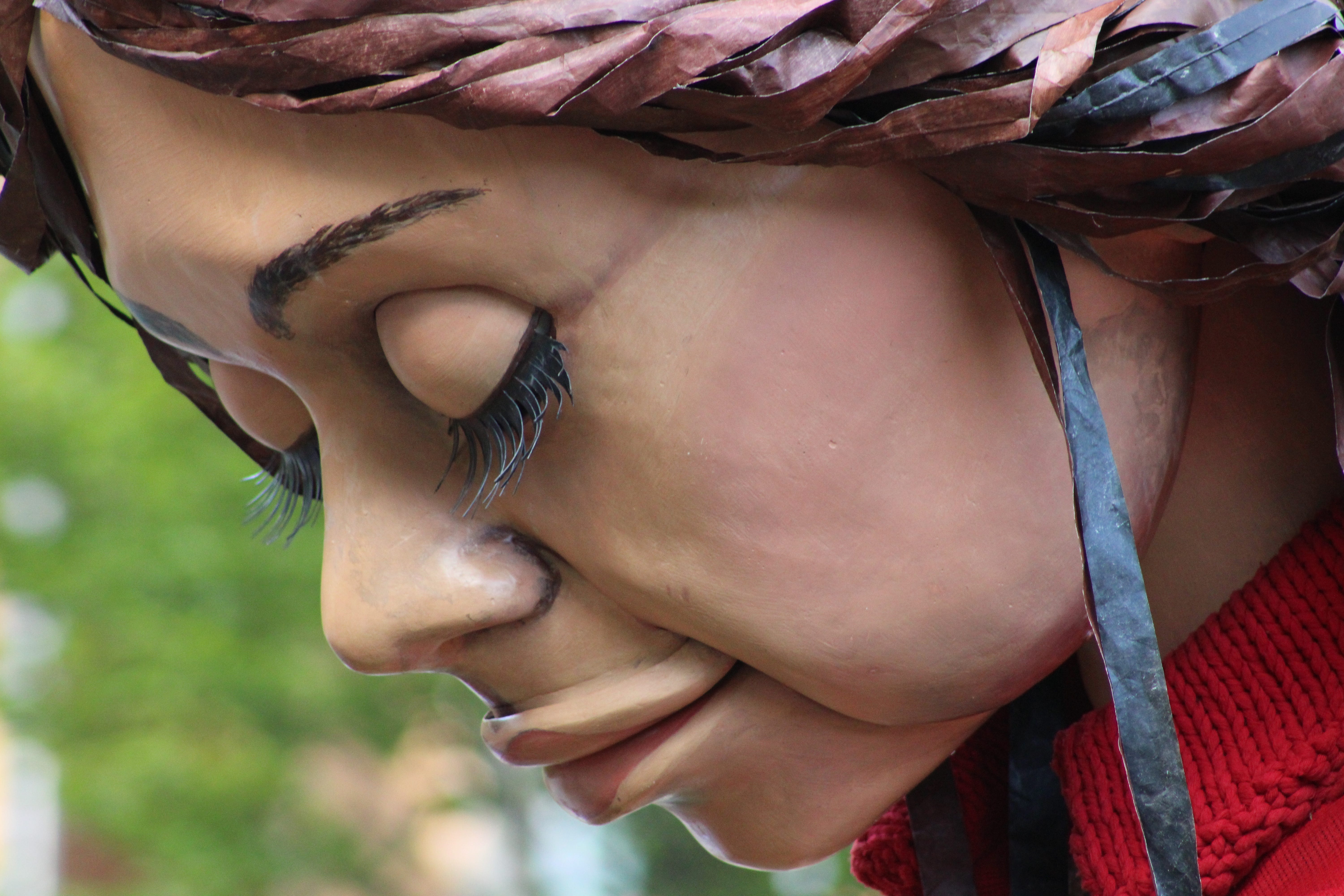
Among other events, she took a stroll through Whitney Park in Wilkinsburg, a borough adjacent to Pittsburgh. To ethereal, lilting music, Amal walked her way through a throng of flocking adults and children, as balloons floated by, and bubbles blew. She waved, shook hands, stopped at a playground set where a dozen beaming children peered, at eye level, into her cantaloupe-sized brown eyes. In playful interludes – and for a local touch – she brushed away umbrellas made into spotted lanternflies and was presented with a refrigerator-sized Turner’s Iced Tea.
This was just one stop among many made by Little Amal, who has, since July 2021, traversed 6,000 miles while visiting 15 countries. Her mission – the mission of project supporters, including the Handspring Puppet Company, which designed and built Amal – is to foster compassion among event participants and help them grow in awareness about refugee experiences, especially the experiences of child refugees.
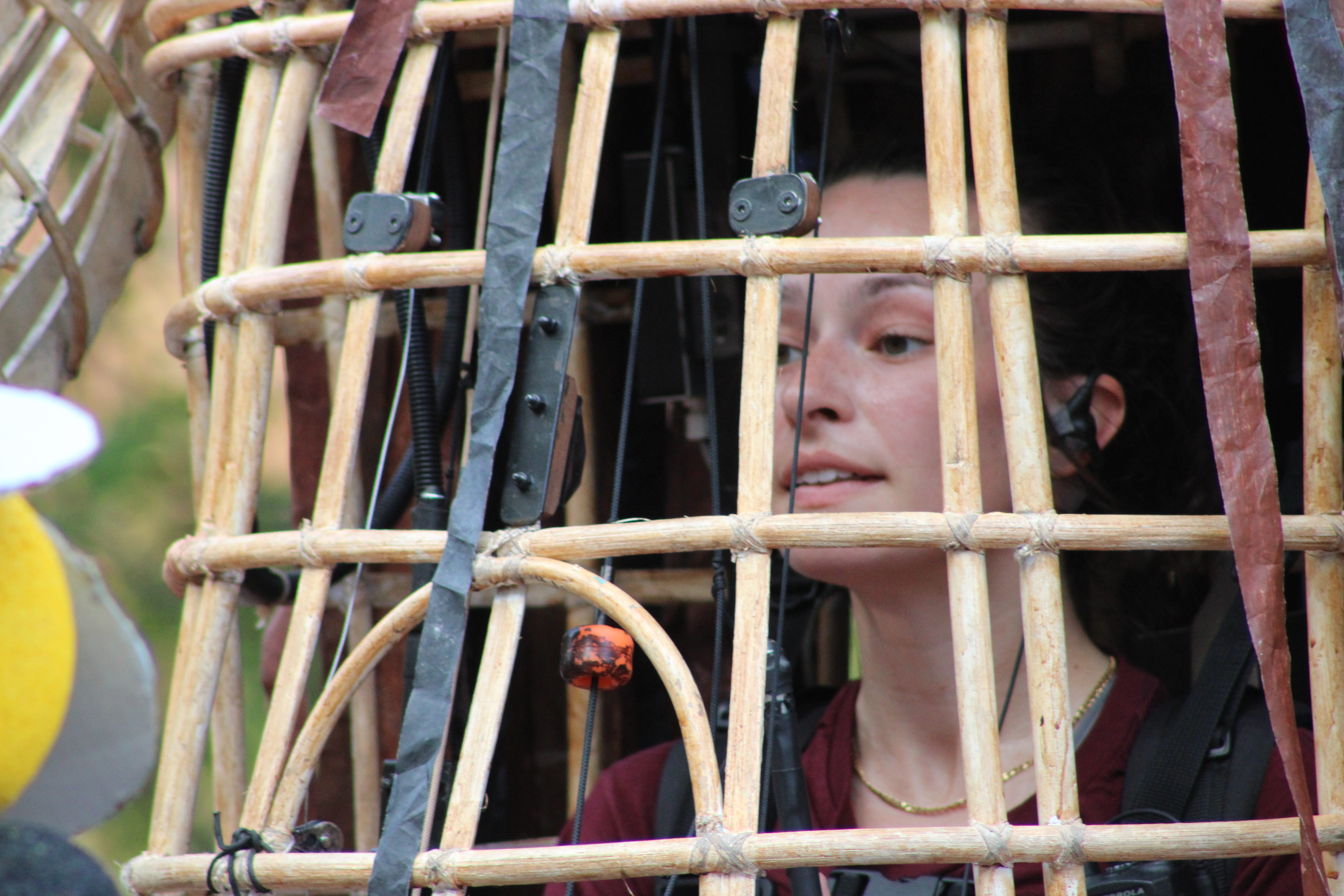
She’s controlled by several puppeteers, including one standing inside of her on stilts who walks Amal’s legs and controls some of her facial expressions. A couple exterior puppeteers move her arms and hands. A computer controls Amal’s eye movements. But even as the puppeteers do their work, viewers tend to forget – at least this viewer tended to forget – that the puppeteers are even there. Such is the empathy and other emotions evoked by those big eyes and their lashes and her facial expressions, the gracefulness of her movements, the choreography that brings her close to these adoring, wide-eyed kids who seem to keep a much more intimate relationship with awe and wonder than all of us of grizzled, accompanying adults. That awe and wonder were on full display as Amal leaned up close to the children, laughed, patted a few kids on the head, and even tossed a ball.
In the United States, Amal is visiting 40 cities and attending more than 100 free public events, currently making her way south and then skirting the US/Mexico border – where so many refugees reside – before finally finishing in San Diego on November 5th.
And, yeah, while watching Amal parade through this park, as kids chased after her in delight, I choked up. A lot. And yet I also just couldn’t wipe the smile from my face, as I trailed the throng, took pictures, and greeted friends I came across.
This puppet and the music and her entourage summoned in me a response to beauty. And they invited a few hundred of us to share in that communal moment of awe and wonder. The term “empathy” originated in early 20th century work on psychology and aesthetics, related the experience one has when viewing art, the ways in which we internally resonant with creative expression, the ways in which art moves us. The realness and in-the-moment work of theater and puppetry can certainly elicit this esthetic experience. And Amal is certainly art.
But Amal also invited us to empathize with people experiencing so much tragedy – namely, the 43 million children currently living as refugees around the world. According to the United Nations High Commissioner for Refugees, these children comprise half of all those refugees living in uncertainty, scarcity, and even danger. Those 43 million kids aren’t getting what they need in education, healthcare, and support for dealing with the trauma of war and other disasters.
So empathy also describes the feelings through which we identify with others’ experiences, be they happy or miserable, and my encounter with Amal was no exception. Something about this journeying little kid of a puppet being welcomed as a stranger, even as she, too, welcomed children to approach her … and something about this joy shared by a few hundred people who were mostly strangers to one another, simultaneously combined with the splendor of Amal’s form and movements, and then the injustices she represents … something about this performance helped me to feel so much alongside others.
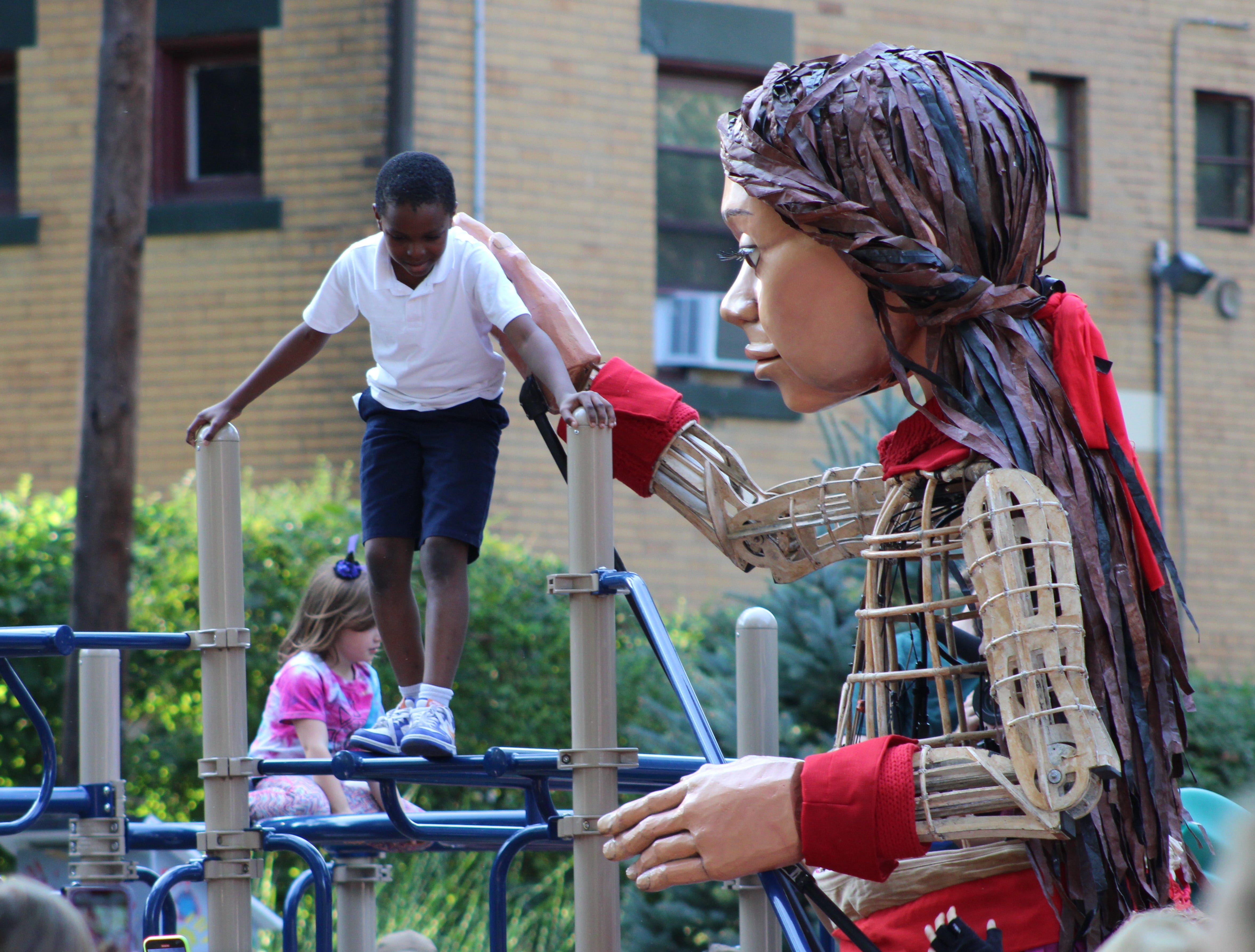
And this was a performance, for sure. Amal is a caricature and, ultimately, a fiction. All the more reason I find it fascinating, though, that just because some activists and artists effectively designed and built a particular combination of cane and carbon fiber and other materials, set these mechanics to music and choreography and props, we were able, on some level, to share in others’ struggles and happiness – and maybe even feel, for a few moments, like we were part of one another’s lives and necessary to one another. Even if fleeting, this empathetic practice enriches us.
The cheers, clapping, and others’ unmitigated smiles made it clear to me that I wasn’t the only one feeling this way.
The Archbishop of Westminster, who heads the Roman Catholic Diocese of Westminster in England, apparently felt this as well when he met Amal in 2021. “Half of me says, ‘Come on, this is a puppet.’ And half of me found myself speaking to her,” Vincent Gerard Nichols said, according to a news report. “… It wasn’t just a puppet – though it was – but it kind of embodies a whole dimension of our human family that is travelling lost, at risk, and in danger. And yet still with the kind of innocence that you would expect of a young child. So, I think there was a strong emotional presence and a pull that somehow, in her gestures particularly, was expressed. I think that touched everybody.”
**
This project is raising funds to provide social services for refugees through The Amal Fund with Choose Love.
No posts
Comments
Nothing yet. Say the first thing.
Sign in to join the conversation.