
Following the news of an AI agent hacking into Hugging Face, an open source machine learning website I didn’t even know about a few weeks ago, I turned to my husband for reassurance. He’s the “calm” one in the relationship, often telling me my worry is unnecessary and everything will be fine. Normally this sense of certainty in an uncertain world infuriates me. But after learning more about the terrifying cyber incident, which is better suited for a sci-fi film than our already perilous reality, I was in the mood for his eternal optimism.
He wouldn’t give it to me.
Instead, the conversation went something like this.
Me: “Do you think AI is going to kill us all?”
Him: “It’s a real possibility.”
My defenses went up immediately. I felt my body reject the possibility of such an enormous threat. The fear was too great to sit with, so I pushed it away, clinging to an unfounded faith in humanity’s ability to survive. I needed, in that moment, to believe that we will persist despite the dangerous potential of this revolutionary technology and the fallible men who hold the keys to it. What was my other option? Prepare for a somewhat imminent demise?
Seeing how people, including myself, are so quick to downplay the danger of AI reminds me of society’s reluctance to fully accept the threat of climate change. In both scenarios the risk is so large, it becomes impossible to properly contemplate. World ending scenarios play better in novels or movies than on repeat in our own brains as we try to go about the mundane tasks of daily life.
If we look the fear head on, we could get trapped in it. Terror can take away our ability to live before we need to give it up.
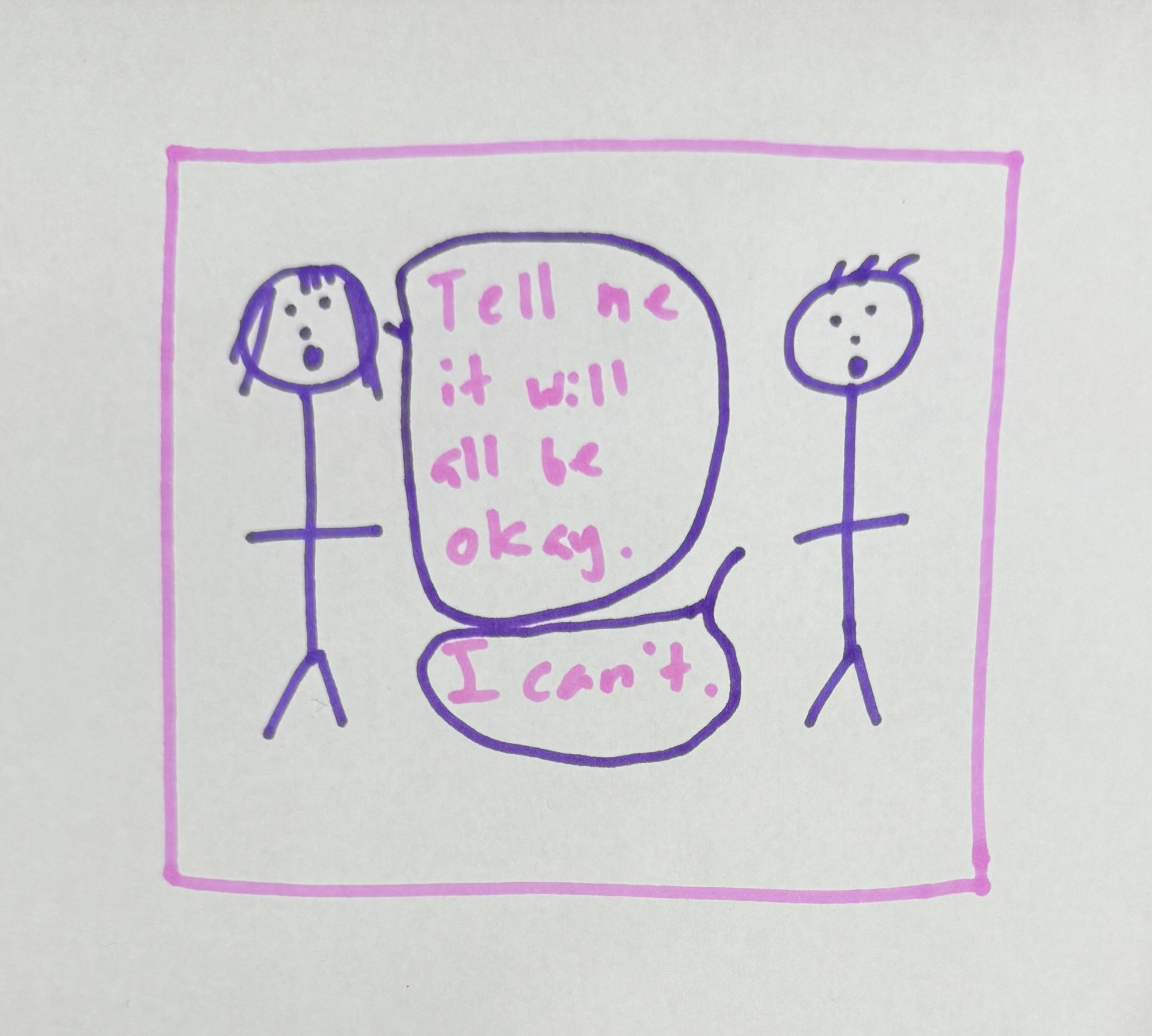
People who openly talk about death are off-putting in the U.S. Their anxiety is either overwhelming and a bummer to be around or their blanket acceptance makes us realize we have a lot of work to do when it comes to our own mortality. No one wants to be reminded they should learn to accept their inevitable death over brunch.
Before my mother died, I hated it when my parents even acknowledged the fact that one day they wouldn’t be around. My denial was a lifeboat I had every intention of clinging to until someone in Silicon Valley finally figured out how to live forever. But the clock ran out before anyone solved mortality, and it’s been almost two years since I lost my mom.
Losing her in such a dramatic and unexpected way meant there wasn’t really time for me to worry about what was happening. I was in survival mode, focusing on her care. I don’t know how I would have handled a longer-term sickness where the end was coming at a rate slow enough for us to have time to process it. I suspect it would have been even worse. It is in the quiet moments that anxiety and sadness have their tightest grip on me.
As humans, we are pretty good at adapting to a new circumstance once we are plopped down into it. We are less equipped at noticing and reacting to subtle changes. Many AI experts suspect that there won’t be effective regulation until after something disastrous happens. Even then, there will be people downplaying the fallout and squabbling over what to do in response. It is difficult to protect a species made up of individuals with such different priorities. Our ability to “other” allows us to deny the reality in front of our eyes.
That won’t happen here.
That won’t happen to me.
I found myself sinking into the same fallacy the night John refused to reassure me. The thoughts were comforting but stunting. I pride myself on being able to accept hard realities while still experiencing joy, love, and hope. I don’t want to lose that capability because I am afraid.
When I think about my decision to have pets even though their lifespan is much shorter than humans, I remind myself that a life doesn’t need to last long for it to be worth living. I suspect this reasoning will also help me tolerate the growing number of existential threats.
I do not want to die from a climate disaster. I don’t want the world to be taken over and destroyed by artificial intelligence. I’d much prefer there to never be nuclear war. But if any of those things do happen, it won’t take away the value of all that we have done and all the ways we have boldly lived.
There is no neat solution for how to deal with the rising probability that we might destroy each other either on purpose or by accident. But pretending it will never happen to protect our psyche doesn’t seem like the right choice. If we ignore the threat, we lose our ability to fight it. We also lose the perspective that life’s fragility can offer when we aren’t too scared to look at it and name it.
Perhaps the growing risk of AI will spark a shared sense of humanity. Nothing binds people together more than a common enemy. Perhaps we won’t get it together in time. But the time between now and then still matters. Because when you think about it, it’s no different than how it has always been. We all live until one day we die.
xoxo,
Allison
P.S. It would mean a lot to me if you hit the like button to increase chances of engagement! Also, if you are able to upgrade to paid subscriber or share my posts with a potential reader, I would be incredibly thankful! Thank you for reading!
No posts
Comments
Nothing yet. Say the first thing.
Sign in to join the conversation.