
You watch athletes rest between games and seasons. Some have season-ending injuries and need months to heal. Nobody questions it or thinks their career is over. It’s been normalized for athletes to build in time to recover, so why not the same expectations for entrepreneurs?
Here’s what most entrepreneurs get wrong: they treat rest like a crisis management tool, or worse a punishment. Business slowing down? Throw the business model away. Feeling burned out? Time for an indefinite sabbatical. That’s backwards.
Rest should be built into your operating system, not bolted on when you’re already broken.
Athletes don’t wait until their body gives out to take a break. They schedule recovery. They plan their off-season. They know peak performance requires peak recovery.
Your business needs the same structure.
I think entrepreneurs are the athletes of the economy. We are in daily competition to win customers, make payroll, pay taxes, and fight to see another day.
You didn’t start a business to create another job. But somewhere along the way, you confused being busy with being essential. You convinced yourself that if you step away, everything falls apart.
That belief keeps you trapped.
The whole point of hiring people, building systems, and paying salaries is this: you should be able to clock out. Not once in a blue moon, but regularly.
Your nervous system is beyond disregulated, but instead of letting go, you hold on tighter. You’re tired and your team is tired of you. Go sit down somewhere, for everyone’s sanity.
I learned this the hard way.
I hired 13 people to handle client delivery and operations and watched the payroll total climb to 5-figures.
My profit margins started shrinking and I worked more hours than when I was solo.
Something was deeply wrong.
My team kept coming to me for every decision. Every client question. Every small problem. I had built a team that depended on me for everything, which meant I became an expensive bottleneck.
The training was done and systems existed, but I was still the first person they messaged, emailed, and wanted approval from.
Summer came, I was moving across the country without childcare lined up. (Why is summer camp $4k for 6 weeks?!)
I had a choice: try to do everything and drown, or see what my business was actually made of.
I chose to disappear. I didn’t want a business dependent on me. I would rather it all break than try to hold it together on fumes, cortisol, and panic attacks.
I revamped all our systems, retrained managers, wrote and recorded dozens on SOPs, then slowly stopped responding to messages. I stopped checking emails. I forced my company to figure out how to run without me.
No warning. No detailed contingency plans. No “reach out to me if” documents.
I wanted to see what would break, adapt, or survive. There was only 1 rule: do what you think is in the best interest of the client.
Spoiler alert: Some things did break. Client communications got delayed or became confusing. Projects weren’t completed to the standard I would have liked. Clients cancelled.
But most things didn’t break, and I forced the transition from self-employment to business owner. Ghosting my team and forcing them to work autonomously shifted our culture and operations forever.
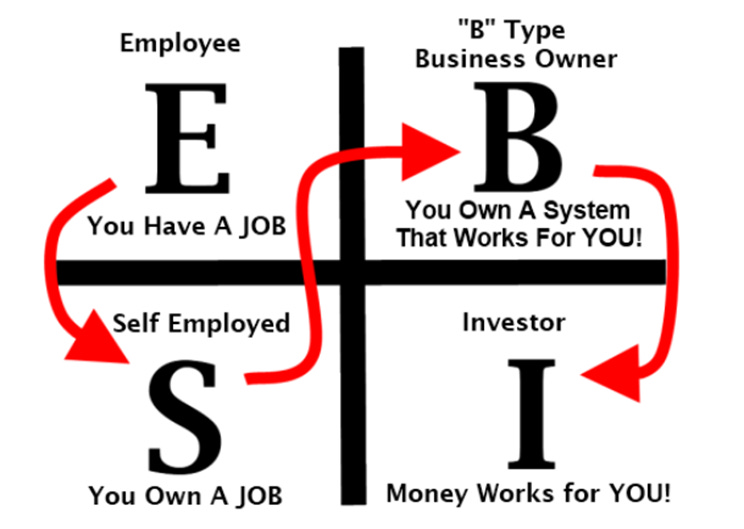
When I checked back in late August, I had a clear map of what needed fixing. The places where things broke showed me exactly where our systems were weak and where authority/confidence needed to be transferred.
I fixed those systems, then I left again. Each time I stepped away, fewer things broke. The team got stronger. The business got more resilient. Now I can focus my energy on the areas that will have the best outcomes for the business, not the million directions I was pulled in before.
I was able to step away from my business because I don’t think I’m special. I’m not irreplaceable.
I’m excellent at what I do. I know how to lead a team. I know how to translate what’s in my head into systems other people can follow.
That’s it.
Most entrepreneurs fail here because they’re learning the wrong things.
They take courses on how to do everyone’s job. They learn Facebook ads when they should be learning leadership. They master copywriting when they should be mastering delegation. They study SEO when they should be studying systems.
You don’t need to know how to do every role in your company. You need to know how to lead the people who do those roles.
You don’t need to be the best marketer. You need to build a marketing system and hire people who can execute it.
You don’t need to handle every client issue. You need to create standards and train your team to handle them.
Your job is to build the machine, not be the machine.
When you make yourself essential to every function, you trap yourself. When you believe nobody can do it like you do it, you guarantee you’ll never leave.
I was confident in taking this gamble because I had 3 things: data from the founders I worked with, an emergency fund in case it all went to hell, and the skill set to rebuild if necessary. My business was not my first rodeo in CEO extraction. I have done it dozens of times.
When I step into a fractional CMO or marketing director role with consulting clients, getting the founder out of the way is usually the first order of business.
The business is thriving according to sales numbers, but the owners are holding on by a thread. Their passion stress oozes into the rest of the business resulting in marketing that’s scattered and operations that have most of the team on edge.
There are 2 root causes:
Root Cause 1: They have no systems. Everything runs through them because there’s no other option or documentation. Every decision lands in their inbox because they never slowed down long enough to build a framework for anyone else to make decisions. They become the bottleneck by default because everything lives in their head.
Root Cause 2: They have systems. They spent time building documented processes and trained their team on them. Then, they refuse to trust any of it. They need to approve every social media post, email, campaign, message. Things that are not that deep become approval bottlenecks, and they don’t treat their team like capable adults.
Nothing moves until the founder weighs in. They don’t just bottleneck marketing. They bottleneck the entire company.
The problem isn’t their marketing strategy. The problem is they hired people to do jobs they keep doing themselves. They built teams they don’t trust. They created systems they won’t follow.
It kills me that when someone takes a vacation and their business keeps running, other entrepreneurs react like they witnessed magic.
“How did you do it?” “What’s your secret?” “You’re so lucky to have that kind of team.”
This reaction reveals the problem. We’ve normalized the wrong thing.
Taking time off without everything collapsing should not impress you. It should be the standard.
Build rest into your calendar the same way you build in client calls and team meetings.
Take a week off every quarter. Not because you’re burned out. Not because you need to “recharge.” Because it’s part of how you run your business.
During that week:
Your team handles daily operations
Systems keep projects moving forward
Clients get served without you
Revenue keeps coming in
This only works if you prepare. You need documentation. You need delegation. You need trust in your team. But those things benefit your business every single day, not just when you’re gone.
Most entrepreneurs avoid taking real time off because we convince ourselves that we will hurt our businesses if we step away. We actually do our clients and customers a bigger disservice when we insist on being in the way.
Respectfully, it’s ego that makes you think that you are more essential than you actually are.
Pick a week in the next 90 days. Put it on the calendar and tell your team.
Then work backward. What needs to happen for your business to run smoothly while you’re gone?
That list becomes your project plan for the next month.
Document the decisions only you make right now. Train someone else to make them. Give your team the authority they need. Build the systems that remove you from the daily loop.
You’ll either prove your business works without you constantly present, or you’ll discover exactly where you need to build more structure.
Both outcomes move you forward.
Stop treating time off like an emergency exit. Build it into your foundation. Your business should have seasons, just like everything else that performs at a high level.
The question is whether you’ll design those seasons intentionally or wait until you have no choice.
The entrepreneurs who figure out “balance” don’t have better luck or bigger teams. They do the hard work of learning leadership, shed their ego, and know they are entitled to rest.
I pray for a season of deep rest for you. May your nervous system find the safety it craves and your mind the stillness it’s forgotten.
Comments
Nothing yet. Say the first thing.
Sign in to join the conversation.