
Hello! Thanks for signing up for my newsletter experiment. I hope to use this space to occasionally share things I’m thinking about / working on. This is:
My first attempt at writing about my practice publicly.
A way for me to tell you about shows and events (step one towards getting off Instagram?)
A place for documenting the process, parts of the work that tend to disappear inside the finished project.
An invitation to talk / collaborate with people who are interested in similar ideas.
Probably a lot of lists.
I’m calling it “Forms” because ten years ago, my friend and collaborator Sophie Goldberg got me excited about words with multiple meanings. Sophie’s writing is subtly poetic and she could lead you to all the various interpretations of the word. I’m not sure how to do that, so instead I’ll tell you:
Forms like bureaucracy - Intake forms, documents, contracts, surveys, the census (more on this in a later newsletter).
Forms like the verb - Gives shape to, arranges, develops.
Forms like form and function - The relationship between the thing and how it works.
Forms like mediums - A sculpture, a prompt, a performance, a newsletter.
I started my current body of work about possible futures in 2023 because I needed an outlet for the conversations I was already having about communal living and alternative family structures. When life feels unsustainable, my friends and I talk about living in a way we haven’t seen modeled. Maybe we all move to the same place and raise our (non-existent) kids together. Maybe we pool our (also somewhat non-existent) resources for a multi-purpose building in the city where we can organize and make art and grow our own food. Maybe, following some major societal collapse or revolution, we band together with our neighbors to take our apartment building from our landlord. These conversations are part fantasy, part joke, often comforting, sometimes empty.
It’s a cliché to spend your 20s and 30s talking about an imagined commune that eventually gives way to the necessity of practical choices. I feel like that kid in Stand By Me, envisioning eternal closeness with my childhood best friends only to discover myself, years later, looking back on those friendships with the kind of idealism that thrives in distance. The eventual manifestation of the cliché is to not do anything about it, to get married and live far away from one another in the private spheres of care that have been established for generations. How comforting and/or suffocating.2
I don’t think any of us are actually ready to commit to our projections. There’s too much doubt, not enough money, and too many other doors that close when you choose to fully commit yourself to something like that. But I want some version of it. I crave being structurally intertwined with my friends.
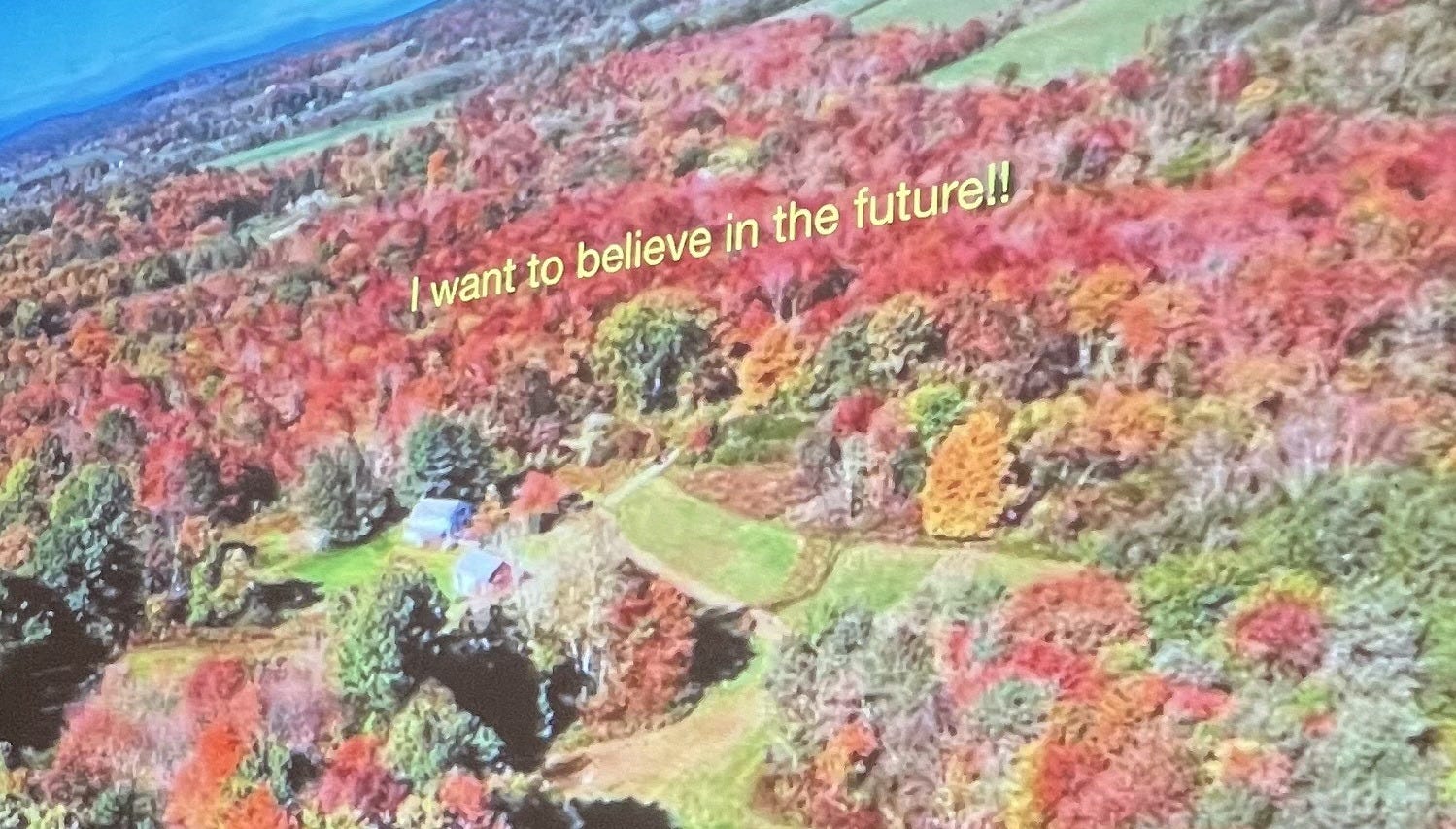
All this is, predictably, a response to context. I’ve started thinking about our current world as a kind of apocalypse—not a single event, but the slower drip of interconnected crises like rising fascism, war and genocide, the climate crisis, mass incarceration. I could go on but I want you to stay with me and anyway, you already know. Each of these forces can instantly destroy the lives of people it touches. Then it spreads out from that initial contact to destroy everything, an apocalypse in the form of disintegration. The only hope left is the question of what could emerge in the absence of failed systems.3
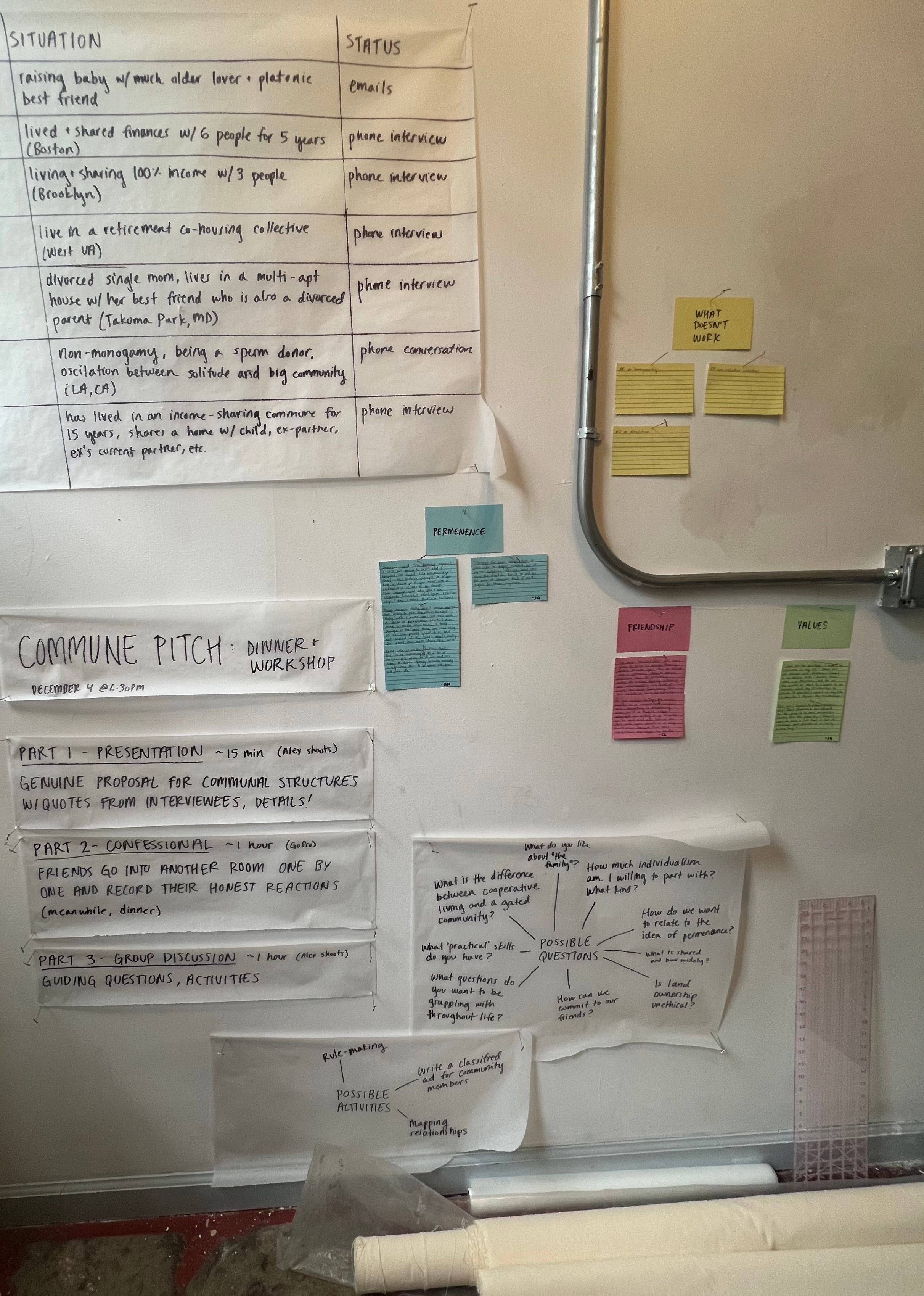
This is a term I’ve landed on to refer to the prompt-writing, survey-making, eavesdropping, and chatting that make up my practice lately. My work on communal structures started with interviews. A few examples:
A married couple who built a retirement co-housing collective told me that the prohibitive cost of designing a place to live leads to homogeneity within that place.
A divorced single mom who owns a house with her best friend and lives there with both of their kids said that permanence is an illusion. She and her friend determined equitable ways to separate their lives if that ever becomes necessary.
A 20-something New Yorker who shares 100 percent of his income with three other people stressed the importance of shared values and long-term relationships.
A middle-aged woman who has lived in a commune for fifteen years feared she would never have the financial means to leave it.
Several themes emerged from these conversations. Those who were happiest with their lives had escape routes, ways they could leave if they wanted to. They also had ideological alignment with other members of their chosen communities and values-based reasons for living how they did. When things didn’t work, it was because of fissures in relationships that had previously not experienced much conflict, because of life events outside of anyone’s control, or because people felt trapped with a decision they had made when they wanted different things than they want now.
So many of the choices people make in life are responses to circumstance—a series of adjustments designed to make life as pleasurable, meaningful, and sustainable as possible under the given conditions. Maybe the commune fantasy fails before it begins because it ignores the real factors that influence decision-making. I wanted to make a system that allowed for both expansive imagination and practicality. I started with a dinner party.
On a December night, some friends and I sat around my living room in Brooklyn with chili and red wine. I made a PowerPoint pitch, showing them photos of a property upstate and pricing out how much it would cost to build a sustainable structure on that land.4 I also talked about the skills we would need and the skills we already had, dividing people into various groups: Farmers/Gardeners, Builders, Cooks, Planners, Mediators, etc.
The basic premise of the idea was that we would all belong to this place, and people could spend as much or as little time there as they wanted. The proposal wasn’t intended to be perfect—I saw things I didn’t like about my own plan immediately—but it gave people something solid to respond to. After the pitch, we all wrote topics to discuss on sticky notes, put them in a “hat” (vase), and drew from them one by one. The bulk of that conversation feels oddly private, but I’ll give you a few moments:
Someone says “But the climate apocalypse,” and we all say “Yeah, the climate apocalypse.” “Geodesic domes, yeah.” “Which is to say...what?” “AQI, you know, there’s gonna be smoky days, smoky weeks, smoky months.” Someone says that’s probably years away, then someone else reminds them of last summer. “I mean there’s a lot of forest left to burn. Eventually it’ll all be gone and there won’t be any more fires. So…yeah.”
The fullest extension of the project, according to one friend, is the land eventually being “outside the legal jurisdiction of the federal government, fully sovereign indigenous land.” He suggests starting with a legal/financial structure that “gets it in the hands of indigenous stakeholders as a foothold for the acknowledgement of certain treaty rights.” New York state has a lot of broken treaty land, “So there’s literal land where you could make a legal claim that this is an occupied sovereign nation and it needs to be returned.”5
We move to the idea of inheritance. None of us have kids but some of us want them. “I like the idea of being like they can be on the land, spend time during their lives there, but at the end of the day it’s not going to be given to them.” But maybe the reality of kids means we hold on tighter to things that are ours. “I’ve been led to believe by parents that once you have kids all you want to do is give them things.”
I gathered the questions generated at the dinner party, broke them into categories, and added some more. Over the next several months, I brought these questions to three other groups of people and filmed the resulting conversations. From that process, I learned which questions worked, which stopped the conversation prematurely, how people tended to order the questions, and what they needed to feel any of this was possible.
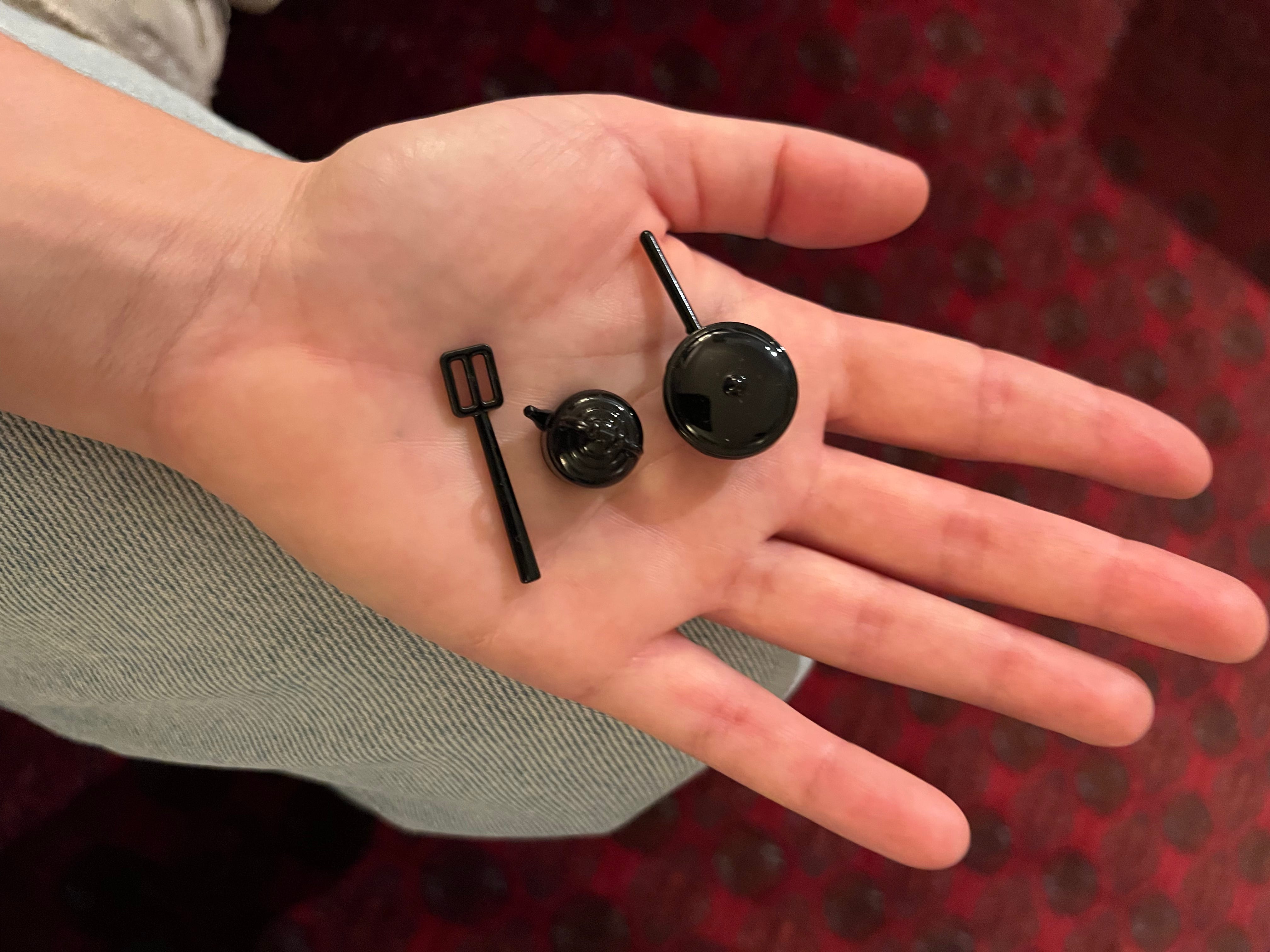
The research found its form as a card deck called If It’s Not A Dream.6 In a rare foray into making actual objects, I hand-made 40 decks. The first card in each deck defines its purpose: “Questions to guide group conversations about collective living in apocalyptic times.”
Each deck is divided into two sections. In Part 1: Building the Place, participants envision and detail the specifics of an intentional community. What are the important roles in your community? How will child-rearing responsibilities be allocated? How does money function? In Part 2: Current Moment, they are encouraged to square that imagined community with their life now. What would your friends and family think? What are the biggest obstacles to this being real? What are you afraid of?
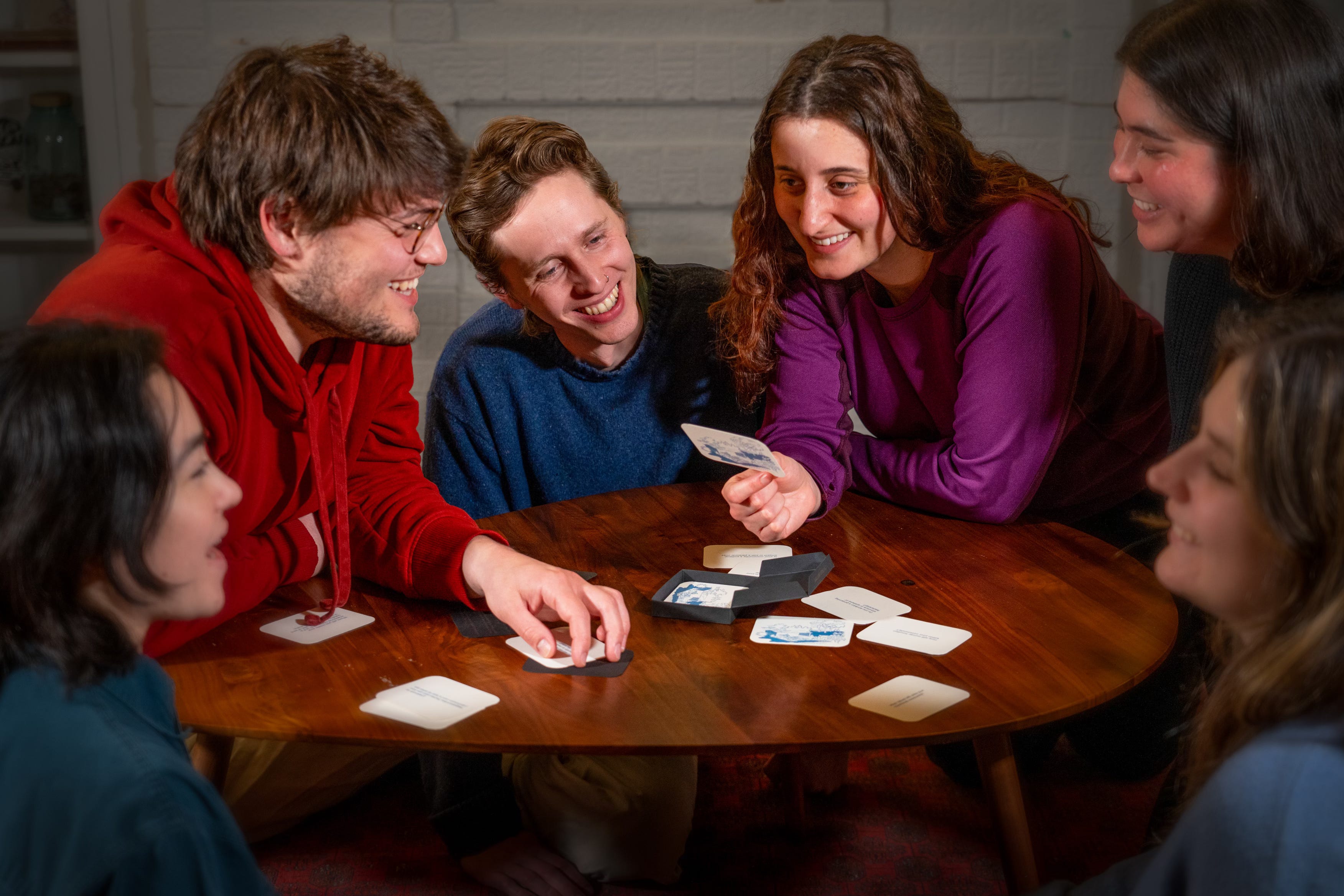
So far, the cards have been used by communities in Chicago, IL; Brooklyn, NY; Philadelphia, PA; Knoxville, TN; Washington, DC; Baltimore, MD; Bloomington, IN; Detroit, MI; Eugene, OR; Seattle, WA; Marseille, France; Oslo, Norway; Schlüsselfeld, Germany. I’ve since heard from other people who are interested in using them, so I’m working on making more. The second batch probably won’t be hand-made because I can’t imagine rounding that many corners or folding that many boxes again, but they’ll still be nice to hold. I’ll let you know when they’re available.
Leaving it there for now. Thanks for reading. If you have something to say, reach out.
Another form! Kristin Ross frames the commune this way in “The Commune Form: The Transformation of Everyday Life” and in this conversation with Andreas Petrossiants. She calls it “at once a political movement and a shared territory, a tactic and a community-in-the-making.”
I promise I’m not anti-marriage, I’m just skeptical of how ubiquitous it is. I love my married friends and admire the lives they’re building. Please still invite me to your wedding.
I based this on plans offered by a company called Earthship Biotecture, which specializes in sustainable off-grid design. I heard about Earthship from my friend Elle, who owns (real!) land in Northern Michigan and is building a (real!) cabin there. They write about it here.
No one in this group is indigenous. I believe the idea being proposed here is to buy the land, steward it in some way, and ultimately give it away. The most compelling projects I’ve seen on the repatriation of indigenous land are by the “public secret society” New Red Order, who recruit non-indigenous “accomplices”. Check out The World’s UnFair, which is possibly my favorite artwork I’ve seen in person.
This title comes from a Caryl Churchill play I love called The Skriker. In it, a demon lures two teenage girls to hell by possessing people around them. One of them is trying to convince the other that the wonders she’s seeing aren’t real. The other, already descending into a kind of madness, says, “If it’s not a dream, it’s even better!”
No posts
Comments
Nothing yet. Say the first thing.
Sign in to join the conversation.