
In this article I’m going to move back to my usual format after last month’s reflection; taking principles from criminology research and seeing how they might be applied to wildlife crime prevention. Having explored key crime-science principles in earlier articles, drawing on Chapter 1 of my thesis, I’ll turn now to Chapter 2.
So to that end, this month I’m going to look at the crime science research relating to the main aim of my project: poacher decision-making.
Offender decision-making, not just in terms of motivation, but also in terms of how the environment etc. influence how offenders make decisions has been studied in urban criminology for decades, particularly in relation to burglary. This field of study has progressed from interviewing burglars, to developing reconstructions of their decision environments, to the use of virtual reality technology to capture behaviours in real-time.
In the 1980s and 1990s, criminologists began to move away from moral or sociological explanations like poverty, deprivation, or delinquent subcultures, and started asking how offenders choose their targets. Richard Wright and Scott Decker’s Burglars on the Job (1994) led. Through detailed interviews with active burglars, they showed that these crimes were rarely impulsive; they involved rapid but reasoned assessments of risk, reward, and effort. Offenders weighed whether a house looked occupied, whether neighbours might see them, and how quickly they could escape.
A few years later, Nee and Taylor (2000) refined this further, introducing the idea of “burglar expertise.” They demonstrated that experienced offenders don’t simply spot opportunities but instead see environments differently. They can recognise subtle cues that signal a viable target: overgrown gardens, open windows, lack of surveillance and so on that may be missed by non-offenders (such as students used as control groups). This moved the field towards understanding bounded rationality; that offenders are rational, but within the limits of their perception, experience, and context.
This line of inquiry was then expanded through experimental and simulation-based research. Nee and Monaghan (2006–2013) used virtual-reality-based retrospective think-aloud (RTA) techniques to reconstruct decision-making in real time. Participants, including convicted burglars, “walked through” realistic, computer-generated neighbourhoods and described what they were noticing as they evaluated each property.
Work by Tilley and Farrell (2001) and others extended this into prevention. They found that altering the immediate environment through better lighting, improved locks, restricted access etc. reduced burglary by changing the offender’s perception of risk and effort rather than by increasing punishment. The message was clear: deterrence depends more on the immediacy and visibility of guardianship than on the severity of sanctions.
Over the past decade, this line of research has become increasingly experimental. Projects such as the Virtual Burglary Project (van Sintemaartensdijk et al., 2022–2024) have used extended-reality (XR) environments to simulate real neighbourhoods. Convicted burglars wearing VR headsets navigate through virtual houses while eye-tracking and motion sensors record where they look, how long they hesitate, and what features catch their attention. These studies reveal the subtle heuristics that shape offender decisions: the preference for corner plots, avoidance of overlooked entrances, attention to escape routes, and the speed at which decisions are made.
This work shows that criminal behaviour is neither random nor purely emotional; it is situational, patterned, and responsive to the environment. For conservation, this is important because it may offer a methodological and conceptual blueprint for studying poaching as a series of choices shaped by terrain, visibility, patrol presence, and perceived guardianship.
Which brings us back to the ideas we have already looked at in criminology:
offenders rely on familiar routes (awareness spaces);
they act within patterned environments;
deterrence depends more on perceived presence than on severity of punishment.
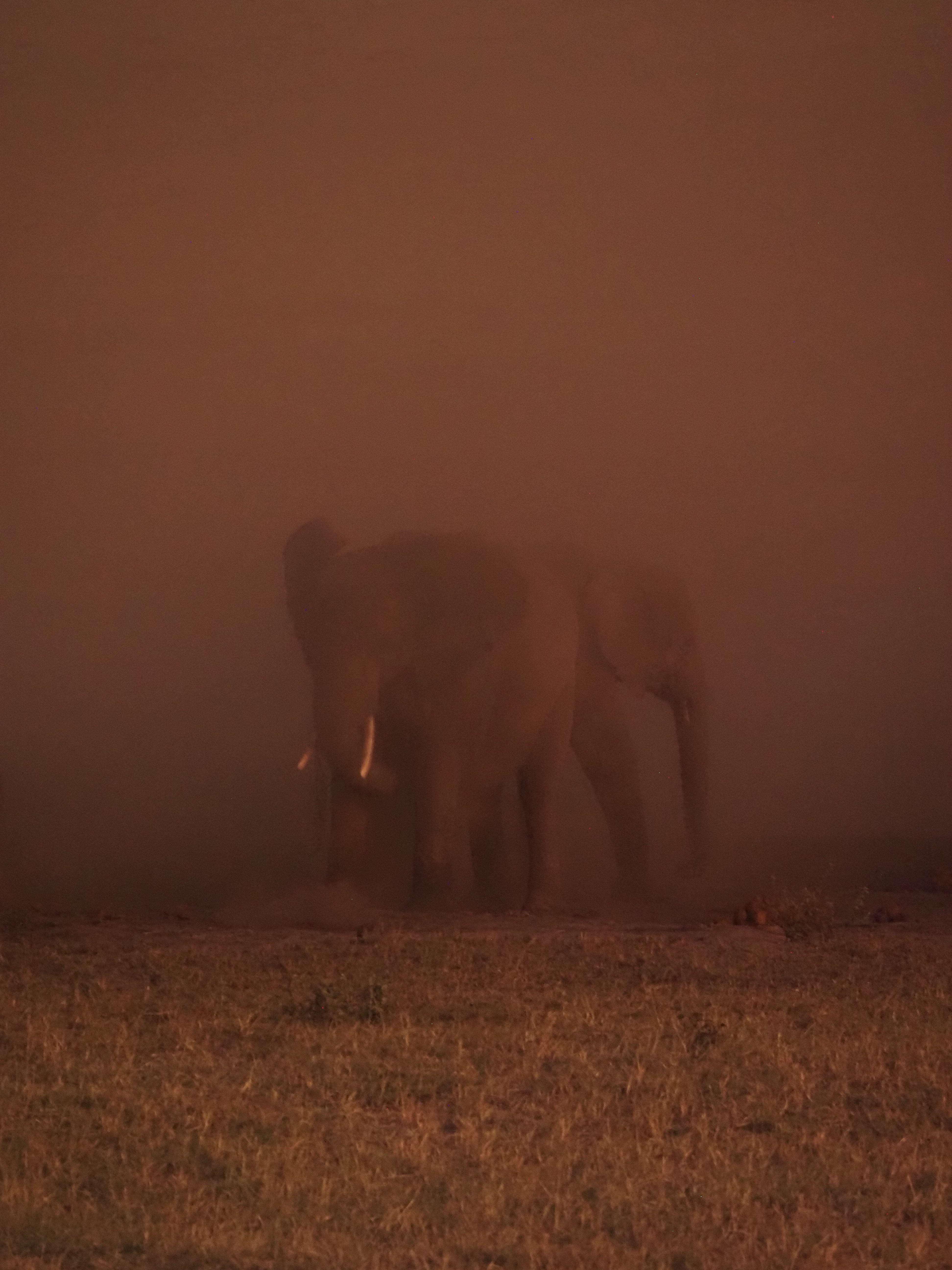
When it comes to wildlife crime, research into how offenders make decisions remains limited. Conservation has borrowed several of criminology’s analytical tools such as spatial mapping, hotspot analysis, and predictive patrol models but it has rarely used comparable methods to study the reasoning that drives those patterns. Most of what we understand about poacher behaviour is inferred from secondary data, not from the offenders themselves.
Direct engagement with offenders is rare. Studies such as those by van Uhm (2016) and Skidmore (2021) have contributed important insight into the organisation, context, and motivations surrounding wildlife crime, yet very few studies have specifically examined the actual decision-making process. The majority of conservation literature continues to depend on what can be deduced from spatial and patrol data rather than direct behavioural evidence.
Analytical models like PAWS (Protection Assistant for Wildlife Security), have helped identify where poaching is most likely to occur, but they offer little understanding of why those locations are chosen. Likewise, ranger monitoring systems such as SMART document incidents and patrol effort (snares recovered, arrests made, kilometres walked) but aren’t designed to capture how offenders evaluate risk, effort, or reward. The result is a wealth of operational data but little insight into decision-making itself.
I think that closing this gap is essential. Decision-making information can refine spatial risk models, correct patrol bias, and strengthen prevention frameworks. For example, recognising that entry points are selected for visibility and ease of exit rather than simply proximity may alter how risk is mapped and how deterrence is applied. Offender-derived insights can also reveal unrecorded opportunity structures: habitual access paths, camping sites, or perceptions of patrol timing, all of which shape poaching behaviour but lie outside standard data collection.
This means that at present, we know far more about the ecology of wildlife crime, i.e. its locations, terrain, and spatial regularities, than we do about its psychology. This means that there is huge opportunity to examine offender cognition with the same methodological curiosity that criminology has applied to burglary, which, in turn could be hugely helpful in preventing and reducing wildlife crimes at source.
There is a great deal conservation can learn from the burglary literature.
Methodologically, it shows the value of talking directly to offenders. Ethical, structured interviews can map out decision pathways including where people enter, what they look for, how they judge risk, and when they choose to act. Even simple reconstructions, like asking someone to sketch or walk through how they approached a site, could reveal more about reasoning and perception than months of patrol data.
Analytically, crime-science frameworks such as bounded rationality and crime-script analysis provide ways to make sense of those narratives. They turn stories into patterns with sequences of steps and triggers that can be translated into practical prevention measures.
Practically, decision-centred information can feed directly into existing spatial tools. Offender-reported routes, staging areas, or perceptions of patrol timing could refine risk models and reduce the bias that comes from relying only on ranger observations.
There could also be scope to borrow the newer techniques. Virtual-reality studies of burglary now allow offenders to “revisit” a scene and describe what catches their attention as they move through it. The same could be done in conservation, even if at a much simpler scale to start with (e.g. participatory mapping, guided site walk-throughs, or low-tech digital reconstructions). These approaches open a window onto the decision process itself, rather than its outcomes.
My own research begins to move the field in that direction. Through analysis of interviews with more than 300 offenders, my research begins to bridge the gap between criminology’s behavioural evidence and conservation’s spatial models. It doesn’t yet reach the level of experimental detail seen in burglary research, but it shows the potential and the practicality of studying decision-making directly in wildlife-crime contexts.
At the centre of all this is a simple point: deterrence can be improved by better understanding how crime is chosen. Every poaching incident comprises a multitude of decisions: about where to go, what to take, when to act, how to capture prey and how to avoid being caught. If we can understand those decisions, our responses could be better at reducing crime.
Urban policing went through the same learning curve. For a long time, success was measured by patrol numbers and arrests, not by whether crime actually fell. Conservation, although moving away from that, still risks repeating the pattern if it keeps focusing on presence rather than precision.
Studying offender decision-making as demonstrated by the research on burglary, could help fill the biggest gap in conservation enforcement; the missing link between data on what happens and insight into why and how it happens. The better we understand how poachers see risk and opportunity, the better we can design systems and patrols that change those perceptions and prevent the crime in the first place.
Brantingham, P. J., & Brantingham, P. L. (1981). Environmental Criminology. Beverly Hills, CA: Sage.
Nee, C., & Monaghan, W. (2006–2013). Virtual reality–based retrospective think-aloud studies of burglar decision-making. University of Portsmouth research series.
Nee, C., & Taylor, M. (2000). Examining burglars’ target selection: Interview, experiment, and analysis. Psychology, Crime & Law, 6(1), 45–64.
Skidmore, A. (2021). Illicit Hunting Practices in Russia: An Ethnographic Inquiry into Wildlife Crime and Enforcement.Doctoral Thesis, University of Glasgow.
Tilley, N., & Farrell, G. (2001). Reducing Burglary: A National Evaluation of Multiple Approaches. Home Office Research Study 251. London: Home Office.
Van Sintemaartensdijk, I., van Gelder, J.-L., & Nee, C. (2022–2024). The Virtual Burglary Project: Using extended reality to study offender decision-making. Journal of Experimental Criminology.
Van Uhm, D. P. (2016). The Illegal Wildlife Trade: Inside the World of Poachers, Smugglers and Traders. Cham: Springer.
Wright, R. T., & Decker, S. H. (1994). Burglars on the Job: Streetlife and Residential Break-ins. Boston: Northeastern University Press.
Cornish, D. B., & Clarke, R. V. (1986). The Reasoning Criminal: Rational Choice Perspectives on Offending. New York: Springer-Verlag.
Clarke, R. V. (Ed.). (1997). Situational Crime Prevention: Successful Case Studies (2nd ed.). Albany, NY: Harrow and Heston.
Weisburd, D. (2015). The law of crime concentration and the criminology of place. Criminology, 53(2), 133–157.
Dancer, H., Milner-Gulland, E. J., Myers, E., & Sandbrook, C. (2022). Evidence of deterrence from patrol data: Trialling a new method to understand wildlife crime prevention. People and Nature, 4(4), 946–960.
Petrossian, G. A., Pires, S. F., & Van Uhm, D. P. (2016). Preventing wildlife crimes: The role of opportunity-focused crime prevention. European Journal on Criminal Policy and Research, 22(3), 397–414.
Thanks for reading! This post is public so feel free to share it.
No posts
Comments
Nothing yet. Say the first thing.
Sign in to join the conversation.