
The French state’s budget situation is quickly becoming unsustainable, with public deficits reaching alarming levels – a reality that has been obscured by misleading reporting. By simply stating there is a “5.5% deficit” without clarifying that this figure is a percentage of the GDP or questioning the merits of using GDP as a measure, most media outlets are failing to convey the true scale of the problem to the public. The reality is the state’s deficit represents nearly one-third of its total expenditures! The impending budgetary correction will inevitably lead to major economic and social upheaval.
Text within this block will maintain its original spacing when published
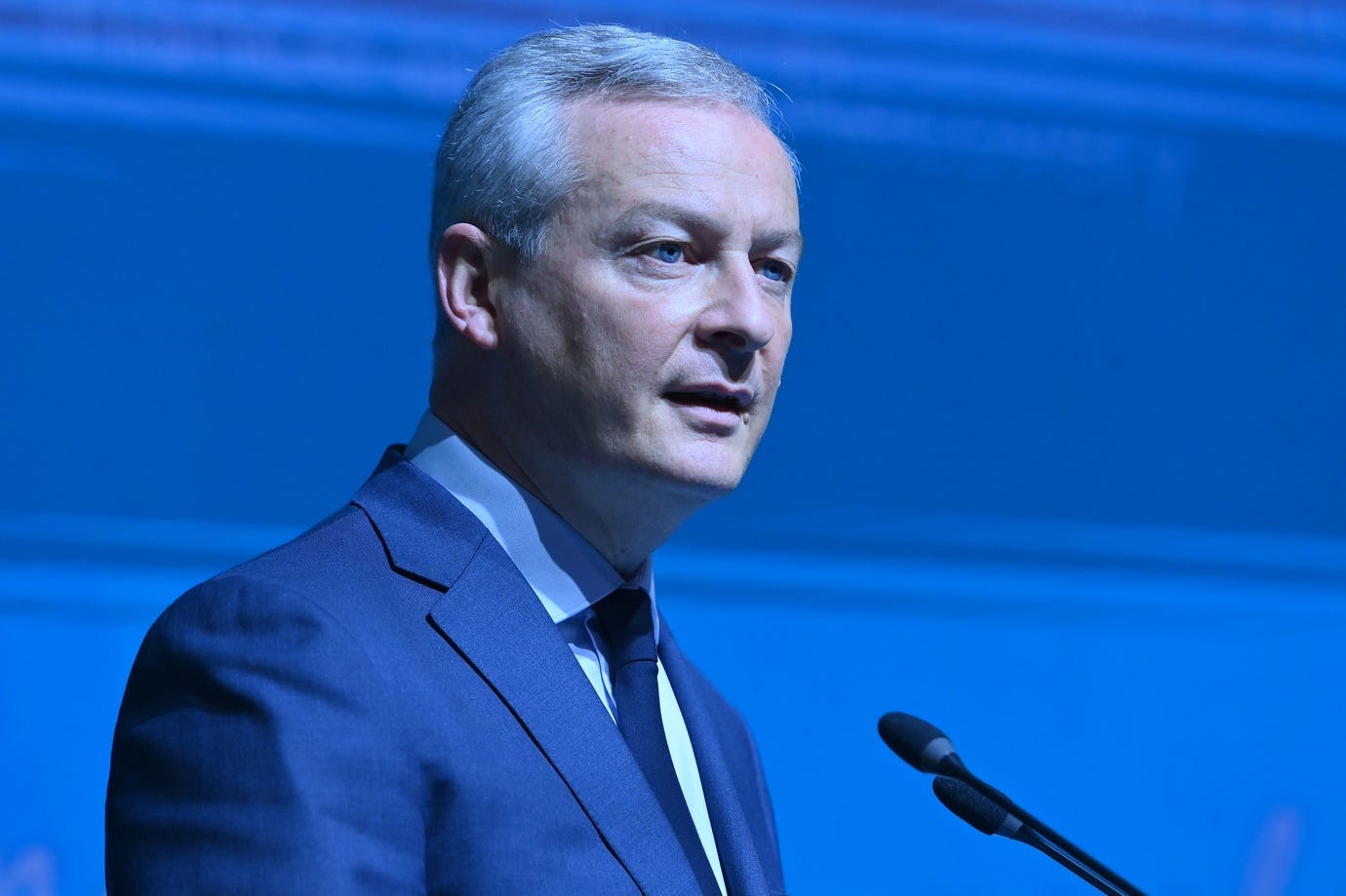
French Finance Minister Bruno Le Maire – Wikimedia Commons, 2021
Public accounts lack transparency and deficit figures are presented insidiously. The common phrasing of a “5.5% deficit” in the 2023 state budget often omits crucial context – that this percentage relates to GDP, not expenditures. Would a company executive calculate their personal deficit as a proportion of the revenue of the company they work for rather than their own income? Such framing suggests the state believes it has a claim to the entirety of the nation’s wealth.
A 5.5% deficit may sound trivial, but the state’s deficit exceeds 30% of its expenditures! With €520 billion in 2023 spending against only €360 billion in revenue, the deficit amounts to €160 billion. Under these conditions, balancing the budget will require draconian measures – such as laying off one in three civil servants and slashing operational funds accordingly.
Such severe cuts to public spending, which accounts for 60% of GDP across all administrative bodies, will inevitably trigger a harsh recession that will in turn cause tax revenues to plummet. The state will then be forced to double down on austerity measures in a vicious cycle.
Ultimately, nearly half of all current public sector jobs and spending may need to be slashed. In addition to mass layoffs of contract workers, whole segments of the tenured civil service will likely be on the chopping block as well.
We got a taste of what fiscal consolidation might look like under former President François Hollande’s tenure. Elected on promises to rein in the debt, his five-year term only achieved a symbolic reduction in the deficit to just under 3% of GDP.
My experience in higher education during that period suggests the coming austerity measures are unlikely to be implemented in an orderly fashion that preserves the most essential services and capable personnel. In the realm of government budgeting, economic efficiency often takes a backseat to hierarchical and office politics, where power struggles and cynicism allow the most dominant or manipulative groups to prevail, often to the detriment of everyone involved.
Until now, public deficits have been financed through monetary expansion. A significant portion of the debt is indeed essentially bought by the central bank, which generates money out of thin air. However, this rampant monetisation inevitably leads to inflation.
Long confined to certain sectors like real estate, inflation has now spread across the board, severely affecting the cost of living and hitting essentials particularly hard. This inflationary surge is especially painful for the younger demographic, setting the stage for significant political upheavals.
In a desperate bid to stop the inflationary spiral, central banks have hiked interest rates, pushing the cost of debt servicing to unsustainable levels for governments. In other words, the budgetary whirlwind has reached a point of no return – France now faces a stark choice between state bankruptcy or runaway inflation. Regardless of the chosen path, it is clear that the era of unchecked deficits has reached its limit, necessitating a fundamental change in approach.
Simultaneously, an overhaul of the international monetary system is underway. Various financial stakeholders are contemplating a shift back to a currency anchored in tangible assets like gold. A move to a currency that cannot be easily inflated will mechanically restrict governments’ ability to borrow excessively.
This transformation, already underway, should be completed within the next decade. Once the new system takes hold, chronic public deficits will no longer be feasible, with long-term balanced budgets as the only viable policy.
The era of misleading budgetary gimmicks is thus drawing to a close. The state will be forced to reckon with its finances, whatever the repercussions may be. As one of the Western world’s most indebted nations heavily reliant on deficit spending, France stands to be hit particularly hard.
For young people considering public sector careers, this should serve as a stark warning sign. Acquiring substantive and marketable skills represents a far better investment in their future. Entire swaths of the public administration will disappear in tumultuous conditions, reminiscent of the upheaval in Eastern European countries when they transitioned away from socialism.
The clock is ticking. It is time to prepare for the inevitable, seismic shocks to come.
No posts
Comments
Nothing yet. Say the first thing.
Sign in to join the conversation.