
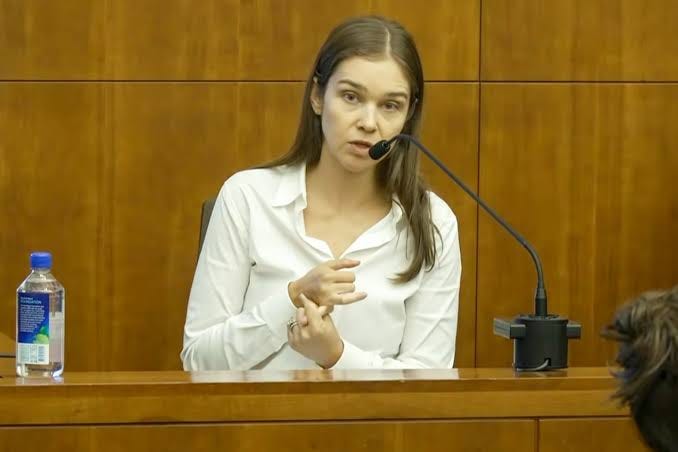
Watching the testimony in the Lindsay Clancy trial — her psychiatrists, psych NPs, nurses, etc. — I’m not convinced that her healthcare providers, on an individual level, were negligent. The system failed her, yes, but the aforementioned people aren’t to blame on an individual basis. There were some minor charting errors, some misdiagnosis, some major mismanagement of her medication, but unfortunately, that’s par for the course with these emergent psychiatric situations. Providers don’t have endless time to be calling every single outside hospital to discuss each individual patient’s case. Some outside hospital notes are available in Epic via CareEverywhere, but not all of them. They’re already overworked and only have so many hours in the day to see their own patients, do their own charting, chart review notes from other providers, etc.
Before I was diagnosed bipolar, I was put on an SSRI — which turned out to be a huge mistake — by a gynecologist who was “interested in” mental health. Should she have been prescribing that medication? Probably not — she should’ve referred out to psych. I’m sure she thought of the SSRI as a benign, commonplace medication, since fewer than 4% of people who go on it end up getting manic. In residential treatment, the psychiatrist on staff gave me a PRN antipsychotic that is explicitly not a PRN medication. That said, I went to a horrible treatment center and had to literally ask to see a provider toward the very end of my 35 day stay there. Later, a different psychiatrist I was seeing gave me a daily benzo prescription (like Lindsay). She initially had me come off cold turkey, which was the seventh circle of hell. Benzos are highly addictive drugs, so I’d of course become addicted, which was exactly what Lindsay was worried with regarding her Ativan prescription. The insomnia, in particular, was brutal and unforgiving.
The point is, none of these providers would come out looking good if they were put on the stand in front of Lindsay’s excellent defense attorney, Kevin Reddington. All of the above clinical decisions were highly questionable. As an educated patient in the medical field, I know that. Still, do I think they were negligent? Not on an individual basis. It was the system that failed all of us. Gynecologists, in general, should not be doling out SSRIs. The treatment center I went to has since been shut down — they were severely understaffed and the psychiatrist I saw there was PRN and only on-site once or twice a week. My former psychiatrist who gave me the benzo was, I believe, doing what she thought best for me at the time given the extremity of my situation. Much like Dr. Tufts who prescribed Lindsay her daily benzo, she was new to private practice. Maybe inexperience had something to do with it. If, god forbid, something terrible were to happen in my life related to my diagnosis, I could probably sue any of the people mentioned here the way Lindsay’s providers are being sued in civil court. Similarly, they might all be called to the stand to testify in a criminal proceeding. Even so, I don’t think any of them should be held personally liable.
These emerging mental health situations are highly ambiguous and difficult to navigate. In the throes of any of this — mania, depression, psychosis — it’s impossible to know what exactly is the right thing to do, and unfortunately, it requires extensive experimentation. People seem shocked by the number of medications Lindsay was on in a short period of time, but I’m not at all. When you’re desperate for something to work — to change your situation — you’ll try anything. And with these classes of medications, there’s no telling if or how something will work until you actually just try it. In my own experience, I tried many different antipsychotics waiting to find the right one, all while taking a slew of other anti-anxieties and sleep aids. If you saw mine (or any bipolar patient’s) med list laid out in a short timeline, it would likely mirror Lindsay’s. She, in my opinion, is not outside the norm in that way. Ask a mental healthcare provider, and I’m sure they would agree. These drugs are understudied and so little is still understood about mental health — about psychiatry, about psychopharmacology — this is sadly still the way.
All this to say, I’m unsurprised by the actions of her providers. While I do believe she and her family were failed, I don’t believe it was the explicit fault of any one person involved in the case. As the trial proceeds, I’ll continue watching each day’s testimony. It’s pathologic, maybe, but I’m riveted, like so many others. I’m very curious, too, to see what unfolds in the civil case that Lindsay and Patrick are filing against these providers. My point is, no one here did anything outside the norm. She was not the exception, but the rule. Clearly, the rule must change. But how? Stricter standards for the prescription of SSRIs, more public funding for mental health research, better clinical research on these medications. Easier said than done, of course, but I at least believe that those are places to start.
No posts
Comments
Nothing yet. Say the first thing.
Sign in to join the conversation.