
This stupid reporter and her stupid husband just sent Kohler a bunch of data that can now be exploited and sold. Emphasis below was added by me.
Written and Tested by Jennifer Ernst Beaudry, published footwear aficionado, style and shopping guru, laundry queen
Updated August 10, 2026
Data nerds, rejoice: There’s a whole new way to track your health. Today, it’s easier than ever to get personalized, detailed insights into how your body is functioning. With a smartwatch reporting on your heart rate, a ring to monitor your sleep, and a fitness band tracking all your steps, you can already get an inside look. But Kohler is breaking new ground with the Dekoda (available at Kohler) , a health-tracking device that attaches to your toilet to scan your urine and stool for personal—extremely personal—insights on your hydration and gut health that, the company says, you can use to “build habits for living better, healthier.” Can tracking your toilet habits give the average user useful information about their health? We decided to put the Dekoda to the test and see.
PROS and CONS
+++++
Health monitoring built into daily routineDiscreet
Sends alerts privately through app
Easy to install
Accurate insights
(Cons)
Expensive
Information is basic
Subscription is required
About the Kohler Dekoda
Size: 8.13 inches H x 3.74 inches W x 3.43 inches D
Weight: 1.1 pounds
Fits rim width: 32mm to 58mm
The Kohler Dekoda health tracker clamps onto the side of your toilet and uses spectroscopy sensors, which Kohler describes as a technology based on light waves, to gather information about what’s in your toilet. This becomes apparent the first time you start a session, when the device begins flashing a surprisingly bright light in your toilet.
The device works and blends in with almost all white toilets of standard size. (Dark-colored toilets may affect the sensor’s ability to gather the required information.) It comes with a remote, a remote holder, a charger, and the device itself. You need to supply the toilet, as well as a smartphone, to install the Kohler Health app, where you can access your data.
How we tested
To put the Dekoda to the test, we installed it on the toilet in the most-used bathroom in the house, the en suite one attached to my bedroom. My husband and I both installed the app on our phones and added our fingerprints to the remote to give us two separate logins. Then, we used the bathroom normally, starting a new session before each use, either on our phones or with the remote.
This is what I put on social media:
Another con, in both senses of the word, once your government meat quota has been met, the toilet will know if it shows up in your shit. And your meat quota will be determined by how well you behave -- which includes your speech. If you express heterodoxy, you will be docked points. Like China...
I knew about these ass-spying devices years ago, and was scolded about conspiracy theories. As usual, I was right. And I will be right. These are like you cute little NEST monitor.

But before you go, here’s some more shit from the piece:
Out of dozens of sessions, we only found one instance where the Dekoda didn’t accurately report output: In that case, it registered stool with no blood, despite there being blood but no stool. This happened late at night in a dark bathroom, so it’s possible the analysis was hampered by the lack of light. We found the other reporting to be largely accurate, both in dark rooms and in bright light...
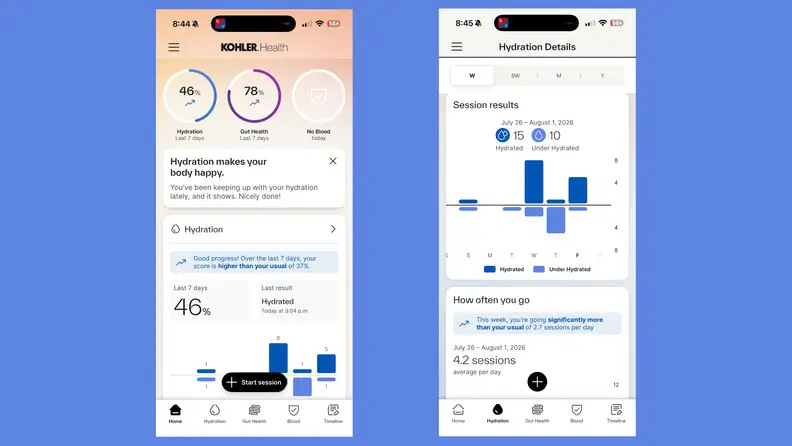
Dekoda presents information in clear language and easy-to-understand graphics that help you track your output over time. However, at its core, it only tracks five things:
Whether you’re hydrated or underhydrated
The color of your stool (brown, black, green, pale, yellow, or red)
The consistency of your stool (regular, hard, and loose)
The amount of your stool (minimal, moderate, or substantial)
Whether or not blood is present
While this can be useful information and is especially helpful to track over time if you’re hoping to see patterns in your output, it’s basic information, and some of it (color, consistency, amount) is generally immediately apparent to the eye.
No posts
Comments
Nothing yet. Say the first thing.
Sign in to join the conversation.