
Holly: You know those days when you get the mean reds?
Paul: The mean reds? You mean like the blues?
Holly: No. The blues are because you’re getting fat and maybe it’s been raining too long, you’re just sad, that’s all. The mean reds are horrible. Suddenly you’re afraid and you don’t know what you’re afraid of. Do you ever get that feeling?
Paul: Sure.
Holly: Well, when I get it the only thing that does any good is to jump in a cab and go to Tiffany’s. Calms me down right away. The quietness and the proud look of it; nothing very bad could happen to you there. If I could find a real-life place that’d make me feel like Tiffany’s, then - then I’d buy some furniture and give the cat a name!
I think I fell in love with Audrey Hepburn some time around ninth grade. I am not sure what initially birthed my interest in her, but I spent most of high school devouring her films and reading every biography I could get my hands on. My favorite Audrey film now is Sabrina, but in high school, there was nothing I loved more than Breakfast at Tiffany’s. The movie, and Audrey’s character Holly Golightly, felt like the epitome of glamour and poise to me. Never mind that there are some decidedly inelegant themes woven throughout the film—I thought she was the most beautiful woman I had ever seen.
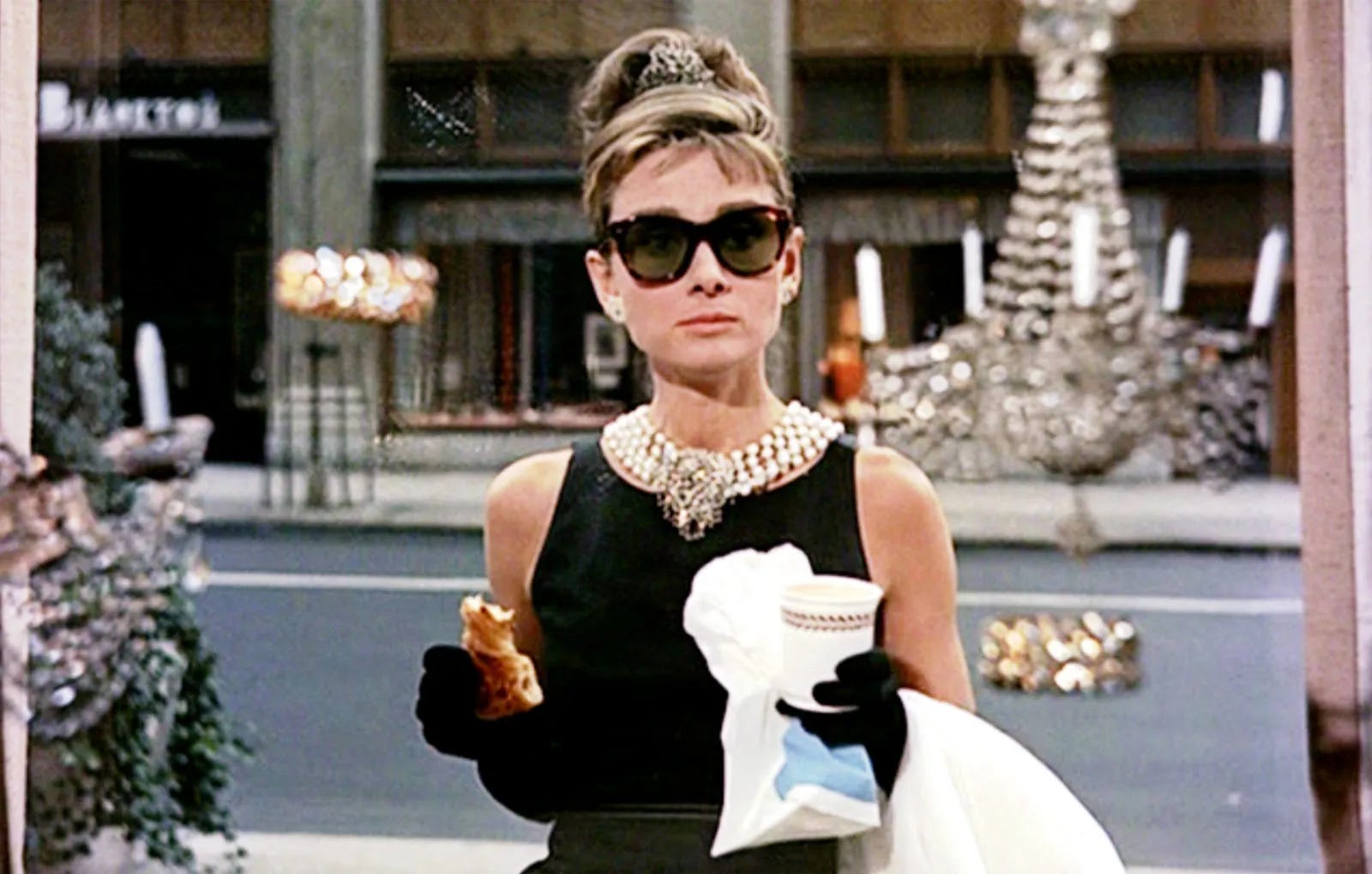
And it’s not just that she is physically beautiful, though she is, of course. She has this funny playfulness to her, like she does not take anything too seriously, including herself. She’s clever and witty, and delivers her lines in a mischievous sort of manner. But I think the thing about her that everyone finds so enchanting, so completely captivating, is how incredibly easy she makes it look.
My favorite part in Breakfast at Tiffany’s is the scene where Holly is awakened suddenly by a visitor at the door when, shortly after her little speech about the mean reds, she suddenly remembers her weekly Thursday morning appointment. In a flurry of makeup brushes, bobby pins, and shoes found in strange places, she steps out of her bathroom, dazzlingly glamorous, in less than five minutes. It is, of course, all movie magic, but still, I thought that she was nothing short of enchanting. I wanted to be just like that, to be elegant and tasteful, without really trying. But that did not keep me from trying quite a lot.
I did my best to copy her makeup look; all soft blush and cat eye liner and ballet pink lips. I became determined to find my own perfect little black dress, which I did find my sophomore year of high school, and continued to wear well into my college years. There are plenty of books, never mind the oceans of blog posts and content online, on how to dress like Audrey Hepburn. Audrey is famous for a style called gamine, defined by its straight lines and boyish charm. In high school, I had a pair of barrel-legged blue corduroy trousers that fit the bill perfectly. I even wore a classic tan trench coat—just like the one she wears in Breakfast at Tiffany’s. I wish I had more photo evidence from this time. I was truly dedicated to this mission of capturing her beauty.
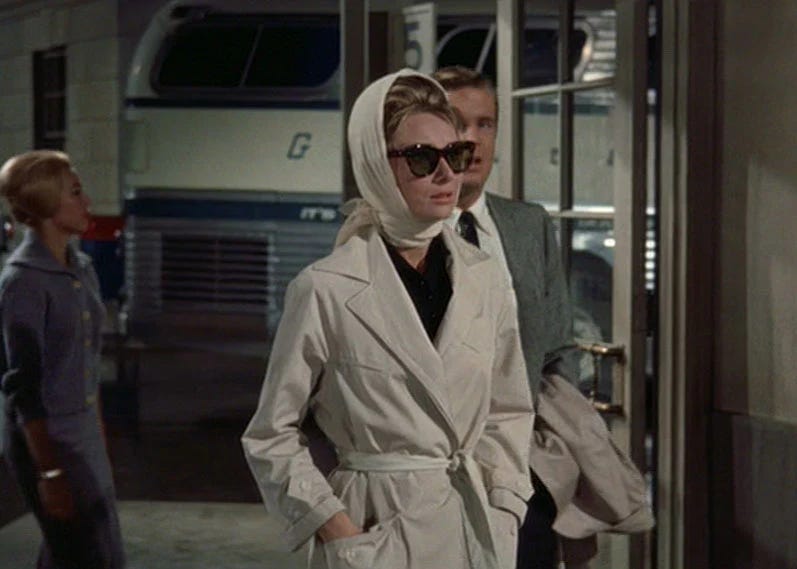
The thing about Audrey Hepburn is that legend of her real self is perhaps even more fantastic than any of the characters she portrayed.
In 2020, a new documentary about Audrey’s life was released. It tells her life story, her rise from refugee to international fame nothing short of dazzling. The documentary, called Audrey, displays scenes from her most popular films, her Oscar acceptance speech, and photograph after photograph of her on set, at home, and attending glamorous events in beautiful gowns. Her clothes are incredible, from the simple outfits she wore to cook or garden to the elaborate costumes for films like Funny Face and My Fair Lady. She worked closely with Hubert de Givenchy on the costumes for several of her films. The story goes that she approached him about designing the costumes for Sabrina, her first major film to follow up her Oscar win for Roman Holiday, and that he was at first disinterested by her smallness, both in stature and fame, but was won over by her elegance and charm.
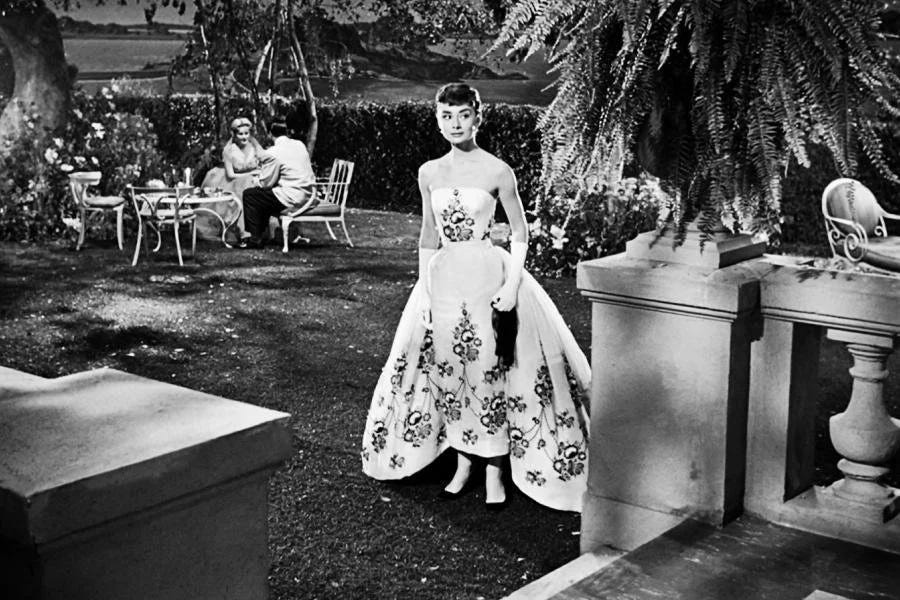
Audrey rose to international success despite experiencing a difficult childhood. Her father deserted the family when she was a little girl, and she never really got over his abandonment. Coming of age in a Nazi occupied Holland, her first dream was to become a ballet dancer. She took dance lessons, and even performed in underground recitals to raise funds for the Dutch resistance. While pursuing a career as a ballerina, she took acting jobs to pay the bills. In the same year, she booked Roman Holiday and the stage show, Gigi, and her career in show business skyrocketed.
Her most iconic role, as the flirtatious socialite Holly Golightly, was not easily won. It is a well known fact that Truman Capote, the author of the novel Breakfast at Tiffany’s, did not think the silly little princess had what it took to play a complex character like Holly. It is often said that she was at the center of an interesting shift for the Hollywood starlet—she represented a new kind of leading lady in the movies, neither a sex icon like Marilyn Monroe, nor the picture of elegance like Grace Kelly. But instead, a wide-eyed, lovely, playful girl, a dancer at heart.
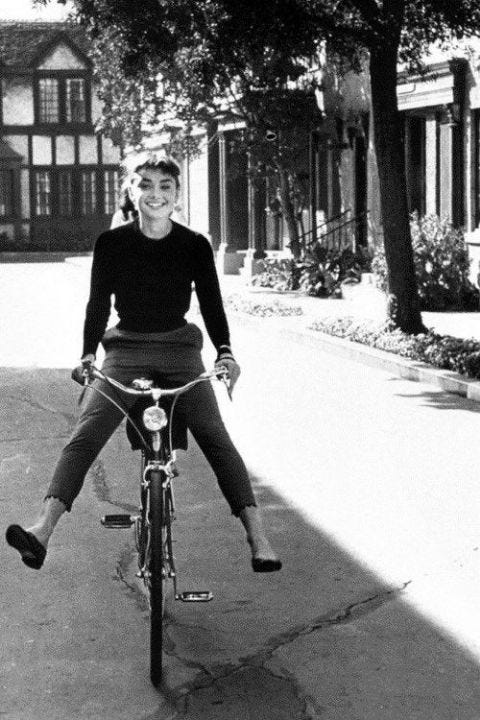
She was married twice, both unions ending in divorce. She had one son with each of her husbands, her children her proudest achievements. There is footage in the documentary of her discussing her decision to step away from Hollywood in order to raise her first son, Sean. Many assumed she was making a great sacrifice to give up her career, especially one of that magnitude. She says that it was an entirely selfish decision— being with her son made her the happiest she had ever been.
For such a seemingly joyful person, there was a deep sadness to Audrey. There is this entirely devastating moment in the documentary where her friend speaks about the time Audrey traveled to Europe to reconnect with her father. Her friend recalls that she was crushed at how her father received her— with cold indifference. How incredibly tragic: to have the entire world fall at your feet, but to not receive the affection of the one man who mattered most to her—her dad.
And yet, Audrey chose joy. She loved her sons. She loved to cook. She loved her gardens and her friends and her dogs. She dedicated the last years of her life to serving as a goodwill ambassador to UNICEF, wholly committed to rescuing children from war, illness, and starvation. She was a fierce advocate for children in horrific circumstances, in many parts of the world. I find this part of her story to be the most fascinating. As a person who endured so much pain in her life, and then so much soaring success, many would expect her to choose a life of luxury and ease, and I think she would have been justified in that choice. Instead, she chose to dedicate herself completely to serving others. She believed in people. She believed in love. She never forgot where she came from or who she really was: deep down, just a hungry little girl in a war torn country, who dreamed of dancing in the ballet.
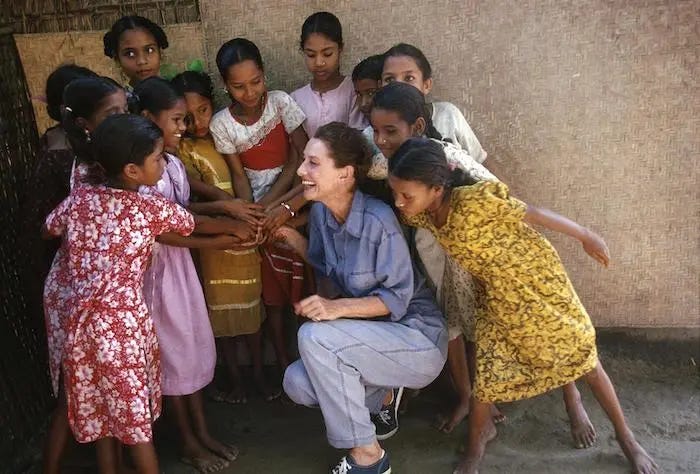
Audrey died in 1993. I was born in 1994. It makes me feel sort of sad that we had never shared any time on the earth. I still love her movies, and I look forward to introducing them to my daughter some day. I think a lot about what Audrey did, what she stood for, and mostly, the way that she valued both inward and outward beauty simultaneously. I have been considering my own relationship with beauty, and wondering what it would look like to cultivate that kind of beauty in my own life. Any time I am sad, the quickest way to lift my spirits is to watch the Audrey documentary. She is my medicine for the mean reds. Audrey is my Tiffany’s.
Comments
Nothing yet. Say the first thing.
Sign in to join the conversation.