
4-min read
Poor Lululemon! They announce a new CEO and the stock drops 13% almost instantly.
Why? Because the CEO came from Nike.
Nike and Lululemon both have the same problem — they’re having an identity crisis. They’ve lost touch with their customer, lost cultural relevance, and product innovation is flailing, so bringing in leadership from Nike has the market asking: how can the executive who helped create the identity crisis at Nike over the past 20 years fix the identity crisis at Lulu?
Lululemon’s market cap has fallen from $67 billion to $17 billion in just a few years. They’ve scaled into a huge global brand but they sacrificed their identity and cultural relevance on the altar of that scale, and are losing market share to more exciting competitors.
It is so hard to scale AND stay relevant and exciting to your customer. Alo meanwhile is trying to do exactly that as it apparently prepares for an IPO. Let’s look at Alo’s discernible brand strategy to see what we can learn.
If you saw the NFL draft, you probably saw #13 draft pick Ty Simpson stroll up to the podium in his custom-made Alo suit. There was also a stage full of Nike-sponsored athletes, but when they walked the red carpet — they weren’t wearing Nike. They were wearing other fashion brands. Nike athletes only wore their branded gear in those little B-roll player vignettes where they’re tossing a ball around.
What Nike’s sponsored positioning is broadcasting, whether deliberately or not, is: athleticism is a compartmentalized part of your life. You are a compartmentalized person. One side of you exercises, one side of you works at a desk, and one side of you gets dressed up to go out.
Has Nike ever even met someone from Gen Z much less tried to understand them?!
On the other hand, Alo is saying: I get you, Gen Z. You’re ambitious and dynamic. Your life is one integrated expression, and we fit into all of it.
That’s a fundamentally different approach.
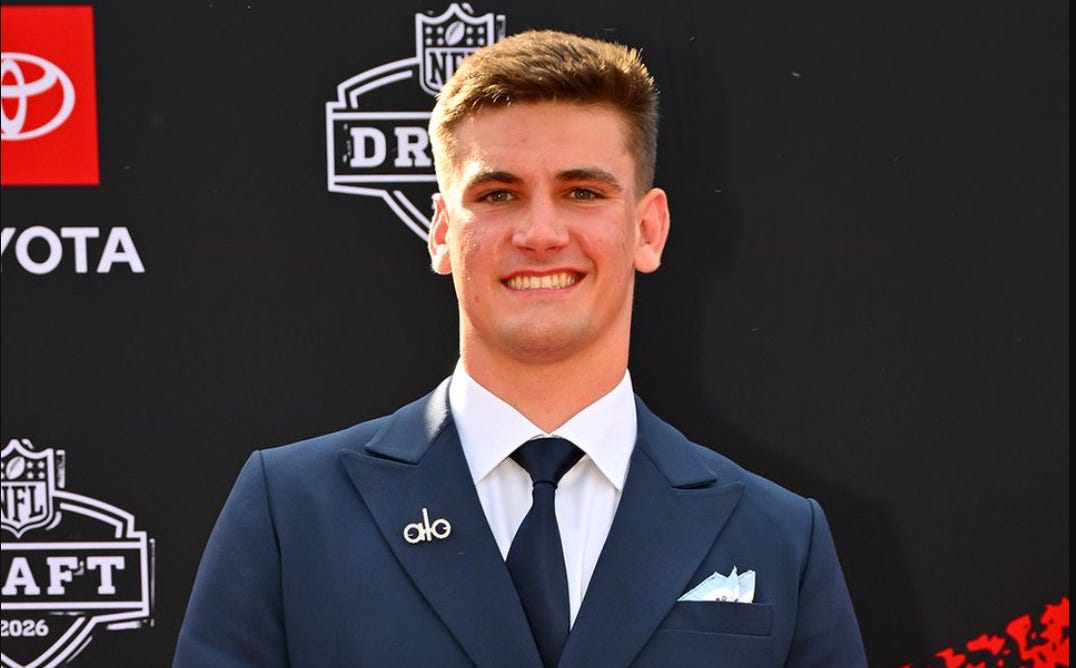
This is really where the gap is opening up. Alo has a very specific read on the modern customer — especially Gen Z. They get that Gen Z has watched young athletes and influencers like Kylie Jenner and Kendall Jenner show up in the world as one integrated brand. Wellness, self-care, their business, and their social lives are all part of one continuous narrative. You’re not one person at the gym, another at work, another going out. You’re curating a single identity across all of it.
Compare that to what Lululemon has become to Gen Z: a generic mall brand. As a function of both product and brand marketing — the identity the brand represents isn’t as culturally charged as it used to be, and at the end of the day, identity is what apparel brands are ultimately selling. When you see brands like Nike and Lulu losing their steam it’s often because the underlying identity they’re selling is out of touch with the zeitgeist.
Interestingly, Ty Simpson’s custom-made suit is one of many tactics that Alo is using to change their brand positioning and move upmarket. This move isn’t random — it’s a strategic effort to create distance from the rest of the athleisure pack and position themselves as different and better. The premium identity also presumably is part of their strategy to scale aggressively while staying cool and exciting to the customer.
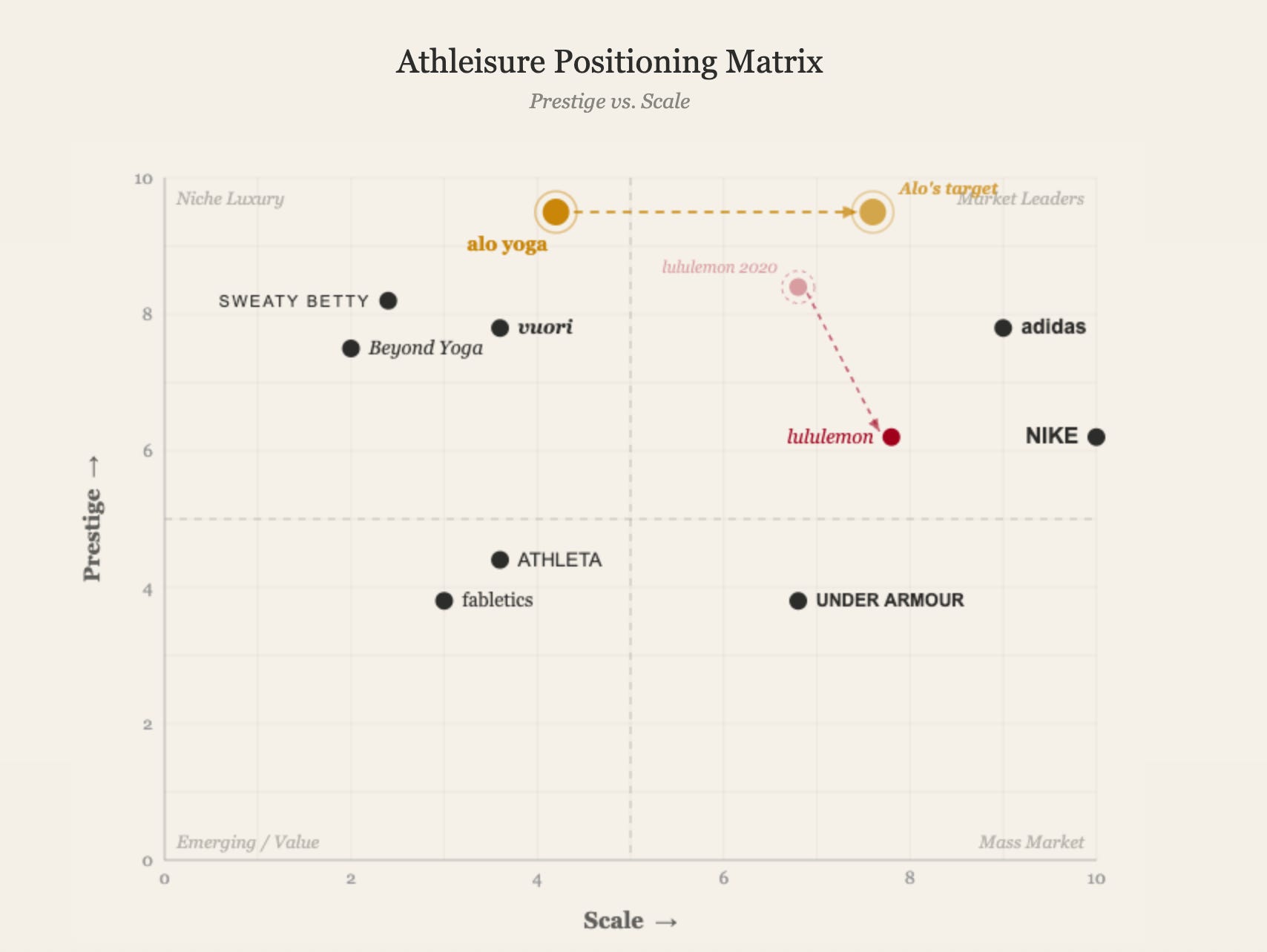
Below is a rough competitive positioning matrix for this market. This isn’t exact, but I think it roughly captures the market. Nike, of course, is the big dog with $46B in 2025 revenue, but Lulu has also gotten into a primary market position at $11B in 2025. It’s huge. So while they scaled and moved to the right, in the process they inadvertently moved down market, turned into a generic mall brand, and made themselves vulnerable to sexier new brands. This is exactly what Alo is both trying to exploit and to avoid. Marketshare in apparel can be so tenuous. Alo is trying to take it, and to have a built-in defensive moat at the same time, anchoring that defensive moat around premium/luxury identity positioning.
So for Heidi O’Neill, the new Lululemon CEO, the path forward I’m sure will start with better understanding the customer at a deep level — specifically Gen Z — and then redefining the brand identity from that understanding. New brand codes and new brand definition. She can’t start developing a single new product until she has refreshed the play-to-win brand positioning. Ultimately, she has to build an exciting and compelling answer to the question: Who do you become when you wear Lululemon?
I’m rooting for Heidi O’Neill as I’m sure we all are. She’s a veteran, she knows this space cold, she’s totally legit, and she’s a woman in a high-profile leadership role, so truly, may the wind be at her back.
And as a side note, I think it’s so cool that even just a few hours of watching the NFL draft on a Thursday night can give you insight into how companies are thinking about their customers and marketing strategy. Marketing is hiding everywhere in plain sight. This will be lots of fun to watch, and see what Lulu does next. Business is such a chess match.
As always, good luck out there!
Emily
Comments
Nothing yet. Say the first thing.
Sign in to join the conversation.