
3-min read
If you’re trying to build a following or sell a product on Instagram or Facebook, Meta has completely rebuilt how content gets served over the past year — and it’s drastically different. Here’s a quick guide to help you understand these changes so you can adjust your content strategy and reach your broadest audience in 2026.
1. Meta has unified its content serving approach across both organic and paid content. That means there’s really no difference between paid content and organic content in terms of Meta’s expectation that your content engages people. You don’t get a free pass on reaching people just because you’re willing to pay for that reach. Meta’s core goal is to keep users engaged and scrolling down their feed for as long as possible. Your ad content will win if it helps Meta deliver an addictively engaging experience to a wide variety of users within your target demo.
2. Meta has completely rebuilt — from scratch — its ad selection model. The new model is called Andromeda. Meta uses something called an “ad retrieval engine” to determine which ads it will deliver to which people. You need to understand how this works, or your content will be overlooked entirely.
3. Andromeda is built for speed, volume, and personalization. It processes tens of millions of ads every second and decides in an instant which ad is going to whom, or if they’re even going to serve that ad at all. Meta built Andromeda from the ground up using advancements in AI, so it can personalize ads to each user much more efficiently than the older retrieval engine.
4. Meta’s mantra to advertisers to succeed on this new algorithm has been simple and clear: CREATIVE DIVERSITY. They want advertisers to pull apart their creative concepts and:
do fewer concepts
in very different formats
that are targeted to distinctly different personas
vs.
doing tons of concepts that are only slightly different.
Have you noticed how utterly different Instagram has been this year vs. prior years? How it’s more like TikTok? TikTok’s engagement engine was a lot more effective than Instagram’s follower engine at keeping users addictively scrolling, so Meta shifted Instagram from a “follower” grid to an “attention economy” grid. You no longer just see content from people you follow. You see content from anyone on the platform that Meta’s algorithm thinks will keep you engaged and scrolling (based on your prior behavior). Meta thinks of this as a personalized content portfolio generated for you in real time on a second-by-second basis, based on your engagement patterns, and drawn from tens of millions of possible content pieces.
We’ve been tinkering with this at Chief Detective for a while, and we’re now putting our formal revised playbook into practice with our clients this quarter. Here are two strategies that have worked for us to help get you in the Creative Diversity mindset:
1. Study your feed. Part of the addiction formula of the new Instagram feed is the rapid-fire diversity of content that it serves up. It’s like a slot machine of formats. As you scroll, notice how different each piece of sequential content is that you are getting delivered.
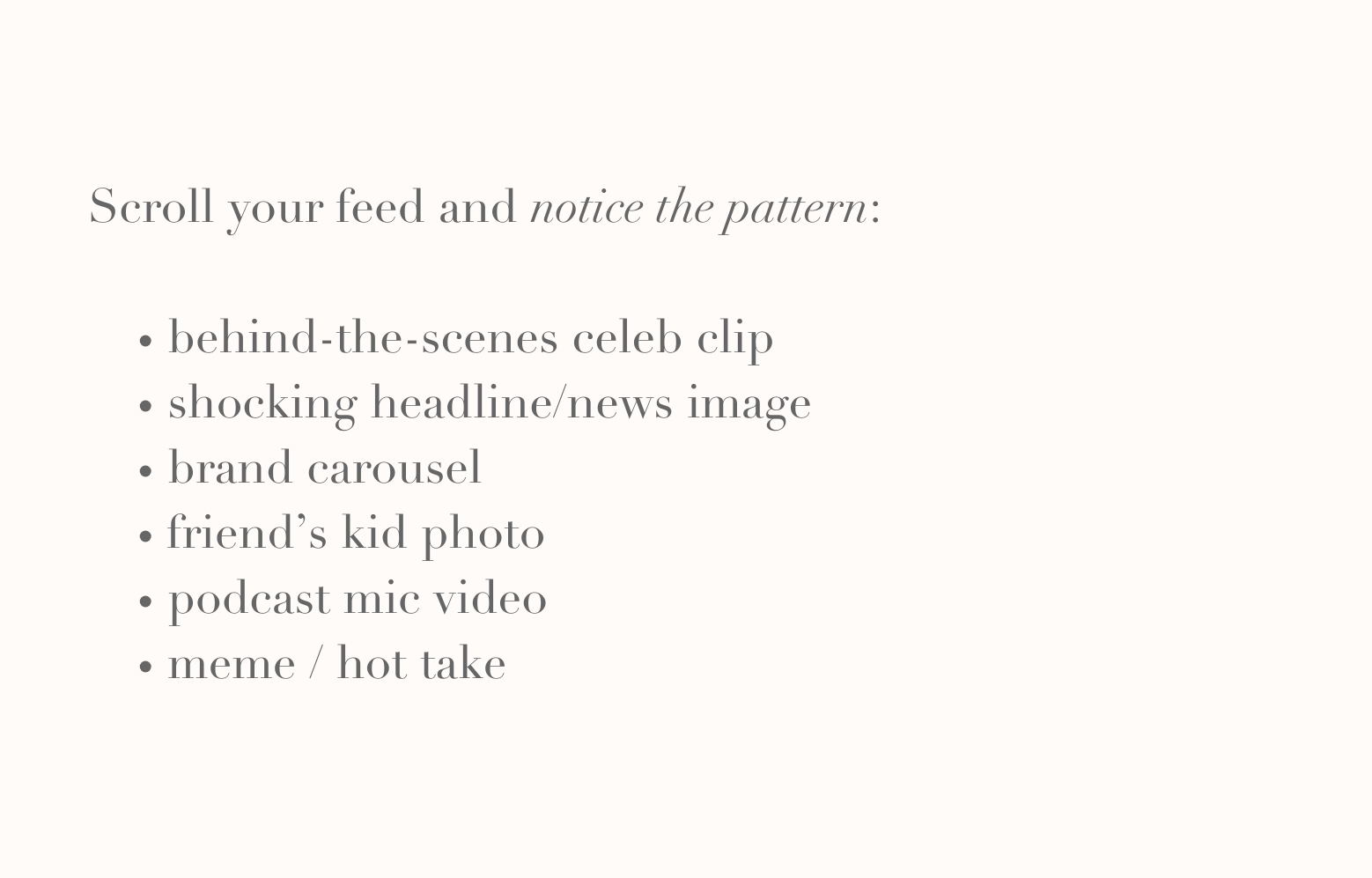
This diversity of content types delivered to you rapid-fire is a big part of what Andromeda is trying to deliver to every single user.
2. Imagine if you were the only creator on Instagram — the only person or brand injecting content into somebody’s personalized feed to create that rapid-fire diversity. How would you plan your content investments accordingly?
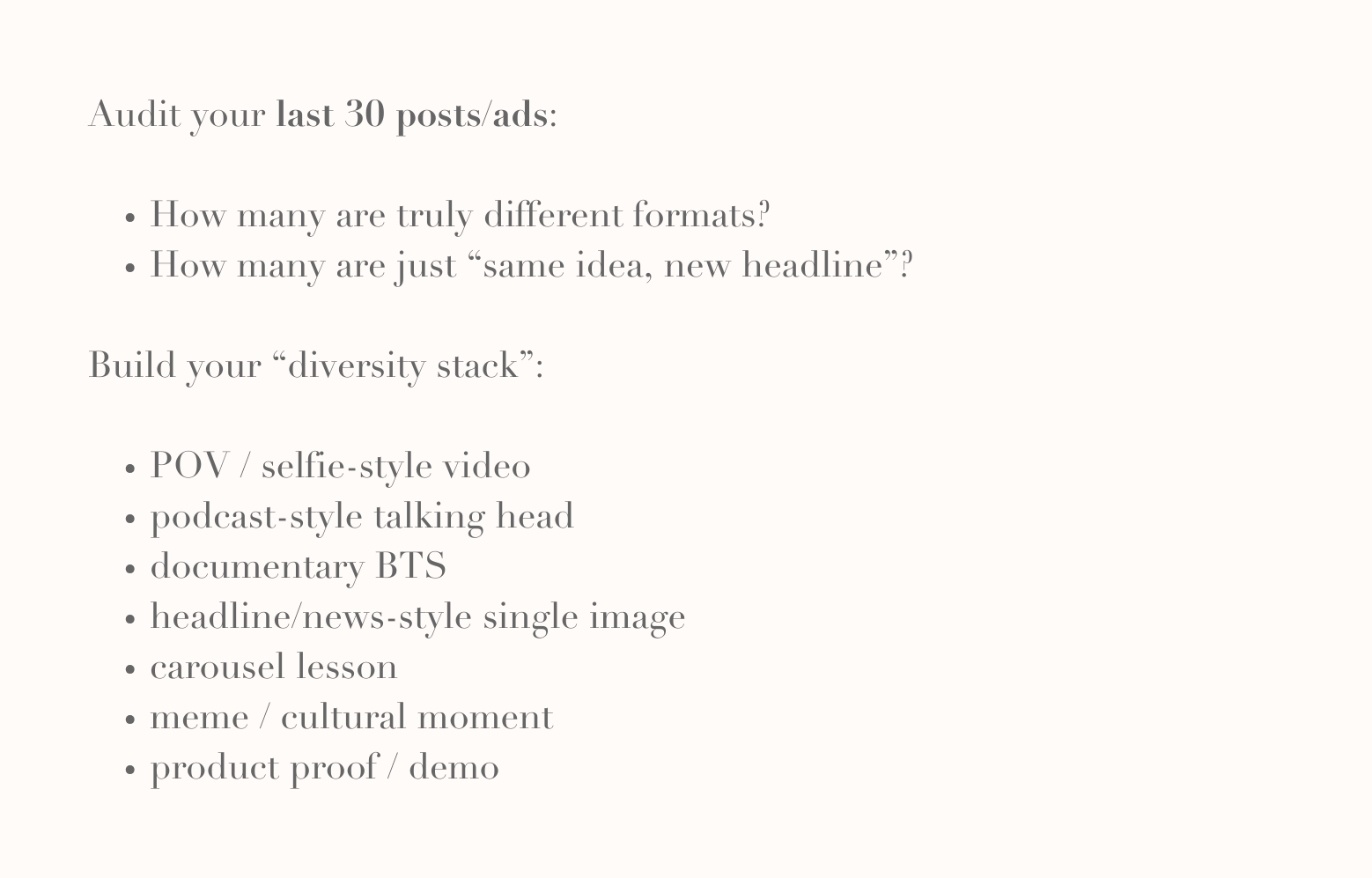
Now, of course there are limits to what one brand or one person can do! And from an advertiser’s perspective, there are additional considerations, such as thinking from a “persona” point of view, and something called GEM, which is Meta’s new ranking algorithm that I’ll cover in a more detailed white paper at some point here. But I think this is a good high-level starting point for thinking about your content strategies for 2026.
Lastly — if you’re in the apparel, beauty, or real estate industries — please refer to this video on YouTube where you can comment back to get diversified content portfolio concept examples for each of those industries. If you don’t see your industry and want to see examples, please comment on the post and I’ll add it to my list for the white paper when I get to it.
Hope this is helpful!
And as always, good luck out there!
Emily
Comments
Nothing yet. Say the first thing.
Sign in to join the conversation.