
Well, my summer of FOMO has begun: the other day I watched (via Instagram) as 50 women set off to bikepack from Munich, to the Grand Départ of Tour de France Femmes avec Zwift in Lausanne.1 I was actually invited in the end, but not far enough in advance for me to change my existing plans, so instead I’m watching from afar – and I have now started looking at how I can get to Ventoux by train, so it’s possible that I will see them there next week. (And I’d better, because I’ll regret it if I don’t.)
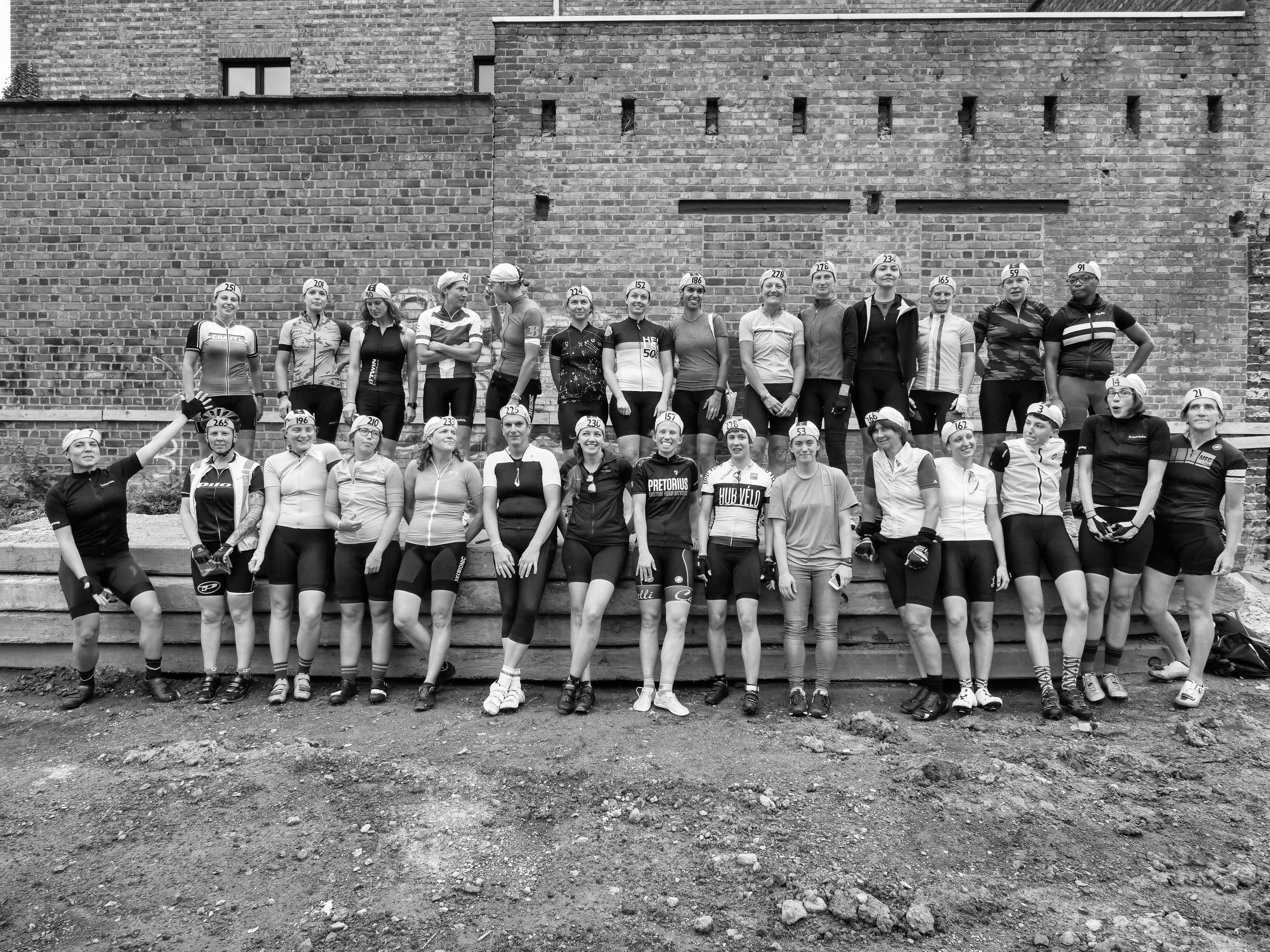
I’m not actually as jealous of the Grlpck Rally as I feared I might be. Yes, I do sort of wish I was there, but I’m also well aware of the difficulties of cycling long days through the Alps at this time of year, and to be honest would be more interested in doing it in September than July, once the weather’s cooled down a bit. And much as I love riding with other people, I know that my social battery would be almost flat by the end of the week, and that wouldn’t be a great state in which to join the festivities around Mont Ventoux.
So mainly I’m just enjoying the optics of a large group of well-equipped women riding their bikes a long way together. Because this sight still feels new and novel to me, even though such things have been going on for quite a few years now.
My reaction to this decade’s boom in women’s cycling is similar to how I feel when I see supermarkets covering themselves in rainbow bunting every time Pride Month comes around. It’s actually been going on for quite a while now, and for most people it’s the normal state of things, not a big deal at all. But for me – and probably a few others – who lived for a long time in a world that was different, it will always feel like a shock to the system, albeit a pleasant one.
When I was cycling round the world between 2011 and 2013, I crossed paths with a lot of other touring cyclists – solo men, pairs of men, one Swedish trio, and plenty of male-female couples, who tended to have the best record for staying together, I guessed because they were already intimately familiar with each other’s annoying habits. But I never once met a woman on her own, although several of us eventually found each other online.
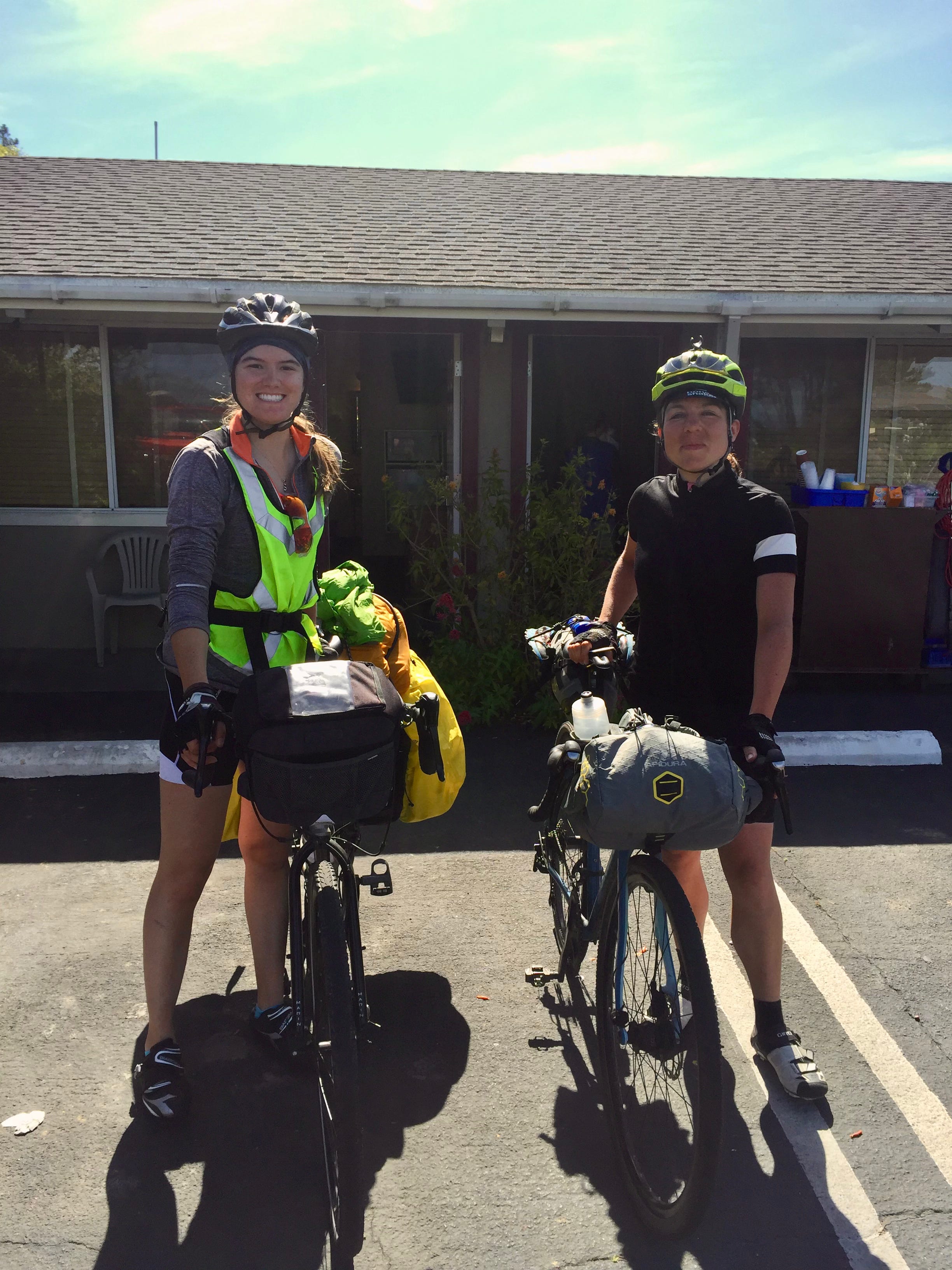
The first time I met another solo woman in real life was in 2016, on the Pacific Coast Highway. She was a young Canadian, called Paule, and she had started off her trip with a male companion, I think mainly to mollify the fears of her parents. But he had been so unpleasant to her that she’d eventually decided to continue without him (she didn’t go into much detail about this unpleasantness, but what she did tell me confirmed my belief that we are often safer on our own), and her worried parents were instead giving her money to ensure she stayed in hotels. We were delighted to meet each other, and I stopped earlier than planned, so that we could get to know each other over a pizza, and then share the last motel room in town.
That was a decade ago, and shortly after that the number of women I ran into on the road (and on the trails) began to accelerate. The following year there were 30 women on the start line of the Transcontinental (and I believe around 50 had originally signed up), a fact I take some credit for, though I really do think that most of them had been ready for this for ages, and all I did was nudge them over the brink, much as happened to me in 2014, when three ultra-racing veterans persuaded me that I should sign up for the Transcontinental, despite my protests.
I was never actually the only woman doing my sort of cycling, even though it often felt like it. Right from the beginning, I was helped on my way by mentors and role models, and also the odd hero, like Anne Mustoe and Dervla Murphy. Just over ten years ago, I started to meet some of them in person. When Juliana Buhring and I first encountered each other, on a rainy October night in a bar in King’s Cross, we both remember saying
“You’re my hero.”
“No, you’re my hero!”
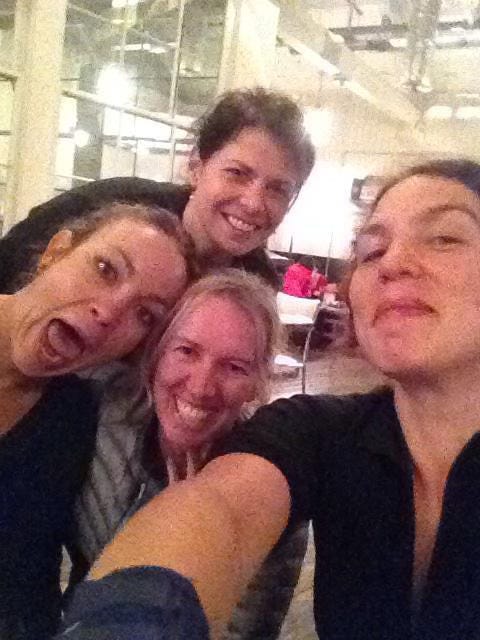
The following summer she and I rode from London to Edinburgh together over two days, and our jaunt had all the energy of a childhood sleepover rolled into a tipsy girls’ weekend. We gossiped and giggled, and raced each other and teased each other, and shared snacks and exchanged stories and developed in-jokes that persist to this day.
I remember enthusing afterwards that I had never before met a woman who wanted to ride in the same way I did. It’s not that I hadn’t enjoyed riding on my own, or riding with the occasional men who crossed my path. But with another woman I felt I could be myself in a way I hadn’t until now.
The men I had ridden with – even the very nice ones – tended either to patronise or revere me. Some managed to do both, when they praised me effusively for achieving something that they themselves had managed easily. Over the years I’ve moved from finding this behaviour irritating, to accepting that it probably speaks of men’s deep (and mostly unexamined) insecurities, but still not wanting to deal with too much of it. And all of this baggage was delightfully absent when I rode with other women. I felt safe to express my occasional moments of weakness, knowing that I wouldn’t instantly be dismissed as incapable. And nor did I need to hold back on the hills, for fear of troubling the other person’s ego.
That transformative ride with Juliana was the first of many. A couple of days later, after we had both given our talks at the Edinburgh Festival of Cycling, I met a woman called Jenny Graham, who at that point was still licking her wounds after failing to complete the Highland Trail 550 the previous month. No one, least of all herself, had any idea that she’d go on to break Juliana’s round-the-world record, becoming one of her generation’s most famous ultra-cyclists as a result. Two years later, at the start of the Transcontinental, I met the great Anisa Aubin. Both of these women, along with many others, have become beacons of familiarity for me. Whenever we cross paths – usually on a start line, or partway through a long ride – they remind me that I’m not the only weirdo who likes to do things like this, who is both fiercely strong and at times embarrassingly feeble, who enjoys pavement picnics and long conversations about saddlesore, who is up for riding 400km at a moment’s notice, whose mood will swing in all possible directions during the course of a multi-day ride, and who is nevertheless entirely capable of looking after herself, no matter how bad things seem to get.
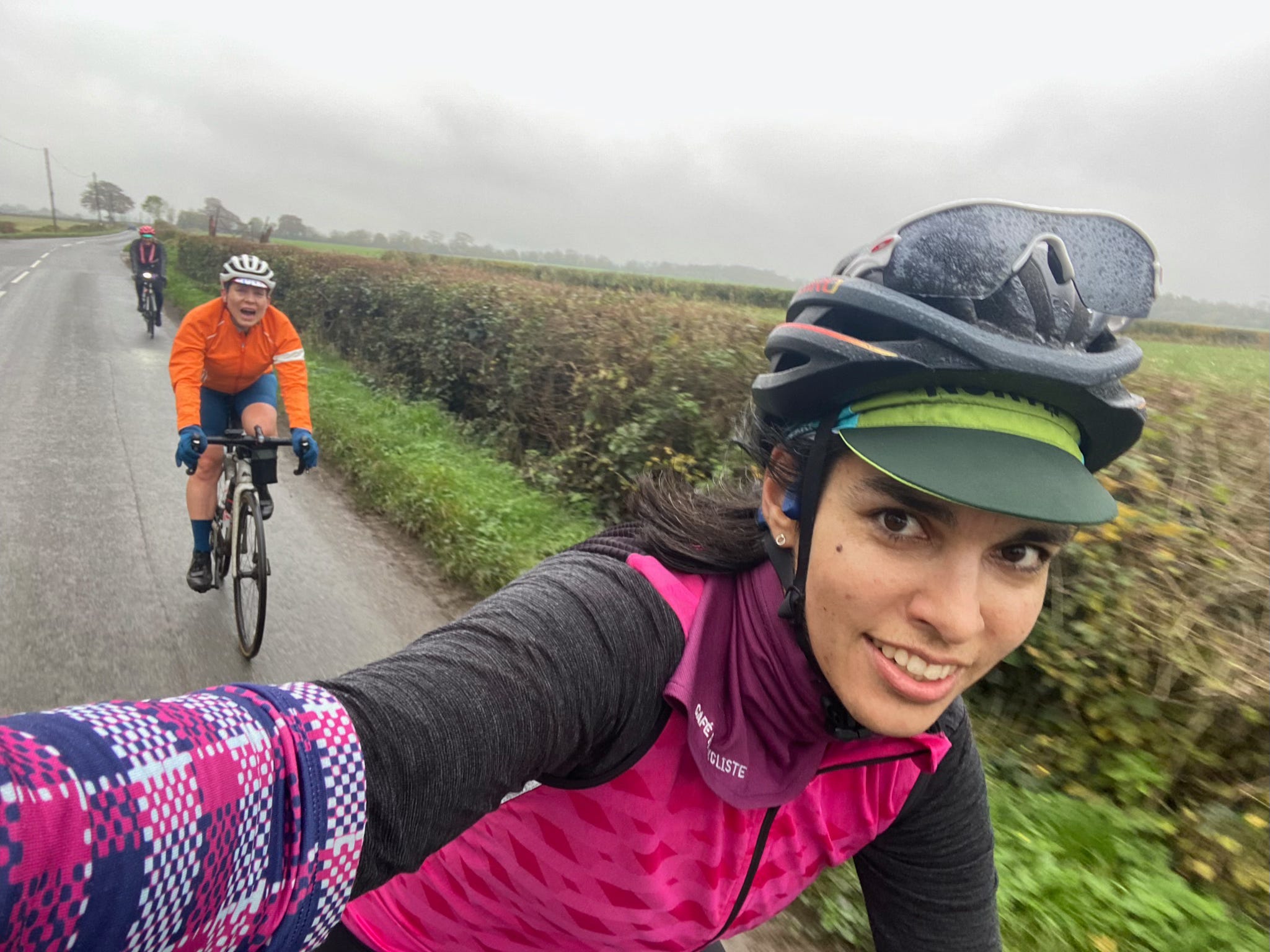
I realised quite early on that one of the reasons I felt so comfortable riding with people like Juliana, Jenny and Anisa was the understanding that, no matter how awful a time one or other of us might be having at certain points of the ride, there was never any doubt that we’d keep going, or implication that we resented the other for bringing us here. We had all signed up for whatever adventure we were on in the full knowledge of how hard it would be, and although were always available to help each other if needed, in most cases the clouds would eventually pass, and half an hour later we’d be hooting with laughter again.
It’s only in the last five years or so that I’ve begun to see larger groups of women riding together – as with the Grlpck Rally, which is currently making its way through the Alps, towards the start of the Tour. Groups and events like this were almost unheard-of before the COVID lockdowns. Then, all of a sudden in 2020 and 2021, every town and city in the UK seemed to have a nascent women-led cycling community. In many cases the people who set it up were fairly new to cycling themselves, but that didn’t stop them, and now a lot of the most impressive women in cycling (mechanics, community leaders, race winners) come from that cohort.
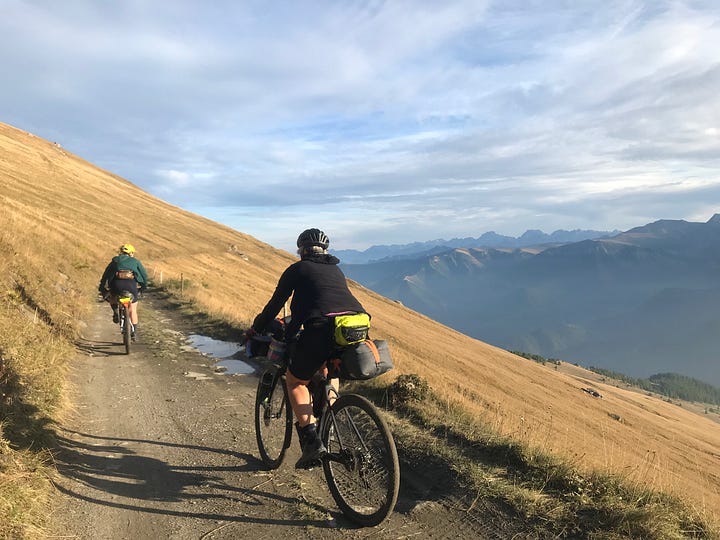
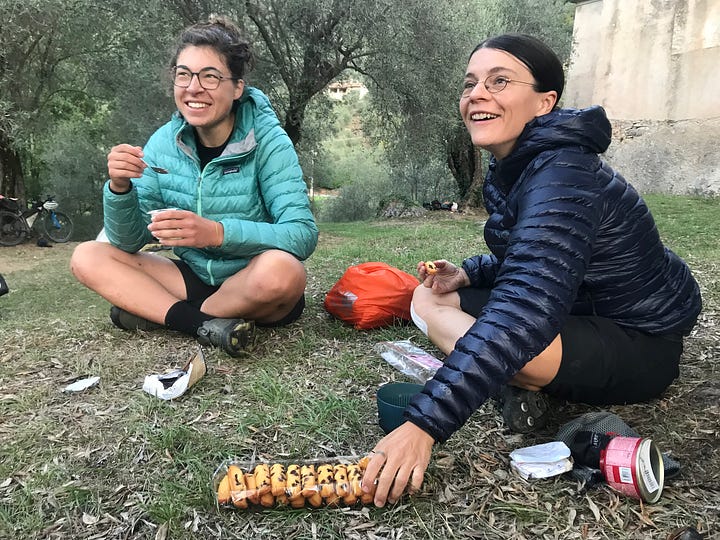

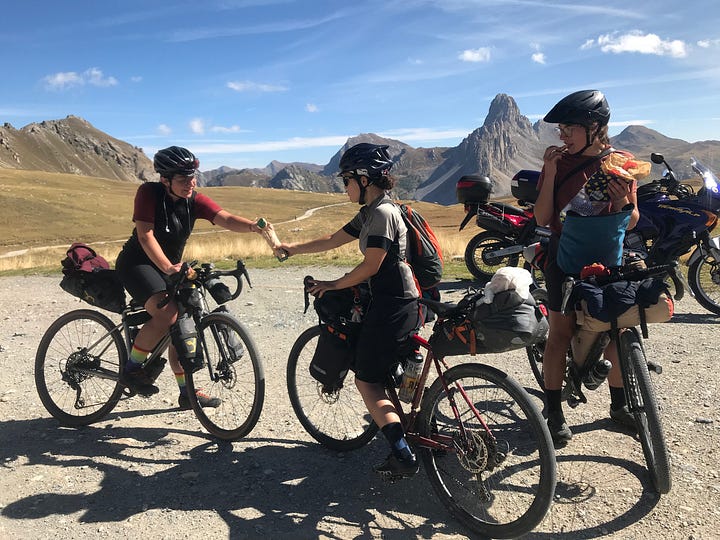
I am fascinated by how this might have happened, and it wouldn’t take much persuasion for me to embark on a tour of the UK’s grassroots cycling scene, to ask all the founders and members of these groups what it was that caused so many of them to come together in 2020.
Yes, of course there’s the fact that quieter roads emboldened more women to go out on their bikes, and that having more spare time during furlough will have played a part for some, along with people’s aversion to using public transport during a pandemic. But what was going on directly before this, that meant so many women were ready to take up cycling, or to do more of it, when the nudge finally came? And what was it that had stopped them from getting into it sooner? I suspect that, as with the TCR start line in 2017, the seeds were sown a long time before the first shoots started to appear, though I wouldn’t like to guess what those seeds might have been.
Anyway, while I puzzle it out, I’m happy that we all get to see all these women, out riding adventurously, and pleased by how much easier this will make it for others, who might, at some point, want to get into cycling, and will find it so much easier now that there is this abundance of pathways and role models.2
These groups show that you don’t need to be exceptional – which I worry is what people think when they see pictures of a lone women, toiling bravely through the wilderness, or holding her own in a group of men. And nor do you need to have a particular look or style. When I look at pictures from events like the Grlpck Rally, or the IRIS Weekender, or the various events and trips offered by Sisters In The Wild, I see a great diversity of age, style, background and body type. And perhaps most importantly, everyone looks like they’re having a great time. There is none of the ‘glorious suffering’ narrative here – even though these women are often undertaking rides that challenge them. The post-COVID generation of cyclists have successfully rewritten the script, in a way that I think others of us had hitherto failed to do, and created something that more and more women (myself included) want to be part of.
Indeed, there is even a mentorship scheme in Bristol called ‘Roll Models’. I must also mention the School of Rocks (read this interview with found El Jaskowska), which I think may be dormant now, but really does encapsulate all that is excellent about this new era of women-led cycling.
Comments
Nothing yet. Say the first thing.
Sign in to join the conversation.