
Over the last six or so weeks, we’ve been exploring the development of the novel in France, using my qualifying exam list as our guide.
We’ve looked at texts ranging from the Marquis de Sade’s Justine to Proust’s Swann’s Way (and we’ll be incorporating The Plague by Camus into this post). But, what’s missing? How can you study the development of a genre or form while missing out on some major works?
That’s where my Reading Recap series posts come in. In these posts, I aim to not only synthesize all the learning for each section into one fluid syllabus or research tool, but to bring up some questions, ideas, and further readings we can consider.
Here’s how Reading Recaps work:
For free subscribers:
You receive about half of the content: History of the development of the novel, explorations of major themes, and timelines
For paid subscribers:
You receive all of the above, plus: a read-only (you may duplicate it and add edits as you wish, but please do not re-use or re-post without crediting me or asking permission) copy of my syllabus, secondary sources, notes, and questions for further study. This includes visuals and longer digressions than I can’t include here otherwise it’d be way too long.
If you are an educator, student, or you just want to build your own syllabus for self-study, this is where the additional materials for paid subs come in handy.
Okay, I hate having to “sell something” every time I post here, so now that the awkward introduction is over, let’s get into it.
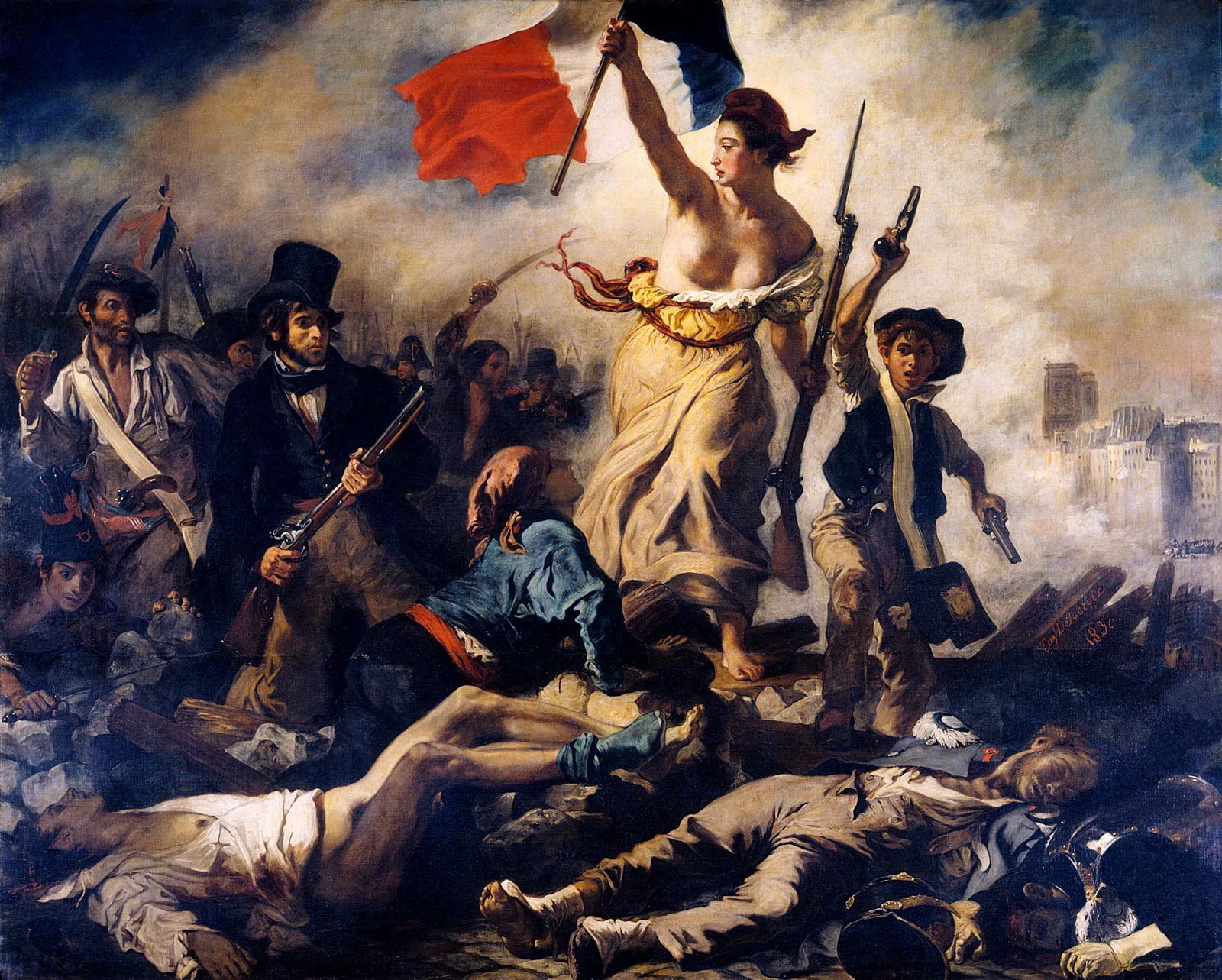
We can, theoretically, argue that the novel begins in France in the Middle Ages. One of my areas of study is medievalism, so I have spent quite a bit of time looking at the Romances of the Middle Ages: The Song of Roland, Chretien de Troyes’ Arthurian romances, and Marie de France’s Lanval and Chevrefoil.
Romances, while pre-cursors to the novel, are a bit different: they can be in either verse or prose, and traditionally will deal with an almost exclusive laundry-list of themes such as chivalric deeds, heroism, Arthurian myth, etc. They differ from the epic in their content: usually in terms of character, love, and wish-fulfillment.
So, with the epic and romance in mind, we can tie-in a few threads as to what makes a novel? I’ve already discussed this in my English class series, but as we are looking at the French novel, we might want to consider a few additional ideas.
There were authors beginning to write novels as early as the 17th century: Rabelais, D’Urfe, and Moliere come to mind, but as there were no real “theories” or “categorizations” of the novel until the late 17th-century at the earliest, these texts largely relied upon inherited traditions of comedy, tragedy, epic, and romance to form their structures.
So, why begin with the 18th century? Simply put, if we are to look at the novel as a form, it is not until 1713, with The Illustrious French Lovers, that this form really begins to take shape.
Let’s consider what we think of as the defining, basic features of a novel:
A story told in prose, rather than verse
A story with a basic plot
A reflection of the everyday lives of people. That does not mean that novels cannot be fantastical or reflect the speculative or unrealistic, but it simply means that characters are no longer so easily “typed” as heroes, villains, knights, maidens, etc. Simply put, they are dimensional.
We begin to see these things more clearly develop as the 17th century moves forward, in books like Manon Lescaut, Dangerous Liaisons, and Justine.
All of these novels have a central focus on the social realities affecting their characters, on the psychologies behind character decision-making, and the relationship between people and society.
The books I chose to focus on are books that explore these things in great detail. So, while we could begin our study of the novel in France with Manon Lescaut or The Illustrious French Lovers, I instead chose to start our study with Justine (1791) by the Marquis de Sade. Saucy.
Why? If there are so many pre-cursors, why?
The answer, I think, lies in how the libertine novel, in particular, Justine, approaches the relationship between morality and social life.
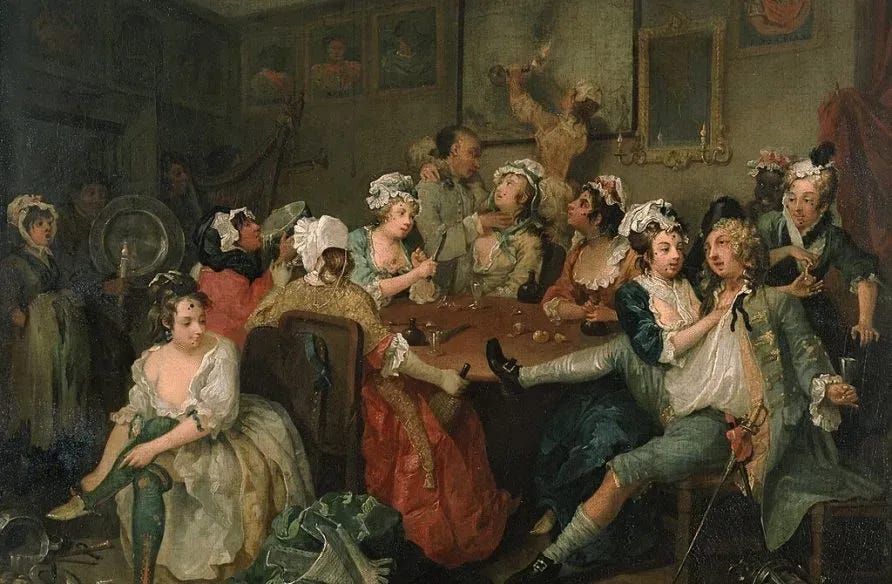
The libertine novel, which Justine is, takes its root in satire. Traditional satire takes aim at a political or social problem and excoriates against it, but Justine is doing something a bit different. In The Cambridge History of the Novel in French, Marine Ganofsky writes, “By challenging traditions and laws, these novels echo the eighteenth century’s yearning for liberty and happiness; they illustrate the period’s revaluation of society’s rules and reflect its growing intellectual emancipation from the fears and prejudices of the past” (ch. 12).1
She goes on to say that, “Through their authors’ representation of erotic desire, traditional moral landmarks and religious idols such as God, piety, chastity, marriage or love, are all unmasked as inadequate to support individuals in their quest for happiness. Libertine fiction records like no other art form the moment when France and Europe were undergoing a transition from the early modern to the modern, the moment when Christian gods died only to be replaced by new ones: liberty and pleasure; the time when ‘Public Man’ fell, pushed into oblivion by the rise of new concepts such as privacy and intimacy.”
Given that until the late 18th-century, novels were largely concerned with not only exploring character and society, but the moral frameworks of those things, to me starting with a novel like Justine allows me to take into consideration a multitude of ideas: how do people read and react to social norms? How do novels allow readers to experience pleasure as well as social critiques? More interestingly, how do novels reflect the shifting values of society?
So, now, we have some additional points to add to our history of the French novel:
Desire for liberty
Critique or condemnation of social laws and traditions
Representation of psychology as something that is impacted by social life
So let’s call the French novel, in particular, a representation of the struggles between man and society.
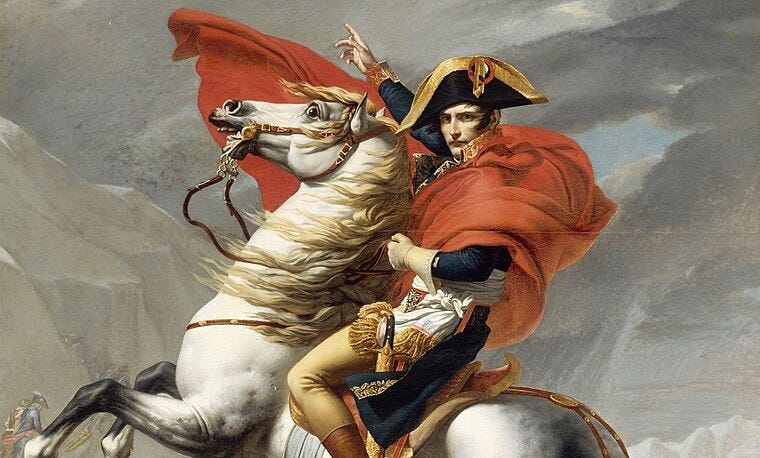
Between Sade and our second book, The Red and the Black, comes the French Revolution and Napoleon’s reign. What happens to the relationship between man and society between these texts?
It’s important to note that during the heat of the Revolution and Reign of Terror, due to political propaganda, paper shortages, and a general fear among the social world, that the publication of novels fell to almost zero between 1793 and 94 (Cambridge History).
You also see a rise in the translation of foreign texts to French in this period, especially the English Gothic and the works of the “English Jacobins” like William Godwin. It is not really until Napoleon that novelists begin innovating.
But the remnants of revolutionary attitudes remain: novelists, rather than address sweeping social problems, move inward. The roman intime becomes the move the first decade or so of the 19th century. Novelists such as Chateaubriand and Constant move toward expressing the tumult not of public life, but of private decision-making.
After the fall of Napoleon, novels turn toward the historic. Following in the tradition of Walter Scott, who is thought to be the first historical novelist, writers now look at the events of the last 40 years to write.
In our Cambridge companion, Patrick O’Donovan writes, “This generation, the children of the Empire and grandchildren of the Revolution, faces its own grave crisis of belief. Even if the religious and temporal powers of old have been restored, they can no longer command the assent of those for whom a future proportionate to the visions inherited from the decades of upheaval and war has yet to materialise” (ch. 15).
This is where we eventually reach Stendhal, with his novel The Red and the Black, and the early inklings of realism.
Maria Scott tells us, “These founding novelists of French realism expressly set out to produce a quasi-historical record of contemporary reality. However, what complicates this project is that as well as attempting to produce a history of the present, French realism gives thematic and structural prominence to the historical qualities of the present, understood as its proneness to change, its mutability. In both of these ways of understanding present reality (as already history or as subject to change), the realist novel can be understood to bear witness to what Michel Foucault called the epistemic shift towards modernity that took place in Western culture at the end of the eighteenth century and beginning of the nineteenth. At this juncture, according to Foucault, ‘a profound historicity entered into the heart of things’” (ch. 17).
The Red and the Black, The Count of Monte Cristo, and Lost Illusions all incorporate this historicity into their plots. Post-revolutionary hindsight and the development of widespread literacy, industrialization, and social change all come to the fore in some way, shape, or form.
So far the novel has gone through a number of iterations:
It has been satire, romance, chivalric tale, libertine manifesto, and personal reflection. It has also become aware of its point in the historical timeline and begins to grapple with the larger questions of what it means to exist within the social world.
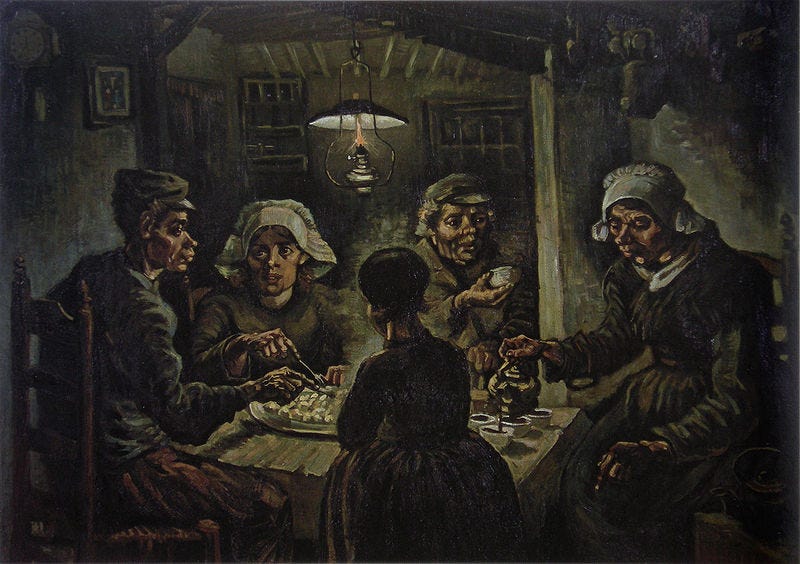
French Realism hits its peak during the mid to late 19th-century. At this point, being a novelist by trade is a career that many people are taking part in. Including some authors I didn’t have the space to add onto my list, like Victor Hugo, George Sand, or Colette. But, as with all literary periods, art begets new, inventive art. With that we reach naturalism.
Whereas Realism, with its morally grey but oftentimes unrealistic characters, depicts a more idealized form of life, naturalism tends toward no-holds-barred depictions of the social world. Novels like Germinal (1885) by Zola can be included in this. The book was so difficult for me to get through because of its depictions of how brutal life was in the coal mines of France in the late 19th-century. Realism sees characters depicted as complex, dimensional, and with relative control over their own fates, despite the world around them being unpredictable and realistic, but naturalism emphasizes the opposite: the character is a product of their environment. They live, they work, they have sex, they raise their children in the mines, they die. They drink, they organize against corruption, but eventually are defeated and must return to work. Naturalist texts lean so heavily upon exposing the deterministic factors of human life that they strip their characters of agency. Because, after all, do those whose lives are marked by poverty and suffering tend to have happily-ever-afters? Not really.
This is where the novel turns an even more critical eye upon the social and environmental factors that influence characters. From that, we get to Decadence, which, if you’ll recall, means decay.
In the decadent text, such as Against Nature (1884) presents artificiality as the final stage of the realist-naturalist projects: the accumulation of the “stuff” of everyday life has now become an excess of “stuff” and there is no everyday life. There is only the retreat from the social world in which we all inhabit and cannot escape from. At the end of Against Nature, Des Esseintes must return back into society and cannot stand it, but he also recognizes that the social world is crucial to existence: we cannot live outside of a world that is so dependent upon the labor, technologies, and lives of others.
The world has become intertwined in ways that were thought impossible a century prior. So, with that in mind, we now leave the 19th-century behind and consider what comes next.
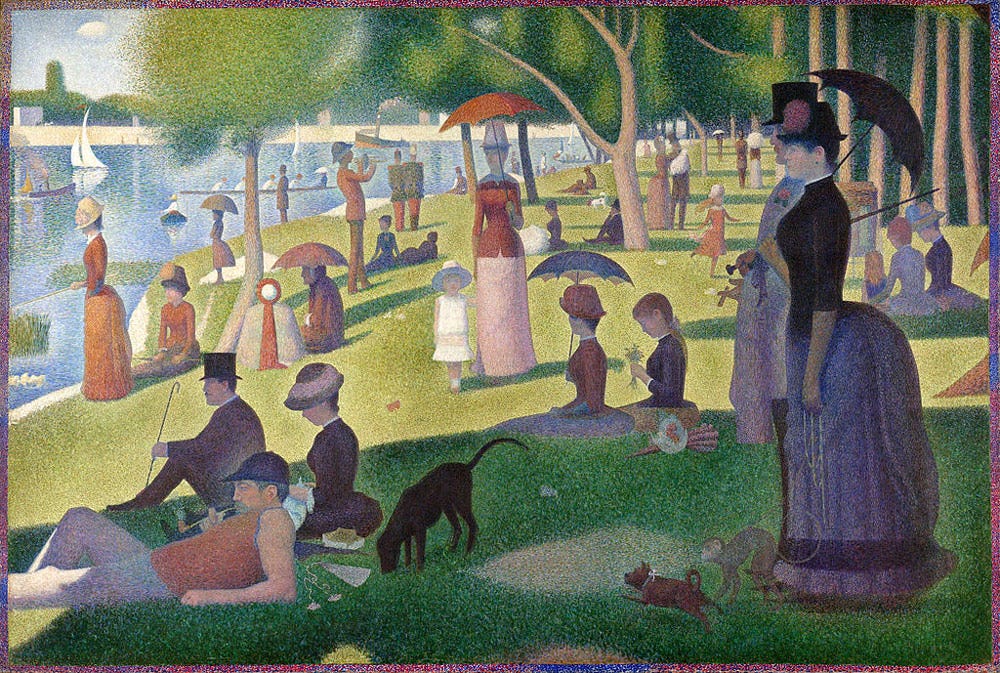
The 19th-century in France does not end in the same way that the 19th-century ends in England, with the death of the monarch. Rather, the 19th-century ends with the outbreak of WWI, which, given that decadence tends to strip bare the corrupting nature of the world, allows us to understand how modernism winds up taking root in France.
By the time we get to Proust in 1913, WWI is already on the horizon. Though Swann’s Way is published before the war, we can already see a shift toward the inter- and post-war manner of thinking that paves the way for the absurdism of Camus in the 1940s.
Proust turns the social world inward; this is the internal experience of social life, with an emphasis on the personal and on recollection. We see this in the focalization of the text and the first-person narrative. Instead of turning Swann’s relationship with Odette into a social scandal, Proust instead explores the psychology of social interactions. We can thank Freud for that. Memories and dreams serve as means by which to explore the experience of social exclusion and punishment, fundamentally showing us that the greatest punishments are those we bring upon ourselves.
Narrative, too, shifts: it is not fixed or linear, but rather constellatory—moving through the psychology of the narrator in the way one would move around one’s own mind.
That allows us then to understand how a novel like Camus’ The Plague (1947) can come into existence: with realism, naturalism, psychology, and recollection as means by which the narrative motor runs, Camus can craft a form of story that simultaneously reflects the experience of living under wartime rule, but also gets at the core of what it means to live in a social world entirely cut off from others.
The Plague is the last text on my French list because it is by far (in my opinion) one of the best works that synthesizes the innovations that came before it.
If we consider the French novel as a means by which we can view our social world through the variegated lenses of history, industry, love, memory, and psychology, then the absurd world of Camus’ The Plague lets us see what happens when all of those things come together: what happens when industry fails us? When the social world we have now come to depend upon entirely is frozen and forced into quarantine-martial-law? How do we depend upon each other or vilify each other?
With all of this in mind, we might want to make ourselves a little timeline of how the novel develops in France.
12th-15th Centuries:
Precursors to the Novel: Epic, Romance, Song
16th-17th Centuries:
Uncategorized, non-theorized prose works: Rabelais, D’Urfe, and Moliere
Romance, parody, comedy, tragedy
18th Century:
Theorization of the novel
Rising revolutionary sentiment
Libertinism: Sade
Revolution
19th Century:
Revolution, Reign of Terror, Napoleon
Restoration
Roman intime: Chateaubriand
Realism, historicity, and socialization: Stendhal, Balzac, Flaubert
High realism, naturalism, decadence: Zola, Huysmans
20th Century
Decadence, modernization, industrialization
Modernism: Proust
WWI: Proust
WWII
Absurdism, Existentialism: Camus
Let’s now turn to the individual works we’ve looked at—as well as some added texts—and build ourselves a syllabus.
Comments
Nothing yet. Say the first thing.
Sign in to join the conversation.