
You look great today. Don’t forget to tap on the “heart” button before you stop scrolling here, OK? Your likes (and comments) are a great form of support. Also! While we’re tapping! If you’re not yet subscribed to Hurdle’s new YouTube channel, click below and get to it.
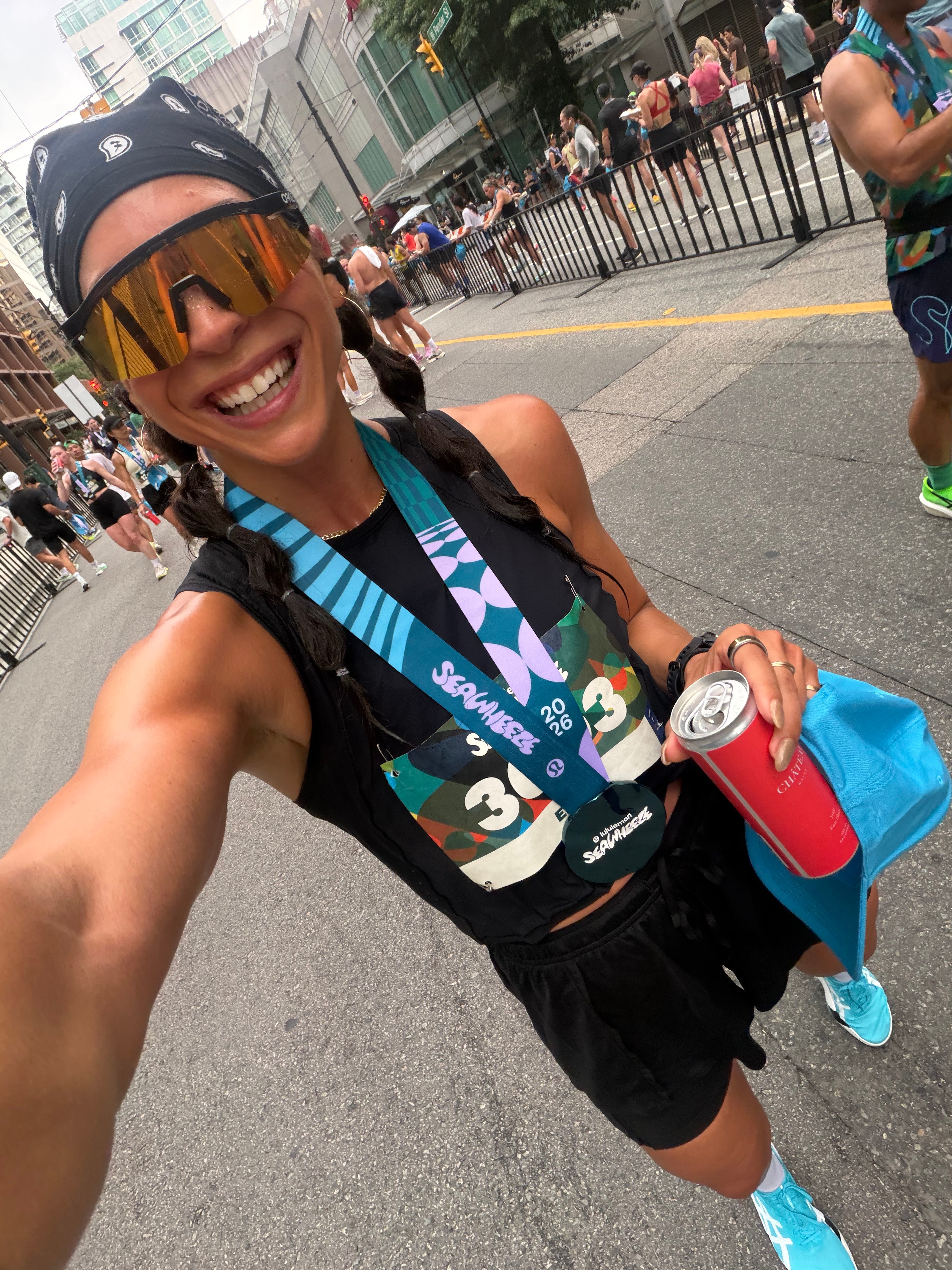
Welcome back to Part II! Part I was all about laying the foundation: getting your gear dialed, establishing a weekly training situation, and locking in your “why.” Which is why this week, we’re diving deep into the nitty gritty.
Consider this your blueprint for everything you need to know once the training cycle really kicks off. At this point, the initial high of signing up’s wearing off, the long runs cross into double digits (and require legit logistics-izing), and fatigue’s stacking up. But make no mistake: this is the good stuff. This is where magic happens.
Whether you’re in the thick of a heavy training build, gearing up for a fall race, or simply want to learn a bit more about what gearing up for 26.2 really looks like—here’s the playbook for executing the road to race day with intention, authority, and resiliency.
Sure, some folks under or overtrain. But I’d say that the biggest mistake most people make is actually making mid-run nutrition an afterthought. Some skip it altogether, and others don’t even think about fueling until the days leading up to the big dance. This may sound weird, but your gut’s a trainable organ, just like your legs. It requires reps and practice.
Train Your Gut Early: Don’t wait for 14-mile runs to start taking gels (or gummies or Rice Krispies Treats or Nerds Clusters or insert go-to fuel, here). Begin practicing fueling on any run lasting longer than 75 minutes. I typically aim for 30 to 40 grams of carbohydrates per hour early in your block, and progressively work your way toward 60+ grams per hour as volume peaks. Just like other aspects of your training, it’s super helpful to talk about your strategy and go-to picks with a nutritionist or other expert one-on-one.
Fuel on a Schedule, Not by Feeling: Take your calories on a strict timer—every 30 to 45 minutes—regardless of whether you feel hungry or low on energy. I typically aim for every four miles. Once you actually feel bonked or depleted, you’re too late. Your blood sugar’s already crashed, and you’re playing a losing game of catch-up.
The Hydration Strategy: Electrolytes aren’t just for hot days or post-workout recovery; they maintain blood volume and muscular function. Pre-hydrate starting at least 24 hours before your longest runs with elevated sodium options, and carry hydration on your long runs rather than relying solely on public water fountains. I’m an LMNT girl (this link gives you a free sample pack with purchase).
Around weeks eight through 12, cumulative fatigue sets in. Your legs will feel heavy on easy days, your alarm clock will feel a little heavier too. This is around the time that my pace goals usually feel tougher to hit. This isn’t a sign that you’re losing fitness—it’s a sign that the training stimulus is doing its job.
Keep Easy Days Unapologetically Easy: The purpose of an easy run is aerobic volume. And! Recovery. What it’s not for: proving speed. If you can’t speak in full, fluid sentences, you’re running too fast. Slower easy runs allow you to hit your high-intensity speed sessions as they’re intended.
Zoom Out on “Bad” Runs: High heat, poor sleep, life stress, or where you’re at in your cycle can destroy a single workout. One off-day does not erase weeks of solid training. Evaluate your progress in three-week blocks rather than micro-analyzing a bad sesh.
Protect the Unseen Hours: You don’t adapt to training during the run itself; you adapt during rest. Prioritize sleep hygiene—like keeping a tech-free wind-down window before bed—and stay consistent with recovery tools like compression boots, bodywork, or 10 dedicated minutes of mobility.
Your 18- to 20-mile long runs aren’t just hard. Or long. Or physical endurance tests. They’re full rehearsals for race morning. Whatever you do, treat them with the exact same respect and structure you will bring to the starting line. This means:
Execute the Full Rehearsal: Wear the exact race kit (or, whatever you can that’s closest to it)—down to the socks, sports bra, shorts, and anti-chafe. Eat the exact same pre-run breakfast at the exact time (aim for no less than 90 minutes before running). This will help you test digestion under pressure, and give you time to use the bathroom.
Build Mental Scaffolding: When miles 15 through 18 get heavy, your brain will naturally try to process the entire remaining distance at once. So! Break the run down into micro-goals. Chunk the distance into 3-mile segments. Focus on getting to the next fueling window. Or! Focus purely on your cadence (read: the rhythm of your feet hitting the ground) for 60 seconds at a time.
Flexibility is an underrated marathon superpower. One more time for people who are still half-asleep reading this:
Over a 16-to-20-week build, you will likely hit an obstacle. For example: a sudden work deadline, illness, travel—an injury. How you react determines whether it becomes a minor bump or a season-ending injury (no thank you).
The 3-Day Rule for Niggles: If you feel sharp, asymmetrical, or persistent pain, take some time. My rule of thumb is at least three days of rest. I promise you: three days won’t hurt your marathon fitness. You know what will? Pushing through a strain.
Swap, Don’t Stack: If you miss a workout or a long run due to life chaos, do NOT attempt to cram it into the following week alongside your other sessions. Let the missed run go, period. Adjust your plan (without guilt), and resume with whatever’s on deck.
Now, I know. There’s SO MUCH more I could write here. But this feel’s like a good jumping off point. And! I know there’s a lot of room for more questions! And with that:
Let’s Talk It Out Live: I know this all brings up a lot of specific questions—from gut issues to pacing anxieties. That’s why we’re doing a Live Q&A next week!
Drop your top marathon prep questions in the comments below (or reply directly to this email), and I’ll address them live on August 20! Keep a lookout for exact timing in your inbox!
Keep hurdling,

What I’m Wearing: Nike Vomero 18
Stumbled on this super cute colorway at the store, and was reminded just how much I adore this shoe.
What I’m Reading: Famesick by Lena Dunham
Have been so excited to finally find the time to dive into this!
What I’m Using Obsessively: Korres Black Pepper Eau de Toilette
I first got introduced to this in Paris a few years back, and it’s slowly become my secondary signature scent (behind this classic).
🎧 Finding Answers: Colleen Quigley on Injury Lessons, Stepping Into HYROX & Owning Her Worth
This week on Hurdle, I sit down with Olympian, lululemon ambassador, and Meridia founder Colleen Quigley for a candid, post-USATF Championships catch-up in New York City.
Ten years after making her first Olympic team, Colleen reflects on the physical and mental shifts that have reshaped her career. After finally getting clarity on a decade-long foot injury, Colleen shares how embracing that answer allowed her to release the pressure of track racing and open the door to exciting new challenges—including stepping into the world of HYROX, navigating a major home renovation in Boulder, and stepping into her power as a brand advocate and team leader.
Together, we dive into what it takes to own your worth as an athlete, the importance of telling authentic stories beyond a 15-second social clip, and why trusting your gut is the ultimate key to conquering life’s hurdles.
I’m so glad you asked! This newsletter is free, but consider becoming a paying subscriber for $7/month to support the work that I’m doing.
For partnership inquiries, please email hello@hurdle.us.
Thanks so much for all of your support on the launch of Hurdle’s YouTube channel! PLEASE SUBSCRIBE, it would mean the world to me.
SUBSCRIBE, RATE, AND REVIEW HURDLE:
Go on, get after it. It takes 30 seconds!
iTunes | Spotify
Another (weekly) Hurdle conquered.
Do me a quick favor? Click the “heart” below before you graduate onto the next thing of your day, yeah? Your likes, comments, and support mean the world to me.
No posts
Comments
Nothing yet. Say the first thing.
Sign in to join the conversation.