

You are who you believe you are. And your life, is exactly what you think it is. And neither of these is true.
Everything in your world is just simply your perspective of it.
I used to believe in right and wrong, but now I just see grey. Of course, for all the contrarians — there are a few things that are objectively wrong. Things I don’t need to list, but things that hurt the young, the old, or the defenseless.
But when I studied anthropology, my entire perspective on life shifted. I realized that the opinions I hold were the walls of my worldview — and within these walls, I had convinced myself they hold universal truth. Yet when you look beyond these walls, you realize they are just a glass cage.
If you’re like what are you talking about? Let me put it plainer: your opinions are just that. They don’t hold objective, universal truth simply because you believe them. Everything you perceive is a reflection of the culture you grew up in, the privilege and opportunities (or lack thereof) you’ve had access to, the information you’ve been exposed to, and the specific, unrepeatable combination of experiences that shaped you.
My point being: Nothing is universally true. Everything is always becoming otherwise.
Dw, I’m not in the middle of a menty b x
I’m just an esoteric baddie and this is my tangent of the day. Let’s discuss.
Introducing you to.. (drum roll)... cultural relativism. The first thing you learn in an anthropology bachelor’s degree.
It was developed by Franz Boas in the early 20th century and it’s one of the most important ideas in the history of social science. Read this if you’re interested in learning more about this!
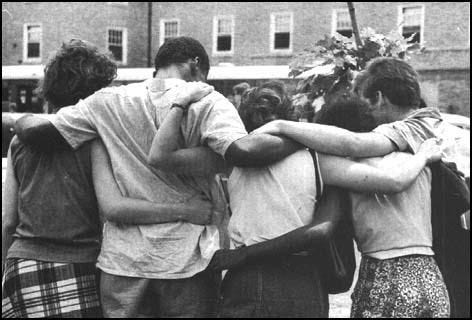
The basic argument: you cannot evaluate a belief, behavior, or cultural practice outside of the context that produced it.
Every single opinion, every value, every moral framework makes sense from INSIDE the worldview that generated it. There is no view from nowhere. There is no neutral ground from which objective truth can be observed.
This doesn’t mean all opinions are equally valid or that ethics don’t exist. It means that the confidence with which most people hold their worldview is almost always inversely proportional to how much of the world they’ve actually seen.
It’s why the whole Americans don’t travel thing is actually an issue. I know that sounds privileged; I get it. But most Americans don’t have a passport. Thus, many Americans have never experienced life outside of America. Thus, is there any surprise that Americans disproportionately believe that the US is the greatest nation in the world, while outside the US, that belief is… not exactly that…
To be my anthropological, let me share the case study by Oscar Lewis that I return to again and again (in my mind) when I want to ponder cultural relativism. It’s a social theory called the Culture of Poverty, read it here if you’re interested.
The argument is this: Humans are largely rational and make rational decisions. WITHIN THEIR OWN WORLDVIEW.
His ethnography included societies in Mexico (especially Mexico City), Puerto Rico (San Juan), and the United States (New York City / Harlem). Which, during the time of the ethnography (the 1950s), were places experiencing a lot of poverty, racism, systematic exclusion, and social stigma.
Lewis argued — controversially, but with significant supporting ethnographic evidence — that people in these poor communities were not criminals, lazy, or morally weak. They were people who made entirely rational decisions. WITHIN THEIR OWN WORLDVIEW!

It is rational to steal food if your child is hungry and you have no other options. It is rational to distrust institutions that have historically exploited you. It is rational to prioritize immediate survival over long-term planning when long-term planning has never paid off in your experience.
Someone born into wealth looks at the same behavior and calls it irrational, irresponsible, or morally wrong — because from inside their experience, those choices genuinely don’t compute. Neither person is accessing objective truth.
Both are reasoning from within their own world.
This is the glass cage. You’re inside it, looking out, and calling what you see reality.
There is consistent evidence in psychology linking cognitive rigidity to lower cognitive flexibility. And cognitive flexibility is an important part of overall intelligence.
Think of your local Republican housewife:
In addition to their near-identical appearance, they also hold rigid, unanimous beliefs. They call themselves “Republicans” as a blanket political identity. BY THE WAY! This is not anti-Republican; I could just as easy say the same for democrats and show a picture of anyone with purple hair who lives in Portland.
Blanket political identities are seductive. We’re psychologically wired to enjoy closure — we prefer clear, simple, definitive answers. But if we lean into this ease and comfort too much, our beliefs become rigid, and we get dumber.
It’s cognitively cheaper to join a team with pre-packaged positions — Republican, Democrat, left, right — than to do the harder work of evaluating each issue individually, holding contradictions, and sitting with uncertainty.
It’s why you see those funny viral videos online that show people at political rallies and the interviewer will unknowingly rage bait the interviewee by questioning them about their political beliefs or specifics.
Jonathan Haidt’s moral foundations theory says that most people adopt their political identity based on intuition and tribal belonging first, and construct the reasoning afterward.
Read that again. MOST people make real-world decisions based on intuition and tribal belonging. Not careful reasoning. They do what they believe is rational — and rationality, as you now know, is just another word for “what makes sense from inside my particular cage.”

Most people consider themselves open-minded. They’re not.
This is the “bias blind spot.” We are better at seeing other people’s closed-mindedness than our own.
The more confident someone is in their own open-mindedness, the more suspicious of that confidence you should be.
These people, who are CONFIDENT that they are open-minded, fall prey to the most dangerous version of closed-mindedness. They’re not honest with themselves. They have performed open-mindedness so convincingly — to themselves and to others — that they have completely lost the ability to notice when they’ve stopped actually doing it.
I have someone in my life who says to everyone that they’re “willing to hear all sides,” that they’re “open-minded by nature,” that they “don’t judge.” And it KILLS ME! Because I know them well, and I know that they are so painfully rigid in their beliefs (despite their beliefs being generally “liberal”) that they don’t even consider another perspective when presented with one.
Oscar Wilde famously advised everything in moderation, including moderation, and it’s kinda the same thing for this. Your beliefs should be held loosely, but not too loosely that you don’t have a foundation for your values.
When I first had my mind changed by the concept of cultural relativism, I actually went too far in the wrong direction. I found myself in late-night debates with strangers about whether women should be allowed to drive in Saudi Arabia considering it’s “part of their culture.” Nowadays I’d say yes, women should be allowed to drive (duh), regardless of any cultural norm.
Basically: Don’t be so open minded that your brain falls out.
I wrote this because I was thinking about the idea that some people are so tied to their beliefs that they become like cages.
You believe you can’t get fit, then you never will. You believe you’ll never be able to buy a house, then you never will. You believe that a certain political party will be the solution to your existential crisis, and then you’re surprised that it’s not. You argue with strangers about things that you can’t even explain why you care about it.
Your beliefs are trapping you into a glass cage — you can see the big wide world out there, but you’re stuck in your default state of presumed safety. Little did you know that the glass walls are suffocating you, and keeping you contained.
So examine your beliefs regularly. Don’t feel any loyalty to things previously decided. Have an open mind — inquisitive, but with rigor. Believe in things, but hold them loosely. Be comfortable admitting when you’re wrong when the evidence presents itself. And resist the seductive pull of certainty.
Thank you for reading this! If you have any questions please drop them below <3
all photos from Pinterest
No posts
Comments
Nothing yet. Say the first thing.
Sign in to join the conversation.