
If you’ve been on social media at any point in the last five years, you’ve been under the influence. Social media doesn’t even describe today’s apps accurately. Mark Zuckerberg made this very argument in a recent legal case, when he said Facebook wasn’t a social network anymore but really more of a content discovery platform. Yikes.
If you’re a millennial, you remember the days when social media was in fact, social. Your online community was an extension of your physical community. We posted albums of hundreds of embarrassing photos, left cringe videos to each other, and used unhinged, objectively ugly filters on our photos because at that point in time, these platforms weren’t about curating a perfect life — they were about celebrating real life and finding solace in our collectively shared imperfections.
But somewhere along the way, we stopped seeing our friends and family on our feeds and started watching complete strangers doing, well, everything. I don’t remember exactly when the shift happened but I associate its dawn with those bleak early COVID months, when we were all forced to find some way to busy ourselves during lockdown and turned to cheap, easy entertainment on TikTok and Instagram.
If I go to the apps now my feed is flooded with these: videos of people getting out of bed, getting dressed for their days, driving to the gym, working out, doing laundry, cleaning, getting ready, getting “unready,” walking to work, working at work, leaving work, unwinding after work, getting groceries, unpacking groceries, cooking at home, going to restaurants, eating food, not eating food. The list goes on. Every mundane activity now has the potential to go viral — and make a quick buck — when posted by the right person. And they’re all seemingly trying to sell me something: use my code! Shop my picks! Use my affiliate link!
If you had told me 15 or even 10 years ago that millions of people would be watching other people clean their apartments or unpack groceries I would’ve thought you had one too many Four Lokos (iykyk). But here we are. Regardless of exactly when it started, it feels like overnight, Instagram went from a photo album you shared with your friends to an overly edited, obsessively curated example of what life should look like.
Let’s call this period the arrival of the influencers. And we are now all the influenced.
So how did this happen?
I recently started reading “It” (not the Stephen King novel but this topic is equally scary tbh), an in-depth look at modern celebrity by Yale theater professor and historian Joseph Roach. In the book, Roach goes into a fascinating exploration of why certain people have a certain pizzaz, a charisma, the ‘It’ factor we’re all drawn to, and others don’t.
The book was published almost 20 years ago in 2007, before the age of the modern influencer, but it got me thinking: what makes these influencers so fascinating to the general population? Did they come up with a changing social landscape? Or did they build it themselves, one ‘get ready with me’ brick at a time? How do some strangers become viral icons while others post into oblivion?
Roach uses a definition from the 1920s by author and tastemaker Elinor Glyn to frame his analysis:
“To have ‘It,’ the fortunate possessor must have that strange magnetism which attracts both sexes. He or she must be entirely unselfconscious and full of self-confidence, indifferent to the effect he or she is producing, and uninfluenced by others. There must be physical attraction, but beauty is unnecessary.”
He expands on Glyn’s definition to include the tension that makes ‘It’ so interesting:
“‘It’ is the power of apparently effortless embodiment of contradictory qualities simultaneously: strength and vulnerability, innocence and experience, and singularity and typicality among them.”
One specific quality of ‘It’ that Roach focuses on heavily is the aspect of public intimacy, rooted in traditional religious doctrine. Roach says, “Public intimacy describes the illusion of proximity to the tantalizing apparition [and] . . . intensifies the craving for greater intimacy with the ultimately unavailable icon.” He talks about saints and martyrs in history, drawing parallels between modern celebrity:
“They must seem at once touchable and transcendent, like movie stars and cover girls, and like them also and for that reason, they very often appear in representation seminude. Their image circulates widely in the absence of their persons—a necessary condition of modern celebrity—but the very tension between their widespread visibility and their actual remoteness creates an unfulfilled need in the hearts of the public.”
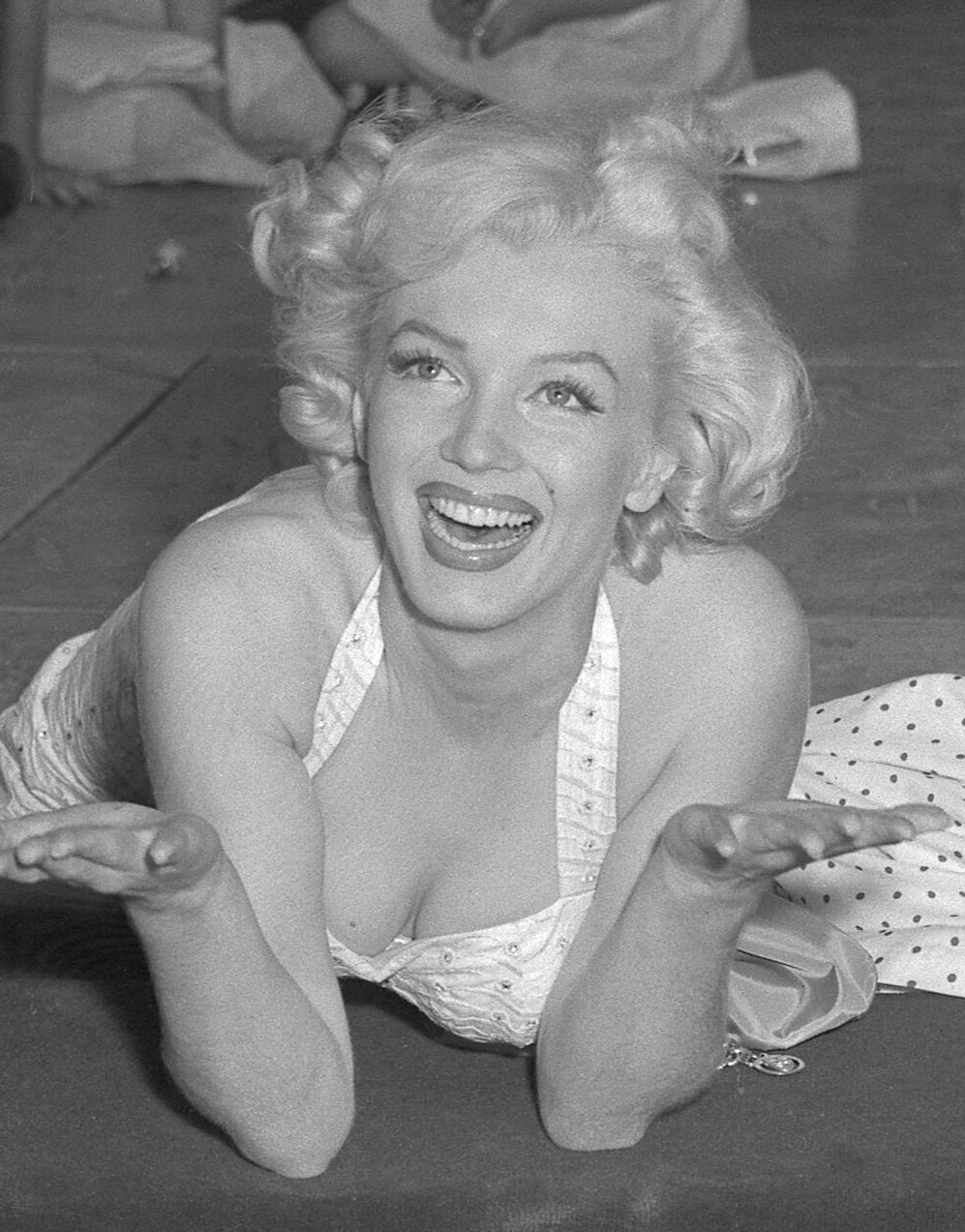
Roach says that those with ‘It’ have such an effect on the public because of our human need for synthetic experience, which is “regulated by both curiosity and fear, to experience life vicariously as well as directly.” And there’s no denying the satisfaction of watching someone do things well, especially the small, relatable things we all do every day.
So, in very brief summary, ‘It’ is marked by three qualities:
self-knowledge, or being uninfluenced
public intimacy
tension
Any popular or ‘It’ girl influencer you think of probably exhibits all three to some degree: they’re not being influenced — they are the influence — they constantly post private things publicly, and they thrive on the tension of being relatable but famous, innocent but also experienced, completely unique but also just like the rest of us.
They make their audiences feel like the best of friends by inviting them into their homes, chatting about daily routines, and taking them along for everyday errands and life milestones. We’ve never met these people, but we seem to know so much about them that not seeing their latest content can feel like missing out on a friend’s life. As Roach says, this disconnect between “widespread visibility and their actual remoteness creates an unfulfilled need in the hearts of the public” — much like celebrities.
But today’s influencers aren’t just celebrities: their whole business is about generating views, boosting following counts, closing brand deals, and selling us stuff we probably definitely don’t need but are compelled to get anyway. It’s a new type of charisma not fed by acting or singing or art or fashion or royalty but rather by being able to glorify the banality of everyday life and use these glamorized portrayals as a revenue-generating business.
And while Roach’s definition for ‘It’ isn’t about perfection (it’s rather the opposite), these strangers are doing mundane things too perfectly: filming things over and over to get the perfect angle, the perfect voiceover, the perfect lighting, all whilst claiming to be real and authentic but reading scripts written for them by big brands.
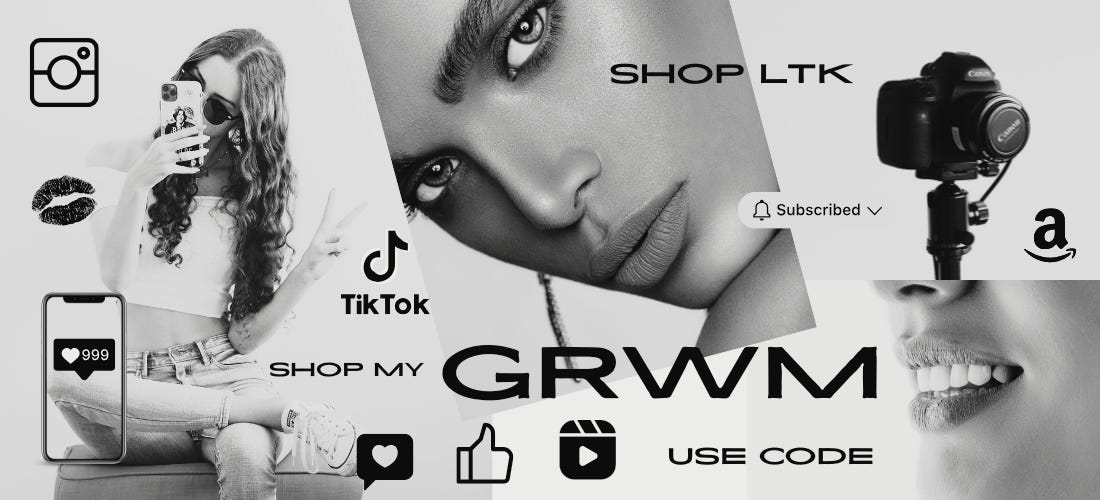
So the modern influencer isn’t creating tension by embracing imperfection — they’re building this intrigue by normalizing imperfect everyday actions done perfectly, giving us a glimpse into what life might look like if we all tried a little harder, cared a little more, or prioritized an aesthetic life over one well lived.
And in doing so, everyone is trying to live life in this perfect, performative, sterile way, which leads us all to look the same, talk the same, watch the same things, read the same books, listen to the same music, do the same things, and even travel to the same places (An Amex study found that ~50% of travelers choose destinations based on what they’ll post on social media). We’re all either a Pilates princess with Botox and a matching workout set or trying actively not to be one because everyone else is.
Everyone is trying to play the role of the ‘It’ girl, but in doing so, we’ve all become actors in life, and our social media has become a resume of highlights and accolades that leave us feeling empty because a perfect life is in fact an empty one. Maybe Shakespeare was onto something when he said “All the world’s a stage.” Precious time that was once reserved for close friends and family is now given to strangers who monetize our attention. And importantly, we’ve lost our individual sparks and sacrificed our personal taste.
The influenced is where creativity goes to die.
So where do we go from here, and how can we all be a little less influenced? I’m still trying to figure it out, but I think the answer is simpler than it seems: turning away from these apps and back to our communities.
Stop taking advice and guidance from people you’ve never met and start turning to people you know and trust.
Stop obsessively watching content made by strangers and start cheering on your friends for their small wins and side projects.
Read a book without hearing someone’s opinions on it first.
Go shopping and buy something just because you like it, not because someone you’ve never met is posting their link.
Sleep on it for a few nights before you impulsively buy something recommended to you by someone you’ve never met.
Stop buying things you can’t afford because people you’ve never met insist you need one and having one gives you the illusion of social capital.
Stop posting everything. Privacy is sexy.
Watch the sunset without taking a picture of it.
Log off for a while. Better yet, throw your phone away and move to a faraway cottage by the sea with a dog and vegetable garden. Kidding, sort of.
I’m not saying all influencers are evil and taking advice from influencers makes you lesser than. I think it’s pretty unavoidable if you use any kind of social media. I’m also not saying that all influencer content is damaging. I find some great lifestyle inspiration and motivation from many accounts I follow. But I am saying it’s gotten, at least to me, a bit suffocating. A bit draining. A bit too much. And I’m tired.
I’m hopeful that we’re getting to a point where other people are also tired of being sold a version of life that just doesn’t exist. We’re tired of being sold to, period. Remember that ‘It’ girls aren’t influenced. So let’s all stop being the influenced and start being ourselves again. Isn’t that the entire point?
Thanks for reading! If you liked this article, you might also like:
The rise of the content curator
·
Jul 17

In a time when it seems like there’s no end to the amount of content available to us whenever and wherever we need it, there’s one key quality that’s quickly differentiating a select few from the mass of consumers and creators of information: taste.
No posts
Comments
Nothing yet. Say the first thing.
Sign in to join the conversation.