
A robot called Digit has now moved more than 100,000 totes inside a real GXO warehouse in Georgia. It is repetitive work: pick up a container, carry it, put it down, repeat. There is nothing cinematic about it. That is exactly why the number matters.
At BMW’s Spartanburg factory, Figure’s previous robot spent more than 1,250 hours working on the line. It loaded over 90,000 parts and took part in the production of more than 30,000 cars. Its replacement, Figure 03, is now back at BMW doing a different logistics job.
Then look at China.
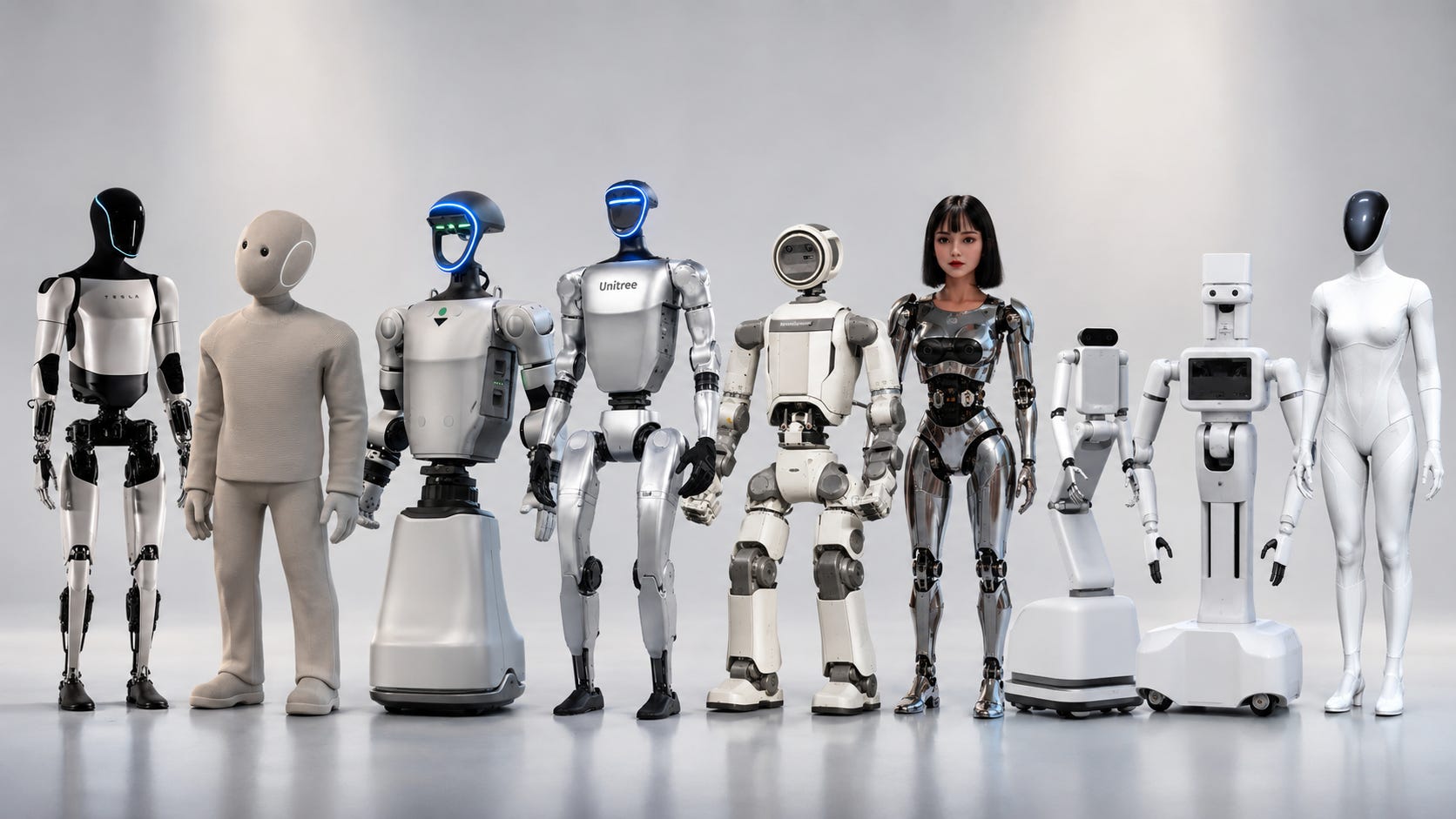
Unitree sells its G1 humanoid online for $13,500. Its smaller R1 starts at $4,900. A teardown cited in Unitree’s listing analysis estimated the parts inside a higher-end G1 at about $8,976. Unitree says it sold 5,215 humanoids in 2025.
Research firm Omdia counted roughly 13,000 humanoid shipments worldwide in 2025, with Chinese companies taking most of the market. AgiBot, Unitree and UBTECH occupied the top three positions in its estimate.
And this week Unitree became a public company. Its Shanghai IPO valued the business at about $9 billion and attracted extraordinary demand from Chinese investors.
That is a very different robot industry from the one we were watching two years ago.
The robots are still awkward. They are still limited. Many still need humans nearby.
But they are no longer waiting in a research lab for some distant future.
They have started showing up for work.
Here is what makes this story much more interesting.
In July, Anthropic gave several frontier AI models control of different robots in simulation. One of them was Unitree’s human-shaped G1.
The researchers started the G1 on the floor and asked the models to make it stand up.
Not one model succeeded.
The same study found much better results when AI was given an easier job: let specialist robot software handle balance and movement, while the large model handled higher-level decisions.
This is the part that gets lost in robot videos.
A robot can dance beautifully without a general AI deciding how every joint should move. It can follow a prepared routine. A person can control part of it remotely. Special software can handle balance while an AI model simply says, “walk left.”
Comments
Nothing yet. Say the first thing.
Sign in to join the conversation.