
Our family collapsed in our beds at 2am Sunday morning, capping off a long day and a full week in Málaga, Spain. This trip almost didn’t happen— we had an already full summer and ran into a few bumps booking our flights and accommodation. But I’m so glad it did.
This trip met two of my goals since moving back to Europe, which were to explore around the continent and give our kids a chance to practice their Spanish. When it came time to pack for this trip, I was a little reluctant because we’d settled into our summer routine and the weather had been blissful in Ireland. Going to a place I’ve never been demands mental energy, days in airports, and physical stamina (in the heat!). But the suitcases came back out, and it turned into a memorable adventure.
For this trip, we selected Málaga for its beaches, Islamic architecture, and cultural scene. I have been to Madrid and Barcelona before, which are both incredible, but for this trip we wanted to be somewhere along the coast where Spanish, not Cátalan, was the primary language.
We found a 1/2 day language camp through Cervantes International that our kids could do, which sealed the deal. This wasn’t 100% vacation, as my husband and I worked remotely during part of the weekdays.
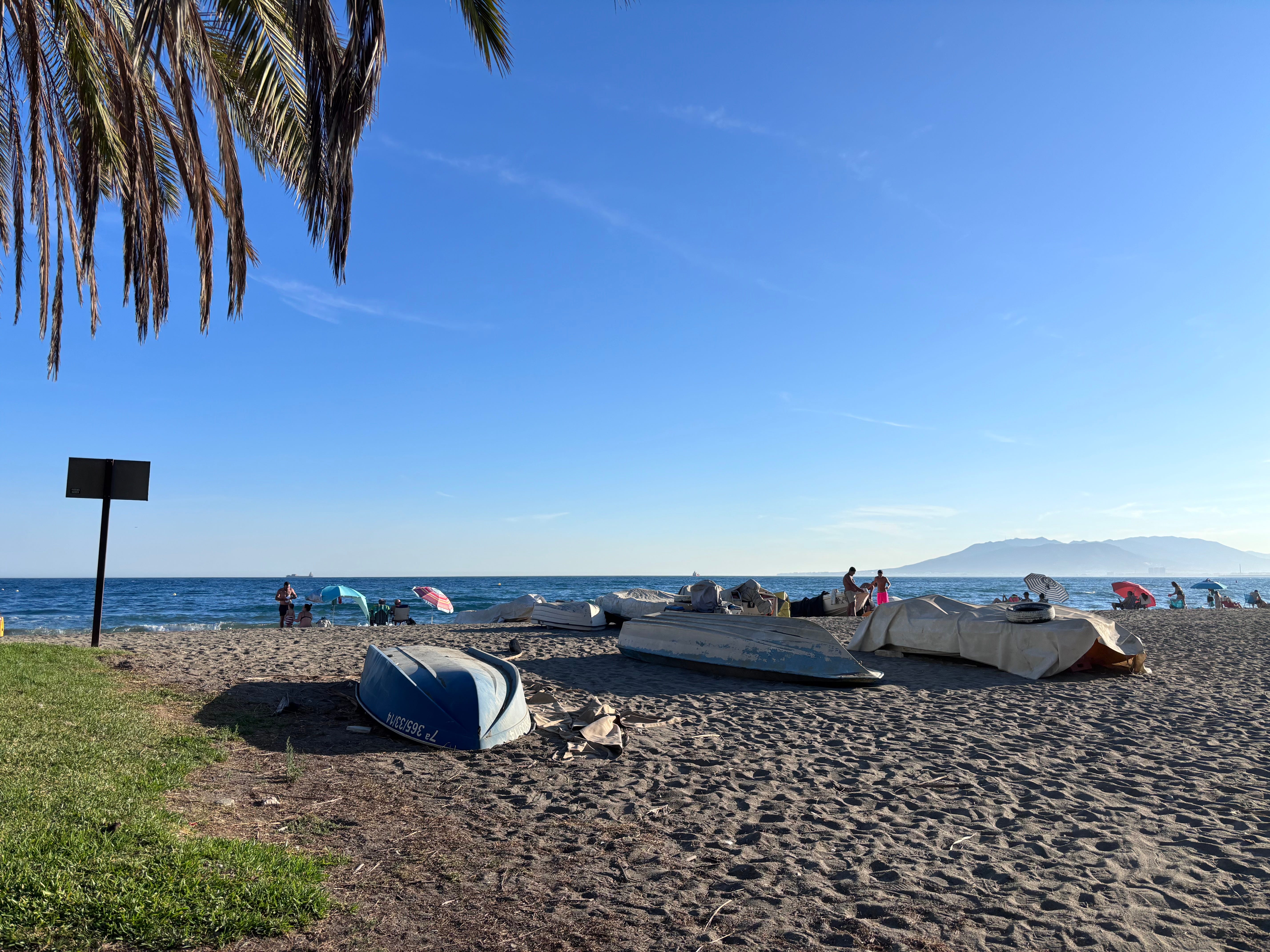
The Costa del Sol is a popular destination for British and Irish tourists, but most skip the city entirely and head for the resorts up and down the coast from Málaga. I think they’re missing out! (Though our kids saw some billboards for the resort waterparks and thought they were the ones missing out.)
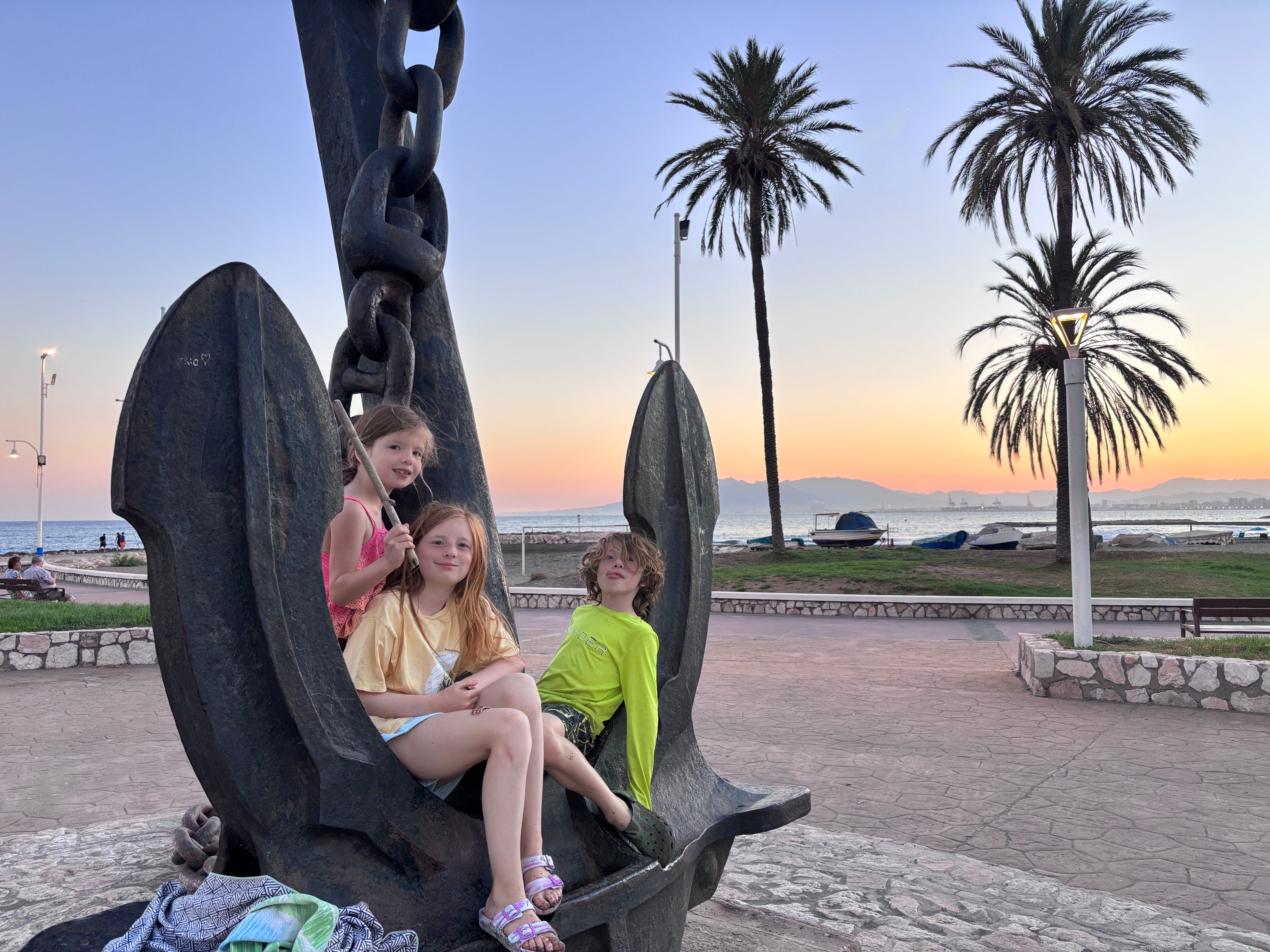
We decided to stay in a rental apartment in the eastern neighbourhood of El Candado. It was basic but sufficient (with AC!), about a 15-minute walk to the nearest beach (Playas del Palo) and about 30 minutes on the bus to get into the Centro Histórico. The streets were lined with palm trees, tiendas, cafés, motorbikes, and cats napping. We were surrounded by a mix of locals and German and French holidaymakers.
The first few days in Málaga reminded me a bit of our first week in Ireland. We immediately headed to our closest Carrefour Express for groceries, and stopped there most days to pick up a few things we needed.
We figured out which bus line to take to camp and into the city and located a tiny Tábac store where we could buy a bus card (dropping the price from €1.40 to €0.50 per ride). Thank God for smartphones to find our way around! We used our basic Spanish knowledge, with help from Google Translate, to order and find what we needed.
Here are a few of the favourite things I did during our week in Málaga, both solo and with our family (kids aged 12, 10, 7).
Alcazaba and Gibralfaro Castle
Southern Spain was under Muslim rule for over 700 years, until the late 1400s. Its fingerprints are still everywhere in Málaga, from the architecture to the Moroccan coastline we could see across the water on a clear beach day. We visited the Alcazaba, an Islamic fortress in the middle of the city built in 1057, and Gibalfaro, a nearby palace dating back to the 1400s.
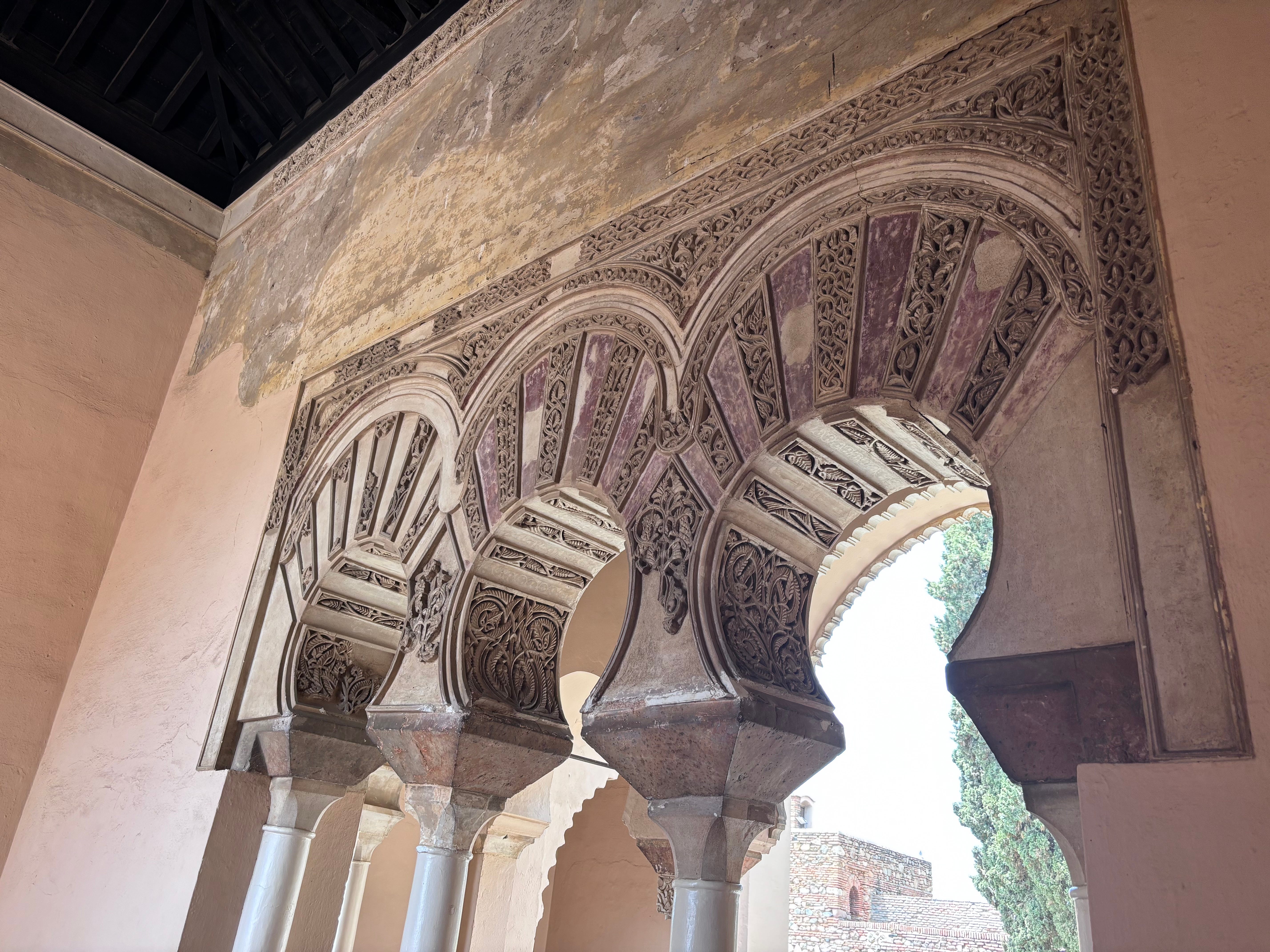
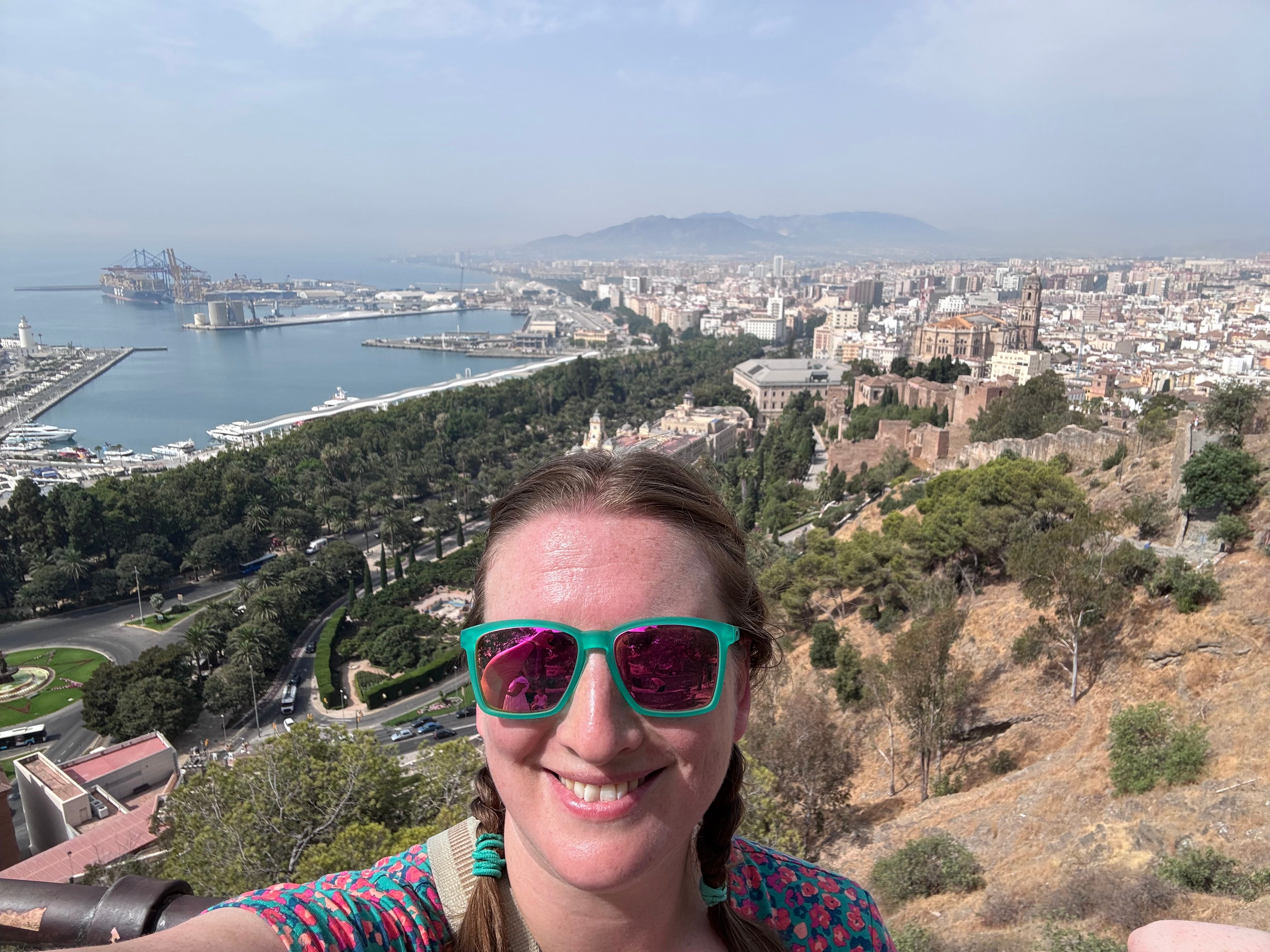
The hike up to Alcazaba was hot, taking about 30 minutes of uphill climbing, but we were rewarded with a 360-degree view across the city, port, and Mediterranean. The tickets are very affordable, and there’s a well-preserved Roman Theatre right next to Gibralfaro.
Day trip to Frigiliana and Nerja
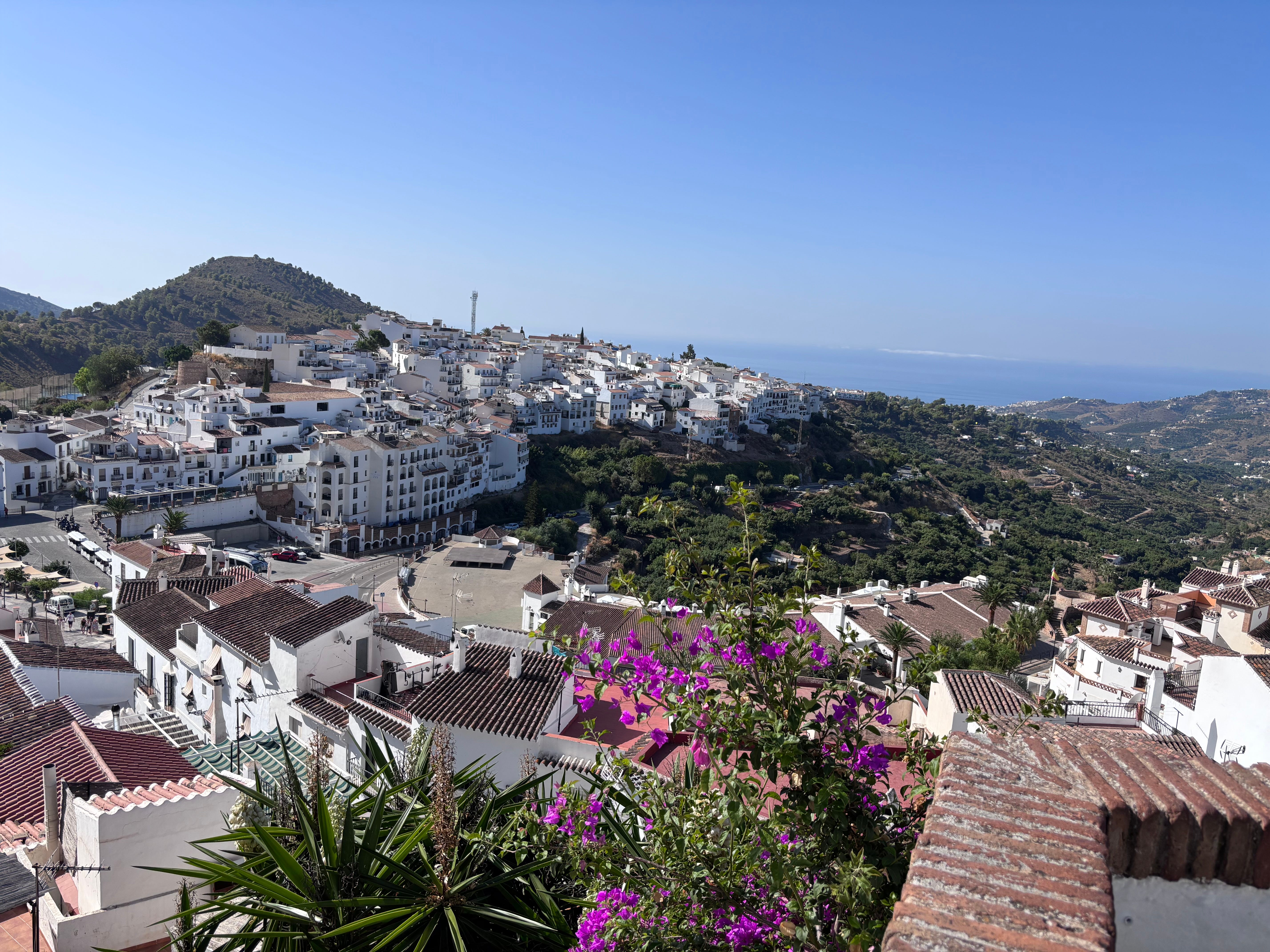
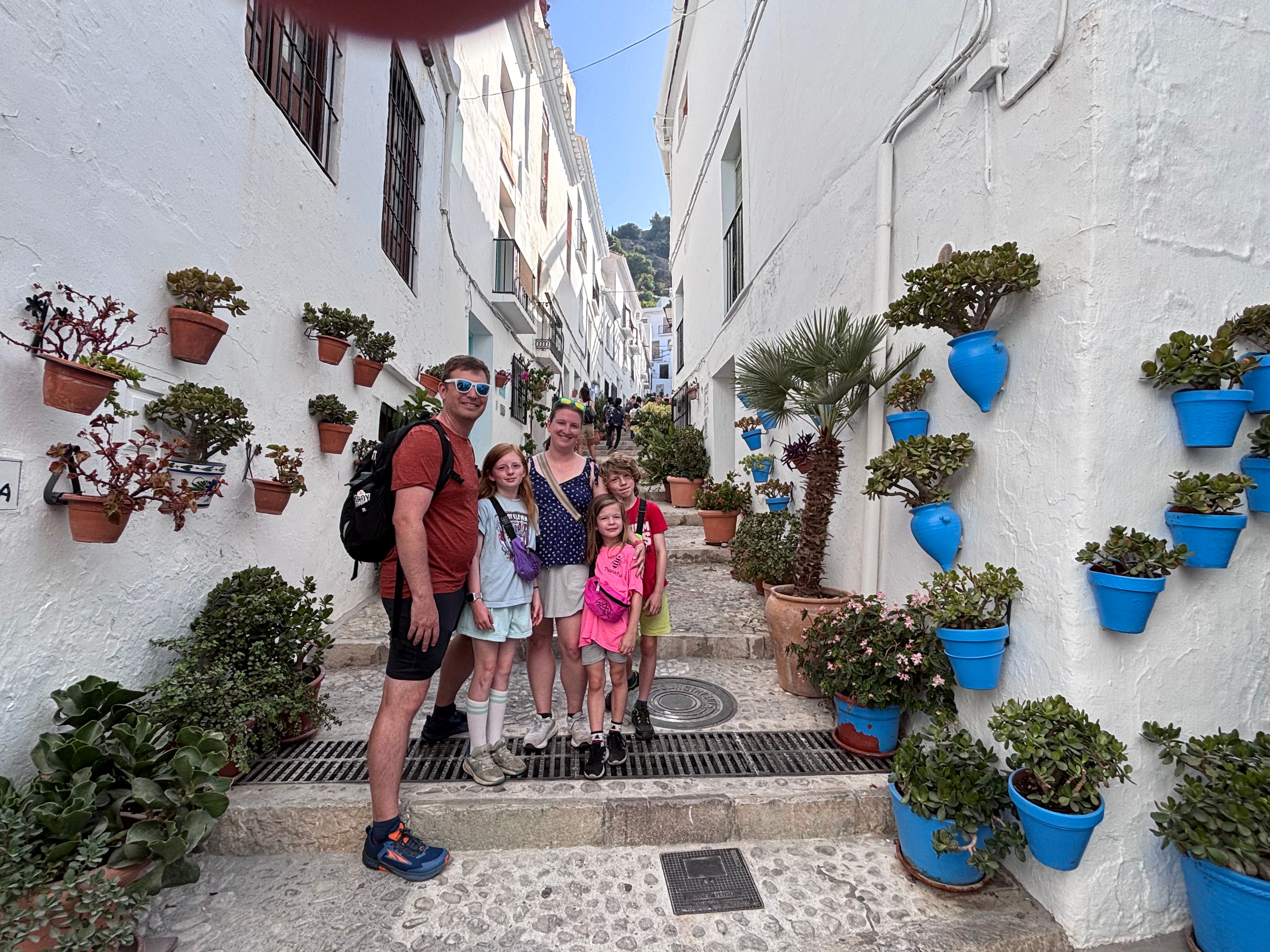
We booked a bus tour one day to take us up the coast. We stopped at Frigiliana, a whitewashed village with cobblestone streets, which is located in a tropical sub-climate with lush mango and avocado groves.
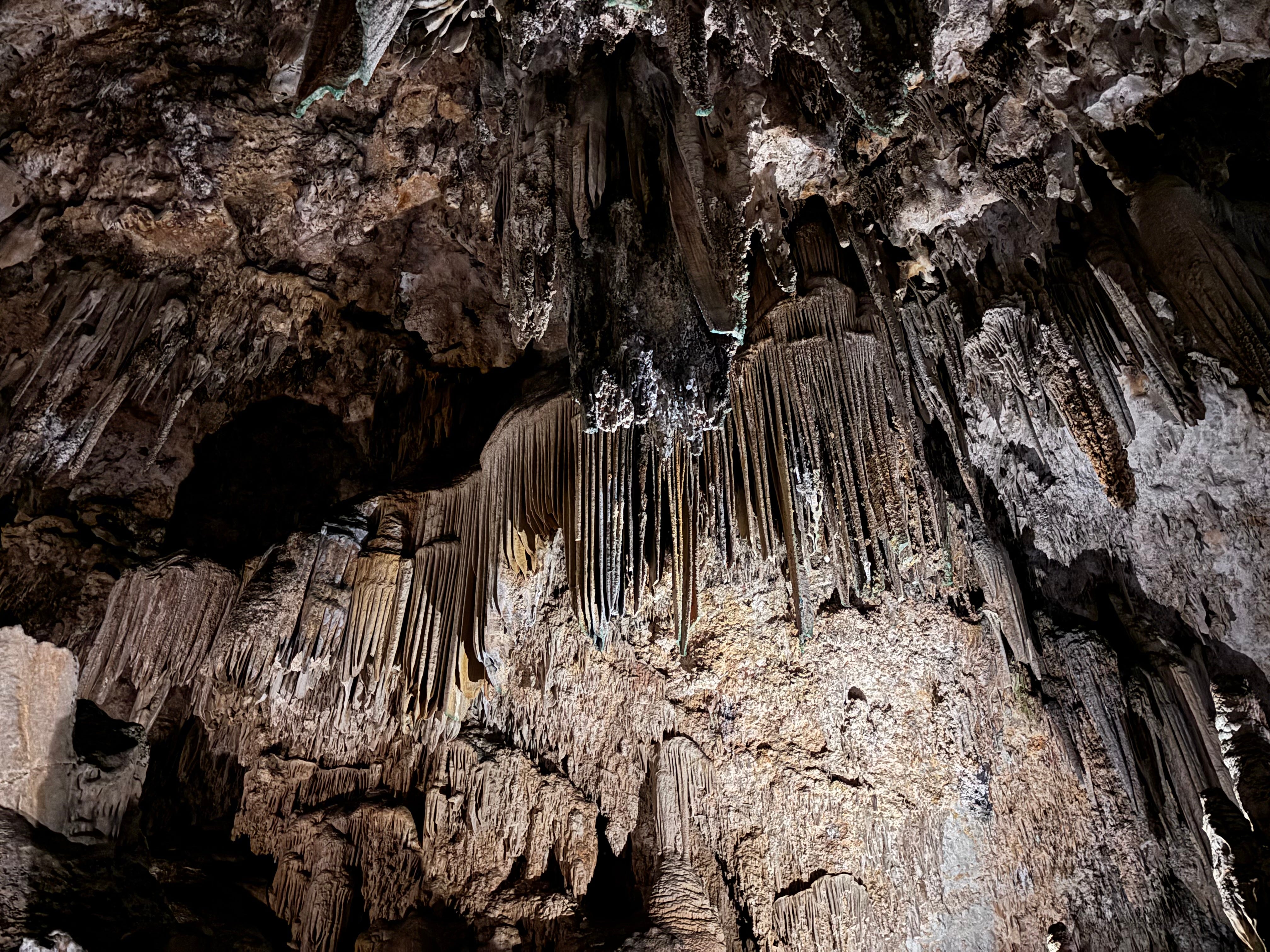
Next, we stopped in at Nerja, a more developed coastal town, with the famous Balcony of Europe and the Nerja Caves, extensive natural caves stretching almost 5km. We enjoyed the VR experience showing how the caves were made, and the cool temperatures down in the caves.
The Picasso Museum
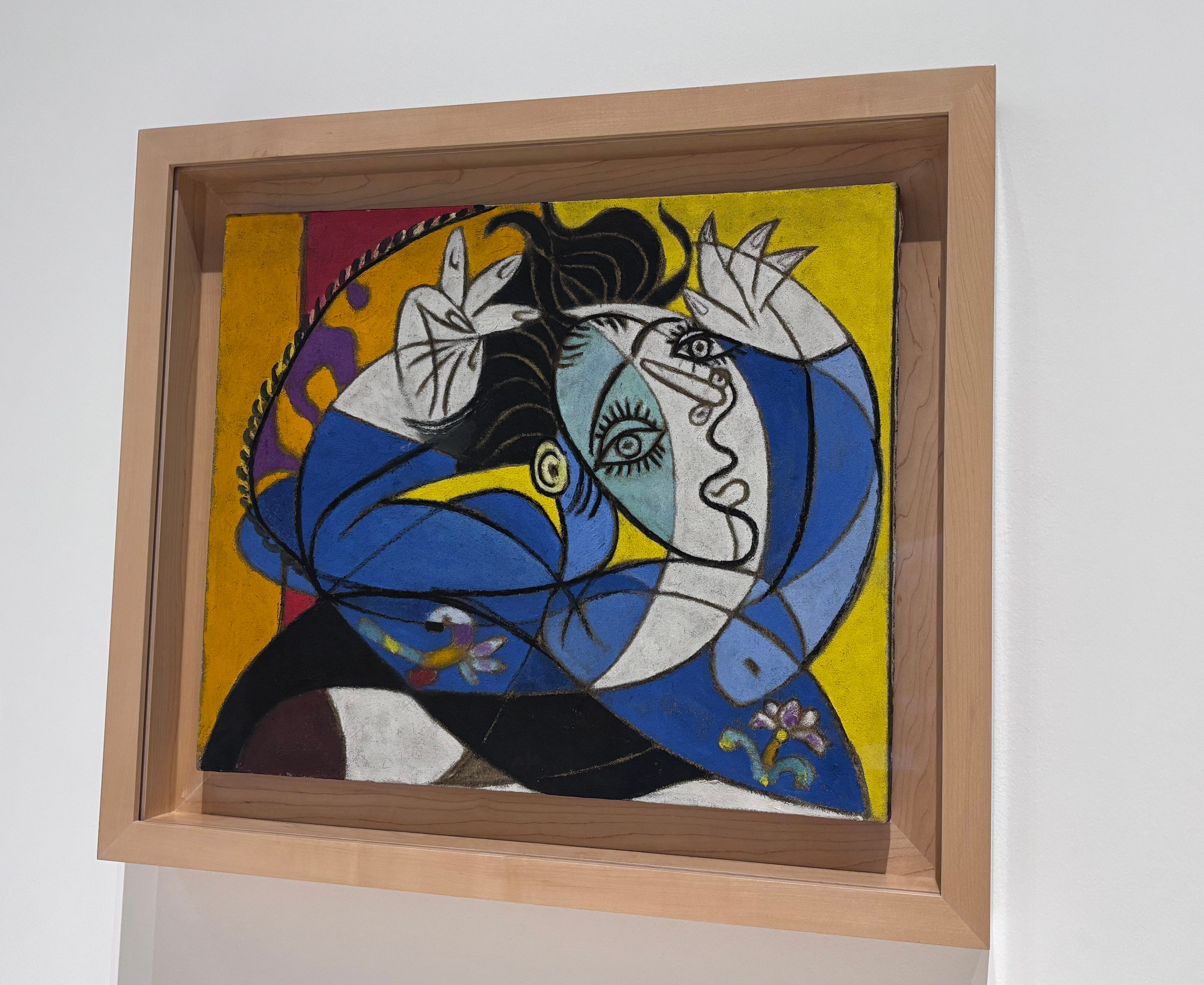
I wish I had taken a little more time for the museums, but the one I made sure to visit was the Picasso Museum. Málaga is Pablo Picasso’s hometown, and this museum explores his life and work. I also enjoyed the exhibits by contemporary textile artist Joana Vasconcelos.
Beach and pool visits
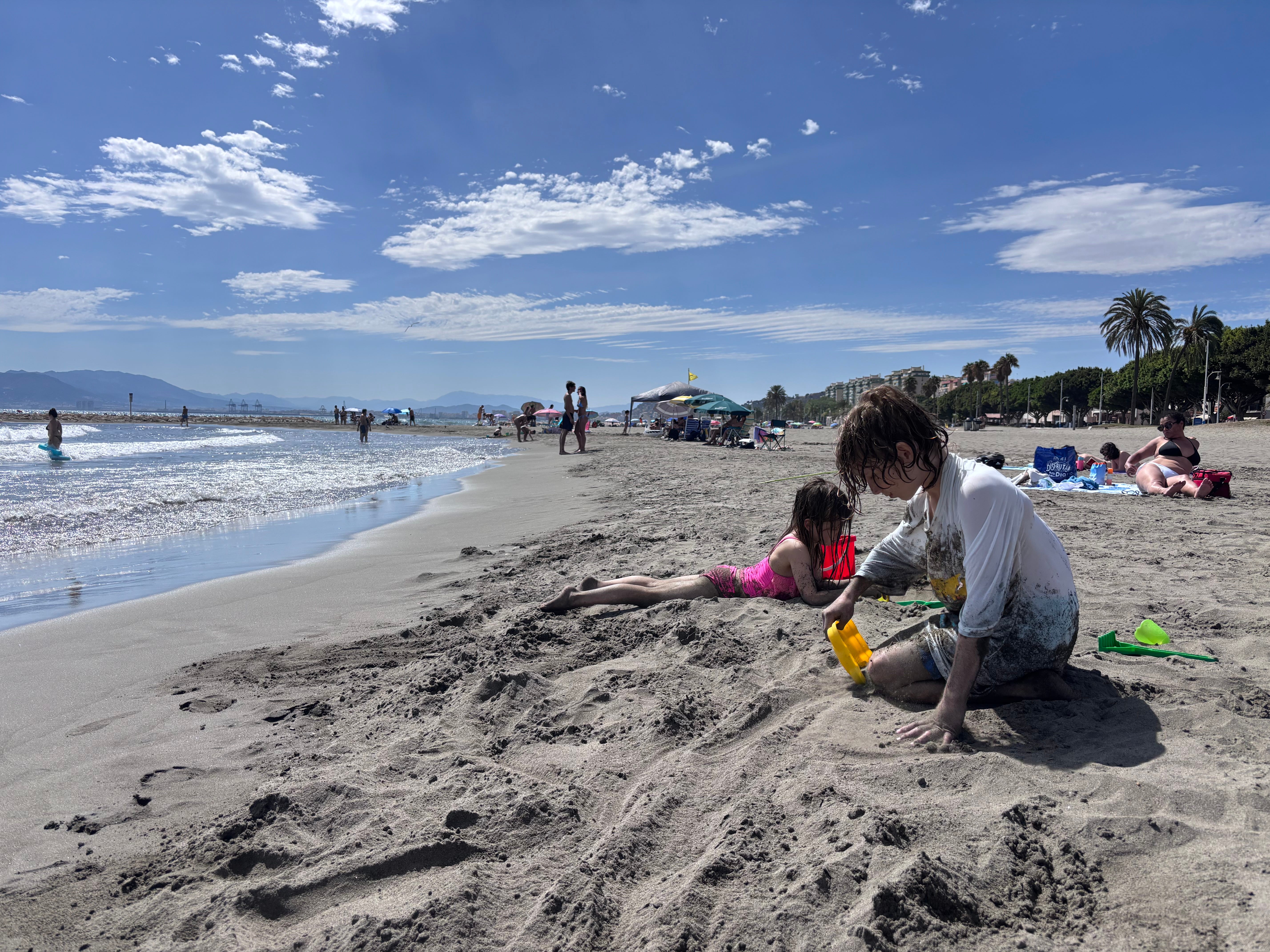
While we toured hard on the weekend, our weekdays were much more relaxed. Our typical schedule was wake up, eat breakfast, walk down to the bus stop, and I would take the kids a few stops over to the language school for their camp. After camp, we would head back to the apartment, stopping for empanadas on the way or making a sandwich at home. Since it was hot, we would siesta until 3 or 4pm, then head out to swim.
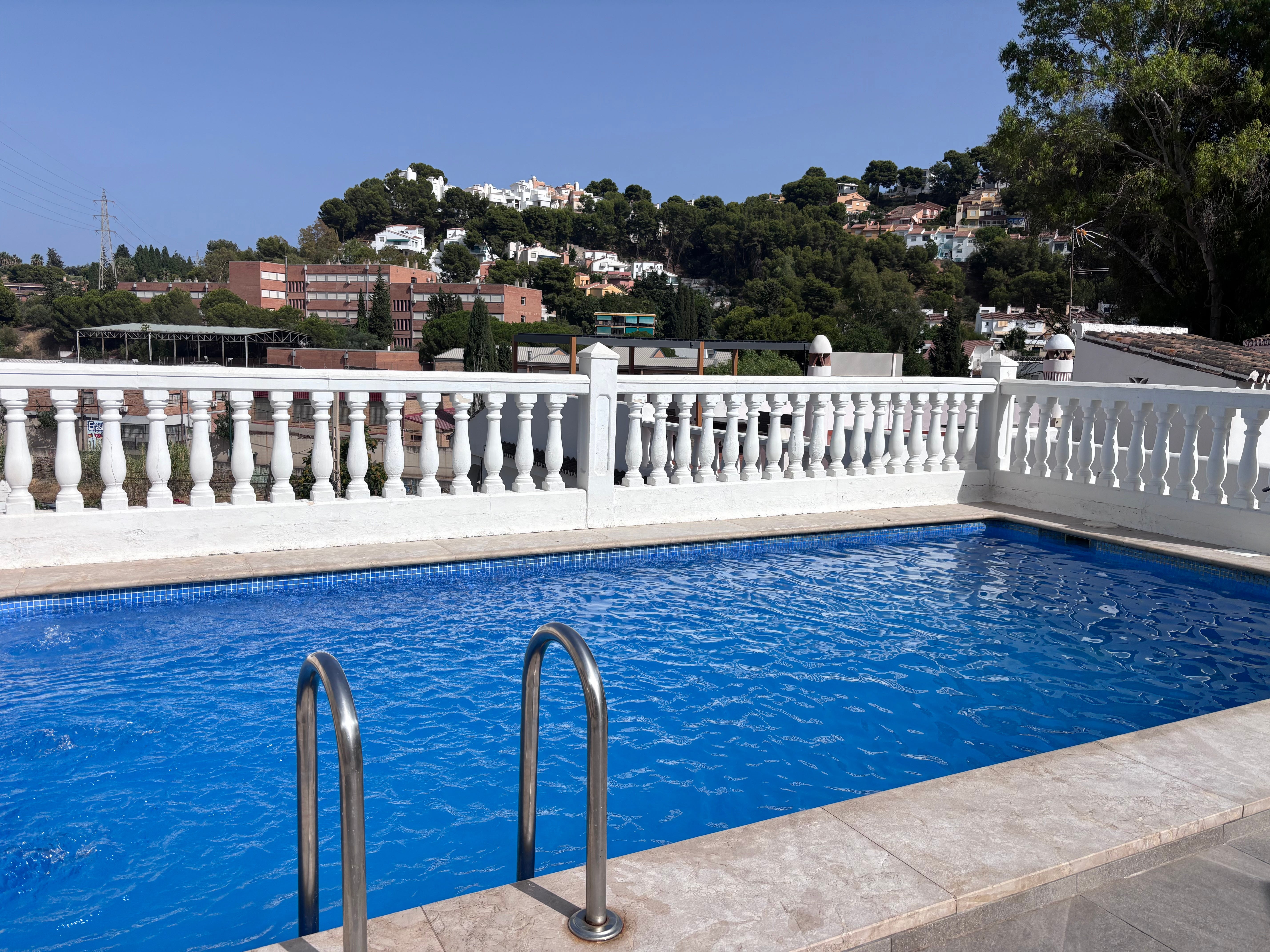
We alternated between beach and pool days. Our apartment had a small but lovely rooftop pool, which was so convenient, or we would pack up our towels and gear and walk down to the beach for a few hours.
Trying new food
Eating was probably my favourite pastime in Málaga. I already knew that I loved paella and sangria and had these on more than one occasion. I also grew to love tostada (toast with avocado, tomato, Spanish ham, or eggs), and bocadillo (ham or beef sandwiches on really good bread). Two memorable food experiences were the day we ate out at a seafood restaurant.
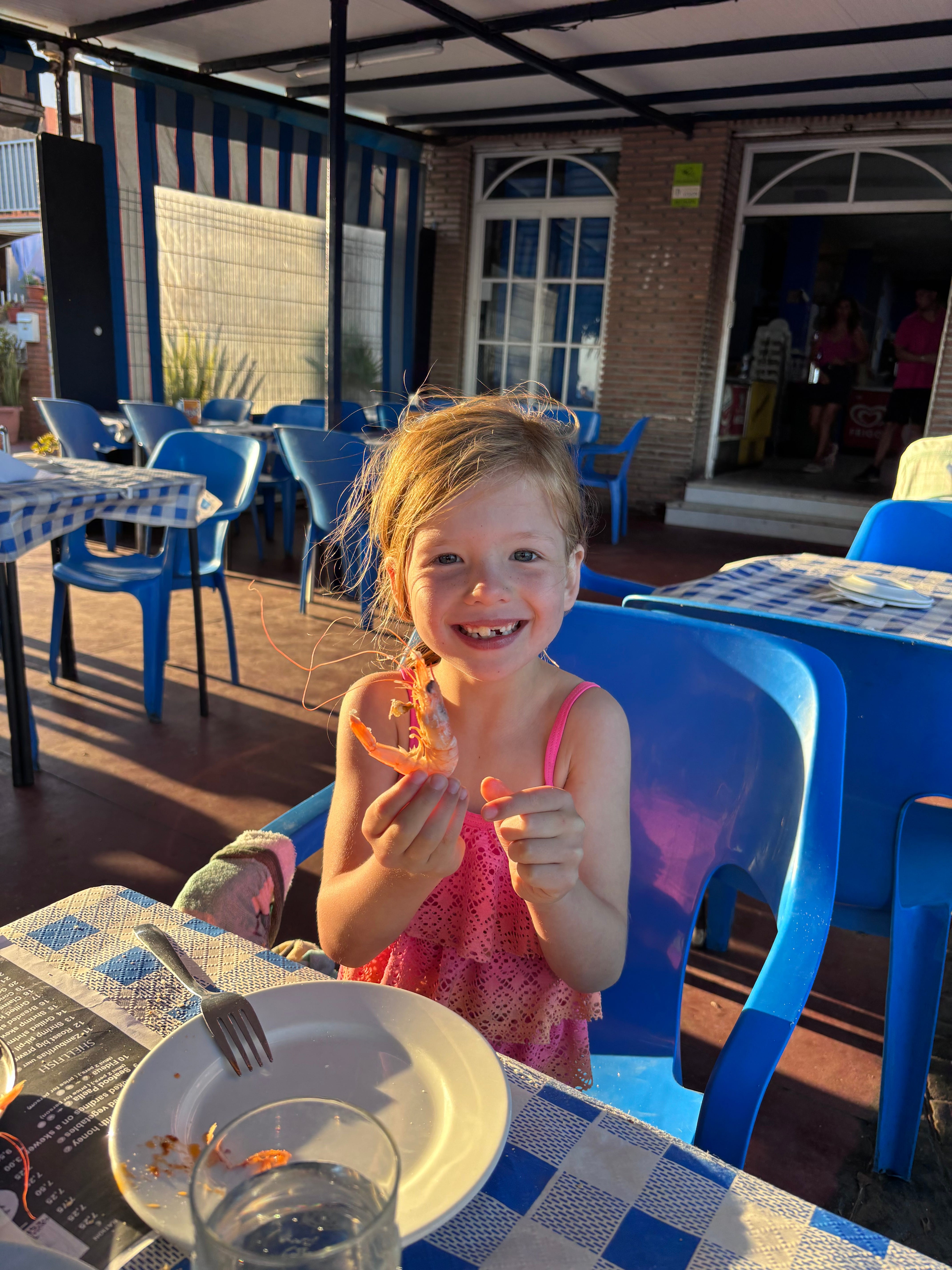
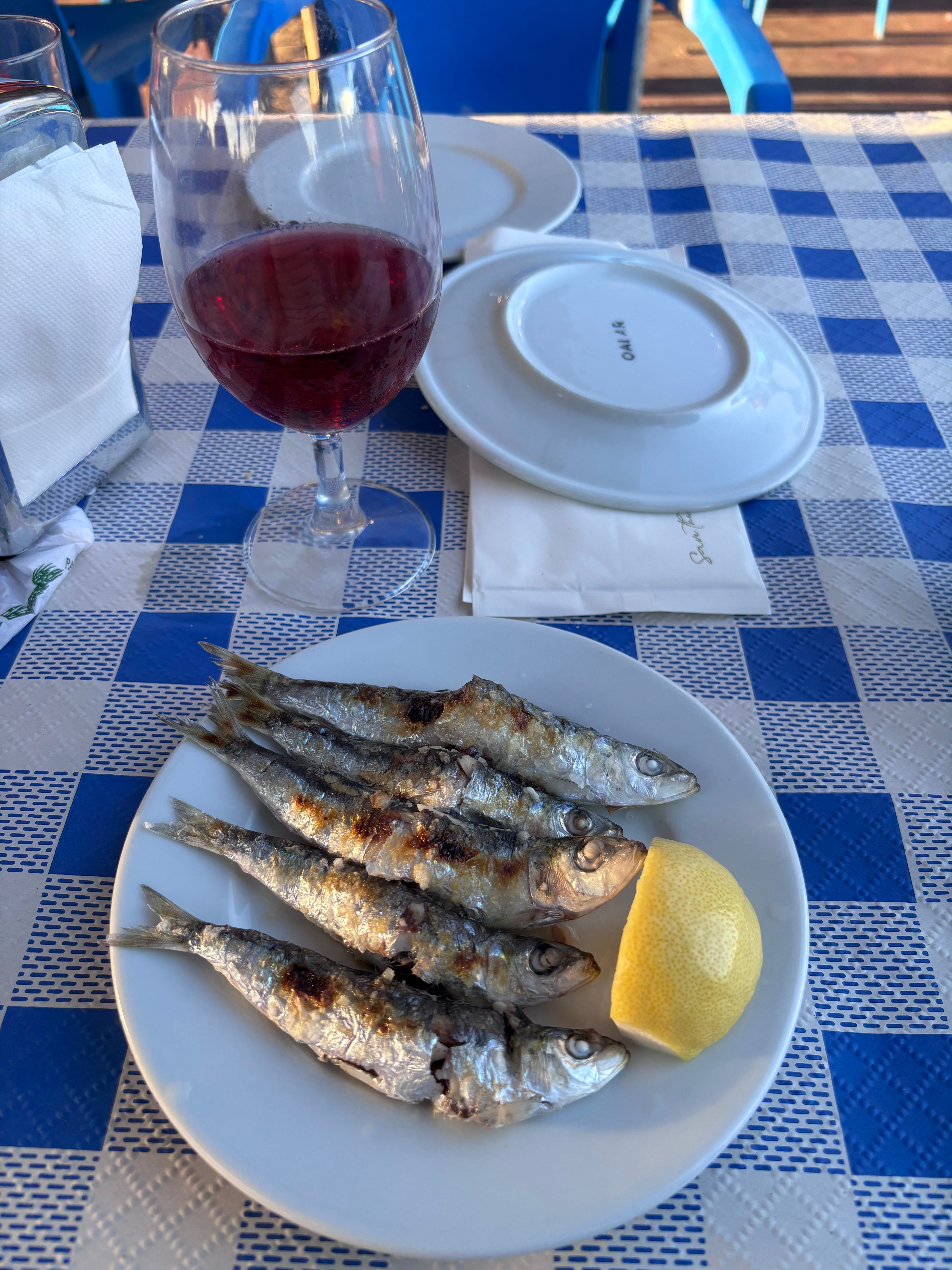
We had seen these beachfront restaurants setting up dozens of tables but hadn’t tried one yet (you can’t get seated until 8pm, the traditional dinner time is 9pm!), so we went for it one night. We tried different shrimp plates and sea bass as well as the local sardine delicacy, which is cooked on a skewer over coals in an old boat!
The second memorable experience was Mercado de Atarazanas, a market dating back to the 14th century where you can find every type of food vendor imaginable. We mostly walked around looking wide-eyed at jámon hanging from hooks, all means of seafood including octopus, and walked away with some tasty bocadillos and zuma (fresh juice) for our lunch.
The hammam
If you’ve ever visited the Middle East or North Africa, you’re likely familiar with a hammam. This is a traditional bathhouse, and Ross and I visited one without the kids. While the ones I’ve visited before are gender-separated, Hammam Al Ándalus in Málaga is a much more modern spa experience. It’s a beautiful series of candle-lit rooms in Islamic-style décor, leading to different temperatures of thermal baths. We did a massage where we laid on a warm stone, were covered in a massive mound of bubbles, and had warm water poured over us.
I kept my phone in the locker and didn’t take any pictures, but you can see some here.
OXO video game museum
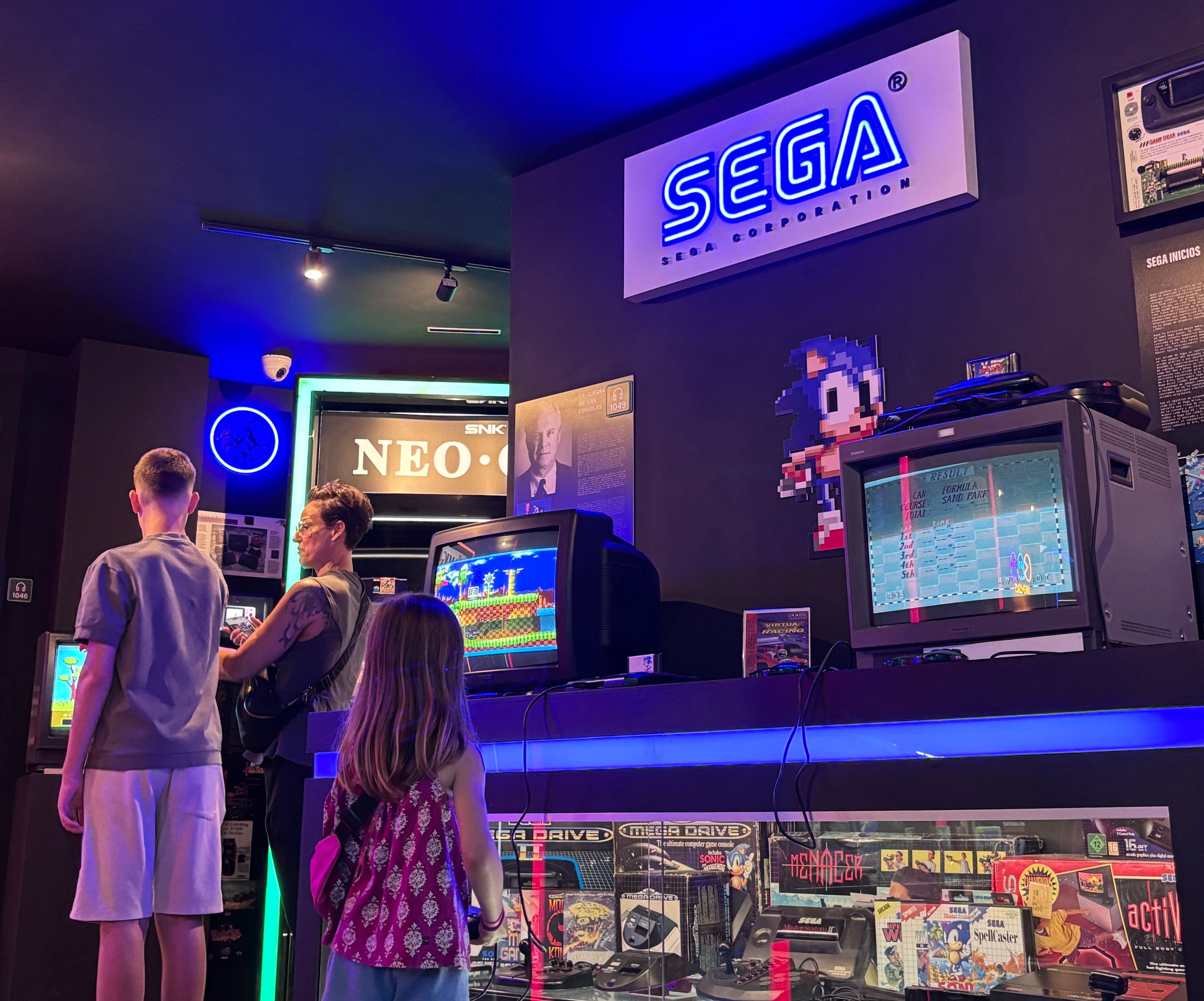
We needed an air-conditioned space to spend some time after checking out of our hotel on Saturday, and OXO was just the ticket. We explored three floors of exhibits showing the past and future of video games. Almost everything was playable— we played tons of vintage games and had an immersive intro and a fun VR simulation experience.
At the end of the week, we definitely checked off some tourist sites, but the bigger victory was just learning how to get by in a new place. By the end of the week, our kids knew which buses we needed to go where, and how to walk from the bus stop to the apartment without directions. We had a few go-to cafés and restaurants in our neighbourhood.
All week, I bumbled through ordering and getting what I needed in Spanish, the locals (especially waiters) were very gracious. Our kids have varying levels of Spanish after one to six years in bilingual school in the U.S. Two of my kids loved the Spanish camp, and one struggled most days (felt too much “like school”). They commented on the differences between Spain Spanish and the Latin American Spanish that they learned in the U.S. By Friday, I think they had all learned or re-learned some new vocab. A little too shy to speak and order on their own, but not too shy to tell me what I had said wrong 🙂.
Building that confidence is something we’ll carry with us back home as we head into our second year living in Ireland. Hasta luego, España.
No posts
Comments
Nothing yet. Say the first thing.
Sign in to join the conversation.