
I’ve seen firsthand how strong financial discipline changes the trajectory of a business. So many of us, intuitively, understand the value of the accounting profession.
For me, I have seen it over and over again in the businesses I have interacted with—our vendors, our suppliers, and the people we rely on to deliver. There is a noticeable difference when a business is grounded in strong financial discipline. You feel it in how they operate. You see it in how they make decisions and how they show up. There is clarity, there is structure, and there is a level of trust that is hard to miss.
I have especially seen it during difficult times. When markets tighten, when costs rise, and when uncertainty increases, some businesses remain steady and impressive, while others struggle to keep up. In my experience, that difference is rarely luck. It is discipline. It is planning. It is having the right financial foundation in place.
I have also seen it in the details—the processes that are transparent, fair, and auditable. I have seen it when working through complex financial planning and tax matters, when building projections, and when reading audit reports as a member of boards, nonprofits, private companies, and public partnerships. In those moments, accountability matters, and the work behind the scenes matters even more.
What many people may not realize is how much the profession has evolved.
Accounting is at the intersection of finance, technology, and data. Today, it sits at the center of some of the most complex areas of our economy. I have seen it in the way CPAs account for new technology, including the tokenization of assets and the structure of mutual funds and ETFs. I have seen it in how we evaluate the useful lives of equipment supporting data centers, manufacturing facilities, and utility infrastructure. These are not theoretical exercises. These are real decisions that shape and standardize financial data, which impacts capital allocation and long-term outcomes.
I have also seen the profession in how public dollars are managed. When states face fiscal shortfalls or manage excess funds, when pensions are maintained for teachers, police officers, firefighters, and others who serve our communities, those funds are not simply tracked—they are audited, analyzed, and reviewed through systems built and maintained by CPAs. That level of oversight is critical to maintaining public trust.
This profession plays an important role in society, even if it is not always visible.
And yet, despite all of this, we are facing a real challenge.
I have become increasingly aware of the growing shortage of CPAs. A meaningful number of professionals are approaching retirement, and fewer students are choosing accounting as a major. This is not just a pipeline issue for the profession—it is a broader concern for the businesses, institutions, and systems that rely on this work every day.
For me, this is also personal.
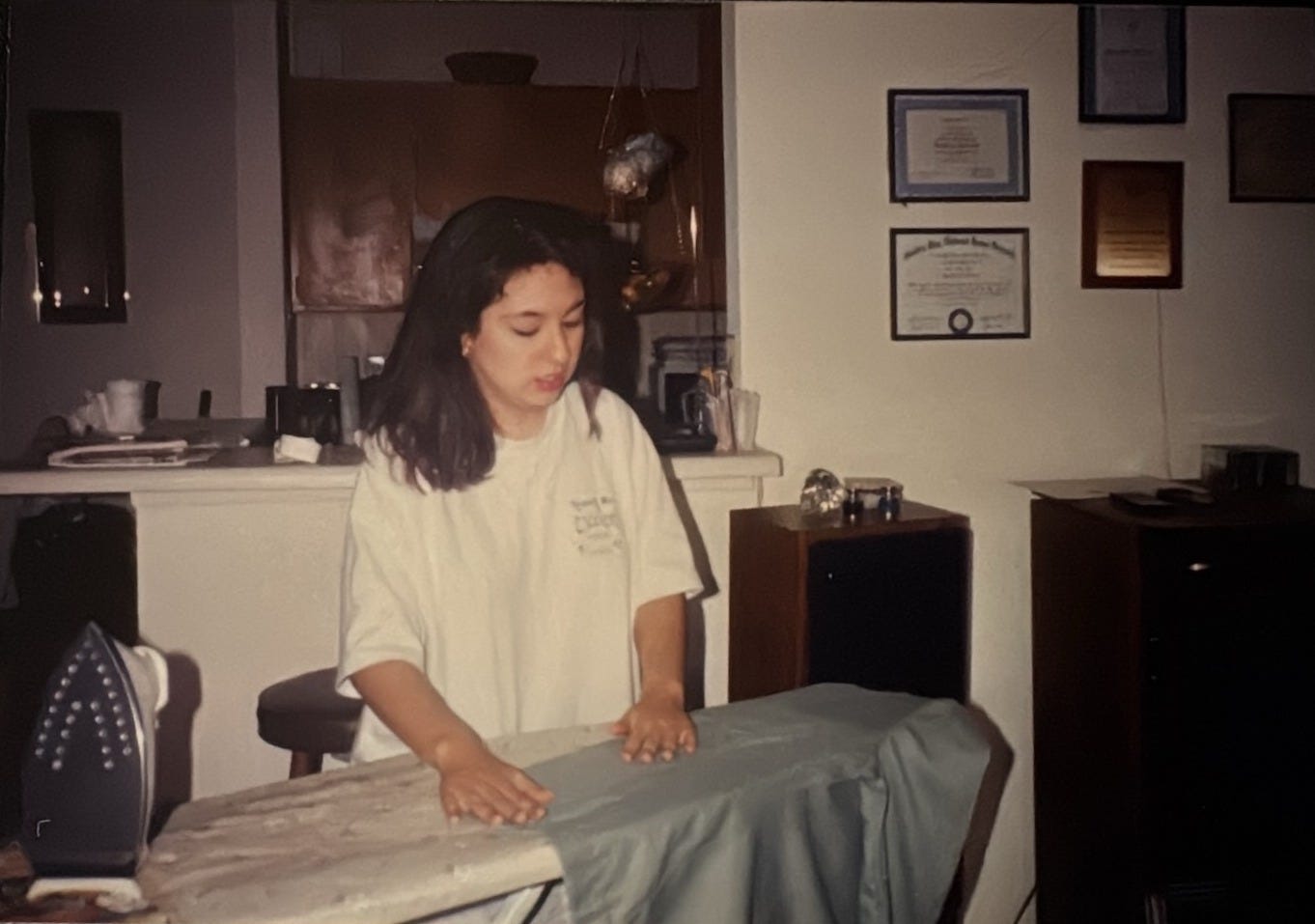
I was introduced to accounting in high school after transferring to a new school. I completed Accounting I and Accounting II in my junior and senior years. I liked math and businesses, and I remember one of the people I babysat for (years prior) was a tax attorney. He encouraged me to consider the tax or accounting profession. I still think about those moments. I may have been drawn to consider the field because of that one person’s comments, but that two-year program cemented it for me.
If that program had not been available, I likely would not have discovered I had a real interest in the profession. That exposure set the direction of my career, my life, and the lives of those around me. It helped shape how I think about business, discipline, and long-term decision-making. It also shaped how I served my internal corporate clients so they could achieve what were, at times, insurmountable business and public policy objectives.
Not every student has that opportunity today.
That is part of the reason I took time today to do advocacy work for the profession through my membership in the American Institute of Certified Public Accountants (AICPA).
Today, during the AICPA’s Town Hall—a twice-monthly session where tens of thousands of CPAs hear Capitol Hill updates, IRS updates, technology updates, and business development practices—we learned that the AICPA is supporting legislation led by Senator Susan Collins and Representative Young Kim to recognize accounting as a STEM field. This effort reflects what the profession has already become—deeply connected to data, technology, analytics, and critical thinking.
Recognizing accounting as a STEM field can be very powerful. It will help create awareness much earlier for students, strengthen and widen the pipeline, and help students see the profession for what it truly is today.
If you have a young person in your life who is looking to advance their education, consider sharing this newsletter so they can see someone who made this choice many decades ago and still appreciates and supports the profession today. Talk about compounding in one profession for decades.
If they have concerns about accounting being replaced by AI, anyone who does this work knows that at the center of it is trust, validation, analysis, and real-world experience.
AI knows what it knows today because of all the data we have fed it. All that data, solutions, and recommendations are based on real-world human experiences. One day, it may solve unsolved scientific problems. But will it solve how humans interact with each other—which is what business is all about? That is something I have a hard time seeing fully realized.
And if accounting is the language of business, and financials are the output that must serve as a single source of truth, it will be difficult to replace those roles. If anything, the work of the CPA professional has been elevated even higher because of AI.
If you are curious—or if you want to advocate to your congressional officials to support this effort—feel free to read on. I hope it inspires some of you to do the same. We need more accountants in a world where trust is how business gets done—and where that trust has never mattered more.
Dear Senators and Representative,
As both a voter and a Certified Public Accountant (CPA), I am writing to respectfully ask that you consider becoming a cosponsor of the Accounting STEM Pursuit Act (H.R. 2911 / S. 3784) and support the formal recognition of accounting as a STEM field.
The profession has evolved significantly. Today’s accountants operate at the intersection of finance, technology, and data—leveraging data analytics, artificial intelligence, machine learning, and statistical modeling to inform decisions, assess risk, and uphold the integrity of our capital markets. These are not adjacent capabilities; they are foundational to modern accounting practice. They are embedded in university curricula, tested through the Uniform CPA Examination, and required by accreditation standards.
Recognizing accounting as a STEM discipline is a practical and timely step to strengthen the pipeline of future professionals. We are already seeing meaningful workforce shortages across public accounting and industry. This legislation helps increase awareness and interest—particularly at the high school level—while positioning the profession alongside other analytically rigorous fields competing for the same talent.
I share this from personal experience. I was introduced to accounting through a high school program after transferring schools. Without that exposure, I likely would not have discovered the profession. That single point of access shaped my career. Expanding that visibility today can open similar pathways for the next generation of students.
Globally, other countries have already recognized accounting within STEM and are investing accordingly. If we want to maintain the strength, transparency, and competitiveness of U.S. capital markets, we should be equally intentional in how we define and support the professions that sustain them.
For coordination on H.R. 2911, your office may contact Jaliya Nagahawatte in Representative Young Kim’s office at jaliya@mail.house.gov or Sam Knapke in Representative Haley Stevens’ office at Sam.Knapke2@mail.house.gov.
For S. 3784, please contact Michael Delorge in Senator Susan Collins’ office at Michael_Delorge@collins.senate.gov or Megan Thompson in Senator Jacky Rosen’s office at megan_thompson@rosen.senate.gov.
Thank you for your time and consideration. I would welcome the opportunity to discuss why this legislation matters—not only for the profession, but for the broader economic infrastructure it supports.
Sincerely,
Rachel C. Ybarra, CPA, CGMA
Side Note: I’ve been offline lately. I’ve had several accounting projects I’ve been working through—hurdles I’ve challenged myself to learn, battle with, and one day master. AI is one of them. So much changes each week that it’s difficult to keep up.
I will say one thing—don’t count Microsoft out. Their Copilot tool blew me away yesterday. One month ago, I would not have said that. In fact, I probably did say something not so generous about the product at local investor group meetup.
That kind of progress—seeing something improve that quickly—is exciting to me.
Until next time.
Comments
Nothing yet. Say the first thing.
Sign in to join the conversation.