
Before jumping in, I want to be sure you know about TWO exciting developments here. The Center for Embodied Faith is launching
Integrative PilgrIMAGE—an extended training on coaching & spiritual direction
Deeply Attached — to help pastors/leaders cultivate environments of deep attachment in their teams, churches, and ministries
Deadlines for both are quickly approaching! So check them out.
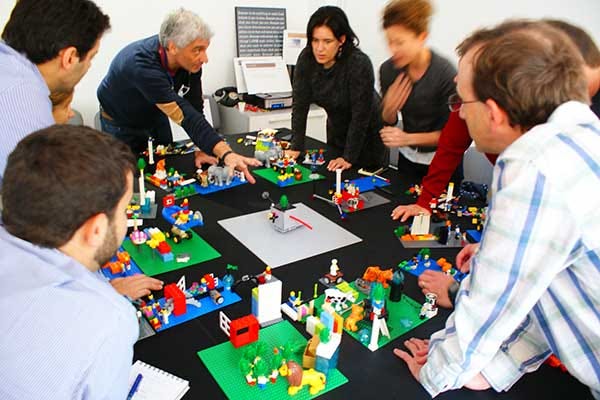
Recently, I read this wonderful piece asking if we needed to shift our understanding of marriage as hard work to that of serious play.
And of course I thought, “This is true for discipleship and spiritual formation.”
So often, we talk about spiritual formation like a second job with a regular performance review.
Read your Bible.
Pray more.
Try harder.
Serve more.
Be better.
Keep going.
Yes. Spiritual disciplines and practices matter.
But to think of the spiritual life as hard work will quickly reshape our vision of God. We begin to see spiritual growth as a project to manage rather than a relationship to enjoy. We begin to evaluate and optimize our performance and outputs. Or we just assign our spiritual life to be one of endless druggery.
But what if the spiritual life were more like play, and less like work?
Not trivial play.
Not careless play.
But serious play.
But what Nina Li Coomes calls “serious play”—the kind of joyful, attentive, relational engagement that deep love requires. Marriage, she argues, thrives not merely through hard work, but through shared delight, curiosity, and delighting in one another.
The same is true, perhaps even more so, of life with God.
Jim Wilder has spent decades helping Christians recover a truth the church often forgets: we do not grow primarily through willpower. We grow through attachment.
His definition of joy is both simple and profound: joy is the experience of being with someone who is glad to be with you. Not merely tolerated. Not evaluated. Delighted in.
That is the heart of the gospel.
Just seek Luke 15 (Lost Sheep, Lost Coin, Prodigal Son), where the conclusion of every parable is that heaven is throwing a party!
Joy is not an accessory to spiritual growth. It is the main event.
Allan Schore
For more from Jim Wilder, see “Joy Changes Everything.”
Are you a pastor or ministry leader who would love to cultivate communities of serious play and deep attachment with God? Check out our DEEPLY ATTACHED Training Cohort.
Play is not just a behavior.
Play is an emotional and imaginative state. It is a primary way that humans learn. Children know this instinctively. They discover the world through delight, repetition, imagination, and especially experimentation.
Adults, despite our spreadsheets, are no different.
Play is serious because it forms us. It teaches flexibility, resilience, creativity, and trust. It trains us to remain present, connected, and open to surprises.
That sounds a lot like discipleship.
Prayer, at its best, is not a spiritual task. It is relational presence. Scripture is not merely information transfer. It is an invitation to inhabit God’s world. Worship is not performance or obligation. It is participatory delight. And rest is not simply the absence of labor. It is the presence of joy.
For more on play, see Allan Schore’s “Playing on the Right Side of the Brain.”
In Landscapes of the Soul, Cyd and I talk about how the Good Shepherd is leading us into the pastures of peace and joy. It is a place of nourishment, rest, and exploration. It is where we can grow because they are safe enough to graze, wander, and play.
How different from the spiritual factory. In a factory, efficiency is everything, optimization is everything, and hard work is everything. In the spiritual factory there is a plan and program.
In a pasture, presence is everything, and joy, and peace. This is what secure attachment to God feels like. We come to know—not just intellectually, but bodily and relationally—that God is glad to be with us. We are safe in his presence. We can rest. We can explore. We can grow.
Not because we are striving, but because we are abiding.
None of this means spiritual formation is effortless. Serious play still requires practice.
A pianist practices scales so the music can flow freely.
An athlete drills fundamentals so the game can become instinctive.
Likewise, the spiritual disciplines are not hoops to jump through. They are rehearsals for joyful connection with God and others.
We pray so that conversation with God becomes natural.
We read Scripture so that God’s story becomes our home.
We gather in community so that joy can be shared and multiplied.
Discipline is not opposed to delight. It serves it.
As Dallas Willard famously said, “Grace is not opposed to effort, it is opposed to earning.”
What might this look like in ordinary life?
Read Scripture with curiosity rather than urgency. Linger over what surprises you.
Pray as conversation, not performance. Digressions, topic changes, and rabbit trails are natural. Notice when God’s presence feels welcoming.
Practice Sabbath as delight. Ask not only, “What should I stop?” but also, “What brings life?”
Worship with your whole body—sing, kneel, raise your hands, breathe deeply.
Seek moments of shared joy with others. Joy grows in the company of others.
These are not techniques for self-improvement. They are ways of becoming more available to love.
Jesus said that “unless you change and become like little children, you will never enter the kingdom of heaven” (Matthew 18:3-5).
And children know how to play.
Spiritual formation is serious because love is serious. But love does not flourish under the weight of grim determination alone.
It flourishes in delight.
We are not merely workers in God’s vineyard.
We are children learning to play in our Father’s world.
As I said above, the Center for Embodied Faith is launching…
Integrative PilgrIMAGE—an extended training on coaching & spiritual direction
Deeply Attached — to help pastors/leaders cultivate environments of deep attachment in their teams, churches, and ministries
Deadlines for both are quickly approaching! So check them out.
Comments
Nothing yet. Say the first thing.
Sign in to join the conversation.