
“How do I price my product?”
It’s the question that constantly preoccupies small business leaders, entrepreneurs, and first-time founders—everyone wants a number. A formula. A quick answer.
Here’s the truth: There isn’t one.
…or at least, I’ve never seen one without flaws.
Not because pricing is unknowable, but because you’re asking the wrong question.
After launching over 200 tech platforms, physical and digital products, and services, I’ve learned this: The founders who succeed don’t guess at pricing. They build price justification from the ground up.
Asking “what should I charge?” leads nowhere; I’ve come up with seven questions that actually matter and takes the complexity out of pricing models.
Here’s how to create a pricing strategy that makes your launch profitable instead of provisional.
When someone asks me, “What should I charge for my product?”—my first response is always: “I can’t answer that without more context.”
And neither can anyone else.
I’m not a pricing expert. I don’t specialize in value-based pricing models or complicated pricing frameworks. But I know what works in real launches with real customers and real revenue.
I’ve been on the side of pricing complex B2B SaaS platforms, apps, D2C products, new luxury brands, and service-based experiences, among others.
The problem with “what should I charge?” is that it treats pricing like a math problem with one correct answer. It’s not. It’s a strategic decision that depends entirely on your specific product, market, and business model.
You can’t skip the strategy and jump to the number.
Instead of asking what to charge, ask these seven questions. Your answers will reveal what you can charge—and more importantly, why customers will pay it.
1. How does your pricing fit into your launch strategy?
Pricing isn’t standalone. It’s part of your entire go-to-market approach. Are you launching with an introductory offer to build momentum? Positioning as premium from day one? Using pricing to differentiate from competitors?
Your price needs to support your strategy, not contradict it.
2. Is it billed monthly or yearly?
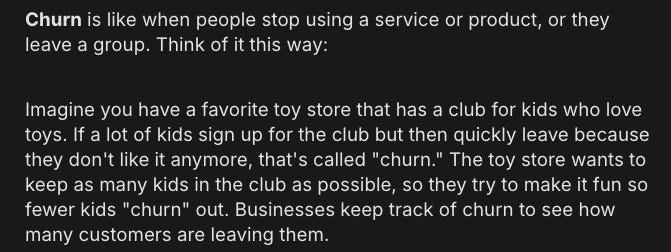
This isn’t just about cash flow—it’s about perceived value and commitment. Monthly feels low-risk to customers but creates churn headaches for you. Yearly requires more justification upfront, but can signal confidence in long-term value.
The billing model shapes how customers think about the investment in your product or service.
3. Do customers realize gains year-over-year?
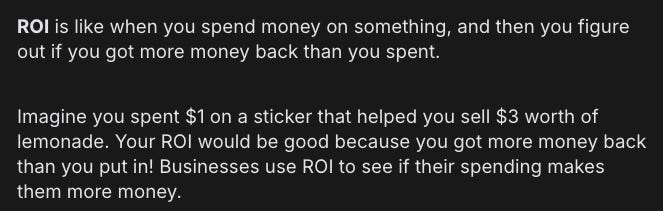
If your product or service delivers compounding benefits—financial gains, productivity increases, cost savings—that’s not a one-time value. That’s ongoing ROI.
Price accordingly. If the gain grows, your pricing power grows with it.
4. Will the perceived gains be consistent?
This is where most founders trip up. Your product might deliver huge value in month one, but if that impact plateaus or becomes invisible over time, customers won’t renew.
Consistent gains justify consistent pricing. Inconsistent gains lead to cancellations.
5. Are there testimonials or proof of the benefit?
Social proof isn’t just marketing fluff—it’s pricing leverage. A customer who can see documented results from someone like them will pay more than someone taking a blind leap.
If you can’t prove the benefit yet, your pricing ceiling is lower until you can.
6. What are the benefits upstream and downstream in the customer’s cycle?
Don’t just think about the immediate use case. What happens before and after your product enters their workflow? Does it reduce friction elsewhere? Create new opportunities? Save time in upstream or downstream processes?
Those secondary benefits stack. And they justify higher prices.
7. Which aspects of production are impacted?
For B2B products especially, this matters. If your solution reduces labor costs, cuts material waste, or speeds up production cycles, quantify it. Those are real dollars your customer saves.
Real dollars saved = real dollars you can charge.
These seven questions—plus a few more tailored to your specific situation—give you the foundation to build price justification. Not a guess. Not a hope. A defensible reason why your price makes sense.
That’s what customers need to hear. And it’s what you need to believe when someone pushes back on your pricing.
The bottom line: Spend the time on a good pricing strategy before you launch. Because how much you charge for those bells and whistles isn’t separate from your go-to-market strategy—it is your go-to-market strategy.
As founders, we love talking about our product’s bells and whistles. The features. The innovations. The things that make it special.
But none of that matters if you can’t justify what you’re charging.
Customers don’t pay for features. They pay for outcomes. For gains. For problems solved and value delivered.
Your pricing needs to reflect that. Not what it cost you to build. Not what you hope someone might pay. But what the value is actually worth to the person buying it.
So before you launch, before you set that number in your payment system, answer the seven questions. Build your justification. Know your strategy.
Because a product launch without a pricing strategy isn’t a launch.
It’s just an expensive experiment.
Subscribe to Target Launch! Access go-to-market strategies and blueprints to launch and grow profitable businesses..
Comments
Nothing yet. Say the first thing.
Sign in to join the conversation.