
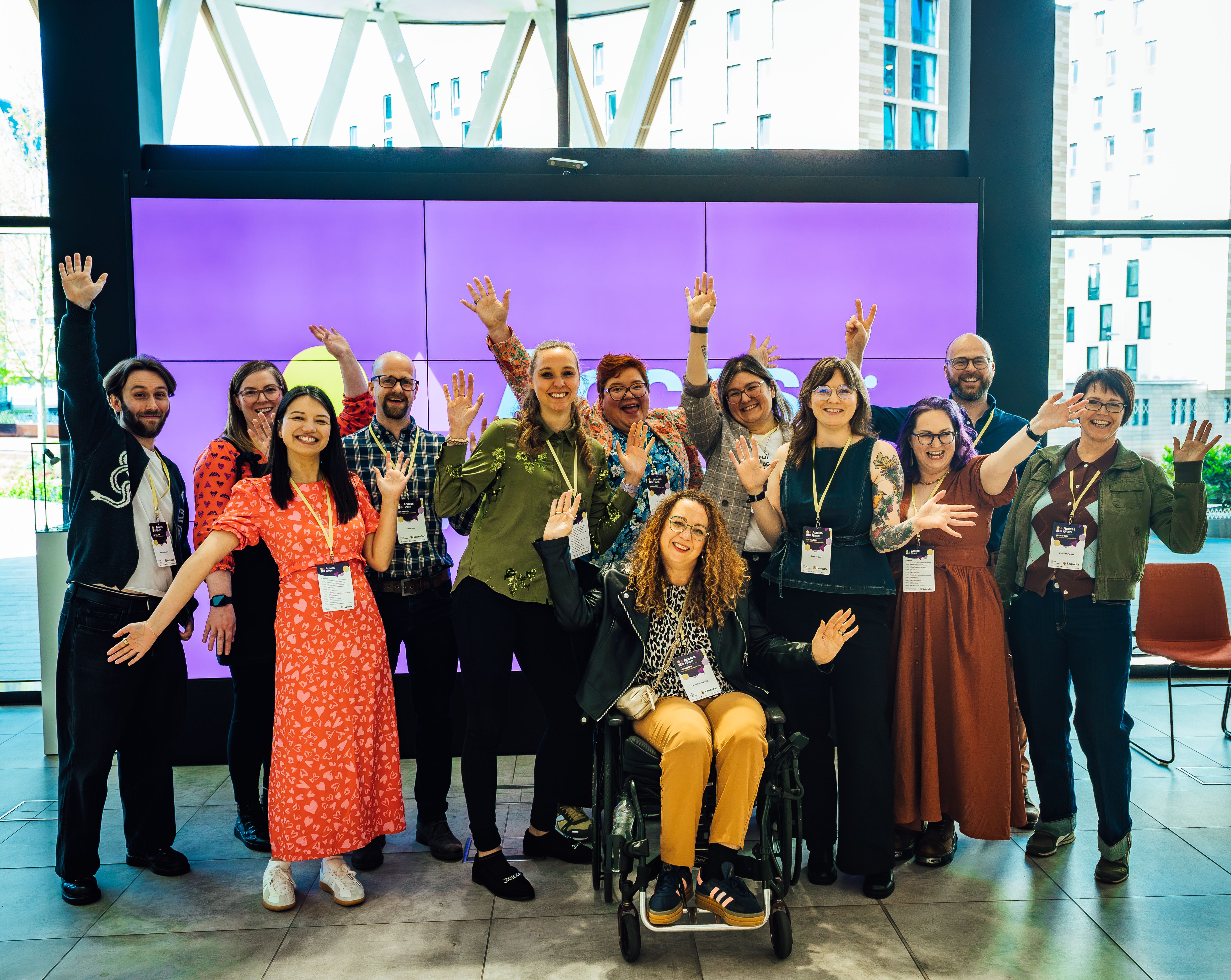
I wrote back in September about starting a business with my best pal, Michelle | Specky Scribbler. We had just our first ever Access:Given, a one-day digital accessibility conference, entirely organised (and mostly funded) by us.
Then, we decided to do it again.
Instead of waiting another 12 months like sane people, we brought the date forward to May. We’ve plenty of time, we thought. Then suddenly we were flapping. Fortunately, we do our best work when under pressure. And, just last week, we pulled it off.
I won’t go into the ins and outs of organising the conference, because I’ve written about that before.
What I do want to focus on here is the power of feedback and criticism, and why we should all be asking for it and using it to improve our work.
Last year, we sent a Google Form after the first event asking for feedback. We explained that this was our first year hosting such an event, and feedback would be really appreciated.
We asked the following questions:
Before the event, did you mention any access requirements?
If your access requirements were or were not met, can you explain why.
How accessible did you find the venue?How relevant did you find the talks?
Which talk was your favourite?At future events, what length talk do you prefer?
The live captions were above the speakers' slides - do you think that was the best place for them?Did you attend the sensory room?
Could anything have been improved in the sensory room?
How did you find the day? Did you understand what was expected of you and what was coming next? Any other comments?
Only around 25% of attendees responded to the survey, but the feedback they did give was really useful.
We had responses covering:
The gap between tables in the cafe area
The way lunch was served
The captions accuracy and location
The level of the talks
The networking opportunities
Plus loads more.
So, we took all of this onboard and make some significant changes for 2026, including:
The introduction of captions on a separate screen as well as on the main screen (we had some technical difficulties with this!)
We served lunch outside of the paper bags, so people could see what they were getting.
We invested in an exhibition space, with a carefully planned table layout (with chairs and spaces for wheelchairs). This helped encourage networking and also acted as a place to serve food and drink that was separate from the public cafe area.
We setup Slido for people to ask speakers questions anonymously and our volunteers read them out.
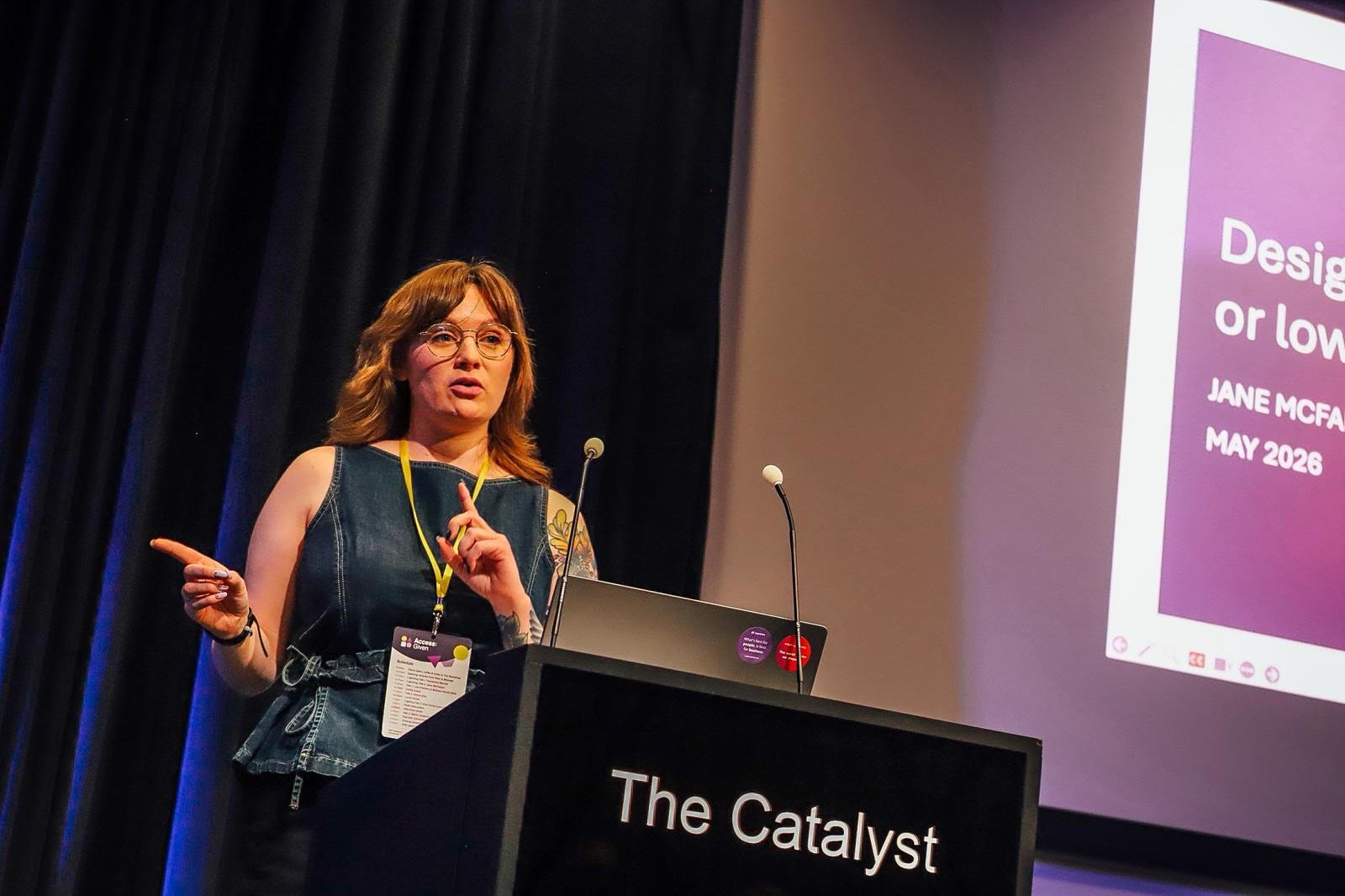
We introduced different types of talks including lightning talks (10 minutes) and a panel.
We held an after party at a local pub.
We worked with an AI-powered captionining tool, CareScribe.
We printed lanyards and added the agenda to the back.
We added more pages for notes to the booklet.
We included even more detail about what to expect in our accessibility guide.
We brought onboard more volunteers!
That being said, we kept quite a few things the same:
We are still a single-track event, so attendees don’t have to choose between talks.
We’re still only a single-day event, too. I know many events spread over multiple days, but this brings with it significant accessibility challenges.
We’re still at the same venue — it’s a truly fantastic and accessible space.
We kept the same videography (Affinity Media) and photography (Lauren McWilliams) teams.
So, that’s the practicalities down.
Access:Given is a business, but that doesn’t mean it’s not personal. Michelle and I put huge amounts of effort into this event, and we’re still yet to take a paycheck (we do pay speakers, though!).
When we ask for feedback, we ask for honesty. But that doesn’t mean every single comment is water off a duck’s back.
I think there is a lot of talk these days about fear of feedback, and in more extreme instances, Rejection Sensitivity Disorder (RSD), which is a common symptom with ADHD. I recognise that everyone experiences criticism in a different way, but I honestly believe we have to ask for it, take it on board, or we won’t get better.
I do recognise that this is a tough one, but there are some really good ways to get around that discomfort of receiving criticism when asking for feedback.
The first thing I’d say is to always remember that it’s their experience, not mine. Their experience is valid, even if it is completely antithetical to my own.
I would also suggest you approach every response with empathy. Ask yourself why that person might have felt that way. Even if their delivery isn’t the most tactful (not the case for our respondants but I have been in situations where this was the case).
And finally, the more you ask for feedback, the more you get used to it.
In our current working culture, we are becoming increasingly accustomed to working alone, and as we shift away from group thinking and further into silos, we risk losing everything that made communities special in the first place.
In reality, the feedback is probably one of the most valuable parts of Access:Given, as it’s like one big user research project where people are able to actively shape the outcome for the following year.

Here are some things I enjoyed this week:
📽️ Obsession - Fantastic horror debut from the 26-year-old (!) YouTuber Curry Baker. This is one of the best cinema experiences I’ve had for ages. I actually jumped out of my seat at one point. This is as scary as I hoped Hokum would be (still very good, but this was better)
📚 Famesick by Lena Dunham - Incredible memoir from Girls writer Dunham. It’s easy to forget just how good a writer she is, given that the media likes to frame her in all the wrong ways. This is a very honest piece of work, the writing of which I expect was like therapy in itself.
📺 Half Man (BBC) - While I did watch Baby Reindeer when it came out in 2024, I (like many others) became a bit suspicious of Richard Gadd’s sudden rise to fame. I also think he made some poor moral judgments (made worse by Netflix) about not working hard enough to hide his IRL stalker's identity. I actually wrote about this back in May 2024.
I even started to believe Gad might be a one-trick pony, having written an insanely successful TV show about his own life, and then little else. Yet now, we have his next show, Half Man, in which he co-stars with our very own Jamie Bell. And I had to admit, Gad is good. He’s really fucking good. This show is coming out weekly (Fridays), and I am really, really invested. I expect last week’s hospital scene will win an Emmy.
Like with Gad’s previous work, Half Man is really dark, so don’t go into it expecting a fun time.
See you next week!
Ellen x
I’m Ellen, and I write about mental health for the chronically online. I am a freelance copywriter, strategist and web designer, and I work from home at Content By The Sea. I have two rescue greyhounds, Potter and Harmony, and a human daughter.
If you like reading my weekly emails, you can give me a kickback in one or more of the following ways:
📨 Share this post
📬 Subscribe for free (if you haven’t already!)
💬 Leave a comment on this newsletter
No posts
Comments
Nothing yet. Say the first thing.
Sign in to join the conversation.