
Hi dear reader, thank you for being here. Right now, I have a summer sale, so when you sign up to become an annual paid subscriber you can enjoy 40% off one year of Rarely Written. Paid subscribers get access to my paywalled posts, the subscriber chat, all of my archives (perfect for holiday reading), plus, paying for a subscription is a lovely way to show your support to a writer like me on substack who is starting to call this their full-time gig! Thank you, your support is greatly appreciated.
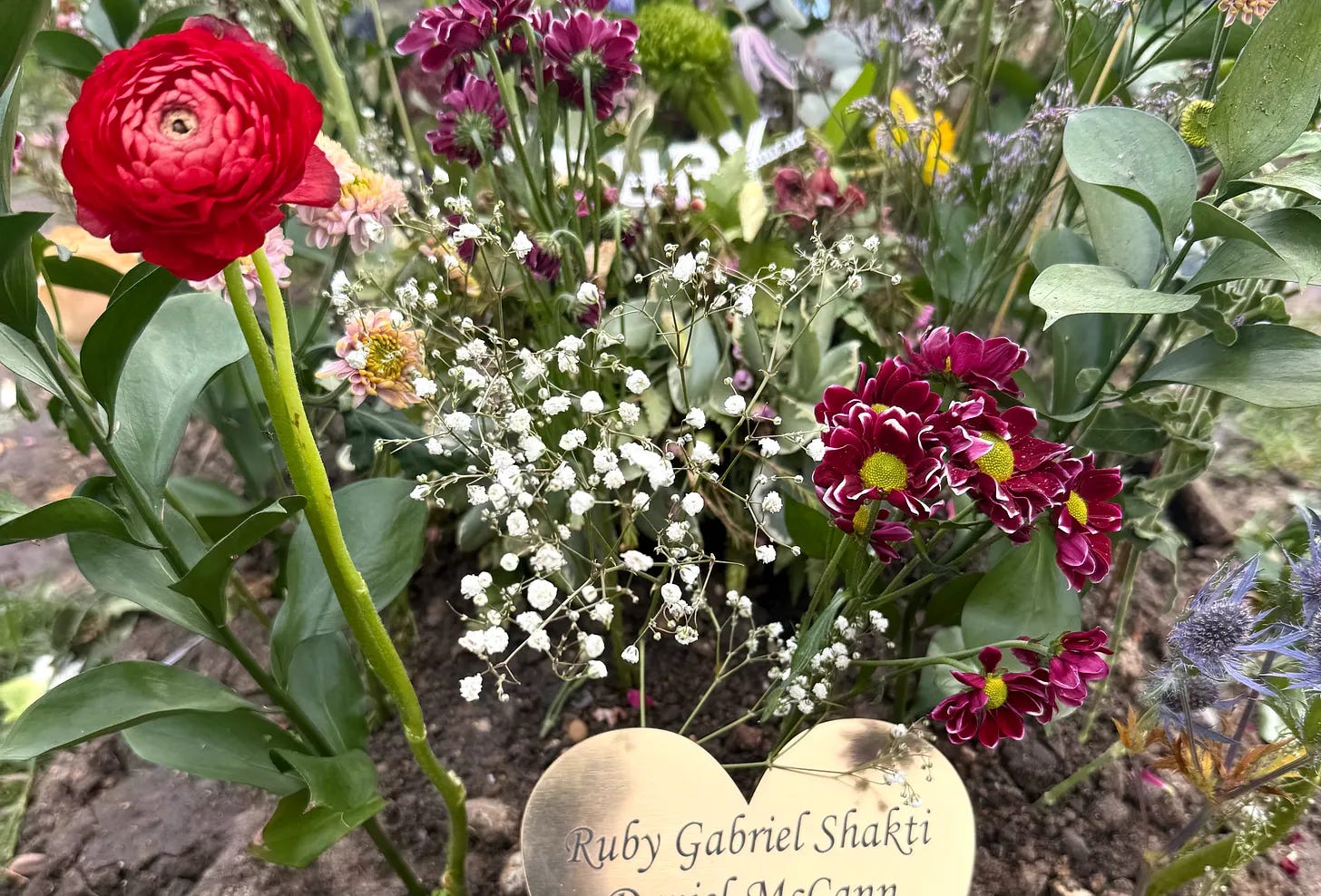
It wasn’t until the unthinkable became a thought, until the unsayable thing was formed into words, that I changed tack. Parents of medically complex children whose lives are, in one way or another, limited (that term still upsets me) — find a way to cope.
Some brave souls stare the end head on, with all the unimaginable ferocity of anticipatory grief. They do not welcome it, nor even wait for it, but they don’t deny its untimely coming either. I clung on to hope until (almost) the last breath. It was the only way for me. Maybe it was delusional. Maybe it was unhealthy, but caring for a chronically ill and, yes, life-limited child is not a recipe for psychological safety. You do whatever you can. I know some parents with their children still here who read my work, and I know others who cannot look at it. Both are completely valid. I would have actually fallen into the latter category whilst Ruby was still alive.
As I have written about before, I knew in the bones that made me a mother that my daughter Ruby was dying around three weeks before she passed. It wasn’t as if she suddenly became sicker, because she had been struggling for much longer than that, and she had lived with this disease her entire life, and it had given her many equally brutal struggles before. It was something less tangible, less obvious to other eyes. She herself was ready to go. I will never not cry writing those words, but they are the truth. It was clear in the way she would look at me that her journey had begun.
“I’m done.”
Because she was (and here comes another term I don’t like) such a ‘fighter’, she always tried to stay. She could see that I wasn’t ready to let her go (I will never be, of course), and she tried. She really tried.
I don’t think death was new to her either. She had many practices at it, as anyone with a life-threatening disease does. She faced it off, with medical support, no doubt, but something in her was telling those that supported her to keep fighting it off for her. She probably knew it’s coming too, in her own way, that I will never be able to translate for her.
But her eyes told me in no uncertain terms that, now, she could not go on like this. That the conditions of her body and its disease had become too much for her little soul to bear. I didn’t give up on her when I realised this. I joined the fight for her freedom. It wasn’t the one I wanted to campaign for, but it wasn’t about me.
Thanks for reading Rarely Written! This post is public so feel free to share it.
I never quite understood parents who lived in anticipatory grief until I realised this. I couldn’t fathom how they could contemplate the loss of their child alongside the fight for their wellbeing, which is an impossibly hard fight that only parents like us know. What I learned was that you can fight for your child’s comfort as well. You can fight for their dignity. You can fight for their wishes. Ruby was only two years old, but she was very clear on what she needed and what she wanted.
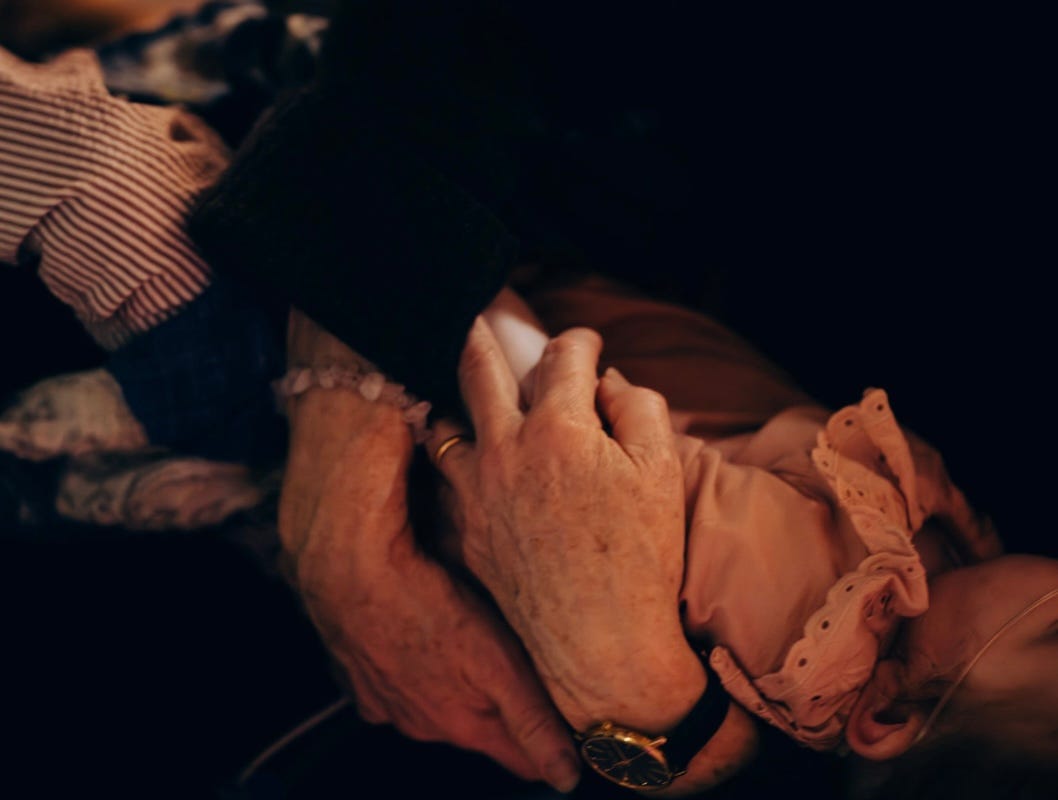
The fight for wellbeing can be a harsh one though, and you can become very singular in your pursuit for their (your) survival. When we received a recommendation that Ruby should have a liver transplant, I barely blinked before immediately putting myself forward as her donor. Steve was heartbroken. On reflection, I never allowed myself to grieve this moment. There are lots of moments that I never allowed myself to grieve. I am paying for those now. I accepted so much harshness in the fight for her life that is too much for any nervous system to bear.
Which brings me to the moment of ultimate grief. The final loss. The moment where all her practices became the real thing. I do not believe that any amount of anticipatory grief could have remotely prepared me for what I felt in the moment in which she took her last breath, when her heartbeat stalled to its halt. I don’t think it could have prepared me any better than living in perpetual positivity and the sometimes relentless forward motion of hope could have protected me from it. If I could make it so that no parent has to experience this then I would, but I am not that powerful.
What I am saying is, there is no right way to prepare for a thing that is so fundamentally wrong. There can be no judgement of a parent to a medically complex child, because there are no rules or guides, neither for when they are here or after they have gone, whenever that might be. The worst part is not knowing. But then again, nothing in life is certain, nothing is guaranteed — parenting a medically complex child lifts that veil for you much earlier.
I was still happier than I have ever been whilst I lived in this limbo — a small, neatly tucked away part of me fully aware of the possible sadness I would eventually be called to endure. I was happy because she was there, and so was I. Not a day passed me by. Not a moment of joy escaped our fullest celebration.
Now, I’m drawing towards the midway point of a new pregnancy. There’s still a long way to go, and I know that the dog days will come where I am heaving myself to the finish line. But unlike last time, I’m not wishing any of it to go any quicker. Some days are very hard, even more so because of the grief I carry alongside the hope and wonder for this new life. As their life takes more evident form within my body, I cannot help but be reminded of the one that is missing. It is an impossible journey, but it is also a blessing. I am strong enough to hold it all, I know that, but it has taken from me more than I will get back for a while, and that is ok too. We actually do not need to be whole all of the time. Sometimes parts of us go missing, and in all the time we spend trying to put them back where we found them, they actually end up being attached in a different way, and we get made anew.
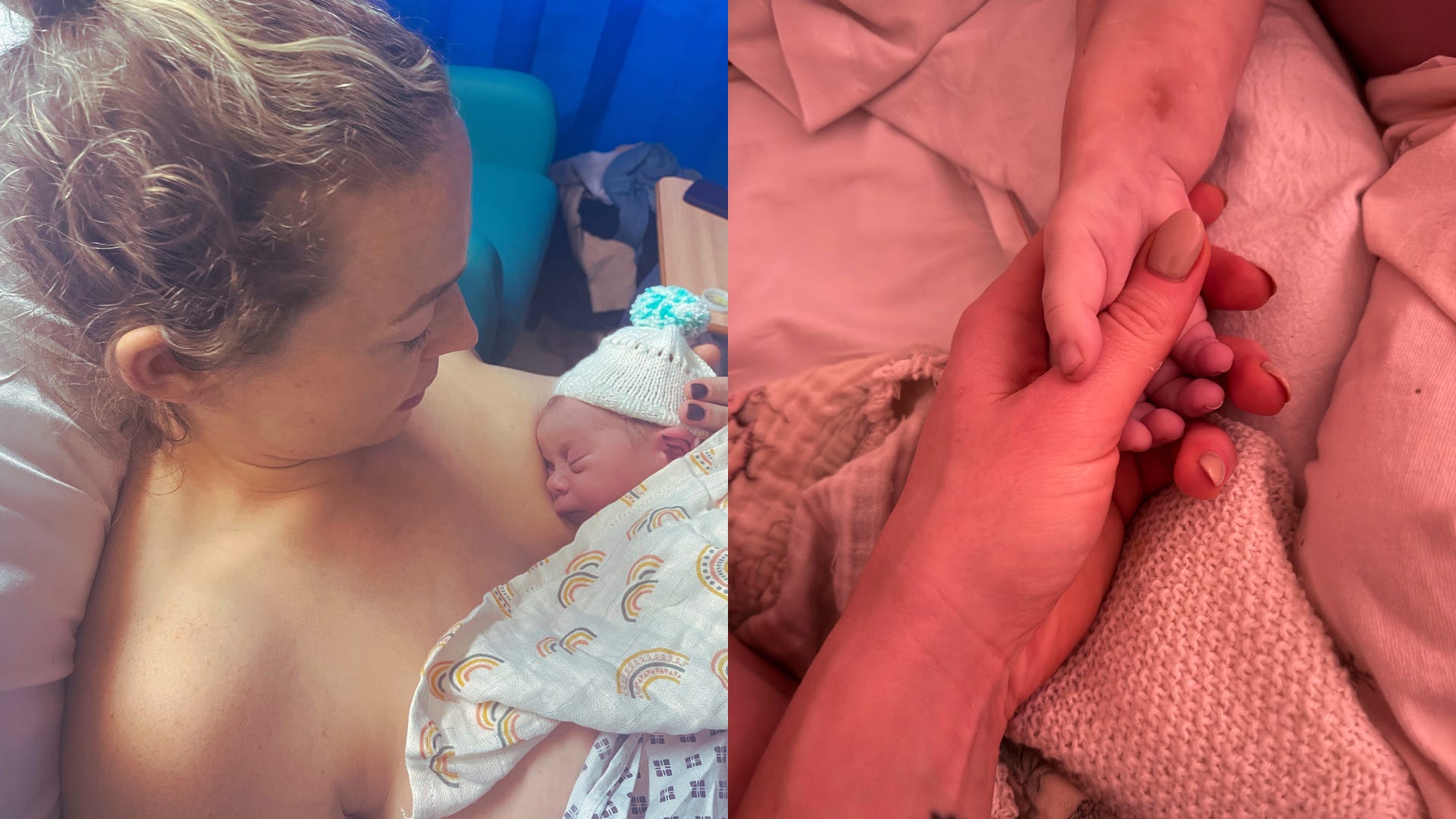
I am still on the lookout for mothers who have become mothers again after losing the person that made them a mother and can write/talk about it. I won’t lie, this is the loneliest I’ve ever felt in that respect. I am, of course, surrounded by my friends and family, and an incredible wider community, brought in large part by Ruby herself. And yet, I don’t know anybody personally who has been through what I’ve been through. Of course I don’t. She had a rare disease. Her manifestation of it was so rare that it took us to places as a family that nobody will ever be able to comprehend unless they had been there too. We lived as a family in hospital for around two years. Not just us three, but our parents, siblings and many of our friends. Everybody’s world shaped around Ruby’s in their own way. It became so utterly normal that now a life that is far more ‘normal’ feels alien to me.
Even if I am not surrounded by bereaved mothers, I am surrounded by lots of newly expectant ones — many who I have grown up with, now entering into this incredible new passage of womanhood. Watching their fresh excitement and anticipation fills me with delight and reminds me of the early days of my first pregnancy with Ruby. Somewhat selfishly, I lamented to my therapist the other day how I had lost this precious particular innocence. She simply said:
“Well, it’s different now. You’re a different mother.”
This set me free. Straightforwardness is, contrary to what many might assume, the language of grief. Grief itself is not straightforward, but speaking it in plain terms is actually more healing than it is harsh. It’s such a nebulous minefield that you often need that voice of reason to cut through it.
I am different. I am forever changed. There is no going back to a simpler parenthood. But then again, is there such a thing as a simple parenthood? There is the hope for it, and there is the denial of the ways it has to break you before it makes you new. There is the familiar trait of complaining about its everyday challenges to conceal your own uncertainty and fears.
No posts
Comments
Nothing yet. Say the first thing.
Sign in to join the conversation.